I may earn a small commission from qualifying purchases linked below, at no extra cost to you. I only mention tools or setups when they genuinely help the tree.
You can keep a bonsai in a hallway or bathroom with no direct light only for a short time, and only in very specific cases. In practice, a bonsai kept long-term in a dim hallway or windowless bathroom will weaken, stretch, and slowly decline unless you provide strong artificial light.
Over the years, students have asked me this question in different forms: a narrow entry hall in London, a rented flat with frosted bathroom glass, a quiet corner that feels perfect for a small tree but receives almost no sun. The answer is less about whether the room feels calm to us and more about whether the tree can photosynthesize enough to stay compact and healthy. Bonsai are not ornaments first. They are trees first.
If you want the short version, here it is: a hallway with bright indirect light can work for some indoor tropical bonsai if you add a proper grow light and keep the tree close to that light for many hours each day. A bathroom can work even less often than people expect. Humidity is useful, but humidity never replaces light. I have seen many ficus and Chinese elm bonsai survive dry homes; I have seen very few survive darkness.
Why the lack of direct light is usually the real problem
When people say ?no direct light,? they often mean one of two very different situations. The first is a bright room with large windows but no sunbeam hitting the shelf. The second is a truly dim space, such as an inner hallway or bathroom with no meaningful daylight. Bonsai may tolerate the first. They do not tolerate the second for long.
Bonsai need enough light to keep internodes short, leaves proportionate, and growth dense. Without that, the tree begins to reach, leaves become larger and thinner, and the fine ramification that makes bonsai believable starts to disappear. A tree can stay green for a while and still be in decline. This is one of the quiet traps of indoor bonsai care: the warning signs come slowly, so people mistake slow deterioration for stability.
In my own practice, the first sign is often not yellow leaves but a loss of tension in the silhouette. A healthy bonsai holds its outline. A light-starved bonsai loosens and reaches. If the shape begins to feel vague and leggy, I stop thinking about watering schedules and look first at the light.
Hallway or bathroom: which is better?
If I had to choose between the two, I would usually take the brighter hallway over the bathroom. Bathrooms are often praised because of humidity, but most bathrooms have inconsistent temperatures, bursts of steam, poor air movement, and very little usable light. A hallway may be dry, but dryness is easier to correct than darkness.
| Location | Possible Advantages | Main Problems | When It Can Work |
|---|---|---|---|
| Hallway | Stable temperature, less steam, easier to place a grow light | Usually dim, can be drafty near doors, easy to forget watering | Bright indirect light or dedicated grow light, suitable tropical species |
| Bathroom | Higher humidity, sometimes warmer in winter | Often very low light, temperature swings, poor airflow, soap and aerosol exposure | Only if there is a genuinely bright window or a strong grow light setup |
| Living room near a window | Best balance of light, airflow, observation, and easy maintenance | May need humidity support in heated homes | Best default location for most indoor bonsai |
A hallway also has one practical advantage people underestimate: you pass through it often. That means you notice the tree. Trees placed in decorative corners are commonly underwatered or overwatered because they disappear from daily attention. Bonsai respond well to quiet observation. Not constant fussing, but regular noticing.
Which bonsai can tolerate these conditions best?
If you are asking about an indoor bonsai in a UK home, the conversation should begin with species. Some trees are sold as ?indoor bonsai? simply because they are less cold-hardy, not because they enjoy low light. For dimmer indoor spaces, tropical and subtropical species are the only realistic candidates, and even they still need bright conditions.
The species I would consider first are ficus, dwarf jade, and sometimes Chinese elm if the window situation is strong enough. Ficus is the most forgiving for typical homes because it tolerates indoor temperatures, occasional watering mistakes, and pruning cycles reasonably well. Dwarf jade can also be reliable, but it demands stronger light than many beginners expect. Chinese elm is often sold indoors in the UK, but in my experience it performs better with much more light and seasonal awareness than casual indoor placement usually provides.
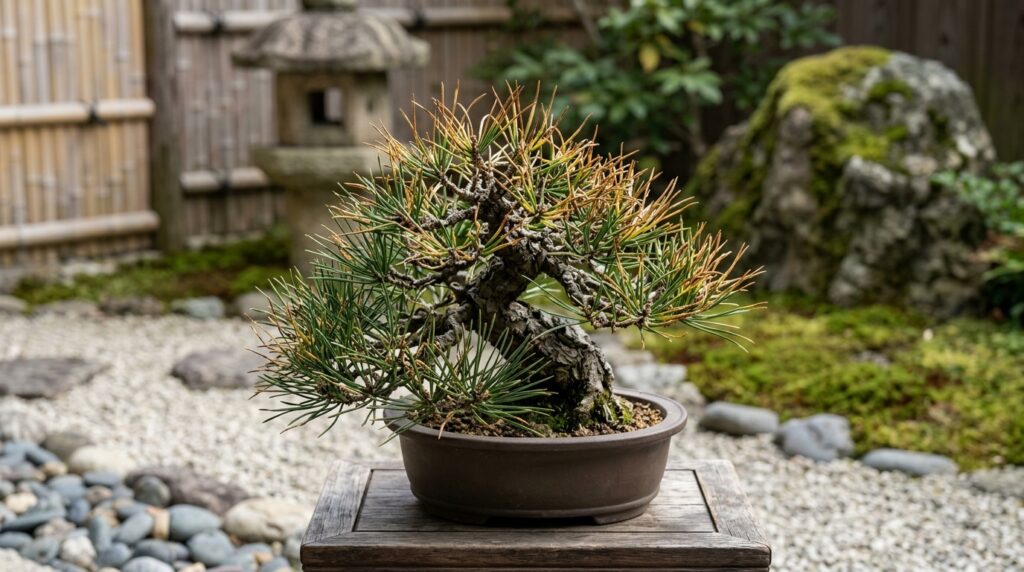
I would not place juniper, pine, larch, or most temperate outdoor bonsai in a hallway or bathroom at all. These trees are not indoor bonsai. Even if they look acceptable for a few weeks, the arrangement is fundamentally wrong. Outdoor species need outdoor conditions, including seasonal temperature change and natural light intensity.
- Best chance: Ficus microcarpa or similar ficus bonsai under strong artificial light.
- Possible with caution: Dwarf jade in a bright position with a dry, careful watering rhythm.
- Less forgiving: Chinese elm, Carmona, Serissa, and Fukien tea in dim spaces.
- Not suitable: Juniper, pine, maple, and other outdoor bonsai species.
When a hallway can work well enough
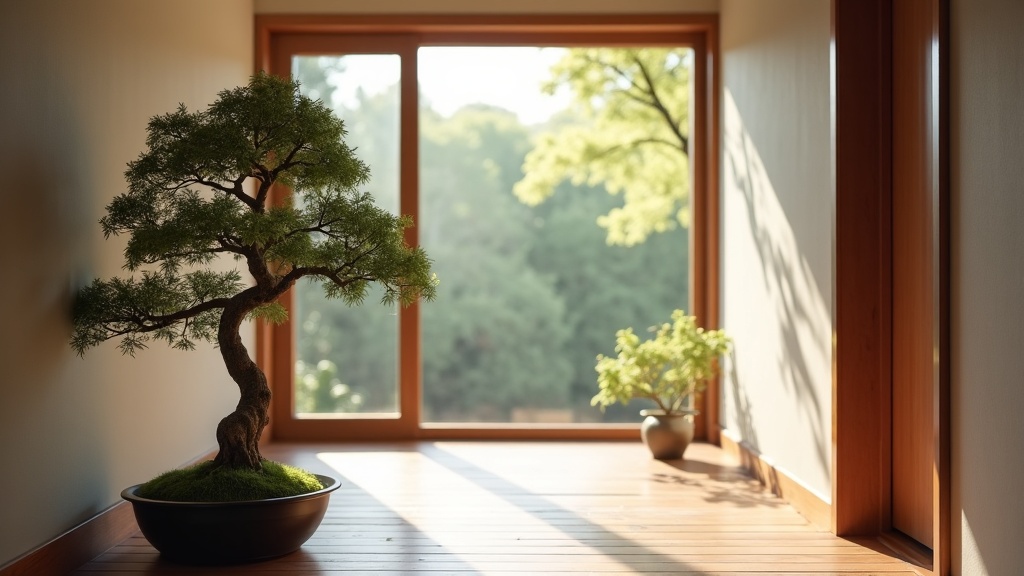
A hallway can be acceptable if it is not truly dark. Some halls receive spill light from a nearby south- or west-facing room, or they have a glass-panelled front door that brightens the space for much of the day. In those cases, the question is not ?no direct light? but ?is the overall light level high enough?? That is a much more useful question.
For a ficus bonsai, I would be comfortable using a hallway only if one of these is true:
- The tree sits very near a bright window or glazed door and receives strong ambient daylight for most of the day.
- You install a dedicated grow light positioned close enough to be effective.
- The hallway is only the display position, and the tree is rotated back to a brighter growing position regularly.
The third option is often the most elegant. Keep the bonsai where it grows best, then move it into the hallway for a dinner, a weekend, or a few days when you want the composition there. I do this myself for tokonoma-style display moments indoors. Temporary display is very different from permanent placement. A bonsai can visit a dim space. It should not usually live there.
One small observation from teaching: beginners often assume a pale wall makes a space brighter for the tree. It makes the space feel brighter to human eyes, but the tree only responds to actual light intensity. Our eyes are adaptable; bonsai are less forgiving.
Why bathrooms are more complicated than they seem
Bathrooms attract bonsai owners because the air feels moist and gentle. That part is understandable. Some tropical species appreciate higher humidity, and bathrooms can reduce crisp leaf edges in dry winter homes. But humidity is only one piece of care, and not the first piece. A tree can tolerate dry air better than it can tolerate darkness.
There are other issues as well. Steam rises and disappears quickly, so the ?humid bathroom? effect is often irregular rather than stable. Many bathrooms also have extraction fans that pull moisture away just as quickly as it appears. Add scented products, cleaning sprays, fluctuating temperatures, and small frosted windows, and you have an environment that is not automatically gentle for a bonsai.
If a bathroom has a large bright window, it can be used. If it has no window or only weak frosted light, I would not choose it unless you are intentionally building a proper artificial-light setup. In twenty years, I have seen more bathroom bonsai decline from insufficient light than from any issue related to watering or humidity.
If there is no natural light, use a proper grow light
This is the practical turning point. If you love the hallway or bathroom as a place for the tree, then the honest solution is not hope. It is artificial light.
For one or two small indoor bonsai, a simple LED grow light is usually enough if it is strong enough and placed close enough. Weak decorative clip lights rarely do the job for long-term health. I prefer a small adjustable full-spectrum panel or bulb setup that can be aimed directly over the canopy. A good starting point is to look for a full-spectrum LED grow light for indoor plants and pair it with a plug-in digital timer so the tree receives a steady daily rhythm.
Position matters as much as the fixture. Place the light close enough to be useful, usually much closer than beginners expect, while avoiding heat stress to the foliage. Keep it above the canopy, not off to the side, so growth remains even. A timer helps keep the photoperiod consistent. Stability is one of the quiet virtues in bonsai care. Trees respond well when conditions are dependable.
If you are using a grow light in a bathroom, pay attention to safe placement around moisture. In a hallway, the bigger issue is often aesthetics. Choose a setup you can live with. An ugly but functional light is still better than a beautiful corner that slowly weakens the tree.
How to care for a bonsai in a low-light indoor spot
Low-light placement changes the rest of your care. The tree uses water more slowly, grows more slowly, and becomes more vulnerable to overwatering. Many people kill shade-stressed indoor bonsai with kindness by keeping the soil too wet. When light is reduced, your margin for watering error becomes smaller.
Watering
Water by checking the soil, not by calendar. If the tree is in a dim hallway, expect the rootball to stay moist longer than it would on a bright sill. Water thoroughly, then allow the upper layer to begin drying before watering again. If you need a simple tool for checking the root zone in a deeper pot, a soil moisture meter for potted plants can help beginners avoid guesswork, though I still prefer a finger and a chopstick.
Soil and drainage
In a low-light indoor setup, free-draining soil becomes even more important. Dense peat-heavy bonsai soil stays wet too long indoors. If your tree is due for repotting and you are keeping it inside, look for a well-draining bonsai soil mix rather than a heavy houseplant compost.
Pruning and feeding
Do not push a weak tree hard. In low light, prune lightly and feed modestly during active growth. Heavy feeding without enough light can produce coarse, soft growth. The aim is balance, not speed.
Airflow and cleanliness
Bathrooms and halls can both have stagnant corners. Good airflow reduces fungal problems and helps the foliage dry properly after watering. Keep leaves clean, especially on ficus, because dusty foliage in already marginal light loses efficiency.
What I would recommend instead
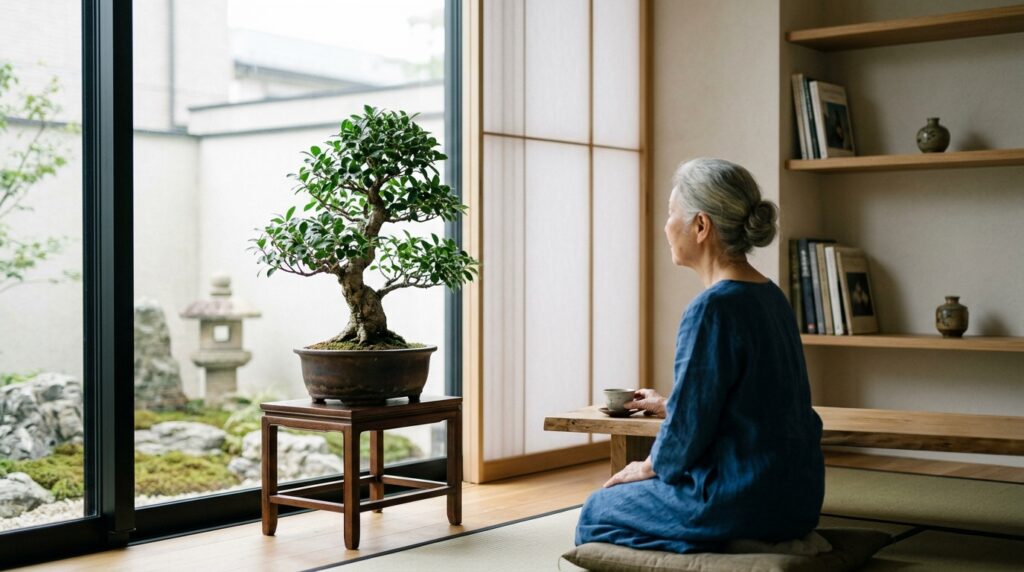
If your goal is a healthy bonsai rather than a temporary decorative accent, place the tree in the brightest reasonable part of the home and then make that placement beautiful. A small stand near an east-facing window is usually a better bonsai decision than a dramatic but dim hallway shelf. The right environment gives you tighter growth, shorter recovery times after pruning, and a tree that actually improves year to year.
If you truly want greenery in a dark hall or bathroom without the maintenance burden of supplemental light, I would consider a non-bonsai plant better suited to deep indoor conditions, or use the bonsai there only for brief display intervals. Good bonsai practice includes knowing when not to force the composition. Wabi-sabi is not about pretending a poor environment is enough. It is about working honestly with what is there.
That honesty matters especially in UK homes, where winter light is already limited. Even species that ?grow well indoors? need the brightest part of the house for the darker half of the year. I often tell students that the right place for a bonsai is decided in November, not June. Summer makes many arrangements seem acceptable. Winter reveals the truth.
FAQ
Can I keep a bonsai in a windowless bathroom?
Not as a permanent setup unless you provide a proper grow light for many hours each day. Humidity alone will not keep the tree healthy.
Will a bonsai survive in a hallway with artificial light only?
Yes, some indoor species can, especially ficus, but the artificial light must be strong enough, close enough, and consistent. Ordinary room lighting is not enough.
Which indoor bonsai trees grow well in UK homes?
Ficus is usually the safest starting point. Dwarf jade can also do well with strong light. Chinese elm can work, but it needs better light and more careful seasonal handling than many beginners expect.
How long can I display a bonsai in a dim place?
For a healthy established tree, a few days to a week is usually fine if it normally lives in a brighter growing position. Longer than that should be treated as a care decision, not just a styling decision.
The simplest answer is this: you can keep a bonsai in a hallway or bathroom with no direct light only if you respect the difference between display and cultivation. For long-term health, the tree needs bright conditions, and if the room cannot provide them, you must.