Some links in this article are affiliate links. If you buy through them, I may earn a small commission at no extra cost to you.
I start training a bonsai tree when it is healthy, growing with energy, and mature enough to benefit from guidance rather than mere survival. In practice, that usually means waiting until the tree has settled into its pot or container, is pushing strong growth in season, and has a trunk or branch structure worth refining.
Beginners often ask me this question as if there is a single age when training begins. There is not. A young juniper in a nursery can be wired lightly in its first season with you, while a recently repotted maple should often be left alone for a while. Training starts when the tree is ready, not when the owner feels impatient.
What ?training? really means in bonsai
When people say training, they usually mean one of several different actions: pruning, wiring, shaping branch direction, encouraging ramification, reducing leaves or needles, or beginning root work that supports a bonsai form. These are related, but they do not begin at the same moment.
I like to separate training into two phases. The first is development: building trunk movement, taper, branch placement, and overall structure. The second is refinement: shortening internodes, improving density, clarifying pads, and making the silhouette feel settled. A tree may be ready for some development work long before it is ready for refinement techniques.
Over many years of teaching, I have noticed that beginners often train too much, too soon, because they want the tree to look finished. The better habit is to ask a quieter question: what does this tree need most right now? Sometimes the answer is wiring. Sometimes the answer is simply another season of feeding and light.
When should you start training a bonsai tree?
You can begin training when these conditions are true:
- The tree is visibly healthy, with normal color and vigorous seasonal growth.
- It has recovered from any recent repotting, shipping, or major environmental change.
- The species is in an appropriate season for the specific work you want to do.
- The trunk and branches are developed enough that shaping will improve the design rather than weaken the tree.
- You can identify a clear goal, such as improving taper, setting primary branches, or reducing coarse growth.
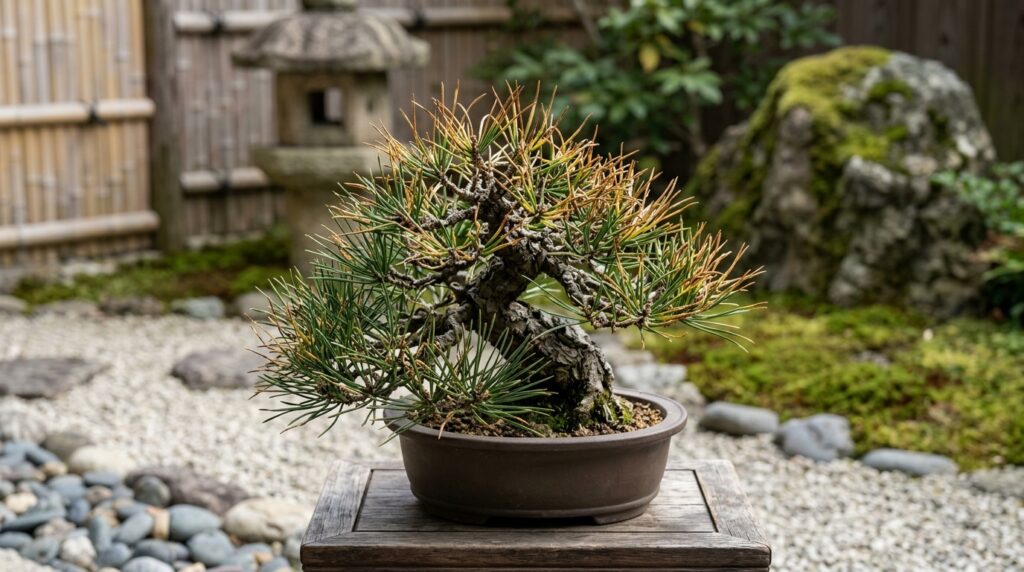
If your tree is yellowing, dropping leaves out of season, sulking after repotting, or adjusting to a new indoor setup, do not begin with aggressive training. Stabilize first. A weak tree does not become a good bonsai through technique. It becomes smaller and weaker.
One of the simplest signs I rely on is extension growth. If a deciduous tree is extending strongly in spring, or a tropical is producing steady warm-season growth, I know I can plan light work. If growth is hesitant, I slow down. Healthy response tells you more than the calendar alone.
Timing depends on the kind of training
The right moment changes depending on what you mean by training. Pruning, wiring, root work, and pinching each place different demands on the tree.
| Training task | Best time to begin | What I watch for |
|---|---|---|
| Light structural pruning | When the tree is established and growing strongly | Healthy buds, good color, no recent stress |
| Wiring young branches | During active growth or dormancy, depending on species | Flexible branches, bark not overly tender |
| Major branch removal | Species-specific strong season, usually spring or early summer | Enough vigor to heal and redirect energy |
| Root pruning and repotting | At the proper repotting window for that species | Swelling buds, root activity, strong prior health |
| Refinement pinching | Only after the basic structure exists | Dense, controlled growth already forming |
This table matters because many new growers think ?training? is one event. It is better to think of it as a sequence. If you repot hard, wire hard, and prune hard in one period, the tree pays the price. Strong bonsai work has rhythm.
Species matter more than age
A two-year-old fast-growing ficus may be ready for regular directional pruning. A five-year-old pine may still be in early development, especially if you are building trunk character. Bonsai timing is much more about species behavior, vigor, and stage of design than the age listed on a tag.
Deciduous trees
Maples, elms, hornbeams, and similar deciduous species are usually straightforward teachers. You can often begin light branch selection and pruning once the tree is established and growing strongly. Structural decisions are often easiest to see in late fall or winter when leaves are gone, but heavy work should still respect the species? strongest recovery window.
With deciduous trees, I tell students to be careful not to confuse fast growth with maturity. Long shoots are useful early on, but refinement comes later. If you start pinching every tip too early, you slow trunk and primary branch development for no real gain.
Conifers
Junipers and pines usually ask for more patience. You can start shaping a healthy juniper relatively early with selective wiring and branch positioning, but that does not mean every tuft should be cleaned and styled into pads at once. Pines are even more dependent on correct seasonal timing and good energy management. If you are new, treat them with restraint.
One thing I learned in Kyoto from older practitioners was how often they left material alone after one meaningful change. A branch set correctly with wire may not need more ?improvement? that season. The tree needs time to respond and set the line naturally.
Tropicals and indoor bonsai
Ficus, schefflera, and jade types can often begin training once they are actively growing in warm conditions with good light. Indoors, the question is not only season but setup. If your tree sits in dim light, beside an air vent, and grows weak, training is premature. Stable vigor comes first.
If you keep an indoor bonsai, a strong grow light is often more useful than another tool. For beginners building a basic setup, a tagged Amazon search for full spectrum grow lights for bonsai is a practical place to compare options. Clean cuts also matter, and a search for bonsai pruning shears is helpful if your current scissors crush soft shoots.
Signs your bonsai is not ready for training
It is often easier to see when not to begin. Delay training if you notice any of the following:
- The tree was repotted recently and has not resumed strong growth.
- Leaves are shrinking, yellowing, scorching, or dropping abnormally.
- You just brought it home from a nursery, mail order shipment, or garden center.
- The root system is weak, the soil stays sour and wet, or the tree is clearly underlit.
- You are unsure whether your next cut serves development or only your impatience.
That last point matters. Many unnecessary cuts come from anxiety. The owner sees vigorous growth and thinks it must be controlled immediately. Often it is better to watch for another two or three weeks, then decide what the new growth reveals about the future design.
In my own practice, the trees that improved fastest were not the ones I worked on constantly. They were the ones I timed carefully. Bonsai rewards judgment more than activity.
How I approach a tree in its first year with me
When I bring home new material, I almost never rush into full styling. Even if the tree looks strong, I spend the first weeks observing how it responds to my garden, water, and light. Needles tell one story in a nursery. They tell another story after a month in your care.
For most beginners, this first-year sequence is safer and produces better bonsai:
- Stabilize the tree in its new environment and correct major care issues.
- Learn the species? strongest growth period and repotting season.
- Do only light cleaning or obvious deadwood removal at first.
- Begin modest structural pruning or wiring once vigorous growth confirms health.
- Save heavy redesign, strong root work, or multiple major techniques for later stages.
This approach is not timid. It is efficient. When a tree is stable, every training step becomes clearer and safer. If you need supplies for that first season, a tagged search for bonsai soil mix and aluminum bonsai wire covers the two items I see beginners need most often after basic pruning tools.
Early training mistakes beginners make
The most common mistake is treating every young tree like a finished bonsai. A beginner buys a nursery juniper, removes too much foliage, wires every branch into dramatic curves, and places it in a shallow pot all in one weekend. The tree may survive, but the design often becomes stiff and the vigor drops.
The second mistake is starting refinement before structure exists. Pinching a maple constantly can create congestion without building a convincing branch framework. The third mistake is doing major work at the wrong season just because the tree ?looks messy.? A messy tree at the right time is better than a tidy weak tree at the wrong time.
I also see people copy techniques across species. What works for a tropical ficus does not automatically work for a black pine. If you want good timing, always ask two questions together: what species is this, and what exact training am I planning?
When to train for style, and when to train for health
There is a useful distinction between training for style and training for health. Training for style includes branch placement, silhouette editing, and refinement decisions. Training for health includes repotting into proper soil, reducing poor top growth so light reaches inner areas, and encouraging stronger structure over time.
Sometimes the best early training is almost invisible. Improving drainage, increasing light, and letting a sacrifice branch run may not make the tree prettier this month, but it may make it far better in two years. A good bonsai artist learns to value hidden progress.
Wabi-sabi in bonsai is not neglect, and it is not roughness for its own sake. It is the quiet maturity that comes when the tree has been guided in step with its nature. Starting training at the right time is part of that discipline.
FAQ
Can I start training a bonsai right after buying it?
Usually, only lightly. If the tree is newly purchased, give it time to adjust unless it is exceptionally healthy and you are doing something minimal, such as gentle wiring of one young branch or removing clearly dead growth.
How old should a bonsai be before wiring?
Age matters less than branch flexibility and overall vigor. Young branches on healthy trees can often be wired early, but heavy shaping should wait until you know the species and the tree is stable in your care.
Should I prune and repot at the same time?
Sometimes light top pruning is fine with repotting, but combining heavy root work and heavy branch work is risky, especially for beginners. I prefer to spread major stress across seasons unless the species and condition clearly support more.
What is the best season to start training?
There is no universal best season. Spring is often the main window for many species because energy is rising, but conifers, deciduous trees, and tropicals each have different ideal moments depending on whether you are wiring, pruning, or repotting.
If my bonsai is growing fast, should I always cut it back?
No. Fast growth may be exactly what you need if the trunk or primary branches are still developing. Cut back with a purpose. Do not slow useful development just to keep the tree small too early.
When should you start training your bonsai tree? Start when the tree is healthy, established, and in the right season for the specific work you have in mind. If you follow that standard instead of forcing a schedule, your bonsai will teach you the timing itself.