Affiliate disclosure: If you buy through a link on this page, I may earn a small commission at no extra cost to you. I only point to tools I would genuinely use for a healthy indoor setup.
I’m often asked whether grow lights really work for bonsai trees in UK homes, and the short answer is yes: they work very well when you use them to replace weak winter light rather than as a vague extra. In many British homes, a decent LED grow light is the difference between a bonsai merely surviving indoors and actually holding compact, healthy growth.
The important question is not whether a lamp can shine on a tree, but whether it gives enough useful light for the right species, for long enough each day, without overheating the plant or making the display look harsh. That is where many beginners struggle. A bonsai can sit under a bright-looking lamp and still slowly weaken because the light is too dim, too far away, or used with the wrong kind of tree.
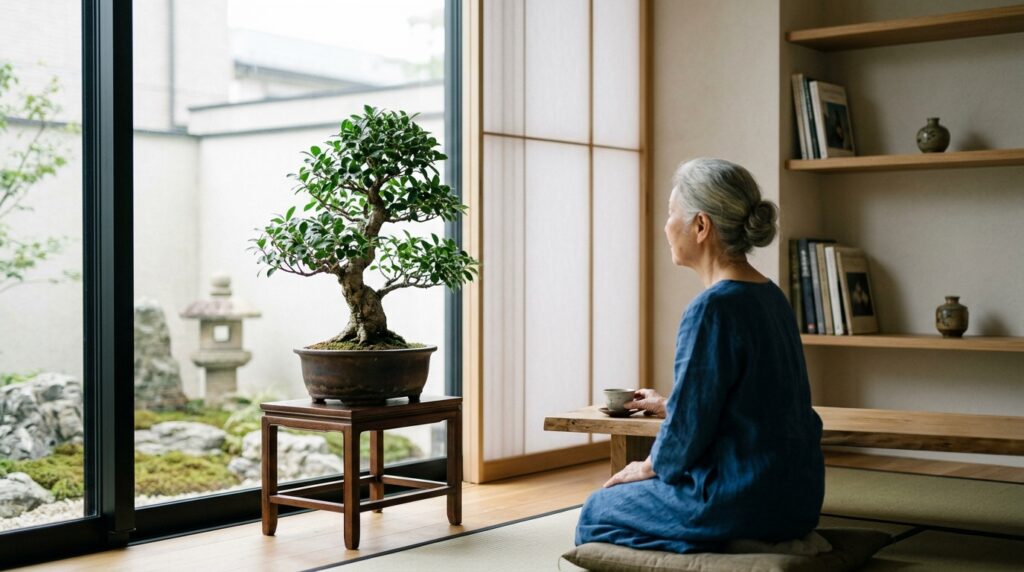
Over the years I have seen this most clearly in winter lessons. A ficus placed near a north-facing UK window often drops leaves by January, while the same tree under a simple timed LED usually steadies within two or three weeks. I have also seen the opposite mistake: someone buys a powerful light, hangs it far too high, and assumes brightness in the room means brightness at leaf level. Bonsai are small, but they are not vague about light.
Do grow lights work for bonsai trees in UK homes?
Yes, especially for tropical and subtropical bonsai kept indoors in autumn and winter. In the UK, short days, frequent cloud cover, deep window reveals, curtains, and heated rooms all reduce the light that actually reaches the foliage. A grow light can compensate for this by giving a reliable daily dose of usable light.
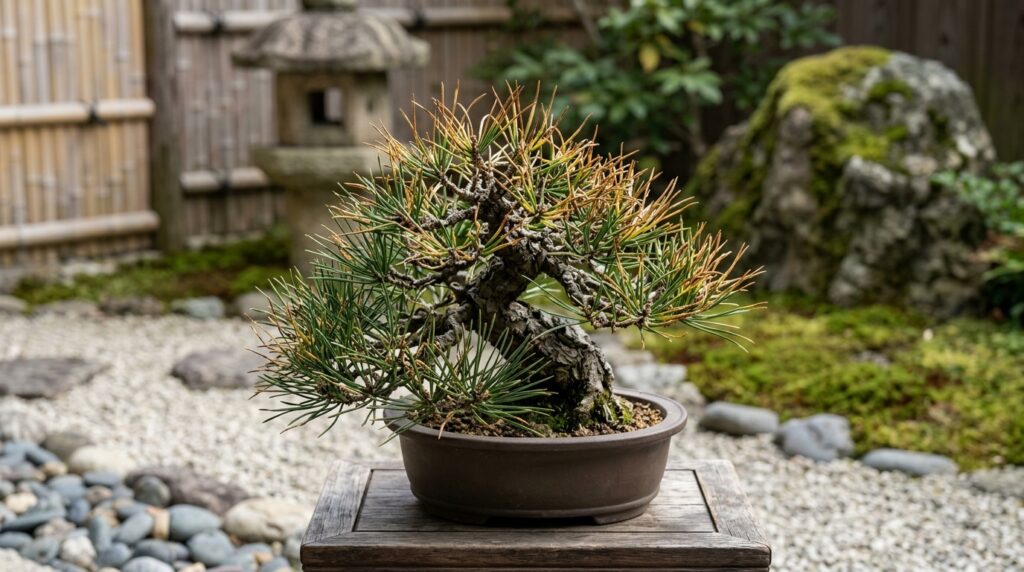
They are most effective for indoor-friendly species such as ficus, Chinese elm kept indoors temporarily, Schefflera, jade, Fukien tea, and Hawaiian umbrella. They are much less useful as a way to keep true outdoor temperate bonsai indoors year-round. A Japanese maple, larch, pine, or juniper does not become an indoor bonsai because you bought a lamp. Those trees need outdoor air movement, seasonal temperature change, and proper dormancy.
So the practical answer is this: grow lights work very well for the right indoor species, and only partially for the wrong outdoor species. That distinction matters more than the lamp brand.
Why UK homes make lighting tricky
Many indoor bonsai guides are written as if every window is bright. In UK homes that is often not true. The room may feel light to us, but the tree may receive only a fraction of what it would get outdoors. Winter sun angles are low, days are short, and even a good south-facing window can become quite weak a metre back from the glass.
One quiet lesson from long practice is that bonsai respond more honestly than people do. We adapt quickly to dim rooms. Trees do not. If internodes begin to stretch, leaves grow larger, older inner leaves yellow, or growth leans hard toward the window, the tree is telling you its energy income is too low.
In practical terms, grow lights help most in four common UK situations:
- A flat or terrace with limited direct sun.
- A room where the bonsai sits more than 30 to 60cm from the window.
- Winter care for tropical species from October to March.
- Homes where curtains, blinds, or neighbouring buildings block much of the day’s light.
Which bonsai benefit most from grow lights?
Not every bonsai has the same tolerance for indoor light. Some species endure lower levels better, though “tolerate” is not the same as “thrive.” If your parent question is which bonsai tree tolerates the lowest light levels indoors, my practical answer is usually ficus, especially Ficus microcarpa or Ficus retusa. It will still grow better in bright conditions, but among common bonsai species it is one of the most forgiving under imperfect household light.
| Species | Indoor light tolerance | How useful grow lights are | My view |
|---|---|---|---|
| Ficus | Best of the common bonsai indoors | Very useful | My first choice for UK homes |
| Schefflera | Good tolerance | Very useful | Easy for beginners if kept compact |
| Jade (Crassula) | Moderate | Useful | Needs brighter light than people think |
| Fukien tea | Poor tolerance of dim rooms | Almost essential indoors | Beautiful but less forgiving |
| Chinese elm | Variable | Helpful short term | Usually better with outdoor time |
| Juniper, pine, maple | Poor indoors long term | Limited | Keep outdoors, not under a living-room lamp |
If you are choosing one bonsai specifically for an indoor UK home, I would almost always steer you toward ficus before anything more delicate. I have watched beginners succeed with imperfect watering and imperfect pruning on ficus. I have rarely seen them succeed with weak winter light on Fukien tea.
What kind of grow light actually works?
You do not need a theatrical purple lamp. A full-spectrum white LED grow light is usually the best choice for a home because it is easier on the eyes, easier to live with, and usually strong enough when positioned correctly. What matters most is not marketing language but usable intensity at the canopy.
For one small to medium bonsai on a shelf or stand, a compact LED panel or gooseneck light can work well. For two or three trees grouped together, a hanging board-style LED is often better because the footprint is more even. If you need options, a tagged Amazon search for full-spectrum LED grow lights for indoor plants is a sensible place to start, and a simple digital plug timer makes the setup far more consistent.
I also like using a modest light meter for houseplants if someone keeps guessing. It is not essential, but it shortens the learning curve. In teaching, I have found that once a grower sees how sharply light levels fall even 20cm farther from the lamp, they stop treating placement as decoration and start treating it as horticulture.
What to look for
- White full-spectrum LED rather than blurple, unless the tree is in a utility area.
- A fixture that can sit close enough to the foliage without heat stress.
- Enough spread for the whole canopy, not just the top centre.
- A timer, because consistency matters more than enthusiasm.
- A stable stand, shelf, or hanging point so the distance does not keep changing.
How long should bonsai stay under grow lights?
For most tropical bonsai in UK homes, I suggest starting with 10 to 12 hours a day in brighter seasons and 12 to 14 hours a day in darker months, then adjusting by observation. The lamp should supplement or replace weak window light, not flick on for an hour or two as an afterthought.
Distance matters as much as duration. Many small fixtures need to sit roughly 15 to 30cm above the canopy to be effective, though you should always follow the maker’s guidance and watch the tree. If leaves bleach, crisp, or curl under a hot fixture, back off. If growth stretches and becomes soft, the light is usually too weak or too far away.
My own preference is to make lighting boring. Set the timer. Keep the distance fixed. Rotate the tree only if one side is clearly favoured. Bonsai improve under steady routines, not constant tinkering.
How to set up a bonsai grow light in a normal room
- Choose the right tree first. For a true indoor setup, start with ficus, Schefflera, or another tropical species.
- Place the bonsai at the brightest window you have, then use the grow light to reinforce that position rather than hiding the tree in a dark corner.
- Mount the lamp so it covers the whole canopy evenly. Aim for close, measured placement rather than dramatic height.
- Run the light on a timer every day. Twelve dependable hours are better than random long sessions.
- Watch the tree for four weeks before making major changes. Look for leaf size, internode length, colour, and whether new buds are forming inside the canopy.
- Adjust watering after improving light. A tree that receives more light often drinks more, and beginners sometimes miss this.
That last point is worth stressing. When lighting improves, watering rhythm changes. I have seen growers “fix” the light and then create root trouble by continuing a winter watering pattern that no longer matches the tree’s new energy use.
When grow lights are not the right solution
Grow lights are helpful, but they do not solve every indoor bonsai problem. They cannot create dormancy for temperate trees. They cannot offset dry radiator air placed directly under the canopy. They cannot rescue poor soil that stays wet and airless for too long.
If your bonsai is an outdoor species, the wiser decision is usually to move it outside and learn seasonal protection properly. If your indoor species is healthy but unattractive under a lamp in the living room, it may be better to keep it in a bright office, porch, or plant shelf where function and display can meet halfway. Bonsai is not only botany; it is placement and judgment.
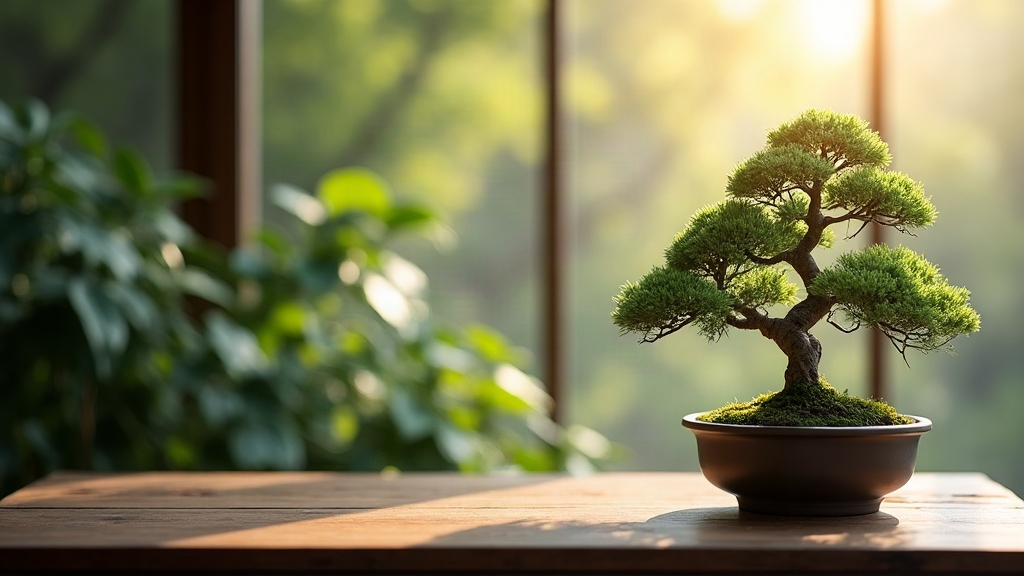
A quiet aesthetic point from years of display work: the best lighting setup is not always the one with the most equipment. One healthy ficus under a neat white lamp by a window is often more satisfying than a complicated tangle of clips, wires, and glowing arms. Simplicity ages better in the home.
Signs your grow light setup is working
- New leaves emerge at a reasonable size instead of getting steadily larger.
- Growth becomes tighter and less leggy.
- Leaf drop slows after the initial acclimation period.
- Buds begin appearing closer to the interior of the branches.
- The tree dries at a predictable pace instead of staying dull and stagnant for days.
If none of these are happening after several weeks, assume the setup is too weak, too distant, or paired with the wrong species. That is a more useful assumption than telling yourself the tree “doesn’t like” grow lights.
FAQ
Can I keep a juniper indoors with a grow light in the UK?
Not well for long. A grow light may slow decline for a while, but junipers are outdoor trees and need outdoor conditions, especially seasonal change and moving air.
Which bonsai tree tolerates the lowest light levels indoors?
Among common bonsai sold for indoor growing, ficus is usually the most tolerant of lower light. Even so, it performs much better with bright window light plus a grow light in darker UK homes.
Do bonsai need special purple grow lights?
No. Full-spectrum white LEDs are usually the better home choice. They are easier to live with and, if strong enough and placed properly, work very well.
Should I leave the grow light on all day and night?
No. Bonsai need a regular day-night rhythm. For most indoor tropical bonsai, 10 to 14 hours daily is a sensible range depending on season and light strength.
Is a windowsill enough without a grow light?
Sometimes in summer, sometimes not in winter. In many UK homes, the windowsill alone is adequate only for the brightest exposures and the most forgiving species.
My practical view
Grow lights do work for bonsai trees in UK homes, and for many indoor growers they are the most practical improvement available. But they work best when you pair them with species honesty, sensible distance, a timer, and patient observation. If you begin with ficus, keep the setup simple, and treat light as a measurable part of care rather than a hopeful accessory, your bonsai will usually tell you the difference quite quickly.