I may earn a small commission if you buy through the product links below, at no extra cost to you.
When bonsai leaves turn yellow, the tree is usually telling you one simple thing: its roots, water balance, light, or seasonal rhythm are out of alignment. The fix is rarely to feed more or panic-prune. It is to slow down, read the pattern of yellowing carefully, and correct the cause before the tree weakens further.
After twenty years of working on bonsai and teaching beginners, I have found that yellow leaves are most often caused by overwatering, poor drainage, insufficient light, normal seasonal change, or root stress after recent work. The color itself matters, but the more useful clues are which leaves are yellowing, how fast it is happening, and what changed in the last two weeks.
A healthy bonsai can lose an occasional yellow leaf with no concern. A tree that is fading across the canopy, dropping soft yellow leaves daily, or showing yellowing together with black tips, limp growth, or sour soil smell needs attention quickly.
How I read yellow leaves before I do anything
My first rule is not to treat the symptom before I understand the pattern. Many owners see yellow leaves and reach for fertilizer. If the roots are waterlogged, fertilizer only adds another stress. If the tree is entering autumn dormancy, fertilizer solves nothing at all.
I begin with four questions:
- Are the oldest inner leaves yellowing, or the newest tips?
- Is the yellowing even and pale, or blotchy with brown or black areas?
- Is the soil staying wet too long, or drying too fast?
- Has the tree been repotted, moved, pruned, or brought indoors recently?
One quiet lesson from long practice: trees often show stress several days after the mistake, not on the same day. A bonsai moved from bright outdoor light to a dim room may still look acceptable for a week, then begin yellowing from the interior. By the time leaves change color, the real cause may already be behind you, which is why recent changes matter so much.
The most common bonsai leaves yellowing causes and fixes
| Cause | Typical signs | Best fix |
|---|---|---|
| Overwatering | Soft yellow leaves, weak growth, soil staying wet, sometimes leaf drop | Let the soil approach slight dryness, improve drainage, reduce watering frequency |
| Underwatering | Crisp yellowing, dry root ball, fast leaf drop, wilt in heat | Water thoroughly, soak dry root ball if needed, adjust summer watering routine |
| Low light | Pale leaves, elongated shoots, interior yellowing, weak canopy density | Move to species-appropriate brighter light gradually |
| Seasonal change | Even autumn yellowing on deciduous species, otherwise healthy growth | No rescue needed; maintain proper seasonal care |
| Nutrient imbalance | General paling, slow growth, sometimes small leaves | Resume balanced feeding only if water, roots, and light are already correct |
| Root stress or rot | Yellowing after repotting, foul smell, black roots, weak response to watering | Stabilize care; repot only if rot is severe and active |
| Pests | Speckling, stippling, sticky residue, yellow patches | Inspect undersides, isolate tree, treat the specific pest |
Overwatering is the cause I see most often
In teaching, this is still the most common problem by far. People hear that bonsai dry out quickly, so they water on a schedule instead of by observation. A bonsai should not be watered because it is 8 a.m. It should be watered because the soil needs it.
When roots stay constantly wet, oxygen disappears from the root zone. Fine roots stop functioning well, and leaves begin turning pale yellow before dropping. On tropical species, this can happen while the surface still looks tidy. On junipers and pines, the signs can be slower and more dangerous because decline is often delayed.
How to tell if you are overwatering
- The pot still feels heavy late in the day after a morning watering.
- The soil surface stays dark and cool for too long.
- The tree looks weak even though it is never allowed to dry slightly.
- A sour or swampy smell rises from the soil.
What to do
Stop watering by habit. Check moisture a little below the surface with a chopstick or your finger. Water only when the soil has begun to dry to the level appropriate for that species. If the mix is dense and peaty, improve the situation at the next proper repotting window with a more open bonsai substrate.
For many growers, shifting into a granular bonsai soil is the single biggest improvement they can make. If you need materials, look for akadama, pumice, and lava bonsai soil components or a reliable premixed bonsai soil suited to your tree type.
Underwatering creates a different kind of yellowing
Dry stress often shows faster than wet stress, especially in shallow pots during hot weather. Leaves may first lose luster, then yellow, then crisp at the edges. If the root ball has become very dry, water can begin running around the sides of the pot without soaking in properly.
I see this often with newly purchased bonsai planted in compact nursery soil under a decorative top layer. The owner waters carefully, but the root ball inside never fully rehydrates. The outside looks wet; the center stays dry.
What to do
Water thoroughly until the entire root mass is saturated and water runs freely from the drainage holes. If the root ball has turned hydrophobic, soak the pot in a basin for several minutes, then allow it to drain well. After that, recheck your placement. Afternoon sun, wind, and small pots can turn a manageable summer routine into a drying emergency.
A simple fine-rose watering can for bonsai helps you water evenly without blasting soil away. For checking root-zone moisture in deeper training pots, a basic soil moisture meter can be useful, though I still prefer learning the feel of the soil itself.
Light problems are common indoors
Many bonsai that yellow indoors are not sick in the usual sense. They are simply receiving too little light for the species. Ficus may tolerate indoor culture with strong window light or supplemental grow lights. Chinese elm may adapt for a period. Juniper, pine, larch, and most temperate species are outdoor trees and usually decline indoors even when they remain green at first.
Low light yellowing tends to be gradual. Leaves become paler, growth stretches, inner foliage weakens, and the tree loses energy month by month. This is different from the sharper collapse of a watering mistake.
What to do
Identify the species first, then match the environment to that species rather than to your furniture layout. Move the tree gradually into stronger light to avoid shock, especially if it has been in dim conditions for a while. If you keep tropical bonsai indoors, a good full-spectrum grow light for bonsai can make a meaningful difference through winter or in darker rooms.
Another thing I have learned through repetition: a tree near a bright window and a tree in bright light are not the same thing. Human eyes adjust kindly. Bonsai do not.
Seasonal yellowing is not always a problem
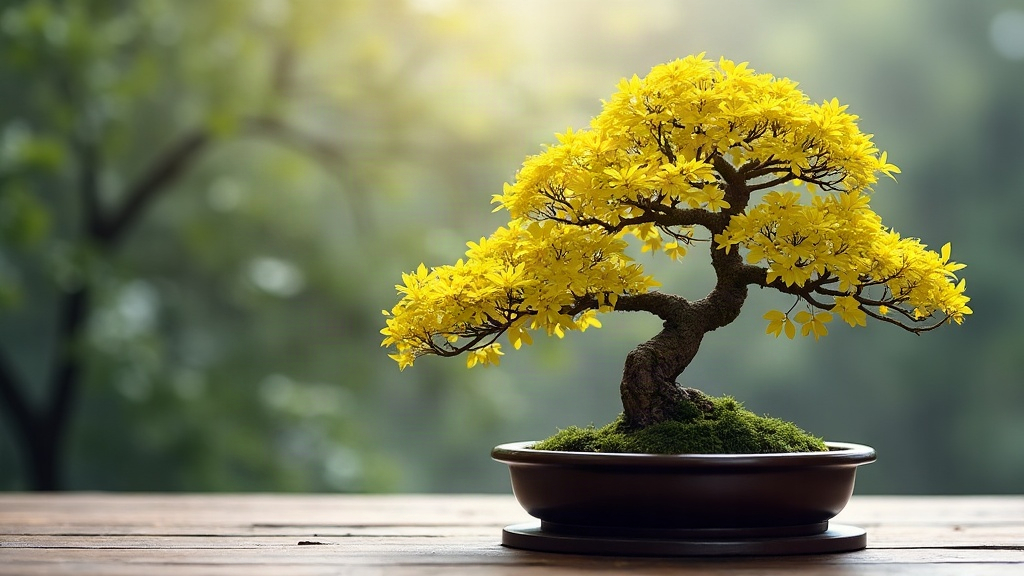
Deciduous bonsai are meant to yellow in autumn. Trident maple, Japanese maple, ginkgo, elm, dawn redwood, and many others move naturally from green to gold as day length shortens and temperatures change. That is not decline. That is rhythm.
The key is context. Seasonal yellowing is usually even, expected, and paired with otherwise normal growth earlier in the season. The leaves often color and fall in a way that looks orderly rather than distressed. If it is late summer or autumn and your deciduous bonsai is otherwise healthy, do not interfere simply because the leaves are turning yellow.
By contrast, yellowing in midsummer on a maple that was recently root-pruned hard, allowed to dry, or placed in severe afternoon heat is not seasonal. It is stress wearing a seasonal disguise.
When nutrient problems are real, and when they are not
Nutrient deficiency can cause pale or yellow leaves, but it is less common than poor watering and poor soil. A tree cannot use fertilizer properly if the roots are compromised. That is why I treat feeding as a second-stage correction, not a first response.
If the soil drains well, watering is correct, roots smell healthy, and the tree is in proper light, then a modest feeding program may be the missing piece. General paling on older leaves and weak growth can suggest low fertility, especially in very inorganic mixes that are watered heavily through the growing season.
How to correct it
Use a balanced bonsai fertilizer at a moderate rate during active growth, adjusted for species and season. Avoid pushing fertilizer on a stressed tree in midsummer heat or immediately after severe repotting. If you prefer organic feeding, a gentle organic bonsai fertilizer is a safer place to start than strong synthetic feeding for most beginners.
I tell students this often: yellow leaves do not automatically mean hunger. A struggling root system and a hungry root system can look similar from above, but they require opposite kinds of restraint.
Species matter more than people expect
A ficus with yellow leaves is not diagnosed the same way as a Japanese black pine or a satsuki azalea. Species tells you how much drying is acceptable, how much sun is appropriate, how roots respond to disturbance, and how much seasonal leaf turnover is normal.
Deciduous bonsai
Maples and elms often show stress through leaf color fairly quickly. They may yellow from heat, root issues, poor drainage, or seasonal transition. Their feedback is relatively readable.
Tropical bonsai
Ficus commonly yellow after changes in environment, especially moves between outdoors and indoors. They may also shed older leaves after a light shift. This is not ideal, but it is often recoverable once light and watering stabilize.
Conifers
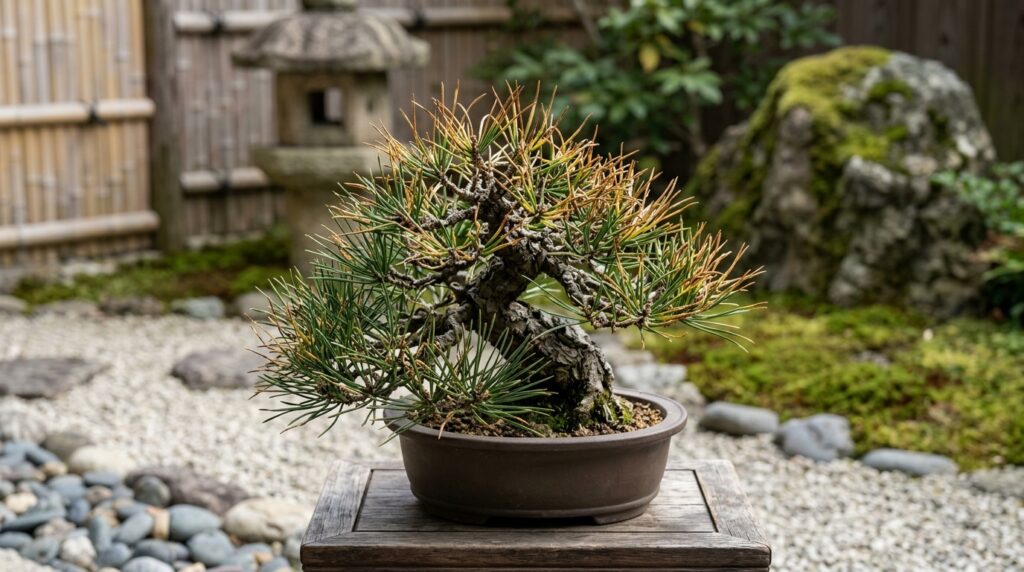
Junipers and pines demand more caution. Interior needle shedding can be normal, but broad yellowing usually points to a serious cultural problem. Conifers often hide stress longer, so by the time discoloration is obvious, the issue may be advanced.
Azaleas and acid-loving species
Yellowing can involve pH and nutrient uptake more readily here, especially in unsuitable water or soil. Even so, drainage and root health still come first.
A step-by-step recovery plan that avoids making things worse
- Move the tree into stable, species-appropriate conditions. Avoid sudden extra stress.
- Check the soil moisture properly below the surface, not only on top.
- Inspect leaves, stems, and undersides for mites, scale, aphids, or residue.
- Review the last two weeks: repotting, pruning, missed watering, relocation, heat spike, indoor move.
- Correct watering first. This solves more cases than any spray or supplement.
- Hold fertilizer until you are confident the roots are functioning reasonably well.
- Repot only if the soil structure is clearly failing or root rot is active and severe. Emergency repotting is sometimes necessary, but it is not a casual fix.
One more observation from years on the bench: the trees that recover best are usually not the ones treated most aggressively. They are the ones given the right light, the right watering rhythm, and enough quiet time to respond.
When yellow leaves mean you should act immediately
Some yellowing can wait for observation. Some cannot. Act faster if you see any of the following:
- Leaves yellowing and dropping rapidly across the whole tree
- Blackened stems, sour soil smell, or mushy roots
- A recently repotted tree collapsing in heat
- Pest activity spreading across multiple leaves
- Conifers yellowing broadly rather than shedding a small amount of older interior foliage
In those cases, focus on root-zone health, environment, and pest inspection first. Cosmetic work can wait. Wiring can wait. Styling decisions can wait.
If you need basic cleanup tools while stabilizing a tree, a set of sharp bonsai scissors and aluminum bonsai wire are useful to keep on hand, but I would not style a yellowing tree until vigor returns.
FAQ
Should I remove yellow leaves from my bonsai?
If they come away easily, removing a few is fine for cleanliness and airflow. Do not strip the canopy heavily just to make the tree look tidier. The priority is correcting the cause, not grooming the symptom.
Can yellow leaves turn green again?
Usually no. Once a leaf has yellowed significantly, it rarely returns to full healthy green. Judge recovery by the quality of new growth and the slowing of further yellowing.
How often should I water a yellowing bonsai?
There is no reliable fixed schedule. Water according to species, soil, season, and weather. A yellowing bonsai should be observed more carefully, not watered more automatically.
Does yellowing after repotting always mean something went wrong?
No. Mild yellowing can follow root disturbance, especially if weather turns hot or dry afterward. Worry more if the yellowing accelerates, new growth stalls completely, or the soil remains overly wet and airless.
Is indoor bonsai yellowing always a light problem?
Not always, but light is one of the first things to check. Indoor bonsai often suffer from a combination of low light and watering mistakes, which is why the pattern can seem confusing.