Some links in this article are affiliate links. If you buy through them, I may earn a small commission at no extra cost to you.
Yes, you can leave many bonsai outside in winter, but only if they are the right kind of tree and only if you protect the roots from the kind of cold a tree in the ground would never feel. I tell students this often: winter itself is not the enemy; the mistake is treating every bonsai as though it wants the same shelter.
Over many years of keeping bonsai through hard winters, I have seen more trees weakened by warm indoor rooms and dry winter wind than by honest cold. A juniper, pine, maple, or elm usually belongs outdoors in winter. A ficus, jade, or Fukien tea usually does not. The important question is not simply can you leave bonsai outside in winter, but which bonsai, in what climate, and with how much protection.
The short answer
If your bonsai is a temperate species, it normally should stay outside for winter dormancy. If it is a tropical or subtropical species, it should be protected from cold and usually moved indoors before temperatures become dangerous.
For outdoor species, the goal is not to keep them warm. The goal is to keep them cold enough to rest, while preventing the shallow rootball from freezing harder and drying faster than it would in nature. That distinction matters. A mature juniper in the landscape can tolerate cold that would damage the same species in a small bonsai pot.
Which bonsai can stay outside in winter
Temperate bonsai need winter. This includes many of the trees people most associate with bonsai: juniper, pine, spruce, larch, Japanese maple, trident maple, elm, hornbeam, beech, and many flowering or fruiting deciduous species. These trees use cold weather to enter dormancy. Without that dormant period, they slowly lose strength.
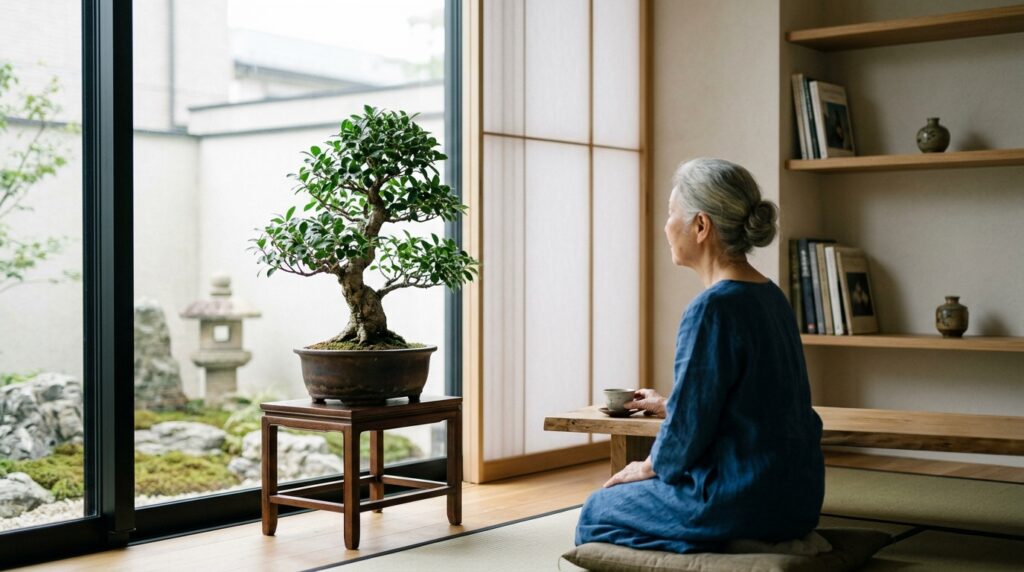
Tropical and subtropical bonsai are different. Ficus, jade, schefflera, Fukien tea, and many serissa specimens cannot safely remain outside through a real winter in most climates. They do not want frost, and they do not need prolonged cold dormancy the way a maple or juniper does.
One of the quiet patterns I have noticed in teaching is that beginners often trust leaf labels more than the tree?s origin. If the tag says ?indoor bonsai,? they believe it. In practice, many so-called indoor bonsai are simply tropical species sold for convenience, while many traditional bonsai species are absolutely outdoor trees.
A simple way to decide
- Temperate bonsai: Usually stay outside in winter, with root and wind protection as needed.
- Subtropical bonsai: May tolerate cool nights, but usually need protection before frost.
- Tropical bonsai: Should be brought indoors or into a warm protected space before cold weather arrives.
Why winter is harder on bonsai than on garden trees
The root zone is the real issue. In the ground, roots are insulated by a large mass of soil. In a bonsai pot, especially a shallow ceramic pot, roots are exposed to quick temperature swings, freezing wind, and repeated thawing. The tree above the soil may be hardy. The roots are less so.
This is why two statements can both be true: a juniper bonsai should stay outdoors in winter, and a juniper bonsai can still be damaged by winter exposure. When people hear only the first half, they leave the tree on an open bench through every cold snap. When they hear only the second half, they bring it into a heated room. Both mistakes come from oversimplifying.
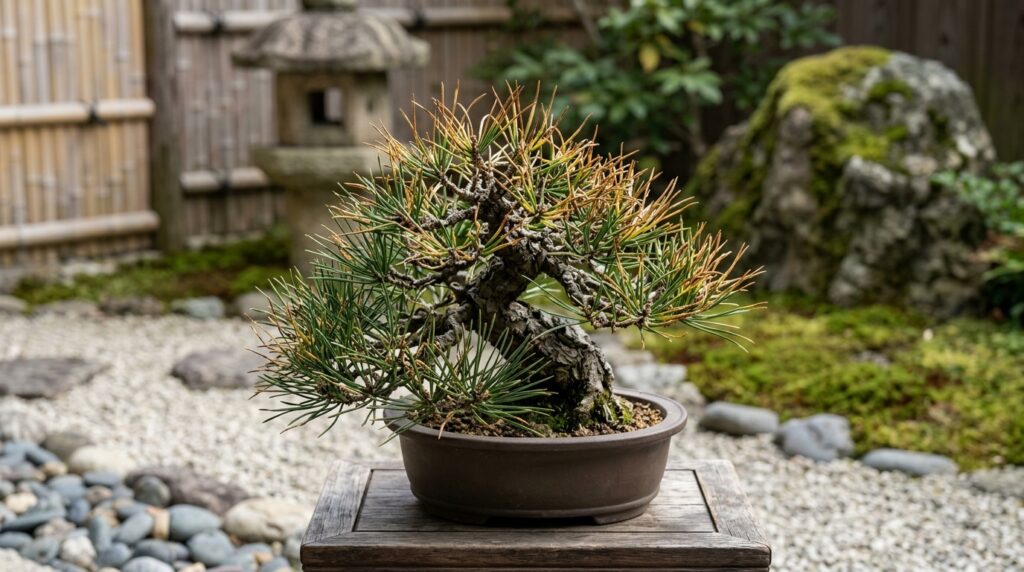
In my own garden, the ugliest winter damage rarely follows the coldest night. It often appears after a bright, windy stretch with alternating freeze and thaw. Evergreens keep losing moisture from their foliage, but frozen roots cannot replace it efficiently. That is when a healthy tree starts to look dull, pale, or burned at the tips.
Outdoor winter care by species and situation
| Tree type | Can it stay outside? | Main winter risk | Best approach |
|---|---|---|---|
| Juniper bonsai | Yes, usually should | Dry wind, frozen rootball, indoor storage | Sheltered outdoor spot, cold frame, mulch around pot in severe cold |
| Pine and spruce bonsai | Yes | Root freeze in shallow pots, winter sun and wind | Outdoor dormancy with wind protection and pot insulation |
| Japanese maple and elm bonsai | Yes | Freeze-thaw cycles, exposed roots, late hard freezes | Protected cold location, mulch or heel in pots |
| Ficus and jade bonsai | No, not through true winter | Cold damage, leaf drop, blackened tissue | Bring indoors before cold nights, keep in bright warm conditions |
| Azalea and other less hardy broadleaf species | Sometimes, depending on zone | Root freeze, desiccation | Unheated shelter or protected outdoor wintering area |
How I decide whether to leave a bonsai outside
I make the decision by looking at four things together: species, pot size, local minimum temperatures, and exposure to wind. A hardy species in a deeper training pot is much easier to overwinter than the same species in a tiny exhibition pot. A balcony with winter gusts is harsher than a quiet garden corner near the house. This is why rules copied from another climate often fail.
If winters are mild, many temperate bonsai can remain outside with only modest shelter. If winters are severe, I still keep hardy trees cold, but I shift them into a more protected setup. That might be a cold frame, an unheated garage with light, a protected shed window, or pots sunk into mulch up to the rim. The tree remains dormant, but the roots are buffered.
I do not chase perfect numbers, but I do respect thresholds. Once prolonged deep freezes arrive, especially for small pots, I become less casual. A tree can tolerate cold air better than a pot can tolerate full root freeze day after day.
Useful winter setups
- Sheltered ground-level spot: Good for many hardy bonsai in moderate winters. Place the tree out of direct wind, ideally near a wall but not inside a heated room.
- Mulched-in pots: Good when you expect stronger cold. Bury or surround the pot with bark, mulch, or soil to insulate roots.
- Cold frame: One of the best choices for serious collections. It protects from wind and temperature swings without pushing the tree out of dormancy.
- Unheated garage or shed: Useful during severe freezes, especially for small deciduous bonsai. Check moisture carefully and avoid warm attached rooms.
If you need supplies for this kind of setup, a simple bonsai soil mix helps prevent winter waterlogging, and breathable frost cloth plant covers can be useful for temporary protection during sharp cold snaps. I would treat both as support tools, not substitutes for correct placement.
Juniper bonsai outdoor winter care
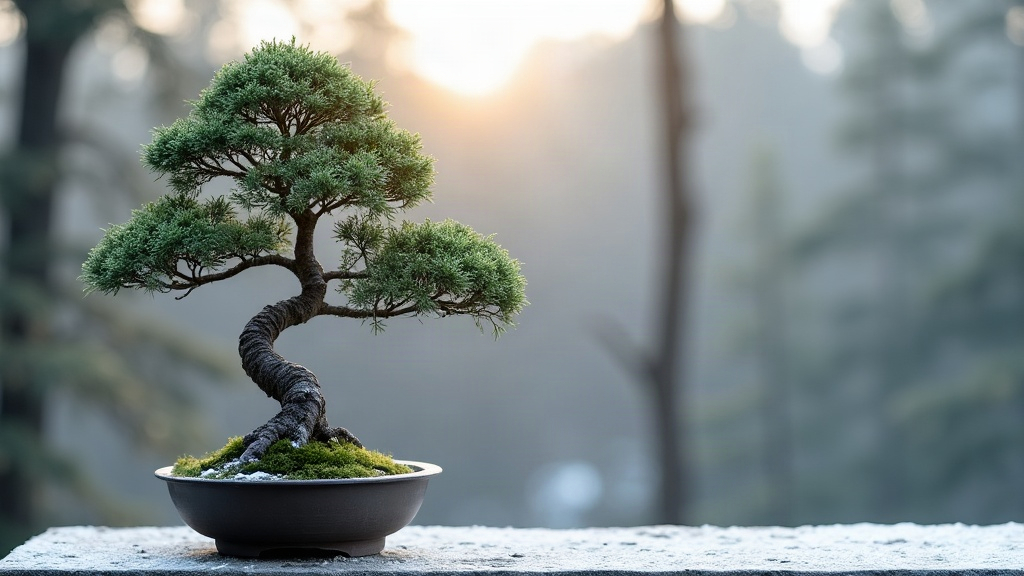
Because your keyword notes point toward juniper bonsai outdoor winter care, it is worth being especially clear here: juniper bonsai should usually remain outdoors in winter. They are not indoor bonsai. Bringing a juniper into a heated house for the season is one of the most common ways people slowly lose the tree.
Junipers need cold dormancy, bright light, and moving air. In winter, I place them where they are protected from the harshest wind but still fully outside. Against a wall, under an overhang with good light, inside a cold frame, or grouped with other pots at ground level usually works well.
The danger comes when the pot is tiny and the weather becomes severe. In that case, I insulate the pot rather than the foliage. I may set the pot into mulch, tuck it into a nursery flat with bark around the sides, or move it to an unheated protected structure during the worst stretch. I do not put it beside a radiator, in a living room window, or deep inside a dark garage for months.
Another small observation from practice: weak junipers often look deceptively calm in winter. They do not always complain immediately. The consequence of poor winter care may appear in spring as weak color, brittle tips, or delayed growth. Winter decisions are often judged a season later.
What to do and what to avoid
What to do
- Keep temperate species cold enough to rest.
- Protect the pot and roots more than the branches.
- Reduce exposure to drying winter wind.
- Water when needed, even in winter, especially during dry spells.
- Use fast-draining soil so roots are not trapped in icy wetness.
What to avoid
- Do not move hardy outdoor bonsai into a heated room for the whole winter.
- Do not leave a small bonsai pot fully exposed on a high bench through repeated hard freezes.
- Do not assume snow is harmful; it can actually insulate roots.
- Do not fertilize heavily in midwinter when the tree is dormant.
- Do not panic-prune winter-stressed trees. Stabilize first, judge later.
I was taught to make winter care quieter, not busier. That remains sound advice. Healthy bonsai in winter usually need fewer interventions, but more attentive placement.
How often to water bonsai left outside in winter
Much less than in summer, but not never. Dormant trees use less water, and cold soil dries slowly. Still, wind, sun, and sheltered placement can dry a rootball more than expected. I check moisture with a finger and by weight, then water thoroughly when the soil has begun to dry but before it becomes dust-dry.
Evergreens such as juniper and pine deserve particular attention because they continue to transpire in winter. Deciduous trees are easier to read once bare, but even they can suffer if the rootball dries in a protected garage or under eaves that block rain.
If your winter area stays wet for long periods, drainage matters as much as watering frequency. A soggy, cold rootball is not safer than a dry one. This is another reason a coarse inorganic bonsai mix is often worth the investment.
FAQ
Can you leave bonsai outside in winter every night?
If the bonsai is a hardy temperate species, yes, that is usually appropriate. The exception is extreme cold for small pots, exposed sites, or species with less root hardiness. In those cases, give protection without turning winter into indoor life.
Should I bring my juniper bonsai inside when it snows?
No. Snow is not usually the problem. In many cases it insulates. A juniper bonsai should normally remain outdoors in winter, with attention to wind exposure and root protection.
What temperature is too cold for bonsai outside?
There is no single answer because species, root health, pot size, and duration all matter. A hardy pine in a larger training pot can tolerate far more than a small maple in a shallow show pot. Think in terms of protecting roots from prolonged severe freezing, not finding one universal cutoff.
Can tropical bonsai stay outside in winter if days are sunny?
Not if nights fall into the dangerous range for that species. Sun does not erase cold stress. Tropical bonsai should come indoors or into a warm protected environment before cold nights arrive.
Final guidance
If you remember one principle, let it be this: winter care should follow the nature of the species, not your instinct to make every tree comfortable by human standards. Hardy bonsai usually need the season outdoors. Tender bonsai need protection from it. The art is in choosing the right kind of shelter, not the maximum amount.
When I look at a bonsai settled properly for winter, I do not expect it to look pampered. I expect it to look composed. That is often the right standard: not warmth, not display, just a calm position in which the tree can rest until spring.