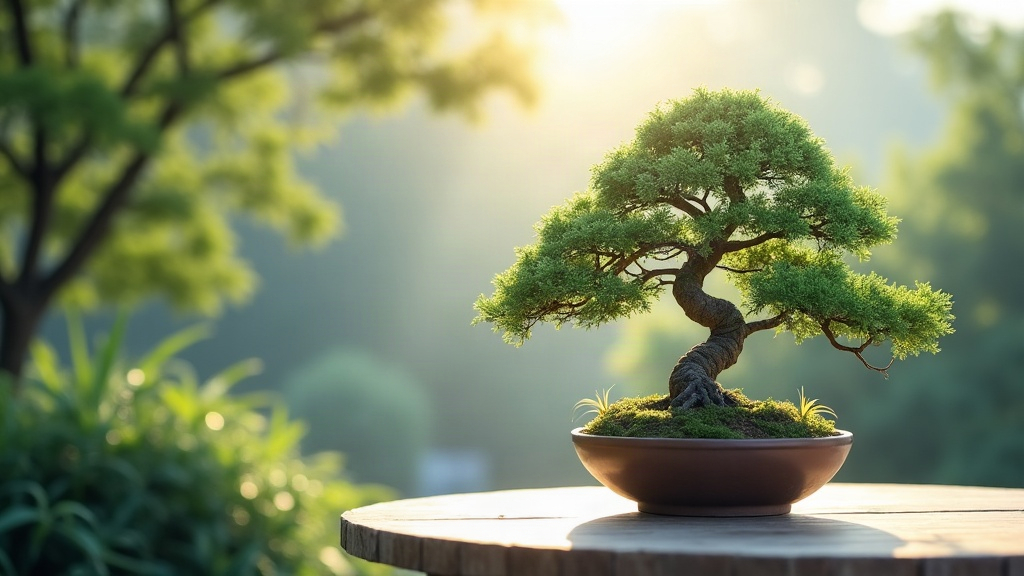
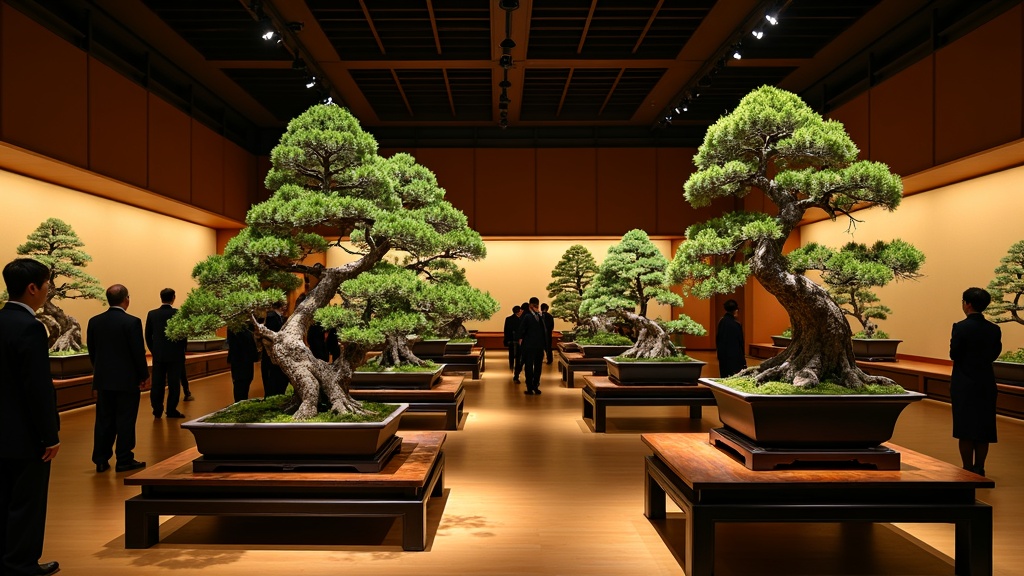
Every February, bonsai artists and collectors from around the world turn their attention to Ueno Park in Tokyo, where the most important event in the bonsai calendar takes place. The Kokufu-ten — Japan’s national bonsai exhibition — has no real equivalent in the art world. It is where the finest trees in the country gather under one roof, judged by master practitioners, and witnessed by thousands of visitors who travel specifically to stand in that room. In February 2026, the exhibition reached a milestone that gave the entire global bonsai community reason to pay close attention: the 100th Kokufu-ten.
What Is the Kokufu-ten?
The name Kokufu-ten (???) translates roughly to “National Style Exhibition,” and that framing is worth sitting with. This is not simply a trade show or a hobbyist gathering. It is the formal public presentation of bonsai at the highest level of Japanese craftsmanship — a cultural institution that carries the same weight in its domain as the most prestigious art exhibitions anywhere in the world.
The exhibition is organized by the Nippon Bonsai Association, the governing body of bonsai in Japan, and held at the Tokyo Metropolitan Art Museum in Ueno. That venue matters. The Tokyo Metropolitan Art Museum is Japan’s oldest public art museum, situated in one of the city’s most celebrated cultural parks, surrounded by the Tokyo National Museum and the National Museum of Western Art. Bonsai is displayed here alongside painting, sculpture, and every other recognized art form — because in Japan, that is exactly what it is.
Over 200 trees are displayed across each part of the show, each specimen representing decades — sometimes close to a century — of patient cultivation. Every entry undergoes rigorous examination before the exhibition opens. The most outstanding trees receive the Kokufu Award, a distinction that can define a tree’s legacy and dramatically influence its value. To win a Kokufu Award is considered the highest honor a bonsai artist can receive in Japan.
A History That Stretches Back to 1934
The Kokufu-ten began in 1934, founded by Count Matsudaira and Toshio Kobayashi under the banner of the Tokyo Bonsai Club. Japan was in a very different place then — culturally, politically, and economically. Yet the commitment to preserving and celebrating bonsai as a living art form never wavered. The exhibition continued through war, through reconstruction, through rapid industrialization and the economic turbulence that followed. There were two years in which the show was not held, and some early years saw double exhibitions, which is why the 100th Kokufu arrived in 2026 rather than 2034.
In 1963, the Tokyo Bonsai Club reorganized and became the present-day Nippon Bonsai Association, which took over stewardship of the exhibition. Since then, the Kokufu-ten has grown in scope and international recognition, drawing visitors not just from across Japan but from the United States, Europe, Australia, and beyond. Beginning with the 60th anniversary exhibition in 1986, the Association established a tradition of holding milestone years — every tenth anniversary — as two-part events with separate trees displayed across each segment. That tradition continued in 2026, making the centennial even more expansive than a standard year.
An annual catalog has been published for every exhibition since 1934. These books — carefully photographed and documented records of each year’s trees — have become their own collector’s items, tracing the entire arc of Japanese bonsai development across nine decades. The 2026 catalog, covering photographs from both Part 1 and Part 2, was anticipated for release in June 2026.
The 100th Kokufu-ten: February 2026
Part 1 of the 100th Kokufu-ten ran from February 8 to 11, 2026. Part 2 followed from February 14 to 18, with a closure on February 16. Both parts were held at the Tokyo Metropolitan Art Museum, with a complete changeover of trees between sessions — meaning the trees visitors saw in the first week were entirely different from those displayed in the second.
The response to the centennial was extraordinary. More than 2,000 visitors attended on the opening day of Part 1 alone. Reporting from those who attended noted the event was busier than it had been in recent years, and observers remarked on a noticeably larger proportion of foreign visitors compared to prior exhibitions. The global bonsai community had been tracking the 100th anniversary for years, and many enthusiasts timed international travel specifically around this show.
Part 1 featured 181 bonsai displays. The variety across species was wide — Japanese Black Pine, Korean Hornbeam, Shimpaku Juniper, Chinese Quince, Trident Maple, Japanese White Pine, Ume, Satsuki Azalea, Zelkova, Ezo Spruce, Magnolia, Honeysuckle, and others. The Kokufu Prize was awarded to a significant number of trees this year — by some accounts the greatest number of prizes presented in the exhibition’s history, reflecting the exceptional quality of entries assembled for the centennial.
Among the Kokufu Prize winners in Part 1 were a large Japanese Black Pine, a Korean Hornbeam, and multiple Shimpaku Junipers. A medium-sized display also took a prize, as did a Shohin (small bonsai) grouping — a reminder that the exhibition honors trees across all scales, not only the massive specimens that tend to draw the most attention. A Red Pine on loan from the Imperial Family was among the most noted entries, distinguished by its deliberately unconventional form that stood apart from the precisely refined aesthetic of most contemporary competition trees.
A White Pine That Bridged a Century
Perhaps the single most symbolic moment of the 100th Kokufu-ten was a Japanese White Pine that had been exhibited at the very first Kokufu-ten in 1934. The tree, worked on by master artist Shinji Suzuki, was brought back to stand in the same museum — now a century older, still living, still growing. Suzuki had specifically prepared the tree for this entry as an acknowledgment of the show’s continuity.
A tree in a Kokufu-ten is not a static object. It grows between exhibitions, develops new character, requires ongoing decisions from its keeper. The White Pine from 1934 carried within it every year of that history — the hands that worked it, the seasons it endured, the room it occupied in 1934 and now again in 2026. Its presence in the 100th show was a statement that bonsai, when practiced at this level, is genuinely a multigenerational art form.
Why the Kokufu-ten Matters to Bonsai Practitioners Everywhere
For anyone who practices bonsai, or is seriously interested in understanding it, the Kokufu-ten occupies a specific and important role. It functions as a technical benchmark. The trees shown here set the standard for what is possible — in ramification, in trunk development, in root structure, in the selection and use of accent plants and display containers. Studying photographs from the Kokufu is a recognized method of improving one’s own practice, and bonsai teachers around the world reference show trees when explaining principles to students.
The exhibition also preserves and transmits historical lineages. Many of the trees at the Kokufu-ten have exhibition records stretching back across multiple shows. A tree’s provenance — including where it was collected, who has owned and worked it, and which prizes it has received — becomes part of the tree itself. That documented history is part of what makes the Kokufu catalog so valuable, and why collectors pursue past editions.
For the international community, the Kokufu-ten represents a singular point of connection to the Japanese tradition from which most Western bonsai practice derives. Styles, techniques, and aesthetics that have spread to every continent over the past forty years were shaped in large part by what was shown at the Kokufu. Attending the exhibition in person — or studying it closely through photographs and catalogs — is the clearest available window into where the art stands at any given moment in Japan.
The Growing International Presence at the Show
One of the notable observations from the 2026 exhibition was the increased proportion of international attendees. Bonsai has become genuinely global over the past two decades, with serious communities in the United States, Europe, Australia, South America, and Southeast Asia. Organizations like the World Bonsai Friendship Federation have worked to strengthen ties between national associations, and the WBFF has been involved in discussions around commemorating the Kokufu’s 100th anniversary through long-term cultural projects.
For many non-Japanese visitors, navigating the exhibition benefits from some preparation. The show is held in Japanese, with limited English signage, and the protocols around photography and crowd flow can be unfamiliar. Those who have attended recommend arriving early — particularly on opening day, which draws the largest crowds — and taking time to observe each tree carefully rather than moving quickly through the room. Some visitors join guided tours specifically designed for international bonsai enthusiasts, which provide context that would otherwise require years of study to absorb independently.
The official Kokufu exhibition book, available for purchase at the venue and through international shipping, typically arrives within a few months of the show’s close. For those who cannot attend in person, the catalog remains the most complete record of each year’s trees and is considered an essential reference by serious practitioners worldwide.
Looking Ahead
The 100th Kokufu-ten was not just a celebration of the past. The show arrived at a moment when interest in bonsai is expanding faster than at any prior point in the art’s international history. Younger practitioners are taking up the craft in significant numbers. New global communities are sharing knowledge across languages and borders in ways that were impossible even twenty years ago. The conversation between tradition and innovation that has always characterized bonsai at its best continues to develop.
The Nippon Bonsai Association and the World Bonsai Friendship Federation have discussed a time capsule project connected to the centennial, intended to carry this milestone into the exhibition’s next century. The 10th World Bonsai Convention, scheduled for Kuala Lumpur, Malaysia in 2026, will bring the global community together again later in the year — another indication of how active and internationally connected the bonsai world has become.
The 101st Kokufu-ten will come next February, and the trees being prepared for it are in the hands of their keepers right now — being styled, rested, assessed, and readied for another year of growth. That is the nature of the art. The exhibition ends, but the work never does.