Affiliate disclosure: This post contains affiliate links. If you purchase through these links, I may earn a small commission at no extra cost to you. I only recommend products I personally use and trust in my own practice.
Of all the trees I have shaped over my twenty years as a bonsai practitioner, none stirs the spirit quite like the maple. Maple bonsai care is both a science and a meditation — a daily conversation with a tree that responds to your attentiveness with breathtaking beauty. Acer palmatum, the Japanese Maple, is considered by many masters to be the crown jewel of deciduous bonsai. Its delicate, palmate leaves, spectacular autumn color, and willingness to develop fine ramification make it the most celebrated deciduous species in our art. Whether you are approaching your first maple or refining a tree you have tended for years, this guide will walk you through every season and every element of care.
Choosing Your Maple: A. palmatum, A. buergerianum, and A. truncatum
Not all maples are equal in bonsai cultivation. Understanding the strengths of each species will help you choose the tree that matches your climate, skill level, and aesthetic vision.
Acer palmatum — Japanese Maple is the most beloved. Its deeply lobed leaves reduce well in the bonsai container, and its autumn display — running from gold through orange to crimson — is unmatched. Dozens of cultivars exist, from the delicate Deshojo with its blood-red spring foliage to the dwarf Kotohime. A. palmatum prefers temperate climates and dislikes extremes of heat and cold. It is the ideal choice for the artist who prizes elegance above all.
Acer buergerianum — Trident Maple is the workhorse of maple bonsai. Its three-lobed leaf is smaller and tougher than A. palmatum, and its root system develops powerful surface roots (nebari) more readily. Trident maples tolerate heat better and are more forgiving of occasional lapses in watering. For beginners, and for those living in warmer climates, the Trident is often the wiser choice.
Acer truncatum — Shantung Maple is less common in Western collections but deserves more attention. Native to northern China, it tolerates cold and drought better than either of its cousins. Its leaves are glossy and its autumn color vivid. If you garden in a continental climate with harsh winters, Shantung Maple may be your best path to cultivating this family.
Seasonal Care Calendar for Maple Bonsai
The maple lives by the rhythm of the seasons, and your care must follow that same rhythm. To work against the season is to work against the tree.
Spring: The Season of Beginnings
Spring is the most important season in maple bonsai care. As soil temperatures rise and the days lengthen, the tree awakens with tremendous energy. This is your window of opportunity.
Repotting must be completed just before the buds begin to swell — ideally when you see the buds starting to elongate but before they break open. At this moment, the tree has mobilized its energy reserves and is ready to push new roots, yet the canopy has not yet made demands on those reserves. Repot with care, removing no more than one-third of the root mass.
First fertilizing begins when leaves have fully expanded. I prefer a balanced, slow-release organic fertilizer applied every three to four weeks throughout the growing season. Organic pellets work beautifully — they feed gently and improve soil biology over time.
Wiring is most elegant in early spring, before the leaves emerge. You can see the branch structure clearly, and the branches are still somewhat pliable from their winter dormancy. Wire with patience; the bark of Japanese Maples marks more easily than most species, so check wire every two to three weeks to prevent cutting.
Summer: Vigilance and Restraint
Summer asks something different of us: watchfulness. The maple is thirsty, and in the heat of midsummer, a pot can dry completely within hours.
Check your tree twice daily in summer — morning and early evening. In climates where temperatures regularly exceed 90°F (32°C), move your tree to a position that receives morning sun and afternoon shade. The tender leaves of A. palmatum are especially prone to scorching under intense afternoon sun.
Pinching growing tips — removing the newest, softest growth with your fingers — encourages the tree to back-bud and develop finer branching. On vigorous shoots, pinch back to two or three leaf pairs as the shoot extends. Do not cut with scissors unless necessary; pinching causes less damage and heals faster.
Autumn: The Glory Season
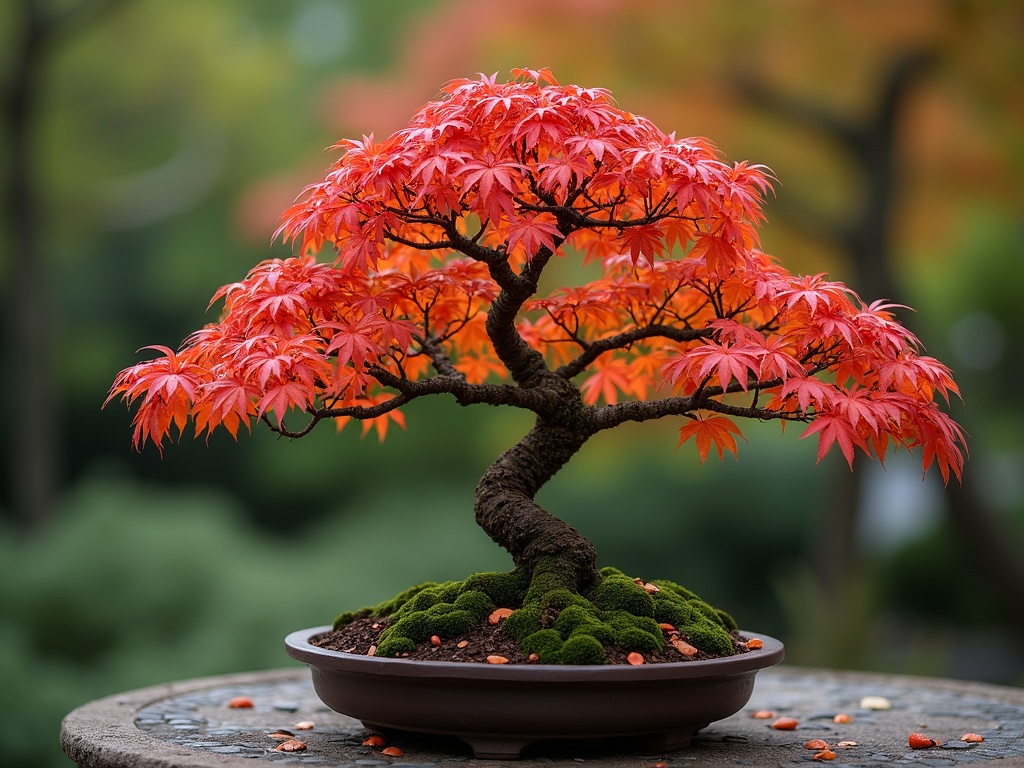
This is why we grow maple bonsai. As the days shorten and the nights cool, the maple begins its final performance of the year. Chlorophyll retreats, and the true colors hidden beneath — gold, orange, deep red, burgundy — emerge in full splendor. A well-grown Japanese Maple in autumn is a painting that no human hand could improve upon.
Continue watering regularly through autumn; the tree is still photosynthesizing and preparing its energy stores for winter. Reduce fertilizing in late summer — stop nitrogen-heavy feeds by late August — to encourage the tree to harden its new growth before cold arrives. A light application of low-nitrogen, phosphorus and potassium-rich fertilizer in early autumn helps the tree prepare for dormancy.
Winter: Dormancy and Rest
The maple must sleep. This is not negotiable. A maple bonsai that is kept warm through winter will weaken and eventually fail. Dormancy is the period during which the tree consolidates its resources, resists disease, and prepares for the explosion of spring growth.
However, “dormancy required” does not mean “freeze your tree solid.” The ideal winter temperature for most maples is between 25°F and 45°F (-4°C to 7°C). A cold garage, unheated greenhouse, or sheltered porch usually suffices. The roots — which are more vulnerable to freezing than the branches — must not freeze solid for extended periods. In climates where temperatures drop below 20°F (-7°C) for more than a few days at a time, provide additional root protection with mulch or by sinking the pot into the ground.
Water sparingly in winter, only enough to prevent the rootball from drying completely. A dormant tree needs very little.
Watering, Sunlight, and Soil
Watering
Maples are thirsty trees. Unlike junipers or pines, which prefer to dry slightly between waterings, the maple prefers consistent moisture. The top layer of soil should never be allowed to dry completely during the growing season. In summer heat, this means checking your tree in the morning before the day heats up, and again in the late afternoon. Water thoroughly — until water flows freely from the drainage holes — rather than giving small, frequent sips.
The quality of your water matters. Maples prefer slightly acidic conditions. If your tap water is highly alkaline (hard water), consider collecting rainwater or using filtered water for at least some of your waterings.
Sunlight
In temperate climates — the Pacific Northwest, the UK, northern Europe — full sun throughout the day is usually appropriate and beneficial. Maples need light to develop fine ramification and vibrant color.
In hot, continental climates — the American South and Southwest, the Mediterranean — the intense afternoon sun from late spring through summer can scorch leaves and stress the tree. Position your maple where it receives at least four to six hours of morning sunlight, then shelters under dappled or full shade from early afternoon onward.
Soil
The bonsai container is a small world, and within it, the soil must do everything. For maples, I use a mix that is fast-draining to prevent root rot, yet water-retentive enough to keep the tree hydrated between waterings. My standard maple mix:
- 50% Akadama — the classic Japanese baked clay that holds moisture and nutrients while allowing excellent aeration
- 25% Pumice — for drainage and root aeration
- 25% Lava rock — for long-term structure and drainage
I highly recommend sourcing quality Akadama for your maples. Its unique properties genuinely make a difference in root health and tree vigor. Find quality Akadama bonsai soil on Amazon
Repotting and Defoliation
Repotting
Young, developing maples (under five years in the bonsai container) should be repotted every one to two years to encourage root development and prevent the root system from becoming too dense and compacted. Mature trees — those that are essentially finished in terms of major development — can go two to three years between repottings.
Repot only in spring, just before or at bud-swell. Never repot in autumn or summer. After repotting, keep the tree in a sheltered location for several weeks, away from strong wind and intense sun, while the new roots establish.
Defoliation: An Advanced Technique
Partial defoliation — removing some or all of the leaves in early to midsummer — stimulates the tree to produce a second flush of smaller leaves and encourages finer branching (ramification). It is a powerful technique, but one that must be applied with judgment.
Do not defoliate a tree that is not in robust health. Do not defoliate in the same year you repot. Do not defoliate if you are uncertain of your tree’s strength. When you do defoliate, remove the leaf blades but leave the petioles (leaf stalks), which will fall naturally over the following weeks.
Good tools make this work both easier and safer. A quality wire cutter and bonsai pliers set is essential for precision work on delicate branches. Explore bonsai wire cutters and pliers on Amazon
Fertilizing Your Maple Bonsai
Maples are moderate feeders. During the growing season — spring through late summer — feed every three to four weeks with a balanced organic fertilizer. I have used organic pellet fertilizers for many years and find them superior to liquid feeds for bonsai; they release nutrients slowly as they break down, feeding gently and consistently without the risk of root burn.
In early autumn, switch to a low-nitrogen formula to support dormancy preparation. Stop all fertilizing once the tree drops its leaves. Browse organic bonsai fertilizer pellets on Amazon
Common Problems in Maple Bonsai
Verticillium Wilt is the most serious disease threat to maple bonsai. Caused by a soil-borne fungus, it enters through wounds or roots and blocks the tree’s vascular system, causing sudden wilting of branches or the entire tree. There is no cure once the tree is infected. Prevention is everything: use sterile soil, clean tools, avoid wounding roots unnecessarily, and do not reuse soil from a tree that has died from unknown causes. If you detect it early — wilting in one branch only — aggressive pruning of affected wood, cutting back to clean, white wood, sometimes saves the tree.
Aphids are common visitors in spring, congregating on new growth and excreting a sticky honeydew that encourages sooty mold. Inspect your tree weekly in spring. A strong jet of water dislodges light infestations. Neem oil or insecticidal soap handles heavier outbreaks. Act early — aphids reproduce rapidly.
Leaf Scorch appears as brown, dry patches on the leaf margins and is caused by too much sun, too little water, or both. If you see scorch developing, move the tree to a shadier position immediately and review your watering schedule. It is not a disease — it is a communication from the tree that conditions are not right.
Frequently Asked Questions
Can maple bonsai be kept indoors?
No — not as a permanent arrangement. Maple bonsai are outdoor trees. They require natural light cycles to maintain dormancy, and indoor environments are typically too warm, too dry, and too low in light. You may bring a maple indoors briefly for display — a few days at most — but it must return outdoors to remain healthy. Attempting to grow a maple as a permanent indoor bonsai will result in a declining and eventually dying tree.
How often should I water my maple bonsai?
In summer, check twice daily — morning and late afternoon — and water whenever the top layer of soil feels barely moist or begins to dry. In spring and autumn, once daily is usually sufficient. In winter, water only enough to prevent the rootball from drying completely.
When is the best time to repot a maple bonsai?
Spring only — just as the buds begin to swell, before they fully break. This timing aligns with the tree’s natural cycle of pushing new root growth and gives the tree the entire growing season to recover and establish.
Why are my maple bonsai leaves turning brown at the edges?
Browning leaf edges — leaf scorch — are typically caused by too much afternoon sun, insufficient watering, or both. Review your placement and watering schedule. In hot climates, afternoon shade is essential. In cooler climates, it may indicate the tree is drying out faster than you are watering.
What is the best soil mix for maple bonsai?
A well-draining, aerated mix is essential. I recommend 50% Akadama, 25% pumice, and 25% lava rock as a starting point. Avoid heavy, peat-based potting composts, which retain too much water and compact over time, suffocating the roots.
Further Reading
For an excellent companion resource, I recommend the Bonsai Empire Japanese Maple care guide, which offers detailed guidance on species selection and seasonal technique.