Affiliate disclosure: This post contains affiliate links. As an Amazon Associate I earn from qualifying purchases at no extra cost to you.
Azalea Bonsai Care Guide: The Flowering Bonsai in Full Bloom
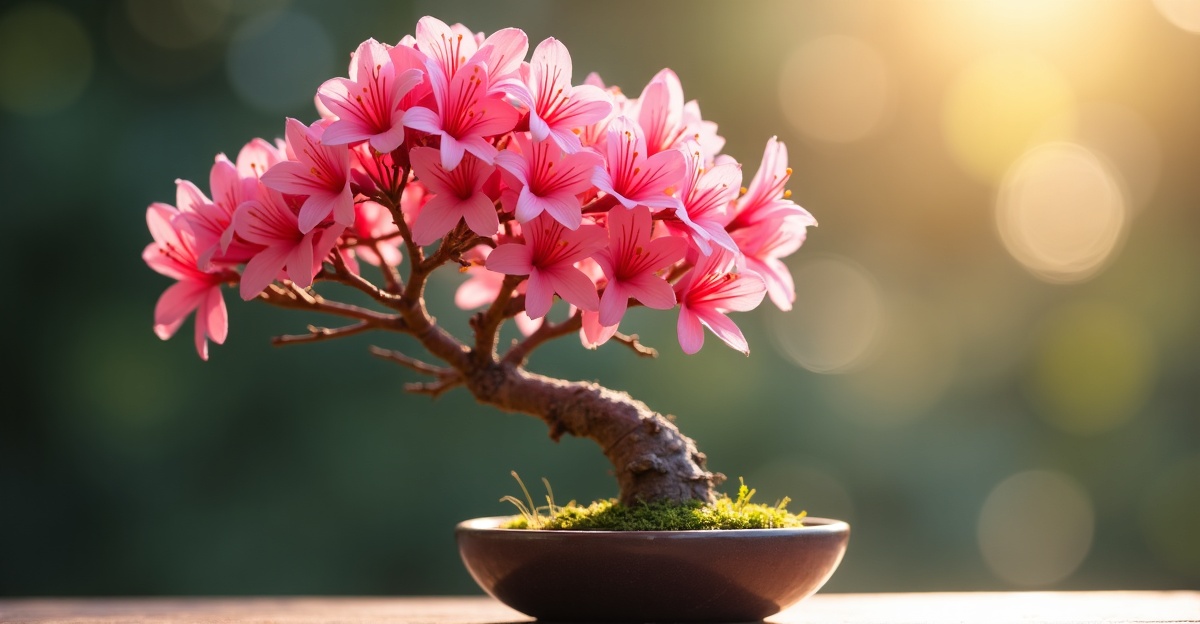
Few sights in the bonsai world rival a well-kept azalea bonsai when it erupts in a cloud of pink, red, or white blossoms every spring. I have been practicing azalea bonsai care for more than twenty years, and I still pause every April when my oldest Satsuki opens its first flower of the season. In this guide I will share everything I have learned — from soil mixes and watering schedules to the precise pruning timing that separates a tree covered in blooms from one that barely flowers at all.
Why Azaleas Make Extraordinary Bonsai
The Rhododendron genus — which includes both Satsuki (R. indicum) and Kurume (R. obtusum) azaleas — has been cultivated as bonsai in Japan since the Edo period. What makes them special is the dramatic contrast between their small, leathery leaves and their surprisingly large, trumpet-shaped flowers. A mature azalea bonsai can carry hundreds of blooms on a trunk no thicker than your wrist.
But azaleas are acid-loving plants, and they will quickly decline if you treat them like a juniper. Understanding their specific needs is the foundation of good azalea bonsai care.
Choosing the Right Azalea Species for Bonsai
Two species dominate the bonsai world:
- Satsuki Azalea (Rhododendron indicum) — Blooms in late May to June (Japan’s fifth lunar month, satsuki). Flowers are large, often striped or multi-colored on a single tree. The gold standard for exhibition bonsai.
- Kurume Azalea (Rhododendron obtusum) — Blooms earlier, in April. Smaller flowers but produced in enormous clusters. Slightly more cold-hardy and forgiving for beginners.
Both respond well to bonsai training, though Satsuki is the choice if your goal is show-level flowering display.
Azalea Bonsai Care: Soil and Potting
This is where most beginners go wrong. Azaleas demand a well-draining, acidic medium with a pH of 4.5–6.0. Standard bonsai soil mixes — especially those heavy in akadama — can be too alkaline and will lock out iron, causing yellowing leaves within a season.
My preferred mix after years of experimentation:
- 60 % Kanuma (a Japanese pumice specifically mined for azaleas — slightly acidic)
- 20 % coarse perlite or pumice for drainage
- 20 % fine pine bark or decomposed pine needles for organic matter
If you cannot source Kanuma locally, a high-quality acidic bonsai mix works well. I recommend Kanuma bonsai soil on Amazon — it ships well and the granule size is consistent.
Repot every two to three years, ideally immediately after flowering finishes and before the summer growth flush begins. Never repot while buds are swelling or flowers are open — the stress will cause bud drop.
Watering Your Azalea Bonsai
Azaleas dislike drying out completely. Unlike junipers or pines that benefit from a brief dry spell between waterings, azaleas prefer consistently moist — not waterlogged — soil. During the growing season I water once daily in mild weather and twice daily during summer heat waves.
Key tips:
- Use rainwater or filtered water if possible. Tap water in many cities is too alkaline and will gradually raise soil pH.
- If you must use tap water, let it sit overnight or add a small amount of vinegar (1 tsp per gallon) to slightly acidify it.
- Check the soil moisture daily by pressing your finger 1 cm into the mix. Water thoroughly when the top layer is barely moist.
- Never let the pot sit in standing water — root rot sets in quickly.
Sunlight and Placement
Azalea bonsai thrive in morning sun and afternoon shade. Direct afternoon sun in summer can scorch the shallow root system and bleach the flowers. I position mine on a bench that receives full sun from 7 AM to noon, then dappled shade for the rest of the day.
In winter, azaleas are surprisingly cold-tolerant. Satsuki can handle temperatures down to about 20 °F (−7 °C) briefly, but the roots are more vulnerable than the foliage. In USDA zones 5 and colder, move pots to an unheated garage or greenhouse when hard freezes are forecast.
Fertilizing for Maximum Bloom
Azaleas are moderate feeders but very sensitive to the type of fertilizer. Avoid anything with high phosphorus early in the season — it can suppress vegetative growth when you need it. My schedule:
- Early spring (after last frost to bud break): Balanced slow-release acid fertilizer, 10-10-10 or 12-6-6
- Post-bloom (June–August): Low-nitrogen fertilizer to harden new growth, 6-12-6 or similar
- Late summer to early fall: Potassium-rich feed to strengthen roots for winter
- Winter: No fertilizer
I have had excellent results with acid-formulated bonsai fertilizer on Amazon — look for formulas designed specifically for azaleas and rhododendrons.
Pruning and Shaping Azalea Bonsai
Timing is everything with azalea pruning. The flower buds for next year form on this year’s new growth — prune too late and you cut off next spring’s display.
The rule I follow without exception: prune within four to six weeks after the last flower fades. By midsummer, bud set is underway and cutting after that point removes developing buds.
Shaping techniques:
- Pinching: Remove elongating shoot tips throughout spring and early summer to encourage ramification.
- Hard pruning: Azaleas back-bud reliably even on old wood. Don’t be afraid to cut back hard in early spring before bud swell.
- Wiring: Use aluminum wire in spring after flowering. Azalea bark is thin and delicate — wrap carefully and remove wire before it bites in (usually within 3–4 months).
A Personal Anecdote: My First Satsuki
My first Satsuki azalea was a scraggly nursery stock plant I paid twelve dollars for at a garden center twenty years ago. I did everything wrong that first year — planted it in regular potting soil, overwatered it, fertilized it with a high-nitrogen lawn feed, and moved it into deep shade because I thought it looked “delicate.”
It produced exactly three flowers that spring, then dropped most of its leaves by July.
Desperate, I repotted it in pure Kanuma, moved it to morning sun, switched to rainwater collected from my gutters, and started following the post-bloom pruning schedule. The following spring it produced over two hundred flowers. That tree taught me that azalea bonsai care is not difficult — it just requires meeting the plant on its own terms.
That same tree is now on my bench, twenty years older, with a trunk base thicker than my fist. It blooms every year without fail. I call it Fuku — fortune.
Common Azalea Bonsai Problems and Solutions
- Yellowing leaves (chlorosis): Usually iron deficiency from alkaline soil or water. Acidify the soil mix, switch to rainwater, and apply chelated iron spray.
- Failure to bloom: Pruned too late, insufficient winter chill, or too much nitrogen. Review your pruning calendar and fertilizer schedule.
- Petal blight (brown, soggy flowers): A fungal disease (Ovulinia azaleae). Remove affected flowers immediately, improve air circulation, and avoid wetting flowers when watering.
- Root rot: Caused by overwatering or poor drainage. Repot immediately into fresh Kanuma mix and reduce watering frequency.
- Lace bugs: Tiny insects that cause stippled, silvery foliage. Treat with insecticidal soap spray on both leaf surfaces.
Frequently Asked Questions About Azalea Bonsai Care
How often should I water my azalea bonsai?
During the growing season, water daily or even twice daily in hot weather. The soil should be consistently moist but never waterlogged. In winter when the plant is dormant, reduce watering significantly — check soil moisture every two to three days.
Can I keep an azalea bonsai indoors?
Azaleas are outdoor plants that need a winter dormancy period with cold temperatures. They can be brought indoors temporarily to enjoy the blooms, but long-term indoor cultivation will weaken the tree. Keep them outdoors year-round and provide frost protection when needed.
When is the best time to repot an azalea bonsai?
Immediately after flowering finishes — typically late spring. This gives the tree the entire summer to re-establish its root system before winter. Never repot in fall or while flowers are open.
What soil pH is best for azalea bonsai?
Aim for pH 4.5 to 6.0. Pure Kanuma sits around 5.0–5.5, which is ideal. Test your soil annually with an inexpensive pH meter if you want precise control.
How do I get my azalea bonsai to bloom more?
The three most important factors are: (1) pruning immediately after bloom and not again after midsummer, (2) providing adequate winter chill (6–8 weeks below 45 °F / 7 °C), and (3) switching to a low-nitrogen fertilizer after flowering ends to encourage bud set over vegetative growth.
Sources and Further Reading