Disclosure: This post contains affiliate links. As an Amazon Associate, I earn from qualifying purchases at no extra cost to you.
Water is life. This is true in nature, and it is especially true in the world of bonsai. In my twenty years of tending these miniature trees, I have come to understand that knowing how to water bonsai is the single most important skill a practitioner can develop. More bonsai are lost to improper watering than to any other cause. Yet the answer is not found in a rigid schedule — it is found in observation, presence, and understanding.
Today, I want to share what I have learned — not as a set of rules to memorize, but as a way of seeing your tree that will serve you for a lifetime.
Why Watering Bonsai Is Different From Watering Other Plants
Bonsai grow in shallow containers with relatively small volumes of soil. This means the root system has limited moisture reserves. A standard houseplant in a deep pot can tolerate a missed watering for days — your bonsai may not have that luxury. The soil dries quickly, and roots can desiccate rapidly in summer heat or when kept indoors near heating vents.
At the same time, waterlogged soil deprives roots of oxygen. This is the paradox the bonsai student must learn to navigate: neither too dry nor too wet. The Japanese call this awareness ma — the space between. Watering bonsai is an exercise in finding that space.
How to Check If Your Bonsai Needs Water
Before you pick up the watering can, learn to read your tree. There are two reliable methods:
- The finger test: Push your finger about one centimeter into the soil. If it feels dry or barely damp, it is time to water. If it still feels moist, wait another day.
- The chopstick method: Insert a wooden chopstick or skewer an inch into the soil and leave it for a minute. Dry soil means it is time to water; damp soil means you can wait.
- Visual cues: Slightly lighter-colored soil on the surface, or a very slight lightening of the pot weight, indicates the tree is ready for water.
Never water on a fixed daily schedule alone. Instead, check your tree daily and water when it needs it.
The Correct Technique: How to Water Bonsai Properly
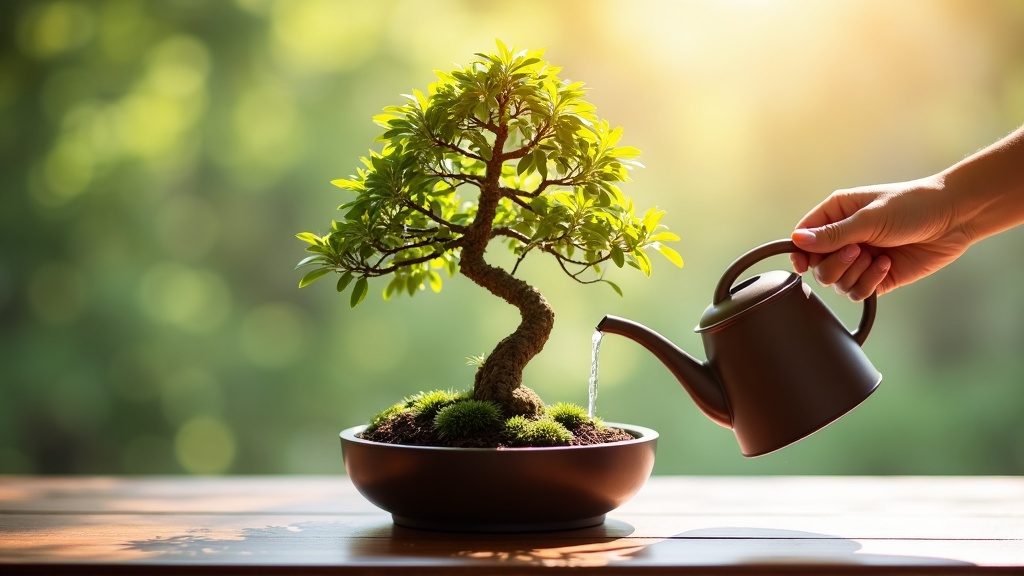
When you do water, water thoroughly. This is one of the most common mistakes I see beginners make — a quick splash that wets only the surface while the roots below remain dry.
The correct approach is to water until the water flows freely from the drainage holes. Then wait a few minutes and water again. This double-watering technique ensures the entire root mass is moistened. Use a gentle, rain-like spray to avoid disturbing the soil — a long-spouted bonsai watering can with a fine rose head is ideal for this purpose.
If your bonsai soil has become extremely dry and hydrophobic, you may need to submerge the entire pot in a basin of water for ten minutes until bubbles stop rising — this indicates the soil is fully saturated.
Watering Frequency by Season
The rhythm of watering changes with the seasons, just as all of nature changes. Here is a general guide:
| Season | Typical Frequency | Notes |
|---|---|---|
| Spring | Every 1–2 days | Growth is active; monitor closely as temperatures rise |
| Summer | Daily, sometimes twice daily | Heat accelerates drying; outdoor trees may need morning and evening water |
| Autumn | Every 2–3 days | Growth slows; soil retains moisture longer |
| Winter | Every 3–7 days (dormant trees) | Dormant trees need far less; never let roots freeze solid or dry out completely |
Watering by Species
Different species have different water needs. Understanding your particular tree is essential:
- Juniper: Prefers to dry slightly between waterings. Overwatering is a common killer. Water when the top layer of soil is dry.
- Ficus: Tolerates slightly more consistent moisture. As an indoor bonsai, it benefits from a regular watering schedule while still passing the finger test. See our Ficus bonsai care guide for more detail.
- Japanese Maple: Loves moisture but needs excellent drainage. In summer, may need watering twice daily. Our maple bonsai guide covers this in depth.
- Chinese Elm: Moderately thirsty. Keep soil evenly moist but not waterlogged. Check out our Chinese elm care guide for full guidance.
- Azalea: Needs consistent moisture and prefers slightly acidic, lime-free water. Avoid letting it dry out. See the azalea bonsai care guide for details.
- Pine: More drought-tolerant than deciduous species. Allow the soil to approach dryness before watering. Avoid waterlogging.
Signs of Overwatering vs. Underwatering
Learning to diagnose your tree’s condition is part of developing the eye of a bonsai practitioner. Here is what to look for:
Signs of Overwatering
- Yellowing leaves that fall off even when they appear healthy
- Soft, mushy roots (root rot) when inspected during repotting
- Soil that stays wet for more than three days without drying
- White mold or fungal growth on the soil surface
- A sour or musty smell from the pot
- General limpness and lack of vigor despite apparent moisture
Signs of Underwatering
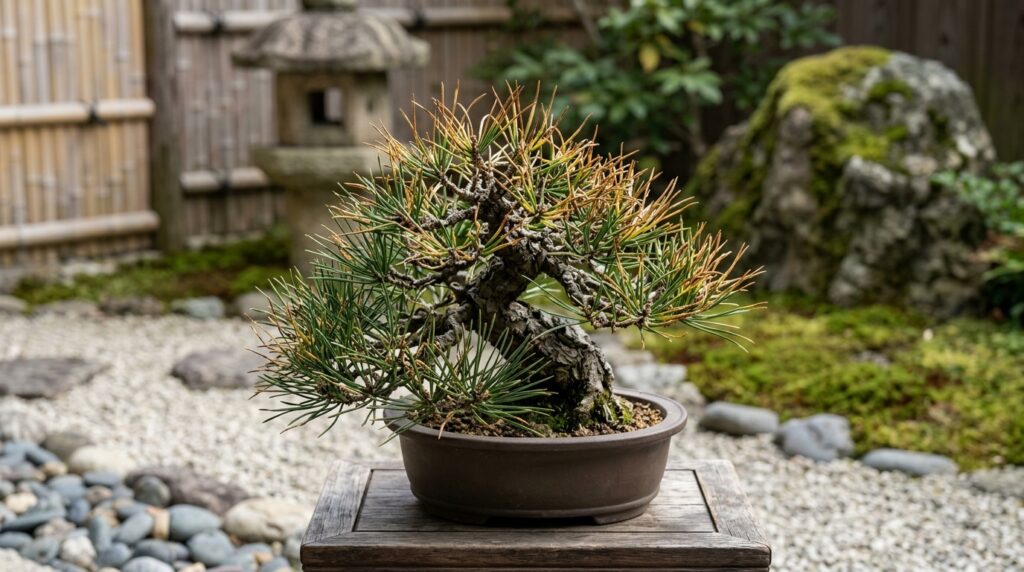
- Crispy, dry leaf edges that brown and curl
- Leaf drop in large quantities, often suddenly
- Soil that pulls away from the sides of the pot (extreme dryness)
- Wilting or drooping branches
- Roots that appear white and dry rather than pale tan and supple
If you suspect overwatering, remove the tree from its pot, inspect the roots, trim any black or mushy roots, and repot in fresh, well-draining bonsai soil. For underwatering, the submerging technique described above is often the fastest remedy.
Water Quality: Does It Matter?
Yes — water quality matters, particularly for acid-loving species like azaleas. Tap water in many areas is alkaline and contains chlorine or chloramine. Rainwater is ideal and nearly free. If you use tap water, letting it sit in an open container overnight will allow some chlorine to dissipate, though it will not remove chloramine or high mineral content.
For sensitive species, consider collecting rainwater or using a simple water filter. The difference in health over time can be significant.[1]
Recommended Tools for Watering Bonsai
Having the right tools makes the practice more pleasurable and more effective. Here are the tools I recommend from experience:
- Long-spouted bonsai watering can with fine rose head — delivers a gentle, rain-like flow that mimics natural rainfall without disturbing soil. Essential for daily use.
- Soil moisture meter — especially useful for beginners who are still developing their sense of soil moisture. Takes the guesswork out of watering decisions.
- Fine mist spray bottle — for misting foliage during hot summer days and for maintaining humidity around indoor trees.
- Humidity tray with pebbles — placed beneath indoor bonsai to raise ambient humidity through evaporation without waterlogging roots.
The Philosophy of Watering: Presence as Practice
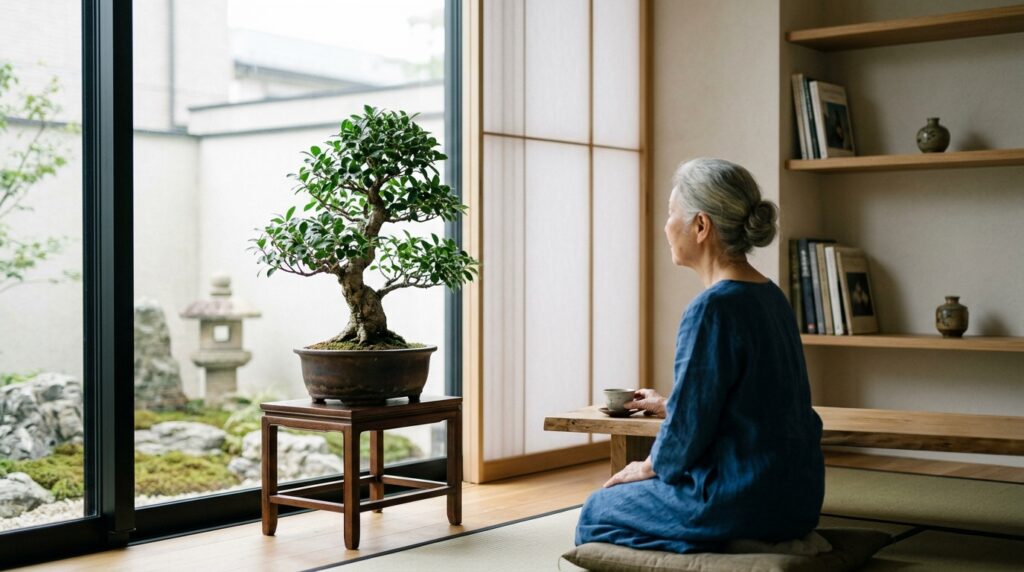
In the spirit of wabi-sabi, there is beauty in the imperfect and the impermanent. Your bonsai will not always look perfect — and neither will your watering. There will be days you forget, days you overwater, days the heat surprises you. This is part of the practice.
What matters is that you return to the tree. You observe. You adjust. Over time, your hands will know — before the finger test, before the chopstick — whether your tree is thirsty. This intuition is earned through years of attentive presence. It is, to me, one of the deepest gifts bonsai gives us.[2]
Frequently Asked Questions
How often should I water my bonsai?
There is no single answer — it depends on species, season, pot size, soil mix, and environment. The best approach is to check your tree daily using the finger test and water when the top centimeter of soil is dry. In summer, this may mean daily or twice-daily watering; in winter dormancy, every several days.
Can I use tap water for my bonsai?
Most bonsai tolerate tap water well. Acid-loving species like azaleas may struggle with hard, alkaline water over time. Letting tap water sit overnight reduces chlorine. Rainwater is always the preferred option when available.
What time of day is best to water bonsai?
Morning is ideal — it gives the tree moisture for the active part of the day and allows foliage to dry before evening, which reduces the risk of fungal disease. Avoid watering directly on hot, sun-exposed foliage at midday, as this can cause scorch.
My bonsai leaves are turning yellow — is it overwatering?
Yellowing leaves can signal overwatering, underwatering, nutrient deficiency, or natural seasonal leaf drop (in deciduous species). Check the soil moisture first. If it is consistently wet and the roots smell sour, overwatering is likely. If the soil is dry and the leaves are crispy at the edges, the tree is thirsty.
Should I mist my bonsai leaves?
Misting foliage is beneficial primarily for increasing humidity around the tree — it does not substitute for watering the soil. For tropical and subtropical species kept indoors, regular misting helps compensate for dry indoor air. Outdoor trees rarely need it.