Disclosure: This post contains affiliate links. As an Amazon Associate, I earn from qualifying purchases at no extra cost to you.
In over two decades of practicing bonsai, I have answered this question more than almost any other: Do I really need a humidity tray? Students arrive at my workshops clutching their first juniper or ficus, and somewhere between repotting soil and wire sizing, this small, flat accessory comes up. My answer has never changed — it depends on your tree, your home, and how deeply you understand what humidity actually does beneath the surface.
Let me walk you through everything I know about bonsai humidity trays: what they do, when they matter, how to choose one, and when to skip them entirely.
What Is a Bonsai Humidity Tray?
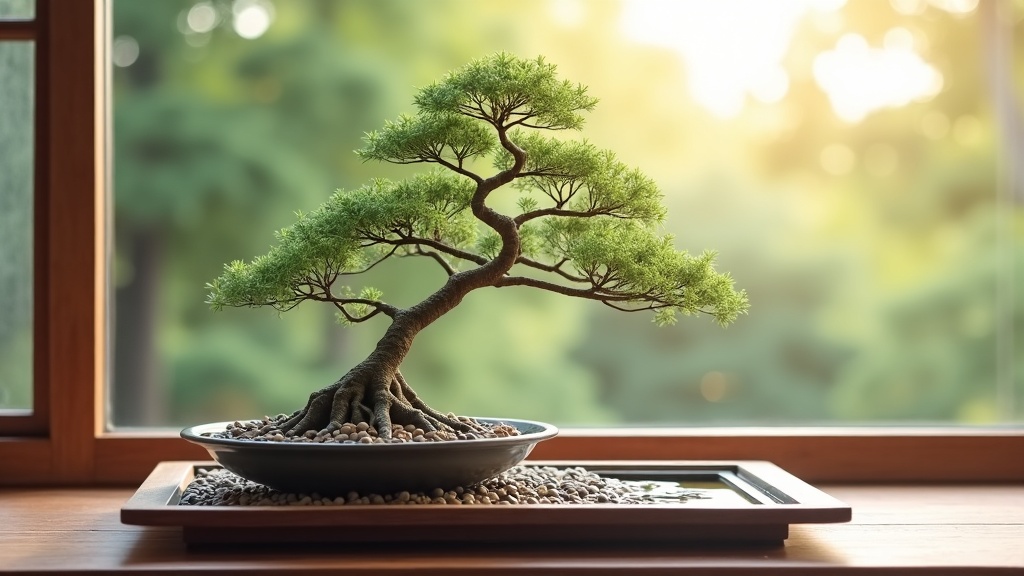
A bonsai humidity tray — sometimes called a drip tray or gravel tray — is a shallow, wide tray filled with pebbles or gravel and a small amount of water. The bonsai pot sits on top of the gravel, elevated above the waterline. As the water in the tray slowly evaporates, it releases moisture into the immediate air surrounding your tree.
The design is elegantly simple, and that simplicity reflects something I have come to love about bonsai practice in general: the best solutions are often the most unassuming ones.
Humidity trays serve two practical functions simultaneously. First, they act as a drip catcher — any water that drains through the pot’s drainage holes collects in the tray rather than pooling on your windowsill or shelf. Second, and more importantly for the health of the tree, they create a localized microclimate of elevated humidity around the foliage and trunk.
How Does a Humidity Tray Work?
Understanding the mechanism makes all the difference in using one correctly. Water in the tray sits below the pot’s drainage holes, so the roots are never submerged — that would cause root rot, one of the most common ways bonsai are lost indoors. The gravel layer keeps the pot raised roughly half an inch above the water surface.
As the water evaporates, water vapor rises directly around the canopy of the tree. This is passive humidification — no electricity, no misting, no intervention required. On dry winter days when central heating strips moisture from indoor air, that passive evaporation can make a measurable difference.
According to research on bonsai cultivation, humidity around 40 to 50 percent is ideal for most bonsai trees (Herbs2000 Bonsai Air & Humidity). Indoor environments, especially during winter heating season, frequently drop below 30 percent. A well-maintained humidity tray can recover several percentage points of that lost moisture, particularly in small or enclosed spaces.
The North Carolina Cooperative Extension recommends lining the bottom of a humidity tray with one-half inch of gravel and a layer of soil to create the proper drainage buffer between the water surface and the pot bottom (N.C. Cooperative Extension: Creating a Bonsai Plant).
Do All Bonsai Trees Need Humidity Trays?
This is where honesty matters more than salesmanship. Not every bonsai requires a humidity tray. The answer depends almost entirely on species and environment.
Tropical and Sub-tropical Species
Tropical bonsai kept indoors benefit most from humidity trays. Species like ficus (Ficus retusa, Ficus ginseng), dwarf umbrella (Schefflera arboricola), serissa, and fukien tea all originate from humid climates and struggle when indoor humidity drops significantly. The Matthaei Botanical Gardens at the University of Michigan specifically notes that tropical bonsai benefit from humidity, though ficus and dwarf jade can tolerate lower humidity better than other tropical varieties (Matthaei Botanical Garden: Growing Bonsai Inside).
If you grow a ficus indoors in a heated home through winter, a humidity tray is not optional — it is part of basic care.
Temperate Outdoor Species
Japanese maples, junipers, Chinese elms kept outdoors, and most coniferous species are generally better off without humidity trays. These trees evolved in environments with seasonal variation, and they are naturally equipped to handle drier air. More importantly, outdoor humidity is typically higher than indoor air to begin with. A juniper on a covered porch rarely needs supplemental humidity.
If a temperate species has been moved temporarily indoors for weather protection, a tray becomes more relevant — but it should be a short-term measure while you plan to move the tree back outside.
The Indoor Environment Test
Before purchasing a tray, I recommend a simple test. Buy an inexpensive hygrometer — a digital humidity gauge — and place it near where your bonsai lives for 24 hours. If your indoor humidity regularly falls below 40 percent, a humidity tray is a worthwhile investment for any tropical species you keep indoors. If your home maintains 50 percent or above naturally (common in coastal regions or humid climates), the tray becomes more optional.
Choosing the Right Size Humidity Tray
Sizing is the most common mistake I see beginners make. A tray that is too small defeats the purpose entirely; one that is far too large looks clumsy and disrupts the visual balance that is so central to bonsai aesthetics.
The Basic Rule
The tray should extend at least one to two inches beyond the edge of your bonsai pot on all sides. This ensures that evaporating water rises around the full perimeter of the canopy, not just from a small central point. A tray the same size as your pot provides almost no humidity benefit — the evaporation happens at the edge of the tray, not beneath the foliage where the tree needs it.
Depth Matters Too
Shallow trays — half an inch to one inch of interior depth — work well for small bonsai on windowsills. For larger trees or for climates where evaporation is rapid, a slightly deeper tray (one to two inches) holds more water and requires less frequent refilling. I check and refill humidity trays every two to three days in winter, when heating systems are running and evaporation is fastest.
Recommended Products
For small to medium bonsai (pots up to 8 inches), the standard rectangular humidity trays on Amazon range from $10 to $25 and work well for most situations. Look for trays with a lip height of at least three-quarters of an inch so the gravel and water stay contained.
For larger, display-quality bonsai, ceramic or glazed trays offer an aesthetic match to the pot. These cost more — often $30 to $60 — but the visual harmony they create is worth it for a tree you display prominently. A humidity tray sold with decorative river stones saves you the trouble of sourcing pebbles separately and often looks more refined than plain gravel.
DIY Humidity Trays vs. Purchased Trays
I practice wabi-sabi — I find beauty in imperfection and function over form — so I have no objection to DIY solutions when they serve the tree just as well as purchased ones.
Effective DIY Approaches
Any shallow waterproof container works as a humidity tray. Plastic storage lids, ceramic serving platters, or repurposed baking trays can all function well. Fill the bottom with clean pea gravel, aquarium gravel, or river stones — anything stable enough to support the pot above the waterline without tipping.
I have used a large ceramic dinner plate as a humidity tray for a small shohin maple kept briefly indoors during a late frost. It worked perfectly. The wabi-sabi principle applies here: the function is what matters, and improvised tools used skillfully reflect the spirit of the practice.
When to Buy Purpose-Made Trays
Purpose-made bonsai humidity trays earn their cost in two situations. First, for display trees where aesthetics matter — a beautiful glazed tray enhances the overall presentation in a way a plastic storage lid cannot. Second, for precise sizing: many purpose-made rectangular drip trays designed specifically for bonsai come in standardized dimensions that correspond to common pot sizes, making selection straightforward without measuring.
Common Mistakes to Avoid
After teaching hundreds of students, I have seen the same errors repeated. Here are the ones that matter most:
Letting the Pot Sit in Water
This is the most serious mistake. If the water level in your tray rises above the bottom of the gravel layer and touches the drainage holes of the pot, roots can wick water continuously and suffocate. Check the water level regularly. The gravel should keep at least a half-inch of air between the water surface and the pot’s drainage holes.
Using Fine Sand Instead of Gravel
Fine sand compacts when wet and can prevent proper airflow. It also clogs drainage holes if any sediment splashes up. Use coarse gravel, pebbles, or river stones — anything with visible air gaps between the pieces.
Ignoring the Tray in Summer
Many bonsai practitioners use humidity trays in winter and forget about them in summer. But if your home runs air conditioning heavily in hot months, indoor humidity can drop just as low as it does in winter. Monitor your hygrometer year-round, not just seasonally.
A Tray Is Not a Substitute for Misting
Some species — particularly serissa and ficus — benefit from light leaf misting in addition to a humidity tray. The tray handles ambient air moisture; misting addresses direct foliar humidity. These are complementary practices, not interchangeable ones.
My Final Recommendation
If you keep any tropical bonsai indoors, buy a humidity tray. The cost is low, the benefit is real, and the tree will tell you it was the right decision through vigorous, healthy growth rather than yellowing leaves and premature leaf drop.
If you keep temperate species outdoors, skip the tray unless you bring trees inside temporarily. Outdoor humidity is usually adequate, and the tray becomes an unnecessary complication.
For those just starting out, I recommend beginning with a basic rectangular humidity tray with gravel — something simple and functional. As your practice deepens and your trees become more refined, you will naturally gravitate toward trays that complement the aesthetic of each tree. That evolution is part of the journey.
Bonsai teaches patience through small, consistent acts of care. A humidity tray, refilled quietly every few days, is one of those acts. It is not dramatic, but over months and years, it quietly sustains life. That is the essence of wabi-sabi practice: caring for what is, precisely as it is.

About Kenji
Bonsai Practitioner & Teacher — 20 Years
Kenji has practiced bonsai for over 20 years, training under master practitioners in Osaka and Kyoto before bringing his craft to Seattle. He approaches bonsai as a meditative discipline rooted in patience, observation, and deep respect for the natural world. Read more about Kenji