Affiliate Disclosure: This article contains affiliate links. As an Amazon Associate, Wabi Bonsai earns from qualifying purchases at no additional cost to you.
Of all the deciduous trees I have shaped over two decades, none rewards patience quite like Acer buergerianum — the trident maple. It is a tree that gives generously: extraordinary ramification, roots that thicken with impressive speed, and autumn color that stops visitors mid-step. Begin one now, and twenty years from today you will understand why so many serious bonsai practitioners consider the trident maple their most treasured specimen.
Why the Trident Maple Is Prized for Bonsai
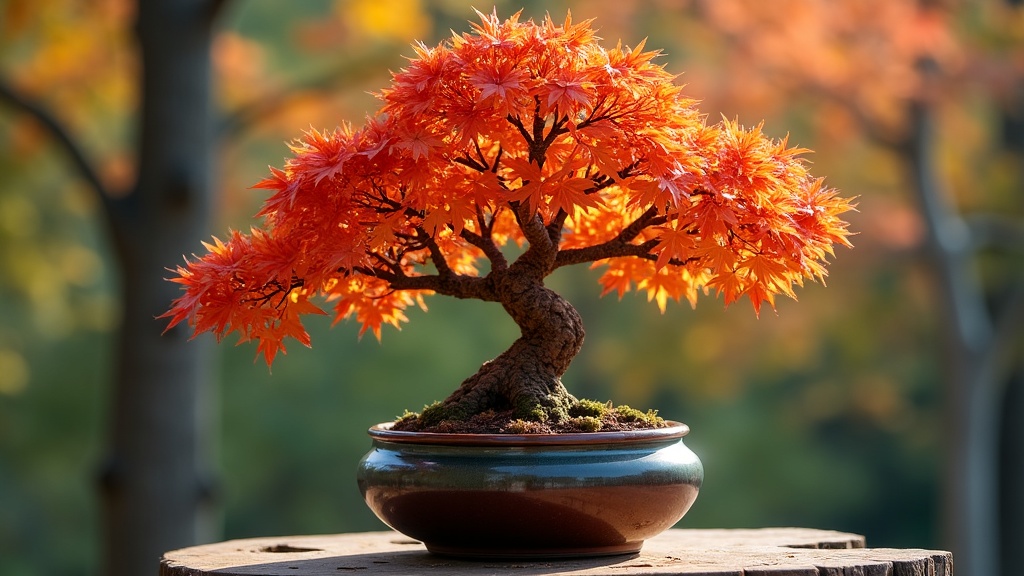
The trident maple earns its reputation through three qualities that matter deeply in bonsai. First is its capacity for fine ramification — the branching divides and subdivides readily, producing the dense, twiggy silhouette of an old forest tree within a surprisingly short span of years. Second is its remarkable nebari development: surface roots spread and flatten naturally when given room, creating the commanding base that separates a convincing bonsai from a potted twig. Third is its autumn display — leaves shift from deep summer green through gold into blazing orange-red before falling, giving the tree a second season of glory.
The trident is also vigorous without being unruly. It responds well to pruning, pushes multiple buds from cut sites, and tolerates the root reduction that bonsai demands better than many maples. For practitioners who want to develop a quality tree in one lifetime rather than several, that vigor is not a minor point — it is everything.
Light, Water, and Soil: The Foundations
Light. Trident maples are sun-loving trees. Place yours in full sun for the majority of the day — six to eight hours minimum during the growing season. Adequate light drives compact internodes, rich leaf color, and the fine branching you are working toward. In climates with extreme summer heat (sustained temperatures above 38°C / 100°F), provide afternoon shade to prevent leaf scorch, but do not move the tree entirely into shade. A shaded trident maple grows weak and coarse.
Water. Water generously during the growing season, allowing the medium to approach — but not reach — dryness between waterings. In practice, this often means watering once or twice daily in summer. Always water until water flows freely from the drainage holes; shallow watering causes salt accumulation and uneven root development. Reduce watering significantly in winter when the tree is dormant. Cold, wet soil around inactive roots is an invitation to rot.
Soil. The ideal mix drains quickly, holds just enough moisture, and resists compaction over time. I work with a blend of 60% akadama, 30% pumice, and 10% decomposed granite or coarse pine bark. Akadama provides gentle moisture retention and breaks down slowly to improve soil texture; pumice ensures drainage and aeration. Avoid heavy, peat-based mixes — they retain too much moisture and compact in ways that suffocate roots.
For quality bonsai soil, I recommend browsing akadama bonsai soil on Amazon and pumice for bonsai — both essential components for a mix that supports vigorous root development.
Seasonal Care Calendar
The trident maple follows a clear seasonal rhythm. Understanding that rhythm — and working with it rather than against it — is the foundation of good cultivation.
Spring: Controlled Flush. As winter cold releases its grip, buds swell and break with urgency. This is your most important window. Allow the first flush of leaves to extend and harden slightly, then cut back hard — reducing new shoots to one or two nodes. This technique, called cut-back pruning, triggers secondary budding and begins building the fine ramification that distinguishes a great trident from an ordinary one. Fertilize generously with a balanced, slow-release granular fertilizer beginning as the leaves open. Spring is also the time to repot, wire new growth, and address any structural issues from the previous year.
Summer: Ramification and Vigor Management. Summer growth is fast. Continue pinching and pruning throughout the season to maintain shape and encourage back-budding. Water diligently — a thirsty trident maple in summer will drop leaves rapidly. Apply a low-nitrogen fertilizer by midsummer to begin transitioning the tree toward hardwood rather than soft growth. Pest vigilance is important now; inspect the undersides of leaves regularly for aphids and spider mites.
Autumn: Color and Transition. As temperatures drop and day length shortens, the trident maple stages its finest display. Allow the color to develop fully before the leaves fall — resist the urge to prune during this period. After leaf fall, assess the branch structure you have built and note areas for refinement next season. A late-autumn application of phosphorus-heavy fertilizer supports root health through winter.
Winter: Dormancy. Trident maples require cold dormancy. Do not attempt to keep your tree in a heated space through winter — without dormancy, long-term health and vigor decline. Place the tree outdoors or in an unheated greenhouse where temperatures stay between -5°C and 10°C (23°F to 50°F) for most of the season. Protect the pot from repeated extreme freezes below -10°C (14°F) by wrapping it in insulating material or setting it into the ground temporarily. Water sparingly — enough to prevent complete desiccation, no more.
Repotting: Timing, Technique, and Root Work
Trident maples reward attentive repotting. Young trees in development should be repotted every two years; mature, refined specimens every three to five. The signal to repot is a pot that roots are beginning to fill and circle — a mass of roots visible at the soil surface, or drainage holes beginning to push out root tips.
Repot in early spring, when buds begin to swell but before leaves open. At this moment the tree is waking but has not yet committed its energy to leaf development, so root disturbance causes minimal setback. Remove the tree, rake out the old soil thoroughly from the root mass, and trim roots back by roughly one third to one half. Position the tree thoughtfully in its new container — tilt, planting depth, and front all deserve consideration at this stage. Work fresh soil into the root mass, eliminating air pockets, and water thoroughly. Keep the repotted tree in light shade for two to three weeks before returning it to full sun.
For root work, a quality set of bonsai tools makes the process considerably cleaner and less traumatic for the roots. I suggest looking at bonsai repotting tool sets on Amazon — good root hooks and chopsticks are indispensable.
Wiring and Shaping Techniques
The trident maple is responsive to wiring, and young branches set quickly. Work with aluminum wire for smaller branches — it is gentle on bark and easy to manipulate — and copper wire for thicker, more stubborn primary branches where you need sustained holding power. A good reference point: use wire that is approximately one third the diameter of the branch being wired.
Wire at an angle of approximately 45 degrees along the branch, wrapping firmly but without biting into bark. Set your bends deliberately — the trident’s wood, once it has lignified, holds position well but does not forgive crushing or sharp bends that damage the cambium. Check wired branches every three to four weeks during the growing season. Trident maples grow fast enough that wire can bite deeply in a matter of weeks. Remove wire by cutting it at each turn rather than unwinding — unwinding risks snapping brittle extension growth.
For primary structural work, use the first three to five years of a tree’s bonsai life to establish trunk movement and primary branch placement. Ramification develops naturally over time once the structure is sound. Patience in structure pays dividends in every season that follows.
Browse bonsai aluminum wire and bonsai copper wire for reliable options that work well with trident maple’s growth rate.
Common Problems: Pests and Disease
Aphids. These small, soft-bodied insects cluster on new growth in spring, drawing sap and distorting emerging leaves. A strong blast of water dislodges colonies effectively, and insecticidal soap handles heavier infestations without harming beneficial insects. Inspect new growth weekly in spring — caught early, aphids are a minor inconvenience rather than a serious problem.
Spider Mites. More problematic in hot, dry summers. The first signs are fine stippling on the leaf surface and, on close inspection, fine webbing on the undersides. Increase humidity around the tree, spray foliage with water regularly, and apply a miticide if populations establish firmly. Avoid the stress conditions — drought, excessive heat — that make trees vulnerable in the first place.
Verticillium Wilt. This soil-borne fungal disease is the most serious threat the trident maple faces. Symptoms appear as sudden wilting and die-back of individual branches, sometimes with dark streaking visible in the wood when cut. There is no chemical cure. Remove affected branches well below the point of visible damage, sterilize tools between cuts, and remove and replace the soil entirely. Some trees recover when affected branches are removed promptly; others do not. Prevention — through good drainage, clean soil, and avoiding mechanical injury to roots — is the only reliable strategy.
Leaf Scorch. Brown, papery margins on leaves in midsummer indicate either heat stress, water stress, or salt accumulation in the soil. Ensure thorough watering, flush the soil periodically with excess water to leach accumulated salts, and provide afternoon shade if temperatures are consistently extreme.
Maintaining tree health with proper fertilization helps prevent many of these issues. I recommend a quality bonsai fertilizer applied on a consistent seasonal schedule.
Final Thoughts on the Trident Maple
There is a quality in the trident maple that I find deeply instructive: it responds to care with generosity, but it will also forgive honest mistakes made by an attentive practitioner who observes and adjusts. It does not punish curiosity. This makes it one of the finest trees for serious development — not because it is easy, but because it is honest. Care for it well and it will give you decades of beauty, each autumn a reminder that patience in bonsai is never wasted.
The foundations are simple: full sun, attentive watering, fast-draining soil, seasonal respect for dormancy, and the willingness to prune with purpose. From these fundamentals, everything else follows.

About Kenji
Bonsai Practitioner & Teacher — 20 Years
Kenji has practiced bonsai for over 20 years, training under master practitioners in Osaka and Kyoto before bringing his craft to Seattle. He approaches bonsai as a meditative discipline rooted in patience, observation, and deep respect for the natural world. Read more about Kenji