
Disclosure: This article contains affiliate links. As an Amazon Associate I earn from qualifying purchases at no extra cost to you. I only recommend tools I personally use in my practice.
There is a particular pleasure in working with a tree your own culture has known for centuries. When I brought my first English oak sapling into training here in the Pacific Northwest, I felt that pull immediately — the same feeling I imagine potters feel working with local clay. Oak is not fast, and it is not forgiving of careless hands. But the trees that result from patient, attentive cultivation carry something the fast-growing species rarely achieve: a sense of deep time compressed into a small pot.
Oak bonsai care is a long conversation between practitioner and tree. This guide is my attempt to share twenty years of that conversation with you.
Why Choose Oak for Bonsai? The Appeal of Native Species
Most bonsai traditions grew from the trees most available in their home landscape. Japanese artists reached for Quercus serrata (konara oak) and Quercus mongolica the way Chinese artists reached for elm and juniper. There is wisdom in that instinct. A tree shaped by millennia of your local climate carries a resilience that exotic imports sometimes lack.
For practitioners in North America and Europe, working with native oaks — white oak, live oak, bur oak, English oak — is a return to that original spirit. These trees know your seasons. They have adapted to your rainfall patterns, your soil chemistry, your pest pressures. In the pot, that resilience shows.
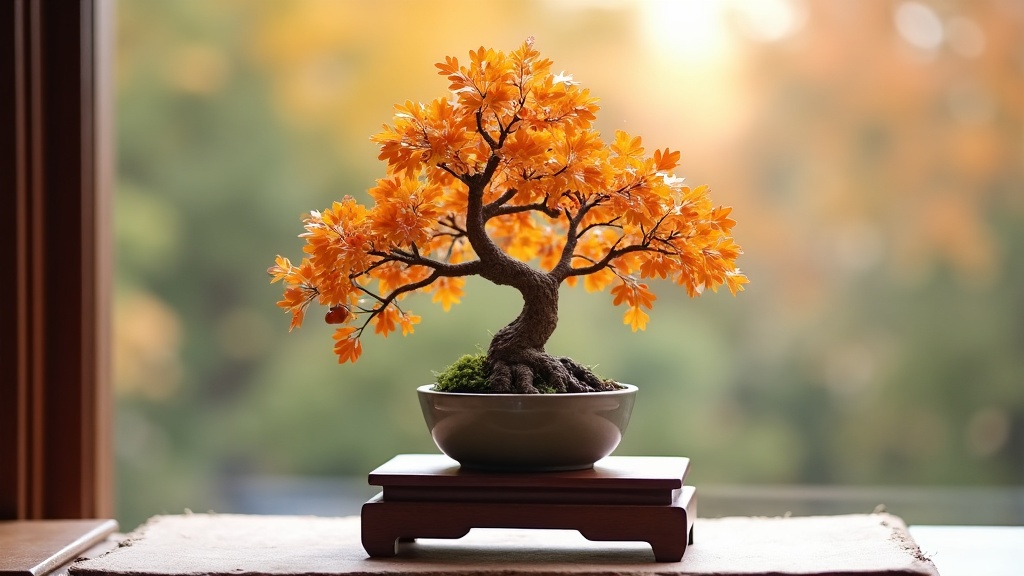
Beyond practicality, oak brings specific aesthetic gifts. The trunk thickens with purpose and develops dramatic, plated bark even on young trees. The root base (nebari) fans outward with authority, gripping the soil like a hand. The deciduous species perform the full drama of seasons: the copper flush of autumn, the silhouette of bare branches in winter, the pale lime explosion of spring buds — each one a small ceremony.
The challenge, and I want to be honest about this, is patience. Oak moves on oak’s schedule. Where a trident maple will reward you with rapid ramification inside two seasons, oak demands five or ten years of consistent, thoughtful work before the branch structure begins to sing. If that sounds daunting, consider: you are not building a display piece. You are building a relationship.
Species Selection: Choosing the Right Oak for Your Climate
The genus Quercus contains roughly 500 species. Not all are suitable for bonsai, and the ones that are suited vary significantly in their requirements. Here are the four I work with most and recommend most often:
English Oak (Quercus robur)
The most commonly cultivated oak bonsai in Europe and one of the easiest to source as pre-bonsai material. English oak produces classic lobed leaves that reduce well over time and turns a warm amber in autumn. It tolerates heavier soils than most oaks and is forgiving of wet winters. The main limitation: it is susceptible to powdery mildew in humid summers and needs good airflow around the canopy.
Japanese Oak / Konara (Quercus serrata)
The oak most familiar in traditional Japanese bonsai. Konara develops exquisite fine ramification when properly trained and produces smaller, more delicate leaves than its European relatives. It prefers slightly more acidic, well-draining soil and benefits from partial afternoon shade in hot climates. Autumn color ranges from gold to russet-brown. This is my personal preference for refined shohin work.
American White Oak (Quercus alba)
A stately, slow-growing native with striking flaking bark that develops character quickly. White oak’s large natural leaves require aggressive defoliation work to reduce, but the resulting autumn color — deep burgundy-red — is unmatched among the oaks. It is cold-hardy to USDA Zone 3 and handles both the heat of southern summers and the cold of northern winters with equal composure.
Live Oak (Quercus virginiana)
The one evergreen oak on this list, and the most different in its requirements. Live oak is native to the American Southeast and performs best in Zones 7–10. It does not require the same hard winter dormancy as deciduous species, tolerates more heat and drought, and develops an architectural, wide-spreading branch structure that suits informal upright and literati styles beautifully. Leaf reduction requires patient, multi-season work.
Light, Temperature, and Placement
All oaks are fundamentally outdoor trees. This is not negotiable. Indoor placement — even near a bright south-facing window — fails to provide the light intensity, temperature variation, and air movement an oak needs to thrive. I mention this at the outset because it is the single most common mistake I see: treating a deciduous bonsai like a houseplant.
Light: Aim for a minimum of five to six hours of direct sun daily during the growing season. Full sun exposure produces compact internodes, tighter leaf size, and robust trunk growth. Partial shade is acceptable but will slow development noticeably. In the hottest climates (Zone 9+), afternoon shade during peak summer heat protects the foliage without sacrificing morning sun.
Temperature: Deciduous oaks (English, Japanese konara, American white) need a genuine winter dormancy — a sustained period of near-freezing temperatures that allows the tree to rest completely. In most of North America and northern Europe, natural winter conditions provide this. Growers in mild climates (Zone 9+) may need to refrigerate their trees for six to eight weeks if winter nights stay above 40°F (4°C) consistently.
Wind: Oak handles wind better than many bonsai species, but strong, desiccating winds in late autumn and winter can cause dieback on exposed shoots. A sheltered but open position — a cold greenhouse wall, the north side of a fence where trees still see sky — is ideal for winter storage.
Watering, Soil, and Feeding Through the Seasons
Oak sits in an interesting middle ground: more drought-tolerant than maple or hornbeam, but far less tolerant of wet feet than willow or bald cypress. Getting this balance right is central to oak bonsai care.
Soil Mix
I use a mix of approximately 60% akadama, 20% pumice, and 20% fine decomposed granite for most of my deciduous oaks. This provides the drainage oaks need while retaining enough moisture to prevent the fine roots from desiccating between waterings. For live oak, I slightly increase the akadama proportion to 70% given the hotter, drier conditions these trees typically face.
Avoid commercial potting soil entirely. It compacts, retains too much water, and deprives roots of the oxygen exchange they need. Akadama bonsai soil is widely available and worth the investment.
Watering Rhythm
Check daily in summer; water thoroughly when the top centimeter of soil approaches dryness. “Thoroughly” means until water runs freely from the drainage holes — not a quick splash. In autumn as growth slows, reduce frequency. In winter dormancy, water only enough to prevent the root ball from drying completely — roughly once every week to ten days, depending on temperature.
The classic instruction is “never let it fully dry, never let it sit wet.” With oak, lean slightly toward the dry side of that balance.
Seasonal Fertilizing
Oak responds well to a structured fertilizing program that mirrors the tree’s natural growth cycle:
- Early spring (bud swell to full leaf-out): Begin with a balanced, slow-release fertilizer — I favor solid organic pellets placed on the soil surface. They release gently with each watering and will not burn emerging roots. Organic bonsai fertilizer supports long, even growth without the surge-and-crash of synthetic feeds.
- Midsummer: Shift to a slightly lower-nitrogen formula to firm up growth and prepare wood for autumn. High nitrogen in midsummer encourages soft, elongated shoots that are prone to dieback.
- Late summer to early autumn: Switch to a low-nitrogen, high-phosphorus and potassium feed (often labeled “autumn” or “bonsai maintenance”). This hardens the wood and encourages root development before dormancy.
- Winter: No fertilizer. The tree is resting. Feeding during dormancy will not help and may encourage premature growth that gets killed by frost.
Repotting, Root Work, and Container Selection
Repotting is the intervention I approach with the most care when working with oak. These trees have a more complex relationship with their root systems than many other bonsai species — particularly the mycorrhizal fungi that colonize their roots and help them absorb nutrients. Aggressive root pruning disrupts this relationship and can set a healthy tree back significantly.
Timing
Repot in early spring, when buds are swelling but have not yet broken. This is the precise window: the tree’s energy is rising, hormones are signaling active growth, and root wounds heal with remarkable speed. Repotting after leaves have emerged forces the tree to simultaneously support new foliage and repair root damage — a taxing double burden.
Young trees in development (under five years in training) may need repotting every two to three years. Mature, refined trees can often go four to five years between repottings.
Root Pruning Philosophy
I remove no more than one-third of the root mass in a single repotting. For oaks with well-established mycorrhizal colonies, I try to retain some of the old soil around the root zone during repotting and mix it into the fresh substrate — this preserves some of the beneficial fungal network. Work quickly to minimize root exposure to air and sun.
Container Choice
Oak’s character calls for restraint in the pot. I favor unglazed earth-tone ceramics — warm ochres, muted grays, deep reds. The pot should not compete with the bark’s texture. For larger specimens with impressive nebari, a flat, shallow oval container emphasizes the root spread. Shohin-sized oaks suit a slightly deeper, more upright container that gives the roots adequate volume for the tree’s slower growth pace.
Wiring, Pruning, and Developing Ramification
Oak’s thick, sometimes brittle branches require a different approach than the supple wood of trident maple or Chinese elm. Wiring should happen in late autumn after leaf drop, when you can clearly see the branch structure and the wood is slightly more flexible from the cooling temperatures. Work slowly and always test a small section before committing to a full bend — older oak wood can snap without warning.
Wire Selection
Use aluminum wire for most oak branch work. Aluminum bonsai wire is easier to bend without marking the bark and provides enough holding power for oak’s moderate branch weight. For primary structural branches over 1.5 cm diameter, copper wire may provide better support, but work carefully — oak bark damages easily.
Check wired branches every three to four weeks during the growing season. Oak’s bark is thin relative to its rapid spring girth increase, and wire cuts in — permanently — faster than you expect.
Developing Ramification
This is the long work with oak, and it requires a multi-year pruning strategy. The core technique is consistent cutback: allow a shoot to extend two to three internodes, then cut back to one or two buds. Each cut produces two new shoots. Over several seasons, this binary branching gradually builds the fine twig structure that gives mature oak bonsai their distinctive, dense winter silhouette.
Defoliation — removing all leaves in early summer — can accelerate this process and reduce leaf size in vigorous specimens. However, I do not recommend defoliating oak annually. Every other year is more appropriate; it is a taxing technique that oak tolerates less well than many other deciduous species. Never defoliate a recently repotted tree or one that has shown signs of stress.
Sharp bonsai pruning scissors are essential for clean cuts on fine oak shoots. Blunt cuts crush the wood fibers and create entry points for the fungal pathogens that plague oak in warm, humid conditions.
Winter Care, Dormancy, and Common Problems
Winter Dormancy
Protecting the root system during winter is more important than protecting the canopy. Oak branches are cold-hardy; oak roots in a bonsai pot are not. The pot’s small volume provides little insulation, and roots can freeze and die at temperatures that the tree’s above-ground portions would survive easily.
I keep my deciduous oaks in an unheated cold greenhouse from late November through late March — temperatures stay above 28°F (-2°C) even in the coldest weeks, which prevents root freeze while maintaining the dormancy the tree needs. A cold frame, an unheated garage with a north-facing window, or the sheltered north side of a building with frost cloth over the pots are all workable alternatives.
Do not bring dormant oaks into a heated space. The warmth will trigger early bud break, and the subsequent tender growth is vulnerable to any late frost.
Common Problems
Powdery Mildew: The most frequent fungal issue on English and American white oak bonsai, particularly in humid summers with poor airflow. White, powdery coating appears on leaf surfaces. Prevention is easier than cure: position trees with good air circulation, avoid wetting foliage in the evening, and remove and dispose of affected leaves promptly. Organic sulfur spray applied every ten days during humid periods provides effective preventive protection.
Oak Gall Wasps: Small wasps lay eggs on oak tissue, and the tree responds by forming distinctive galls — round, sometimes colorful structures on leaves or stems. On a healthy tree, moderate gall infestation is more cosmetic than damaging. Remove galls by hand when possible. Severe infestations on weakened trees can cause significant dieback and warrant treatment with systemic insecticide.
Leaf Scorch: Brown, crispy leaf margins typically signal a watering problem — either underwatering, or less obviously, root rot from overwatering that has damaged the root system’s ability to deliver water. Examine the root ball when repotting. Healthy oak roots are cream-white and firm; rotten roots are brown, mushy, and smell sour. Adjust watering habits and soil mix accordingly.
A Word on Patience: Many of the problems I see on oak bonsai are not caused by disease or pest pressure. They are caused by impatience — repotting too aggressively, wiring branches too thick to bend safely, defoliating a tree that needed rest, or pushing fertilizer when the tree was dormant. Oak rewards the practitioner who learns to do less with more intention. When in doubt, observe. The tree will often tell you what it needs if you give it time to speak.
The oak bonsai I am most proud of is a konara I collected from a hillside in Japan fifteen years ago. It is not the largest tree I own, nor the most technically refined. But it has the presence of something that has stood through many seasons, been shaped by patient hands, and arrived at a form that feels inevitable rather than imposed. That quality — what the Japanese call jidai, or the sense of age — is what oak bonsai, given time, can embody more fully than almost any other species.
Start with a healthy tree. Give it the seasons it needs. Cut, wire, and water with intention. Then step back and let oak be oak.