Bougainvillea Bonsai Care Guide: The Spectacular Flowering Species
I’ve trained bougainvillea bonsai for nearly two decades, and they remain one of the most rewarding species for the patience they demand and the spectacular color they return. Bougainvillea bonsai care requires consistent warmth, precise watering, and strategic pruning to maintain the dramatic papery bracts that make this tropical vine so captivating in miniature form.
When I first encountered bougainvillea during my training in Osaka, my teacher warned me: this is not a beginner’s tree. The vigorous growth, sensitivity to root disturbance, and thorny branches test your discipline. Yet for those willing to learn its rhythms, bougainvillea offers cascading color displays that few other bonsai species can match.
Understanding Bougainvillea as Bonsai Material
Bougainvillea is fundamentally a tropical vine, native to South America. What we admire as “flowers” are actually modified leaves called bracts—papery, vibrant structures surrounding the small, inconspicuous true flowers. This distinction matters for care: the bracts develop on new growth, which shapes how we approach pruning and fertilization.
The species commonly used for bonsai include Bougainvillea glabra and Bougainvillea spectabilis, along with numerous cultivars bred for compact growth and specific bract colors—magenta, orange, white, salmon, and variegated varieties. I favor cultivars with smaller leaves and shorter internodes; they scale better to bonsai proportions.
The trunk develops character slowly but distinctly. Old specimens develop attractive bark texture and natural movement. The challenge lies in managing the aggressive growth while maintaining fine ramification—bougainvillea wants to grow long, thorny shoots, but refined bonsai demands controlled branching.
Light and Temperature Requirements
Bougainvillea demands full sun—at minimum six hours of direct sunlight daily, preferably eight to ten hours. Insufficient light produces weak growth, sparse foliage, and most disappointingly, no bracts. I position my bougainvillea in the sunniest exposure available, rotating the tree weekly to ensure even development.
Temperature sensitivity defines the growing calendar. Bougainvillea thrives between 65°F and 95°F (18°C to 35°C). Below 50°F (10°C), growth stalls; frost kills. In temperate climates, this means outdoor placement from late spring through early fall, then moving indoors to a sunny window or under full-spectrum grow lights for winter.
Indoor overwintering presents challenges. Bougainvillea often drops leaves in response to the environmental shift—lower light, drier air, temperature fluctuations. This is stress response, not necessarily decline. Maintain maximum available light, reduce watering to match slower growth, and accept some dormancy. Growth resumes when conditions improve in spring.
Watering: The Critical Balance
Watering bougainvillea requires reading the tree, not following a schedule. During active growth in warm months, the shallow bonsai container dries quickly—I often water twice daily in peak summer. Yet bougainvillea tolerates brief dryness better than constant saturation.
Here’s what I’ve learned: slight moisture stress before watering actually encourages bract formation. When the soil approaches dryness (but before leaves wilt), the plant shifts energy toward reproduction—flowering and bract development. Constantly wet soil produces lush green growth but fewer bracts.
I water thoroughly when the soil surface feels dry to the touch, watering until it drains from the bottom. During cooler months or indoor periods, I reduce frequency significantly, allowing the top inch to dry between waterings. Root rot from overwatering kills more bougainvillea bonsai than any other cause.
Water quality matters. Bougainvillea prefers slightly acidic to neutral pH. If your tap water is highly alkaline or chlorinated, consider using collected rainwater or filtered water.
Soil Composition and Repotting
Bougainvillea demands excellent drainage—the roots cannot tolerate standing water. I use a coarse, fast-draining mix with minimal organic content:
| Component | Percentage | Purpose |
|---|---|---|
| Akadama or fired clay | 40% | Water retention, structure |
| Pumice or lava rock | 40% | Drainage, aeration |
| Pine bark (fine grade) | 20% | Organic matter, slight acidity |
Repotting tests your timing and technique. Bougainvillea resents root disturbance—aggressive root pruning can set the tree back an entire growing season. I repot only when root-bound, typically every 2-3 years for young trees, less frequently for mature specimens.
The ideal window is late winter to early spring, just before new growth begins. I work quickly, removing no more than one-third of the root mass, and use mycorrhizal fungi amendments to help reestablish root function. Water sparingly for two weeks post-repotting, then resume normal care as new growth emerges.
Fertilization for Growth and Bracts
Bougainvillea grows vigorously when properly fed. During the growing season (spring through early fall), I fertilize every two weeks with balanced liquid fertilizer. As the desired blooming period approaches, I shift to a low-nitrogen, high-phosphorus formula to encourage bract formation over vegetative growth.
A typical fertilization rhythm:
- Early spring: Balanced 10-10-10 or 20-20-20 to support initial growth
- Late spring to mid-summer: Continue balanced feeding for structural development
- Six weeks before desired bloom: Switch to 5-10-10 or similar bloom formula
- During bracting: Reduce to half-strength or pause to extend bract display
- Fall: Cease fertilization 6-8 weeks before bringing indoors
- Winter: No fertilization during dormancy or minimal growth
I prefer organic liquid fertilizers diluted to half the recommended strength—this provides consistent nutrition without the salt buildup that synthetic fertilizers can cause in shallow bonsai containers. Supplement with occasional chelated iron if leaves show yellowing between veins, a sign of iron deficiency in alkaline conditions.
Pruning and Shaping Techniques
Pruning bougainvillea requires understanding its growth pattern: bracts appear on new wood. Severe pruning removes potential blooming sites but stimulates the new growth that will carry future bracts. The timing and intensity of pruning therefore controls the flowering cycle.
My approach follows this pattern: After a flush of bracts fades, I prune back the flowered shoots to 2-3 leaf nodes. This triggers new growth from the remaining nodes. In 6-10 weeks, these new shoots mature and develop their own bracts, creating the next color display.
For structural development, I use hard pruning in early spring before the growing season accelerates. This is when I remove unwanted branches, correct the tree’s direction, and establish the framework. The vigorous spring growth quickly fills in the design.
Throughout summer, I maintain shape with regular pinching—removing shoot tips when they extend beyond the desired silhouette. This refines ramification while still allowing some shoots to mature for bracting. The thorns make this work slower; I use quality curved shears and work carefully.
Wiring is possible but challenging. The branches are somewhat brittle, and the thorns complicate wire application. I wire primarily in the growing season when branches are more flexible, using gentle pressure and checking frequently for wire bite. Guy wires attached to the container edge often work better than traditional wrapped wire for major branch repositioning.
Styling Approaches That Honor the Material
Bougainvillea’s vine nature suggests certain styles. Cascade (kengai) and semi-cascade (han-kengai) styles emphasize the natural downward growth tendency. I’ve also seen effective informal upright (moyogi) and slanting (shakan) styles that capture movement while maintaining the wild character.
Formal upright rarely suits bougainvillea—the irregular growth and dramatic bracts feel constrained in strict vertical form. The wabi-sabi principle guides me here: work with the material’s nature rather than imposing unnatural discipline.
Root-over-rock (sekijoju) and exposed-root (neagari) styles work beautifully with bougainvillea. The roots develop interesting texture, and the dramatic composition complements the equally dramatic bracts. These styles require years to develop but create memorable specimens.
Common Challenges and Solutions
Lack of Bracts
This frustrates many practitioners. The causes usually combine: insufficient light, excess nitrogen fertilizer, overwatering, or pruning at the wrong time. The solution requires patience—move to maximum sun, shift to bloom fertilizer, allow slight moisture stress, and wait for the next growth cycle. Bracts appear on mature new growth, typically 6-8 weeks after shoots emerge.
Leaf Drop
Environmental stress—temperature changes, reduced light, watering shifts—triggers leaf drop. This often occurs during the transition indoors for winter. The tree typically recovers when conditions stabilize. Maintain consistent care, avoid overwatering the now-leafless tree, and wait for spring regrowth.
Pests
Aphids, whiteflies, and mealybugs occasionally appear, attracted to the soft new growth. I inspect weekly and treat early infestations with neem oil spray or insecticidal soap. Severe infestations may require systemic treatment. Good air circulation and avoiding over-fertilization reduce pest pressure.
Chlorosis
Yellowing leaves with green veins indicate iron deficiency, often from alkaline soil or water. Amend with chelated iron and consider adjusting soil pH toward 6.0-6.5 during the next repotting.
Frequently Asked Questions
Can bougainvillea bonsai survive indoors year-round?
Survival is possible with a very bright south-facing window or supplemental grow lights providing 8+ hours of intense light daily. However, indoor specimens rarely bract as spectacularly as those receiving natural outdoor sun during the growing season. If you must keep bougainvillea indoors permanently, maximize light and accept reduced flowering.
How long does it take to develop a bougainvillea bonsai from a nursery plant?
A quality bonsai outline can emerge in 3-5 years from good starting material. Trunk thickness develops slowly—plan 7-10 years for a substantial trunk from a cutting or young plant. I’ve accelerated trunk development by growing in larger containers or the ground for several years before transitioning to a bonsai pot. The aggressive growth rate helps, but developing refined ramification and the balance between growth and flowering requires patient, consistent work.
What’s the best bract color for bonsai?
This is aesthetic preference, not horticultural necessity. Magenta and purple cultivars are vigorous and widely available. White and salmon varieties offer different character. I appreciate variegated bracts for their subtlety. Choose based on your design vision, but verify the cultivar has small leaves and reasonable internode length—some large-flowered varieties don’t scale well to bonsai proportions.
Should I remove spent bracts?
The bracts eventually dry and fall naturally. I remove them once they fade and become papery-brown, both for aesthetics and to reduce debris in the soil surface that can harbor pests or hold excess moisture. This also signals the tree to redirect energy toward new growth rather than seed formation.
How do I protect bougainvillea bonsai from winter damage?
In climates with any frost risk, bring the tree indoors before nighttime temperatures drop below 45°F (7°C). Place in the brightest available location—a south-facing window or under grow lights. Reduce watering to match the slower growth. Some leaf drop is normal; maintain minimal moisture through winter. When spring arrives and outdoor nighttime temperatures stay reliably above 50°F (10°C), transition the tree back outside gradually over a week to avoid shock from the sudden environmental change.
The Patient Practice
Twenty years with bougainvillea has taught me that this species rewards those who learn to read its signals—the slight droop before watering, the hardening of new shoots that indicates readiness to bract, the seasonal rhythms of growth and rest. The spectacular color displays come not from force, but from aligning your care with the tree’s nature.
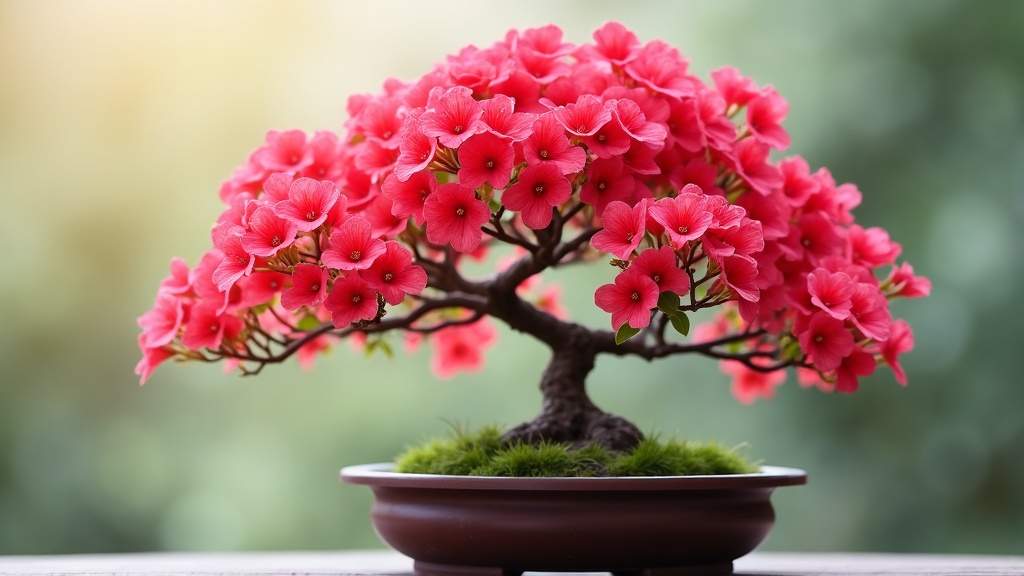
Each specimen develops its own character. The gnarled trunk of an old bougainvillea, covered in brilliant magenta bracts cascading over the container edge, embodies wabi-sabi—imperfect, impermanent, and incomplete, yet precisely because of these qualities, deeply beautiful. This is what draws me back to this challenging species, season after season.