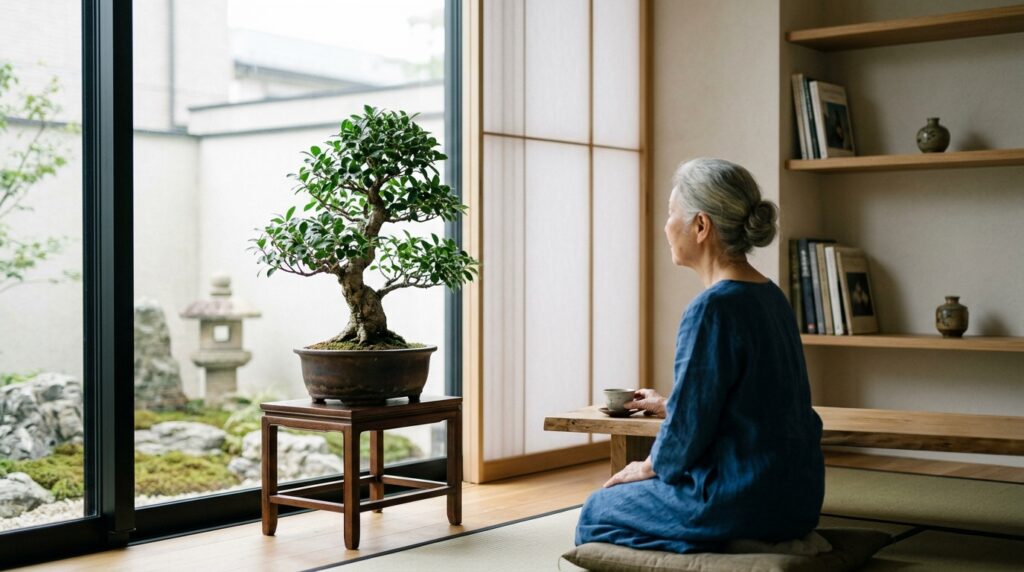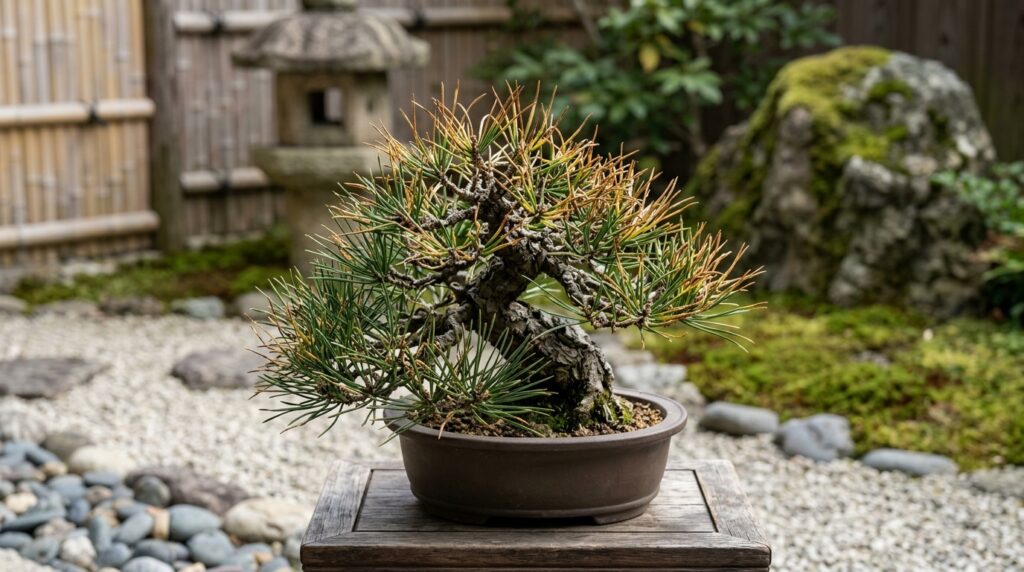
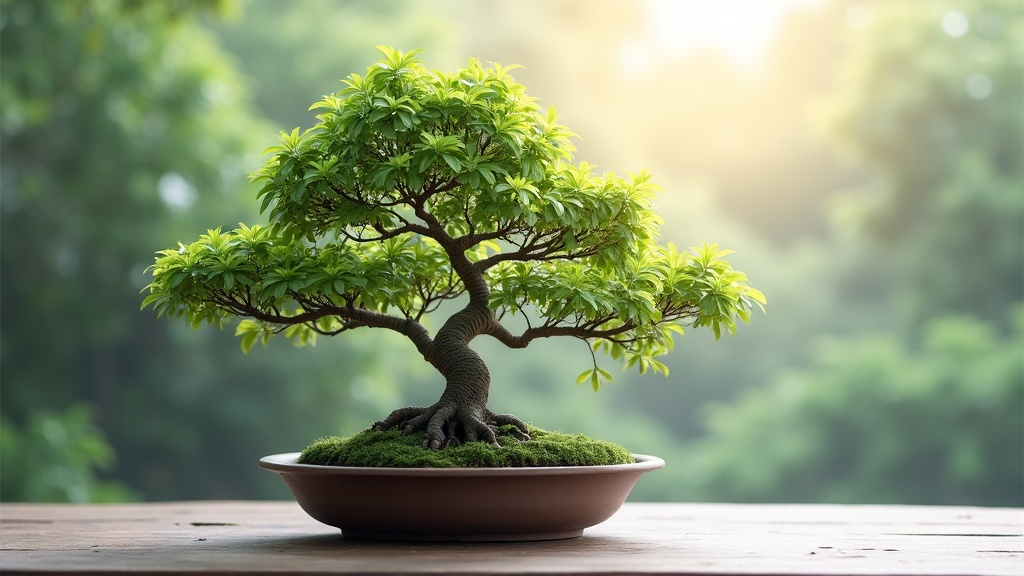
In my two decades working with bonsai, I’ve cared for trees as young as three years and as old as 400. A bonsai tree can be anywhere from a few years old to over a thousand years—age depends entirely on the tree itself, not the pot it lives in.
The question of age fascinates newcomers because it reveals something essential about bonsai: we don’t create these trees from nothing. We guide what already exists, shaping time itself into a visible form.
Understanding Bonsai Age vs. Training Time
When someone asks how old a bonsai is, they’re usually asking one of two questions without realizing it. The first is the tree’s actual biological age—how many years it’s been alive. The second is how long it’s been trained as a bonsai.
These numbers are rarely the same. I might collect a 40-year-old pine from the mountains and begin training it today. Tomorrow, I have a 40-year-old tree with one day of bonsai training. The tree carries four decades of weathering in its trunk, but the human hand has just begun its work.
This distinction matters because it shapes our expectations. A tree that’s been in training for five years might be 30 years old biologically, displaying characteristics—thick bark, mature branching, refined ramification—that would take decades to develop from a seedling.
Common Age Ranges by Bonsai Type
Different cultivation methods produce trees of different ages at the point they become recognizable as bonsai.
Seedling-Grown Bonsai
Starting from seed is the slowest path but offers complete control. A seedling needs 5-7 years minimum before it begins to look like a young bonsai. Most seedling-grown bonsai that appear mature are 15-30 years old. The advantage is perfect root development from day one; the disadvantage is patience measured in decades.
Nursery Stock Conversions
This is where many practitioners begin. You purchase a 5-10 year old tree from a standard nursery, grown for landscaping, and convert it to bonsai. The tree might be 8 years old, but your training time starts at zero. Within 2-3 years of focused work, it can look convincingly bonsai. After 5-10 years of training, it appears mature.
I recommend quality bonsai pruning shears for nursery stock work—you’ll be removing substantial material.
Collected Yamadori
Trees collected from the wild, called yamadori, can be extremely old. A mountain pine twisted by wind and snow might be 80, 150, even 300 years old when collected. In Japan, I watched a practitioner work with a collected juniper estimated at 400 years. The tree had been alpine bonsai by nature’s hand long before humans intervened.
These trees bring instant age but demand skill. Collection is delicate work. Root systems developed in rocky soil don’t transition easily to containers. Success rates improve with experience.
Pre-Bonsai and Starter Trees
The market offers pre-bonsai—young trees with 3-7 years of initial training. These occupy a middle ground. The basic structure exists; you refine it. A 10-year-old pre-bonsai with 5 years of training gives you a foundation without starting from scratch.
For beginners, I suggest juniper bonsai starter trees—they’re forgiving and age gracefully.
How to Determine a Bonsai’s Age
Estimating age requires looking at multiple indicators. No single feature tells the complete story.
Trunk Characteristics
Bark texture changes with time. Young bark is smooth; old bark develops fissures, plates, and distinct patterns specific to each species. On pines, thick, plated bark suggests decades. On maples, the transition from green to gray to deeply furrowed happens gradually over 20-40 years.
Trunk taper—the gradual narrowing from base to apex—develops over time. A tree with pronounced taper and movement has likely been growing and shaped for many years. Perfectly straight, uniform trunks are young.
Nebari (Root Flare)
The surface roots spreading from the base, called nebari, take years to develop properly. Thick, radial roots that anchor the visual composition don’t appear overnight. A mature nebari suggests at least 10-15 years, often more. Trees with poor or undeveloped nebari are either young or improperly trained from the start.
Branch Ramification
Fine branching—the division of primary branches into secondary, tertiary, and smaller twigs—increases with age and pruning. A young tree has few branch divisions. An old tree, repeatedly pruned over decades, develops dense, complex ramification. Each generation of branches is a record of time and intervention.
Growth Ring Count (Destructive Method)
The only certain method is counting growth rings, which requires cutting the tree. This is obviously impractical for living bonsai. Occasionally, when a tree dies or a large branch is removed, you can count rings on the cut surface. Each ring represents one year, though stressed trees in poor conditions sometimes produce false rings or very narrow rings that are hard to distinguish.
Famous Old Bonsai Trees
Some bonsai have documented histories spanning centuries. These trees connect us to practitioners who died generations ago, their hands shaping branches we see today.
The Ficus retusa at Crespi Bonsai Museum in Italy is over 1,000 years old—one of the oldest living bonsai in the world. The Shunkaen Collection in Tokyo houses multiple trees over 800 years old, including ancient pines that were mature trees before the samurai era ended.
The most famous might be the Hiroshima survivor pine at the National Bonsai & Penjing Museum in Washington, D.C. This white pine was in training in 1625. It survived the atomic bombing of Hiroshima in 1945, just two miles from the blast center. The tree is now over 400 years old, a living witness to four centuries.
These trees remind us: bonsai is not about dominating nature. It’s about partnership across time. The tree that stands today is the collaboration of dozens of caretakers, each adding a small increment of guidance.
Age Comparison by Species
| Species | Minimum Age for Bonsai Look | Mature Appearance Age | Maximum Recorded Age |
|---|---|---|---|
| Japanese Maple | 5-8 years | 15-25 years | 150+ years |
| Japanese Black Pine | 7-10 years | 20-35 years | 800+ years |
| Juniper | 5-7 years | 15-30 years | 1,000+ years |
| Ficus | 3-5 years | 10-20 years | 1,000+ years |
| Chinese Elm | 4-6 years | 12-20 years | 200+ years |
| Trident Maple | 5-8 years | 15-25 years | 300+ years |
Does Age Equal Value?
Newcomers often assume older is better. Age correlates with value, but it’s not the only factor—sometimes not even the primary one.
A 200-year-old tree that was poorly styled, improperly maintained, or collected with damaged roots might be worth less than a 30-year-old tree shaped by a skilled practitioner with perfect proportions and health. Age provides raw material—thick trunk, aged bark, established character—but the human contribution matters equally.
In Japanese aesthetics, we value what the tree suggests. A young tree that evokes the feeling of an ancient mountain pine can be more successful artistically than a genuinely old tree that lacks harmony. This is wabi-sabi: finding depth in the essence of things, not just their chronological accumulation.
That said, certain features only come with time. You cannot rush bark development on a pine. You cannot fake the gnarly character of a 300-year-old juniper. Age provides what patience alone can give.
Starting Your Own Bonsai Journey
If you’re beginning, don’t wait for an old tree. Start with young material and grow into the practice. By the time your first tree is 15 years old, you’ll have 15 years of experience to match it.
I began with inexpensive nursery stock—five-gallon azaleas and pines. Some of those early trees are still with me, now 20 years into training. They’re not ancient, but they’re mine in a way no purchased antique could be. Every branch placement, every wire mark, every recovered mistake is recorded in their structure.
For essential supplies, you’ll need bonsai training wire and proper bonsai soil. These tools matter regardless of your tree’s age.
Work slowly. Bonsai punishes haste. The tree will teach you patience because it has no choice but to grow at its own pace. You can wire a branch in five minutes; the branch needs six months to set. This is the practice.
Frequently Asked Questions
How old is the average bonsai tree?
Most bonsai in home collections are 10-30 years old. Trees in this range have developed enough character to be visually interesting but haven’t required the decades of care that very old specimens demand. Display-quality bonsai at exhibitions are often 40-100 years old, while museum pieces can exceed several centuries.
Can you tell a bonsai’s exact age just by looking at it?
No. You can estimate within a range based on bark texture, trunk thickness, nebari development, and branch ramification, but exact age requires documentation or growth ring counting. Two trees of the same species and age can look quite different depending on growing conditions and training methods.
What’s the youngest a tree can be and still be called bonsai?
There’s no official minimum age. The term “bonsai” refers to the technique and presentation, not the tree’s age. A three-year-old seedling in a training pot is bonsai if it’s being shaped with that intention. However, most trees don’t develop convincing bonsai characteristics—taper, ramification, aged appearance—until at least 5-8 years old.
Do bonsai trees live longer than trees in nature?
Not necessarily. Bonsai receive attentive care—protection from extreme weather, pest control, optimal watering—which can extend lifespan. However, the restricted root space and regular pruning create stress that can shorten life if not managed properly. The oldest bonsai are typically hardy species like pines and junipers, which are naturally long-lived. The key is matching care quality to the tree’s needs.
How can I find out the age of my bonsai?
If you purchased from a reputable nursery or practitioner, ask them—they often keep records. Otherwise, examine the trunk diameter, bark development, and branch structure to estimate. Compare your tree to similar species with known ages. Online bonsai forums and local clubs can help with estimates if you share clear photos. Remember that training age and biological age are different, so clarify which you’re asking about.