I see this mistake in beginners because bonsai invites action before it teaches patience. Yes, many bonsai trees can stay outside in winter, but only if their species is suited to your climate and they are given some protection. The biggest mistake bonsai owners make is treating every tree the same. A hardy juniper and a tropical ficus do not handle winter in the same way, and the wrong decision can weaken or kill the tree.
Bonsai are not separate plant types. They are regular trees and shrubs grown in small containers, which means their roots are more exposed to cold than the roots of the same species planted in the ground. Because of that, winter care for bonsai is less about whether the tree is inside or outside and more about matching the tree’s natural needs with the conditions in your yard, patio, or balcony.
The First Rule: Know Whether Your Bonsai Is Hardy, Tropical, or Subtropical
If you want to know whether a bonsai can stay outside in winter, identify its category first.
Hardy bonsai include many junipers, pines, spruces, larches, elms, and maples. These trees usually need a cold winter dormancy period and often do best when kept outdoors year-round.
Subtropical bonsai such as Chinese elm, jade, or some olive varieties may tolerate cool weather but can struggle in prolonged freezing temperatures.
Tropical bonsai such as ficus, schefflera, and dwarf umbrella tree should not stay outdoors once temperatures drop into cold ranges. These trees need warmth and are usually brought indoors before nights become too chilly.
Why Some Bonsai Need Winter Outdoors
For temperate species, winter is not a problem to avoid. It is part of their annual cycle. These trees enter dormancy as days shorten and temperatures fall. Dormancy helps regulate growth, conserve energy, and prepare the tree for healthy spring budding.
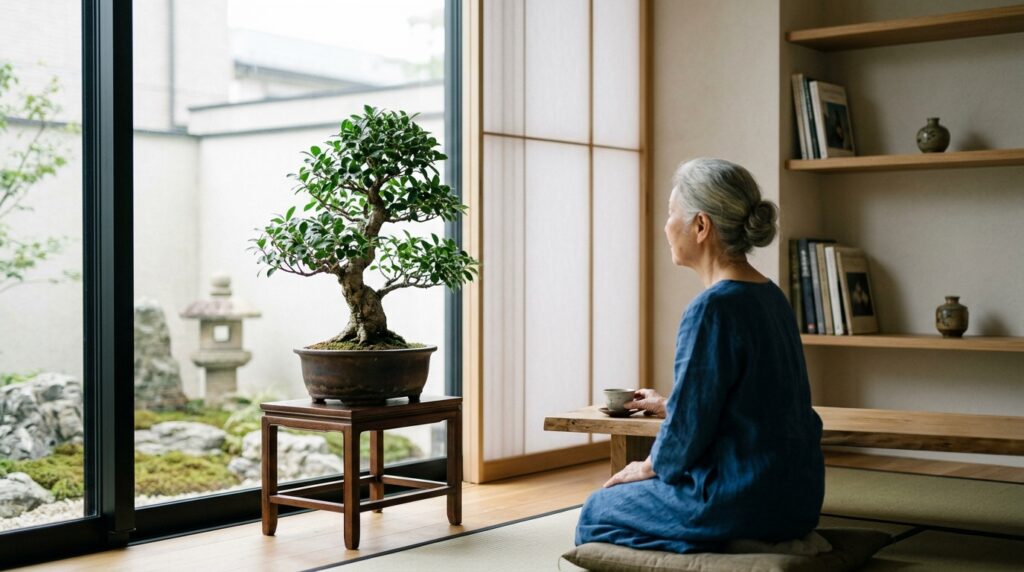
Keeping a hardy outdoor bonsai in a heated house all winter can do more harm than good. Warm indoor air, low humidity, and weak winter light can confuse the tree, interrupt dormancy, and cause stress. Over time, that can lead to weak growth, pest problems, and overall decline.
Why Winter Is Riskier for Bonsai Than for Landscape Trees
Even when a species is winter-hardy, bonsai face a unique challenge: their roots live in a shallow pot. In the ground, soil insulates roots from extreme temperature swings. In a bonsai container, roots can freeze much faster.
This is why a tree that survives winter in a landscape may still need extra shelter as a bonsai. The top of the tree may tolerate cold, but the root system is the vulnerable part. Strong winter wind, repeated freeze-thaw cycles, and drying sun can also damage a potted bonsai faster than people expect.
When Outdoor Bonsai Can Stay Outside
A hardy bonsai can usually remain outdoors in winter if:
- It is a species naturally adapted to cold winters.
- It has entered dormancy gradually in autumn.
- The pot and roots are protected from extreme freezes.
- The tree is kept out of harsh wind when possible.
- The soil is monitored so it does not dry out completely.
For many growers, “outside in winter” does not mean leaving the tree fully exposed on a table through every storm. It often means moving it to a more sheltered outdoor location, such as against a wall, under a bench, in an unheated shed, cold frame, or protected corner of the garden.
How to Protect Outdoor Bonsai in Winter
Protection matters most during severe cold spells. The goal is not to keep the tree warm but to prevent the roots from experiencing damaging extremes.
Common winter protection methods include burying the pot in mulch, placing the tree in a cold frame, surrounding the pot with straw or bark, or grouping multiple bonsai together in a sheltered area. Some growers sink the entire pot into garden soil for the season. Others use an unheated garage or shed, especially in regions with deep, prolonged freezes.
If you use an unheated structure, make sure the tree still stays cold enough for dormancy and is not exposed to indoor-style heat. You also need to check moisture levels occasionally. Dormant bonsai need less water, but they should not be allowed to become bone dry.
When a Bonsai Should Not Stay Outside
You should bring a bonsai indoors or into a frost-free space if it is tropical, newly weakened, recently repotted late in the season, or not reliably hardy for your local winter lows. Young trees and small bonsai in tiny pots are also more vulnerable because they have less root mass and less insulation.
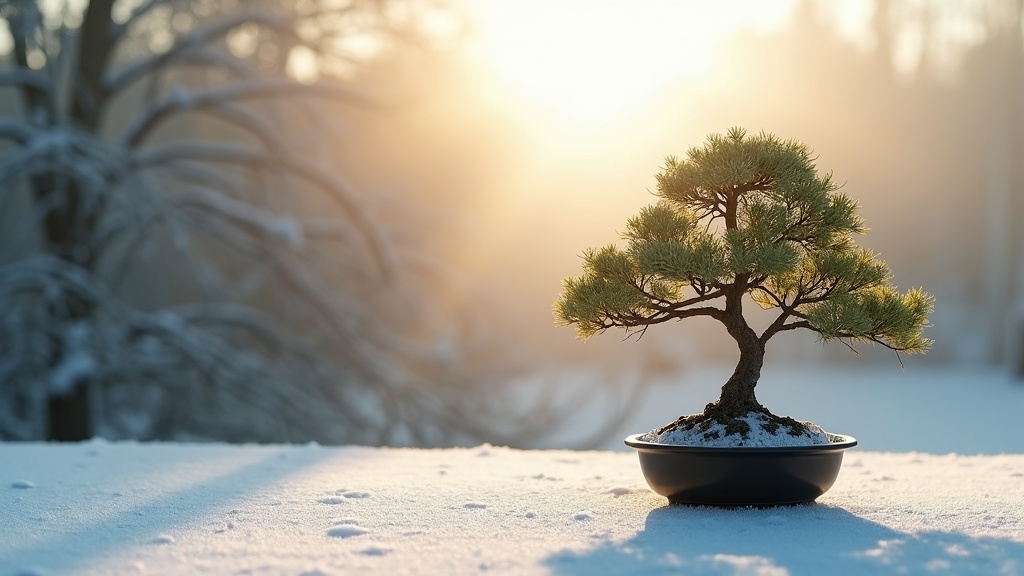
If your area gets severe cold beyond what the species can handle, outdoor exposure without shelter becomes risky. The issue is not simply snow. In many cases, bonsai tolerate snow cover well because snow can act as insulation. The greater danger is prolonged root freeze, dry winter wind, and repeated thawing and refreezing.
Signs Your Winter Setup Is Working
A bonsai that overwinters well will stay dormant without shriveling, losing excessive bark, or showing dieback across many branch tips. The soil should remain slightly moist, not soggy and not dust-dry. By spring, buds should swell at the expected time for that species.
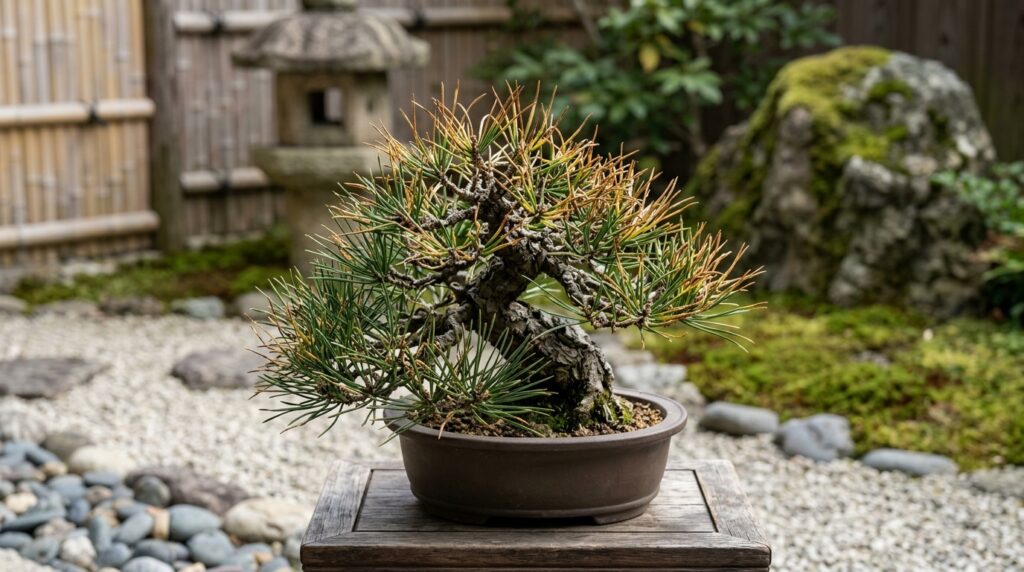
If a tree begins dropping healthy tissue, turns brittle, or shows blackened roots and branch dieback, the winter conditions may have been too harsh, too wet, or too warm for proper dormancy.
Species Examples
Juniper bonsai: Usually stays outdoors in winter and benefits from dormancy, but the roots still need protection in very cold climates.
Japanese maple bonsai: Often remains outside, though it appreciates shelter from severe freezes and drying winter wind.
Pine bonsai: Typically does well outdoors in winter with root protection.
Chinese elm bonsai: Winter treatment depends on local climate and the specific growing conditions; it can behave as semi-deciduous or need some protection in colder areas.
Ficus bonsai: Should be brought indoors before cold weather arrives because it is not frost-hardy.
Common Winter Mistakes
- Bringing hardy outdoor bonsai into a heated living room for the entire winter.
- Leaving bonsai on an exposed bench during extreme freezes without root protection.
- Assuming all indoor-looking bonsai are tropical.
- Watering on a summer schedule during dormancy.
- Ignoring local climate differences and relying on generic advice.
Final Answer
Bonsai trees can stay outside in winter if they are cold-hardy species that require dormancy and if their roots are protected from extreme conditions. Tropical bonsai should not stay outside in cold weather. The right winter plan depends on the species, your local climate, and how much protection you can provide to the pot and root system.
In short, outdoor bonsai usually belong outdoors in winter, but not without thought. Identify the species first, then protect it according to the cold it can realistically handle.
For beginners who want a simple, sensible setup, I usually think it is enough to compare bonsai tree tools and a pair of bonsai watering can. Those two tools are more relevant to real early practice than buying decorative accessories too soon.
What makes bonsai difficult for beginners is that the tree rarely punishes impatience immediately. A beginner can wire too soon, prune too hard, repot at the wrong moment, and still feel successful for a few weeks. The tree often answers later, with weak growth, poor recovery, or a gradual decline that feels mysterious only because the earlier stress was forgotten.
That is why I teach beginners to treat bonsai less like a series of tasks and more like a conversation with a living thing. Before shaping, ask whether the tree is vigorous enough. Before pruning, ask whether the season supports recovery. Before changing several things at once, ask whether you will still understand the result afterward. Those questions slow you down, but they also keep you from making the kind of mistake that costs a year of progress.
Many bonsai beginners also confuse visible activity with meaningful progress. Wiring, pruning, repotting, and styling feel productive, while observation feels passive. In practice, observation is often the more advanced skill. When you notice how a species extends, where buds appear, how quickly soil dries, and how the tree responds to minor adjustments, your later work becomes much more precise.
I also think beginners benefit from keeping one simple rule: do not ask a weak tree to teach you advanced technique. If a tree is struggling with water balance, poor light, or poor root health, styling it harder rarely improves anything. Restoring strength first is not hesitation. It is sound bonsai practice.
The encouraging part is that this mistake is fixable. Most beginners do too much because they care. Once that energy is redirected into observation, timing, and restraint, progress becomes steadier and the tree begins to look more convincing with less force.
What I Check Before I Panic
When an indoor bonsai starts dropping leaves in winter, I look at light first, then watering rhythm, then sudden temperature swings near windows, vents, or heaters. Most indoor trees are reacting to weak winter conditions or inconsistent care, not inventing a mysterious new problem overnight.
I also want to know whether the species is tropical, subtropical, or a tree that was never going to thrive indoors long term. That distinction matters because some winter leaf loss is stress, while some cases are really a mismatch between the tree and the environment it was asked to tolerate.