I see this mistake in beginners because bonsai invites action before it teaches patience. If you want a bonsai for a dim apartment, office, or room with limited window space, the best answer is usually the Ficus bonsai, especially Ficus microcarpa or Ficus retusa. Among commonly sold indoor bonsai, ficus is widely considered the most tolerant of low light. It is not a true no-light plant, but it handles reduced indoor brightness better than most other bonsai species and recovers more easily from imperfect conditions.
That distinction matters. Bonsai is not a separate type of plant; it is a training method applied to real tree species. Some trees naturally demand strong sun, seasonal dormancy, or outdoor airflow. Others are tropical or subtropical species that adapt better to life inside a home. When people ask for the bonsai that tolerates the lowest light indoors, they are really asking which species is least likely to decline in a darker room. In most cases, ficus is the most reliable choice.
Why Ficus Comes Out on Top
Ficus earns its reputation because it combines low-light tolerance with toughness. It tends to keep growing in conditions that would cause more sensitive bonsai to weaken, drop leaves permanently, or lose vigor. It also tolerates the dry air and temperature stability found in heated or air-conditioned homes better than many traditional bonsai trees.
Here is why ficus is usually the safest low-light indoor option:
- It can photosynthesize reasonably well in bright indirect light rather than full direct sun.
- It adapts to indoor temperatures year-round without needing a winter dormancy period.
- It bounces back relatively well after missed watering or a temporary drop in light.
- It is commonly available, beginner-friendly, and easier to maintain than many specialty species.
That said, “low light” should be understood as lower than ideal, not dark. A ficus bonsai still needs access to a bright room, preferably near a window. If a space is too dim for you to read comfortably during the day without turning on lights, it is probably too dim for bonsai long term.
How It Compares to Other Indoor Bonsai Choices
Several other bonsai species are marketed for indoor growing, but most are less forgiving than ficus when light levels drop.
Chinese Elm
Chinese elm can sometimes be grown indoors, but it usually prefers much brighter conditions than ficus and often performs better outdoors. In a dim room, it may weaken over time.
Carmona (Fukien Tea)
Fukien tea is attractive, but it is noticeably more demanding. It likes warmth, humidity, and strong light. It can struggle quickly if placed too far from a window.
Schefflera
Schefflera is another decent indoor candidate and can tolerate moderate light, but many growers still find ficus to be sturdier and easier to shape into a long-term bonsai.
Juniper and Pine
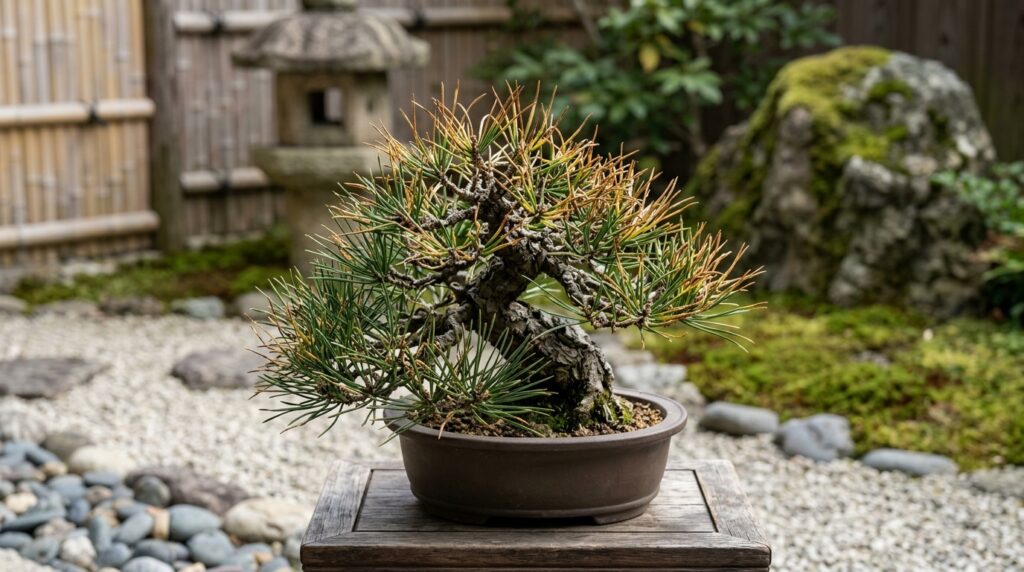
These are poor low-light indoor choices. They are outdoor bonsai species that need sun, seasonal changes, and airflow. Keeping them indoors usually leads to decline, even if they look fine for a short period.
What “Low Light” Really Means for Indoor Bonsai
A lot of bonsai failures start with unrealistic expectations about light. Houseplants labeled “low light” often mean they can survive away from a sunny window, but bonsai are still trees in small containers. Their energy reserves are limited, and they cannot coast indefinitely in a dark corner.
For a ficus bonsai, acceptable low light usually means:
- Bright indirect light for much of the day.
- A spot near an east- or south-facing window with filtered sun.
- Supplemental grow lights if the room is naturally dim.
If light is too low for too long, even a ficus will show stress. Common warning signs include leggy growth, larger leaves, frequent leaf drop, slower growth, and a general loss of density in the canopy.
Best Placement for a Low-Light-Tolerant Bonsai
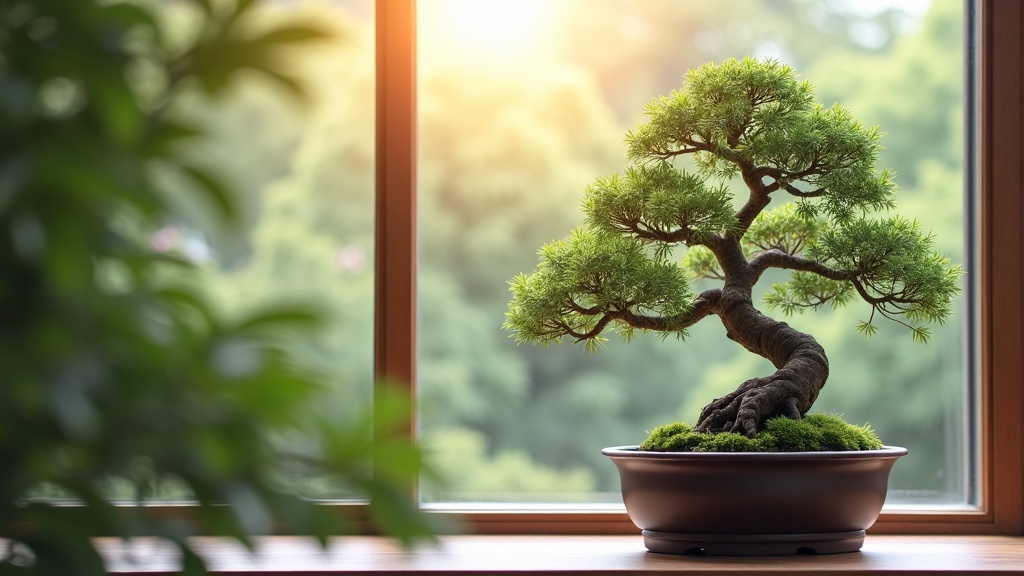
If you choose ficus for a lower-light indoor space, placement still matters. A few feet can make a major difference in available light. Put the tree as close as practical to your best window rather than in the middle of the room. Rotate it occasionally so growth stays more balanced.
Useful placement guidelines include:
- Keep it within a few feet of a bright window.
- Avoid cold drafts, heater vents, and sudden temperature swings.
- Do not place it in a hallway, interior bathroom, or windowless office and expect it to thrive.
- Use a small LED grow light if natural light is limited in winter or year-round.
Care Tips to Help a Ficus Bonsai Succeed Indoors
When light is less than ideal, care discipline becomes more important. Growth slows in lower light, which means overwatering becomes a bigger risk than underwatering.
To keep a low-light-tolerant bonsai healthy:
- Water only when the top layer of soil begins to dry.
- Use fast-draining bonsai soil rather than dense potting mix.
- Feed lightly during active growth, but do not overfertilize a weak tree in poor light.
- Prune to maintain shape, but avoid heavy styling on a stressed plant.
- Clean leaves occasionally so dust does not reduce light absorption.
If your ficus starts dropping leaves after being moved indoors, that can be normal adjustment shock. If new leaves continue to emerge and the branches stay flexible, the tree is usually adapting. Persistent decline, however, often points back to insufficient light or watering issues.
Should You Use a Grow Light?
If your goal is the lowest-light-tolerant bonsai, ficus is still the best answer. But if your room is genuinely dark, the better answer is ficus plus a grow light. A simple full-spectrum LED can turn a borderline location into a workable one and dramatically improve leaf density, growth rate, and overall health.
Grow lights are especially helpful if:
- Your brightest window faces north.
- Buildings or trees block much of the daylight.
- You want the bonsai displayed in an office or shelf area away from direct window exposure.
- Winter days are short where you live.
Final Answer
The bonsai tree that typically tolerates the lowest light levels indoors is the Ficus bonsai. It is not a shade plant, and it will still do best in bright indirect light, but it is generally the most dependable species for indoor bonsai growers dealing with less-than-ideal lighting. If you want the safest, most practical choice for a dimmer indoor setting, ficus should be at the top of your list.
What makes bonsai difficult for beginners is that the tree rarely punishes impatience immediately. A beginner can wire too soon, prune too hard, repot at the wrong moment, and still feel successful for a few weeks. The tree often answers later, with weak growth, poor recovery, or a gradual decline that feels mysterious only because the earlier stress was forgotten.
That is why I teach beginners to treat bonsai less like a series of tasks and more like a conversation with a living thing. Before shaping, ask whether the tree is vigorous enough. Before pruning, ask whether the season supports recovery. Before changing several things at once, ask whether you will still understand the result afterward. Those questions slow you down, but they also keep you from making the kind of mistake that costs a year of progress.
Many bonsai beginners also confuse visible activity with meaningful progress. Wiring, pruning, repotting, and styling feel productive, while observation feels passive. In practice, observation is often the more advanced skill. When you notice how a species extends, where buds appear, how quickly soil dries, and how the tree responds to minor adjustments, your later work becomes much more precise.
I also think beginners benefit from keeping one simple rule: do not ask a weak tree to teach you advanced technique. If a tree is struggling with water balance, poor light, or poor root health, styling it harder rarely improves anything. Restoring strength first is not hesitation. It is sound bonsai practice.
The encouraging part is that this mistake is fixable. Most beginners do too much because they care. Once that energy is redirected into observation, timing, and restraint, progress becomes steadier and the tree begins to look more convincing with less force.
What I Check Before I Panic
When an indoor bonsai starts dropping leaves in winter, I look at light first, then watering rhythm, then sudden temperature swings near windows, vents, or heaters. Most indoor trees are reacting to weak winter conditions or inconsistent care, not inventing a mysterious new problem overnight.
I also want to know whether the species is tropical, subtropical, or a tree that was never going to thrive indoors long term. That distinction matters because some winter leaf loss is stress, while some cases are really a mismatch between the tree and the environment it was asked to tolerate.