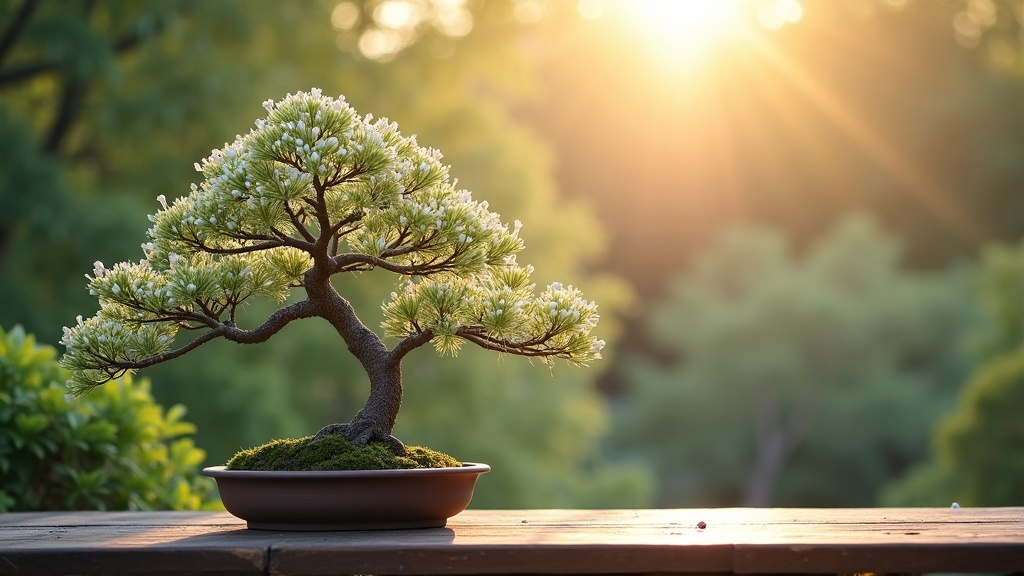
I see this mistake in beginners because bonsai invites action before it teaches patience. In many cases, yes: flowering bonsai usually need more light than bonsai grown mainly for foliage. That does not mean every flowering species wants harsh all-day sun, but it does mean bloom production depends heavily on strong, consistent light. If a tree does not get enough light, it may still stay alive and produce leaves, yet flower poorly or not at all.
The simplest way to think about it is this: leaves keep the tree functioning, while flowers require extra energy. A bonsai that is expected to bloom has to store enough energy not only for normal growth, but also for bud formation, flowering, and often fruit or seed production afterward. That extra work usually requires brighter conditions than a comparable non-flowering bonsai.
Why Flowering Bonsai Often Need More Light
Flowering is one of the most energy-demanding things a plant does. To produce buds, open flowers, and maintain them for any useful length of time, the tree needs strong photosynthesis. Light is what drives that process. When light levels are too low, the tree tends to prioritize survival over reproduction.
That is why a non-flowering bonsai may seem acceptable in moderate light while a flowering bonsai in the same spot becomes leggy, weak, or bloomless. The issue is not that flowering bonsai are fragile by default. It is that blooming raises the plant’s energy requirements.
“More Light” Does Not Mean the Same Thing for Every Species
The phrase flowering bonsai covers many very different trees and shrubs. Azalea bonsai, crabapple bonsai, bougainvillea, wisteria, and flowering quince all have different tolerances and preferences. Some flower best with several hours of direct sun and light afternoon protection in hot climates. Others perform best in full sun for most of the growing season.
So the accurate answer is not “flowering bonsai always need maximum sun.” The better answer is “flowering bonsai generally need stronger light than non-flowering bonsai of similar vigor, but the exact amount depends on species, climate, and season.”
How Flowering Bonsai Compare With Foliage Bonsai
Many foliage-focused bonsai are valued for leaf size, branch structure, bark, or evergreen mass rather than blossoms. They still need appropriate light, of course, but they are not spending as much energy on flower production. Because of that, some can remain visually acceptable in brighter shade or limited direct sun, at least for a while.
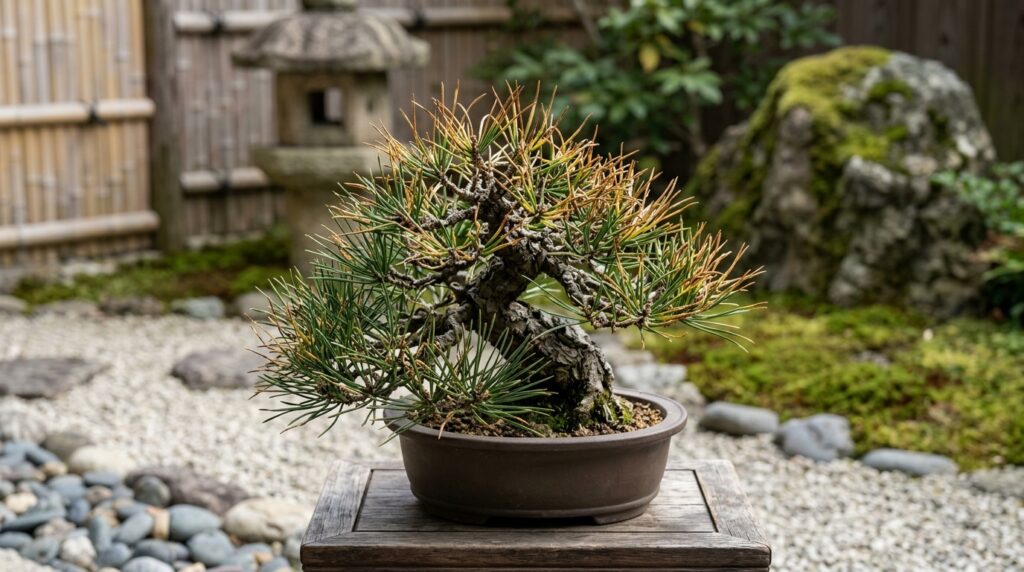
Flowering bonsai are less forgiving. If light drops too low, you may notice fewer flower buds, smaller blooms, weaker branching, longer internodes, and washed-out foliage. The tree may continue growing, but it will not perform the way you expect from a specimen chosen specifically for flowers.
Signs Your Flowering Bonsai Is Not Getting Enough Light
Light problems often show up gradually. Watch for these common signs:
- Few or no flower buds during the expected blooming cycle
- Long, stretched shoots with wide spacing between leaves
- Pale or oversized leaves
- Weak branching and slow back-budding
- Blooms that are smaller, fewer, or short-lived
- Soil that stays wet too long because the tree is using less energy
These symptoms are not caused by low light alone. Watering, fertilizer, root health, and pruning timing matter too. Still, insufficient light is one of the most common reasons a flowering bonsai looks healthy enough to survive but fails to bloom well.
Outdoor Bonsai Usually Have the Advantage
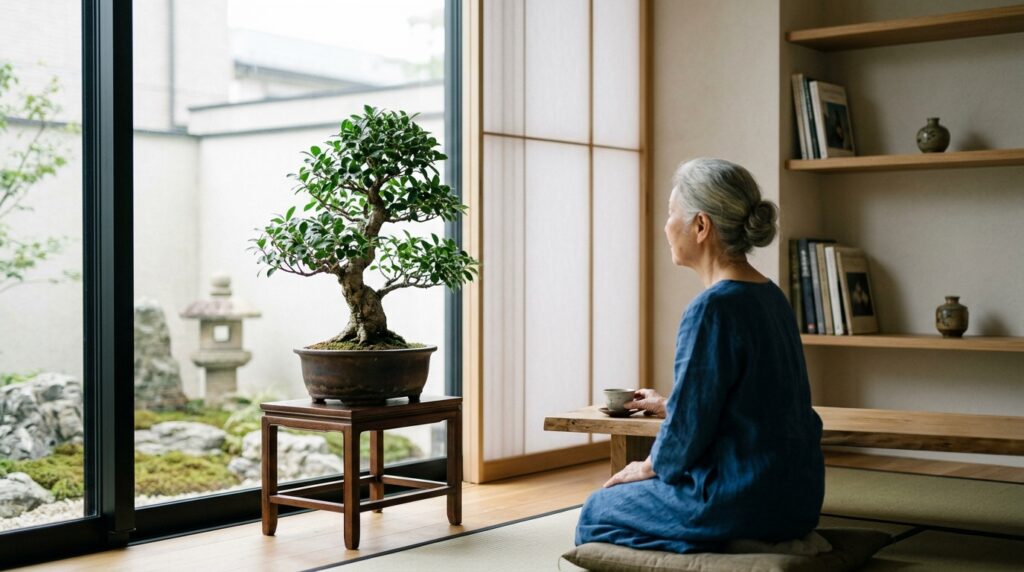
Most flowering bonsai species do best outdoors because outdoor light is dramatically stronger than indoor light, even near a bright window. This surprises beginners. A room may look sunny to people, but plants experience it very differently. Glass, wall placement, roof overhangs, and day length all reduce the amount of usable light reaching the tree.
If your flowering bonsai is an outdoor species, moving it indoors long term usually reduces blooming performance. Indoor growing may be possible for some tropical flowering species, but even those often need the brightest window available, regular rotation, and sometimes supplemental grow lights.
Season Matters Too
Light needs are not static all year. During active growth and bud-setting periods, flowering bonsai typically benefit from stronger light. During extreme summer heat, however, some species may appreciate protection from the harshest afternoon sun, especially in hot inland climates. In winter, deciduous species that are dormant have different needs than tropical species that continue growing.
This is another reason blanket advice can be misleading. The same tree may want full morning sun in spring, partial afternoon shade during heat waves, and a completely different winter setup depending on whether it is dormant or tropical.
Can Too Much Light Be a Problem?
Yes. More light helps only when it matches the species and local conditions. A tree that prefers bright light can still suffer from leaf scorch, dried buds, or heat stress if placed in intense sun without enough water, humidity, or acclimation. Newly purchased bonsai are especially vulnerable if moved abruptly from greenhouse conditions into strong outdoor sun.
So while flowering bonsai often need more light than non-flowering bonsai, the goal is not to blast them with sun indiscriminately. The goal is to provide the strongest light the species can use safely and consistently.
How to Give a Flowering Bonsai the Right Light
A practical approach works better than chasing exact hourly formulas:
- Identify the exact species first, because care differs widely.
- Place outdoor species outside whenever climate allows.
- Start with bright morning sun and evaluate how the tree responds.
- Increase sun exposure gradually rather than making abrupt changes.
- Watch bud production, leaf color, and shoot length for feedback.
- Adjust for seasonal heat rather than assuming one placement works year-round.
If you are growing a tropical flowering bonsai indoors, use the brightest location possible and consider a quality grow light if blooming is weak. Indoor light is often the limiting factor.
The Bottom Line
Flowering bonsai generally do need more light than “normal” bonsai if by normal you mean bonsai grown mainly for foliage or structure. Flowers require extra energy, and strong light is what allows the tree to build that energy. The exact amount depends on the species, but in general, better light means stronger blooming, tighter growth, and a healthier overall bonsai.
If your flowering bonsai grows leaves but rarely flowers, light is one of the first things to evaluate. In bonsai care, blooming is often less about a special fertilizer or trick and more about consistently giving the tree enough usable light to do what nature designed it to do.
What makes bonsai difficult for beginners is that the tree rarely punishes impatience immediately. A beginner can wire too soon, prune too hard, repot at the wrong moment, and still feel successful for a few weeks. The tree often answers later, with weak growth, poor recovery, or a gradual decline that feels mysterious only because the earlier stress was forgotten.
That is why I teach beginners to treat bonsai less like a series of tasks and more like a conversation with a living thing. Before shaping, ask whether the tree is vigorous enough. Before pruning, ask whether the season supports recovery. Before changing several things at once, ask whether you will still understand the result afterward. Those questions slow you down, but they also keep you from making the kind of mistake that costs a year of progress.
Many bonsai beginners also confuse visible activity with meaningful progress. Wiring, pruning, repotting, and styling feel productive, while observation feels passive. In practice, observation is often the more advanced skill. When you notice how a species extends, where buds appear, how quickly soil dries, and how the tree responds to minor adjustments, your later work becomes much more precise.
I also think beginners benefit from keeping one simple rule: do not ask a weak tree to teach you advanced technique. If a tree is struggling with water balance, poor light, or poor root health, styling it harder rarely improves anything. Restoring strength first is not hesitation. It is sound bonsai practice.
The encouraging part is that this mistake is fixable. Most beginners do too much because they care. Once that energy is redirected into observation, timing, and restraint, progress becomes steadier and the tree begins to look more convincing with less force.
What I Check Before I Panic
When an indoor bonsai starts dropping leaves in winter, I look at light first, then watering rhythm, then sudden temperature swings near windows, vents, or heaters. Most indoor trees are reacting to weak winter conditions or inconsistent care, not inventing a mysterious new problem overnight.
I also want to know whether the species is tropical, subtropical, or a tree that was never going to thrive indoors long term. That distinction matters because some winter leaf loss is stress, while some cases are really a mismatch between the tree and the environment it was asked to tolerate.