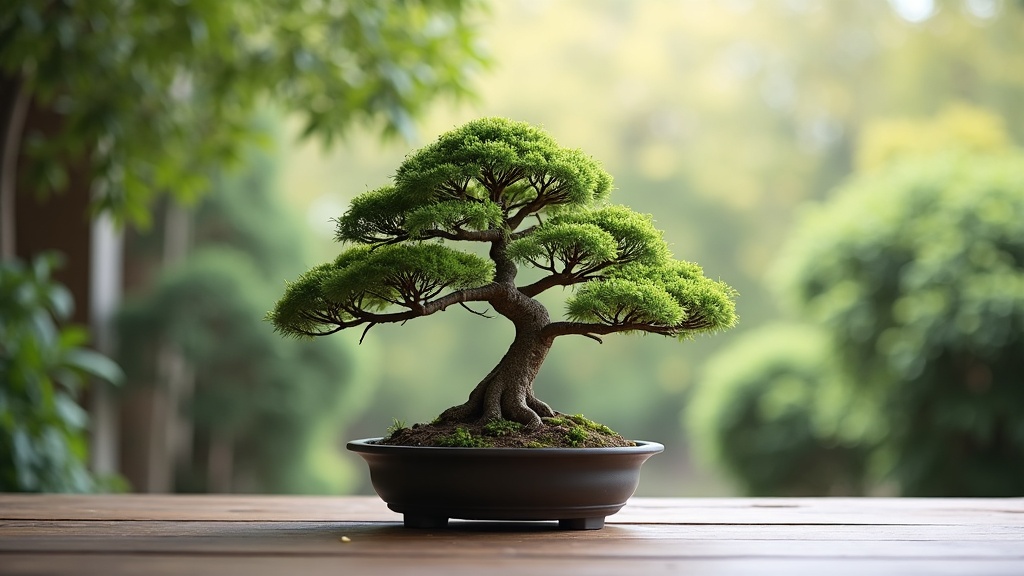
Some do, and some do not. A bonsai tree can carry symbolic meaning, but in my experience the meaning is usually strongest when it grows naturally from the species, the form, and the care behind it rather than from a label attached afterward.
After twenty years with bonsai, including my training in Osaka and Kyoto, I have found that people often ask this question because they sense something quiet in a bonsai that feels larger than its size. They are not imagining it. Bonsai often symbolizes patience, balance, endurance, restraint, and a respectful relationship with time. At the same time, not every bonsai needs to ?mean? something in a ceremonial way. Sometimes its value is simpler: a small tree teaching you to observe, prune carefully, and accept gradual change.
If you use symbolic meaning well, it can deepen how you choose a species, style, or gift. If you use it too heavily, it can make bonsai sound mystical when it is really a practical horticultural art shaped by years of work. I prefer the middle path. A bonsai can absolutely carry meaning, but that meaning should feel earned.
What bonsai trees usually symbolize
Across cultures and modern bonsai practice, a bonsai tree is most often associated with patience. That is the clearest answer. A bonsai is made slowly, sometimes over decades, and it resists the modern habit of wanting a finished result too quickly.
I would add four other meanings that appear again and again in real practice. The first is balance, because bonsai asks you to coordinate vigor and restraint, root growth and canopy growth, movement and stillness. The second is endurance, since even a very refined bonsai often shows signs of weathering, age, or recovery. The third is humility, because the tree always sets limits on what is possible. The fourth is care, because a bonsai cannot be neglected for long and still remain beautiful.
These meanings are not abstract to me. I have seen beginners rush wiring, over-prune healthy branches, or chase dramatic shapes before the roots were strong enough. The tree answers honestly every time. It reminds you that beauty depends on timing and proportion, not force. That is where the symbolic side of bonsai becomes credible: it grows out of actual technique.
Why bonsai feels symbolic even when no symbolism is stated
Bonsai compresses the visual language of an old tree into a small container. That alone creates symbolic weight. A viewer sees age, hardship, adaptation, shelter, wind, or calm, even though the tree is only a few inches or feet tall. This is one reason bonsai attracts people who have never trained a tree. They respond to the suggestion of landscape and time.
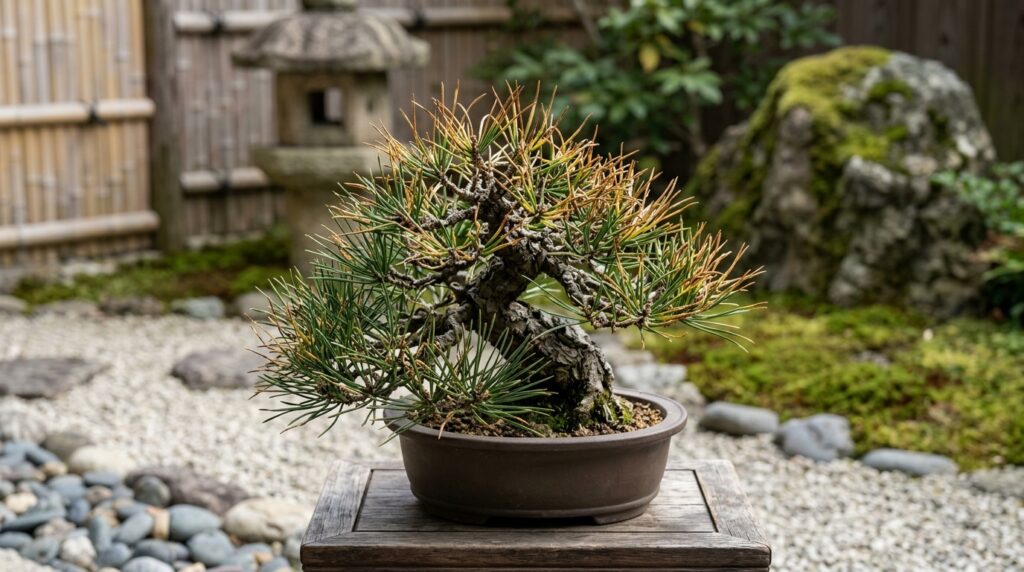
In Japanese aesthetics, especially through a wabi-sabi lens, a bonsai often feels meaningful because it reveals impermanence without announcing it. A scar can become part of the design. A slight asymmetry can make a tree feel more truthful. Deadwood on the right species can suggest survival rather than damage. None of this needs poetry around it. It is visible in the material.
One thing I noticed while teaching is that people often assign meaning to a bonsai after they have cared for it through one difficult season. A tree that recovers from weak roots, heat stress, or a bad repot suddenly becomes more than decoration to them. The symbolism becomes personal. That is more durable than any generic statement about ?peace? or ?zen.?
Different species suggest different meanings
Not all bonsai trees say the same thing. Species matters. Growth habit, bark, leaf size, seasonal behavior, and response to pruning all influence the impression a bonsai gives. If you want symbolic meaning to feel natural, start there.
| Species or type | Common symbolic association | Why it reads that way in bonsai |
|---|---|---|
| Juniper | Endurance, resilience, age | Flexible deadwood design, rugged bark, and strong survival character make it feel weathered and durable. |
| Pine | Longevity, steadiness, dignity | Slow refinement and mature structure create a sense of permanence and disciplined age. |
| Maple | Change, seasonal awareness, refinement | Fine branching and strong autumn display emphasize transition and delicacy. |
| Chinese elm | Adaptability, everyday patience | Reliable growth and forgiving behavior make it an approachable symbol of steady improvement. |
| Ficus | Vitality, persistence, renewal | Strong back-budding and tropical vigor give it a living, resilient presence. |
| Flowering bonsai | Ephemeral beauty, timing, celebration | Blossoms are brief, so the display depends on careful seasonal care and acceptance of short-lived peaks. |
For example, an old-looking juniper with shari and jin naturally suggests survival and persistence. A smooth-barked deciduous tree with light branching may suggest calm, elegance, or seasonal sensitivity instead. I would not force the same symbolic interpretation onto both.
This matters when giving a bonsai as a gift. If the occasion is retirement, a pine or well-developed juniper may carry a more fitting message of endurance and maturity. If the gift is for someone beginning a new home routine, a Chinese elm or ficus may express steadier, more practical care. Symbolism works best when species, owner, and use all align.
Form and styling carry meaning just as much as species
People often focus on the species name, but styling tells at least half the story. A formal upright bonsai communicates something very different from a windswept or cascade design. This is not only visual preference. It changes the emotional reading of the tree.
Formal upright
This style often suggests order, composure, and dignity. It is appropriate when the material truly supports straight, stable taper and balanced branching. When forced onto unsuitable stock, it can feel stiff. When earned, it feels disciplined and calm.
Informal upright
This is the style I recommend most often because it tends to feel natural and humane. It suggests adaptation rather than rigid control. Many good bonsai live here: not wild, not overly formal, but shaped by time and small adjustments.
Slanting, windswept, and cascade forms
These styles carry stronger narrative. They suggest struggle, exposure, gravity, weather, and survival. Used well, they are powerful. Used carelessly, they become theatrical. I learned early in my training that dramatic styles require more restraint than people expect. The more obvious the story, the more carefully you must edit it.
Broom and deciduous silhouette styles
These often symbolize quiet maturity and settled rhythm. They can feel less heroic than a twisted juniper, but sometimes more honest. A well-made deciduous bonsai in winter outline has a kind of transparency that many viewers understand immediately, even if they know nothing about bonsai.
Is bonsai a spiritual symbol?
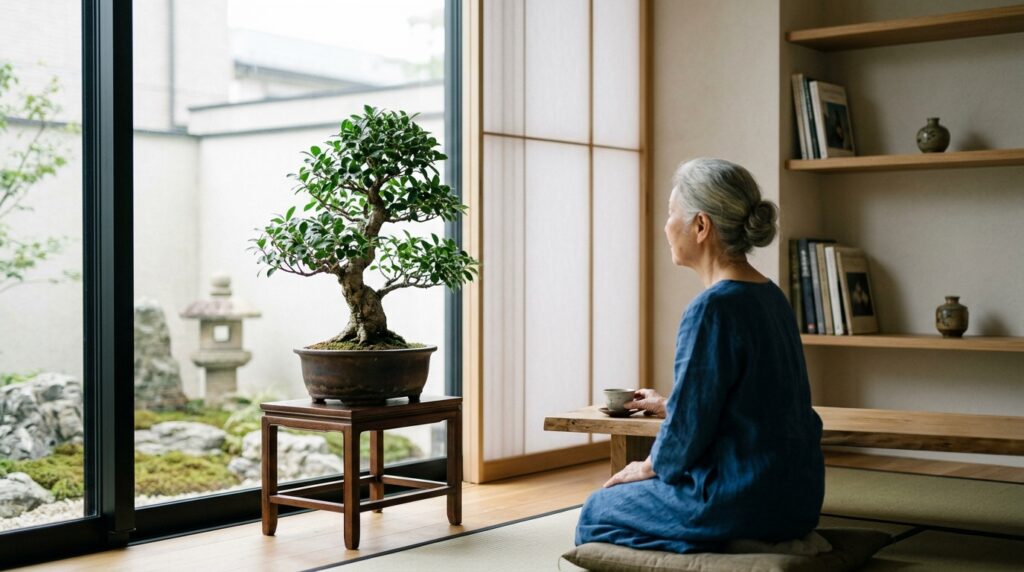
It can be, but I would answer carefully. Bonsai is not automatically a spiritual object. It is a cultivated tree in a container. If an owner approaches bonsai as part of meditation, remembrance, seasonal observation, or a slower domestic life, then yes, it may become spiritually meaningful to them.
What I resist is the habit of treating bonsai as a shortcut to wisdom. A neglected bonsai on a shelf does not become profound because it looks Japanese. Meaning comes from relationship, care, and attention. In workshops, I have seen students become calmer simply from learning to water correctly and study a branch line before cutting. That is real. It is grounded. It does not require performance.
For some households, a bonsai becomes a symbol of continuity. It sits in the same bright place year after year, moves outdoors or indoors with the season, and marks time through maintenance. For others, it becomes a memorial plant or a sign of personal discipline. Both are valid, but they are personal layers added to the horticulture, not replacements for it.
When symbolic meaning helps and when it gets in the way
Symbolic thinking can be useful in three practical situations.
- It helps you choose the right species for a gift or a room.
- It helps you decide what style direction suits the material.
- It helps you appreciate age, scars, asymmetry, and imperfection instead of trying to hide them.
It becomes less useful when it leads to sentiment over sound technique. A tree that symbolizes ?peace? still needs correct watering, seasonal pruning, and a proper substrate. A tree that symbolizes ?strength? can still decline quickly in poor indoor light.
This is especially relevant for newer growers who also search for practical topics like which indoor bonsai trees grow well in UK homes. Symbolism should always follow horticultural reality. If you live in a typical UK home, for example, ficus, Chinese elm, and some Carmona setups are discussed often because indoor conditions matter more than abstract meaning. A pine may symbolize longevity beautifully, but it is still a poor choice for permanent indoor life. The wiser choice is the species that can actually live well where you keep it.
Over the years I have also noticed that people become less interested in symbolic labels as their care improves. They begin to value ramification, internode control, nebari, and seasonal timing more. Then, interestingly, the tree often feels more meaningful again. Skill clears away the cliches and leaves a quieter kind of respect.
How to choose a bonsai if you want meaning as well as beauty
If symbolic meaning matters to you, I suggest choosing in this order:
- Start with environment. Pick a species that suits your light, temperature, and level of experience.
- Look at the tree?s natural character. Do not force a delicate meaning onto coarse material, or vice versa.
- Consider the life stage of the owner. A beginner may benefit from a resilient species more than a prestigious one.
- Match the container and presentation. Pot color, texture, and mass can strengthen the tree?s mood without overexplaining it.
- Let the story stay quiet. The best symbolism is usually felt before it is spoken.
If you are setting up your first practical bonsai bench or indoor care kit, a few tools and supplies genuinely help. For branch training, anodized aluminum bonsai wire is the easiest starting point for most beginners. For root work and repotting, a bonsai root rake and a free-draining bonsai soil mix are more important than decorative accessories. If you keep tropical bonsai indoors, a simple humidity tray for bonsai can also make day-to-day placement easier, though it does not replace proper watering or light.
I include these because meaning and maintenance should never be separated. A bonsai becomes significant through repeated acts of care, and the right setup makes those acts more consistent.
What bonsai symbolism does not mean
It does not mean every bonsai is ancient, rare, or sacred. It does not mean a struggling mass-market plant from a shopping cart will become healthy through intention alone. It does not mean more twisted or more miniature is automatically more profound.
In fact, some of the most meaningful bonsai I have known were visually modest trees with good roots, believable taper, and careful seasonal work. One old teacher in Kyoto once corrected a student who kept chasing dramatic movement in every trunk. He said, in effect, that calm material still deserves to remain calm. I have remembered that for years. Symbolism should reveal what the tree already offers, not bury it under ambition.
That is also why bonsai pairs so naturally with wabi-sabi. The point is not to romanticize imperfection. The point is to recognize proportion, weathering, incompleteness, and transience without panic. A bonsai with one imperfect branch line may still feel more convincing than a heavily manipulated tree with no quiet left in it.
FAQ
Do bonsai trees mean good luck?
Sometimes people treat them that way, especially as gifts, but bonsai is more commonly associated with patience, harmony, and endurance than with luck alone. Any ?good luck? meaning usually comes from cultural context or personal belief rather than from bonsai practice itself.
Is a bonsai tree a good gift with symbolic meaning?
Yes, if the recipient can realistically care for it. A bonsai can symbolize respect, long-term growth, steadiness, or thoughtful attention. The best gift is a species suited to the recipient?s conditions and experience, not just the one with the nicest symbolic label.
Which bonsai has the strongest symbolic meaning?
There is no single answer, but pine and juniper often carry the strongest associations with age, endurance, and longevity. Deciduous bonsai such as maples often speak more about seasonality, change, and refinement.
Are indoor bonsai symbolic in the same way as outdoor bonsai?
They can be, but health comes first. Indoor bonsai such as ficus may symbolize persistence and vitality, while outdoor species often express season and age more strongly because they experience full climate cycles. The symbolic reading changes with the species and the quality of cultivation.
Why do people find bonsai calming?
Because bonsai slows your attention down. It asks for small observations: soil moisture, bud position, branch angle, seasonal timing. That concentration often feels calming, but it comes from practical engagement, not decoration alone.