I may earn a small commission from qualifying purchases through links in this article, at no extra cost to you.
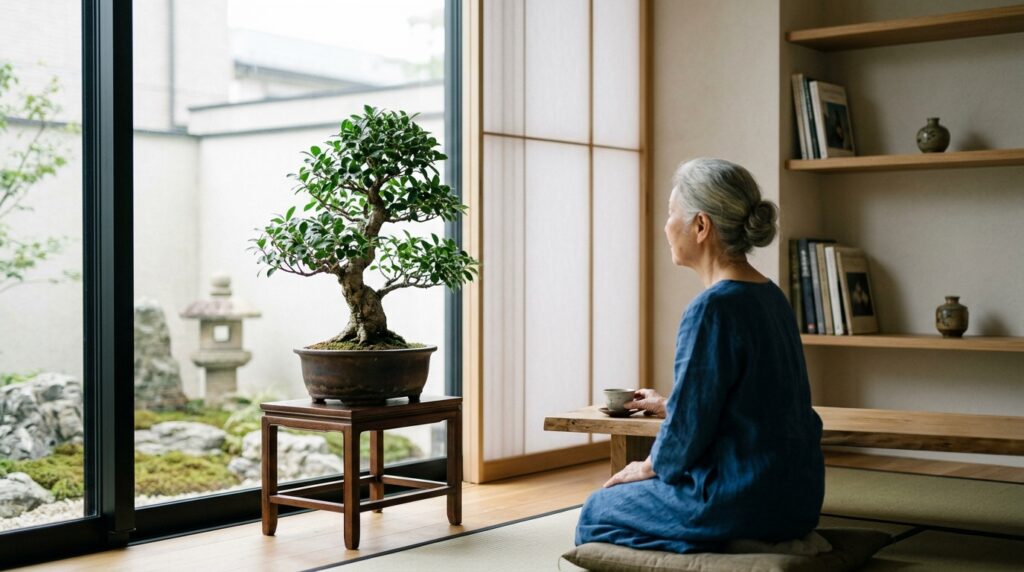
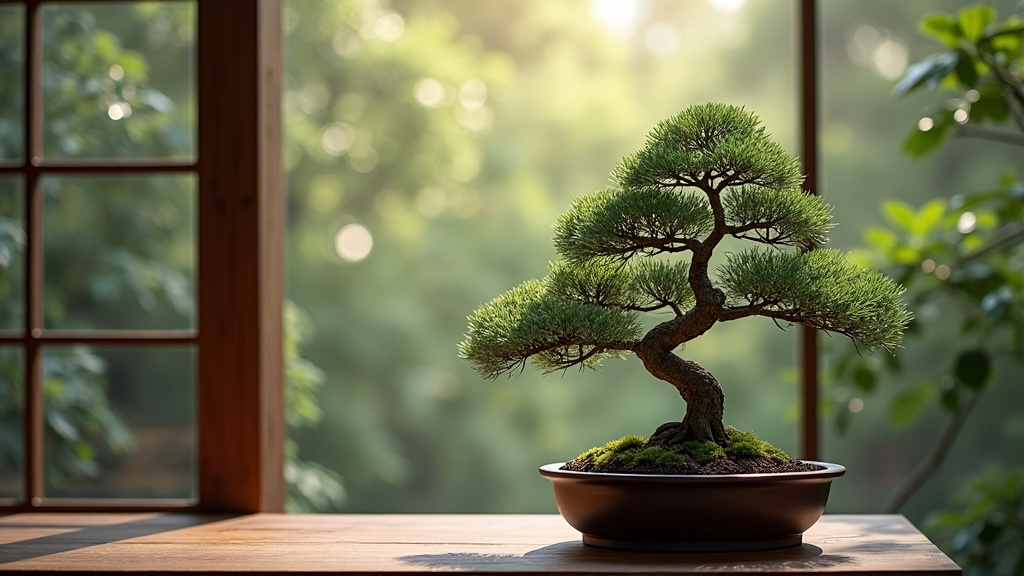
If you ask me plainly, the best bonsai for a north-facing window in the UK is usually a ficus, most often Ficus microcarpa or a similar indoor ficus sold as bonsai. It is not because ficus loves dim conditions. It is because, among the trees people actually keep indoors, it is usually the most tolerant of the softer, shorter light that a north-facing UK window gives for much of the year.
I should say this immediately: a north-facing window in Britain is a compromise, not an ideal bonsai position. Over many years of teaching beginners, I have found that the trouble often starts with a simple misunderstanding. People hear ?indoor bonsai? and imagine a tree that enjoys shade like a fern. Bonsai are still trees. Even the forgiving ones are only forgiving within reason.
So the short answer is this: choose ficus if you want the best chance of success, keep it pressed close to the brightest part of the glass, rotate it gently, water with restraint, and be prepared to add a small grow light in winter. If you do not want supplemental light at all, I would rather see you keep fewer bonsai expectations than force the wrong species into a weak position.
Why ficus is usually the best answer
For a north-facing window, I look for three qualities: tolerance of lower light, resilience to indoor heating, and the ability to recover after a slightly imperfect watering rhythm. Ficus has all three more reliably than the usual alternatives.
In my own practice, ficus has always shown a calm practicality indoors. It will not respond to poor conditions with beauty, but it usually responds with patience. A Chinese elm in the same position may stretch and weaken. A Fukien tea may sulk, drop leaves, and invite frustration. A ficus will often hold itself together long enough for you to correct your setup.
This matters in UK homes because north-facing light is not only dimmer; it is also cool and diffuse for long periods, especially from late autumn through early spring. You may get lovely even light for reading. That does not mean you have strong enough light for compact bonsai growth.
Ficus also fits the indoor rhythm better. It tolerates central heating better than many subtropical species, it backbuds reasonably well when healthy, and it can live with the ordinary temperature fluctuations of a domestic windowsill. Its leaves may become a little larger in lower light, but it still has a credible path to becoming a satisfying bonsai under indoor care.
What ?north-facing window? really means in the UK
Gardeners in sunnier climates sometimes give advice that sounds optimistic because their winter light is stronger than ours. In the UK, a true north-facing window often receives little or no direct sun for most of the year. That does not make it useless, but it does make species choice much stricter.
There are also important variations:
- Large unobstructed north window: better than a small one, especially if the sky view is broad.
- Urban window facing another building: substantially darker than most people realize.
- Bay window or corner aspect: often better because it gathers some side light.
- Windowsill set back from the glass: much worse than the same tree sitting directly beside the pane.
One quiet lesson from years of repotting students? indoor trees is that distance from the window matters more than people expect. Moving a bonsai from one metre back to right against the glass can change its vigour more than switching fertiliser brands ever will.
How the common indoor bonsai species compare
| Species | Suitability for a north-facing UK window | Main strength | Main problem |
|---|---|---|---|
| Ficus microcarpa / retusa | Best overall choice | Tolerates indoor life and lower light better than most | Still benefits greatly from a winter grow light |
| Chinese elm | Possible only with brighter side light or seasonal outdoor time | Excellent bonsai character | Usually wants more light and seasonal change than the spot provides |
| Fukien tea | Poor to fair | Small leaves, attractive when happy | Often fussy indoors and declines quickly in weak light |
| Carmona / Serissa | Poor | Delicate flowering interest | Stress-prone, dislikes inconsistency, not kind to beginners |
| Portulacaria afra | Fair only in the brightest north position | Drought tolerant, easy structure | Really prefers stronger light than most north windows offer |
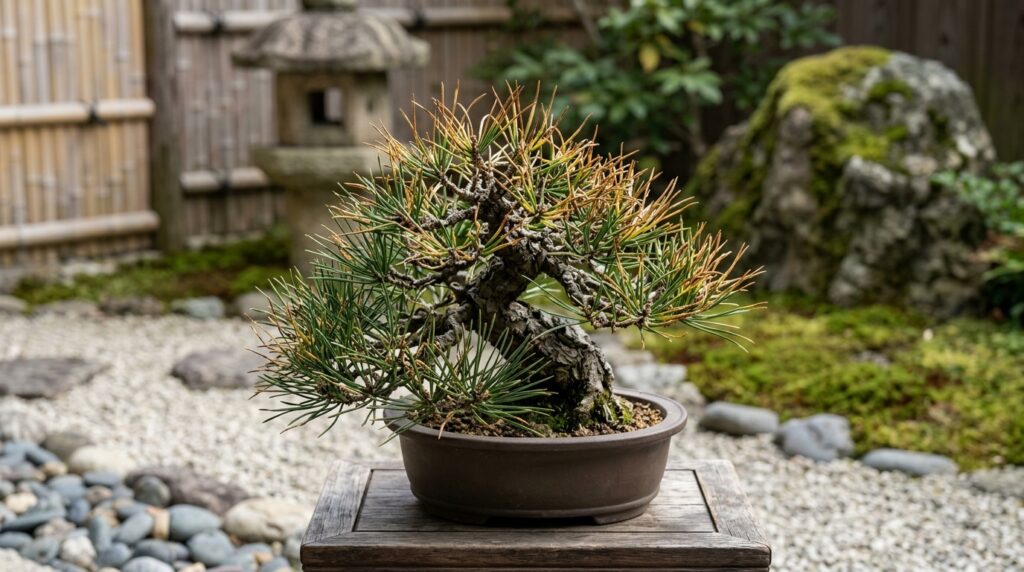
| Juniper, pine, maple | Not suitable | Beautiful outdoor bonsai species | Need outdoor conditions and far more light |
If you want one species recommendation and not a long discussion, choose ficus. If you want the most honest recommendation, it is ficus plus a realistic acceptance that north-facing indoor bonsai is still a managed compromise.
When Chinese elm is tempting, and why I still hesitate
Many people ask whether Chinese elm is the best indoor bonsai for a UK home because it is widely sold, forgiving in some respects, and visually closer to the classic bonsai image than a supermarket ficus. I understand the attraction. Chinese elm can be a lovely teacher of pruning, ramification, and seasonal rhythm.
But I do not usually choose it for a north-facing window. In stronger exposures, or when it can spend much of the year outdoors, it is excellent. In a dim indoor north aspect, it often becomes leggy, with longer internodes, larger leaves, and a general tiredness that beginners misread as a feeding problem. It is usually a light problem first.
I have seen students keep Chinese elm alive in north-facing rooms, but ?alive? and ?developing well? are different standards. If your only place is north-facing and fully indoors year round, ficus remains the steadier answer.
How to make a north-facing windowsill work better
The species matters, but setup matters nearly as much. If you improve the environment, the same tree can behave like a different one.
1. Put the tree as close to the glass as possible
Do not place it in the middle of the room where it merely ?faces? the window. Put it on the sill or immediately beside it. Clean glass helps more than people think, especially in city homes where grime softens already limited light.
2. Use a grow light in autumn and winter
If you are serious about keeping bonsai in a north-facing UK window, I consider a small full-spectrum grow light less a luxury than a correction. A simple clamp-style LED or compact panel is usually enough for one or two trees. If you need one, a practical starting point is a full-spectrum LED grow light for indoor plants.
I prefer modest, consistent supplemental light over dramatic interventions. Ten to twelve hours of reliable light is more useful than occasionally moving the tree around the house chasing brightness.
3. Water by soil condition, not by habit
Lower light means slower water use. That sounds obvious, yet overwatering is the most common secondary mistake in north-facing positions. The soil stays wet longer, roots stay cooler, and weak growth gets blamed on the species. With ficus, let the surface begin to dry before watering thoroughly again.
If your tree is potted in dense, peaty nursery soil, improvement is harder. When repotting season is appropriate and the tree is strong enough, a better-draining bonsai mix helps the roots stay healthier indoors. If you need a ready-made option, look for a free-draining bonsai soil mix rather than generic compost.
4. Keep expectations proportional to the light
In weaker light, growth is slower and refinement is slower. This is not failure. It simply means you should not chase aggressive pruning, frequent defoliation, or dense ramification the way you might on a vigorous outdoor tree. Work gently. Preserve energy first, style second.
What a healthy ficus should look like in this setting
A suitable ficus in a north-facing UK window should hold leaves steadily, produce modest but regular new growth in the warmer months, and avoid long bare internodes. Some increase in leaf size is normal indoors. What you do not want is a tree that keeps shedding interior leaves, extends with pale floppy shoots, or stays wet for many days after watering.
I often tell students to watch the spaces between leaves. A tree describes its light level there. Compact internodes usually mean enough light. Long, soft spaces between leaves usually mean the tree is asking for more.
You should also expect seasonal variation. Even a healthy ficus may slow down markedly in the UK winter. That is not alarming on its own. What matters is whether it resumes clean, balanced growth once light improves or the grow light takes over.
The setup I would recommend for most beginners
- Choose a ficus bonsai with a stable trunk and healthy foliage, not simply the cheapest tree with the smallest leaves.
- Place it directly in the brightest part of the north-facing window, with the pot not hidden behind curtains or blinds.
- Add a small LED grow light from October to March, especially in northern parts of the UK or darker urban flats.
- Use a moisture-aware watering routine, checking the soil with a fingertip rather than watering on fixed calendar days.
- Feed lightly in active growth and do not force heavy pruning until the tree proves it is thriving.
- Repot into better-draining bonsai soil when timing and tree health make sense.
For day-to-day care, a simple long-spout watering can for bonsai and a pair of bonsai pruning shears are genuinely useful. I would buy those before decorative accessories.
When I would advise against bonsai in this position
Sometimes the best guidance is a refusal. If the north-facing window is tiny, heavily shaded by nearby buildings, or far from any usable sill space, I would not encourage bonsai there without dedicated supplemental lighting. Not because it is impossible to keep a tree alive, but because the experience quickly becomes reactive and discouraging.
Another pattern I have seen over the years is that beginners often respond to weak light by doing more: more feeding, more watering, more pruning, more moving the tree. Usually the answer is less interference and more usable light.
If you love the bonsai aesthetic but the site is truly dim, you may be happier waiting for a better position or committing to a small light setup from the start. There is no shame in respecting the tree?s needs plainly.
FAQ
Can any bonsai truly thrive in a north-facing window without a grow light?
Very few will truly thrive there in the UK. A ficus may cope, and in a large bright north window it may do reasonably well for a long time, but most bonsai will perform better with supplemental light.
Is a jade bonsai better than ficus for low light?
No. Portulacaria or jade-type plants are forgiving about watering, but they still prefer brighter light than many north-facing windows provide. They often become stretched and sparse in dim indoor positions.
Can I keep a juniper bonsai on a north-facing windowsill indoors?
No. Junipers are outdoor trees. The issue is not just light quantity but the whole outdoor environment: airflow, seasonal temperature change, and natural sun.
What is the best bonsai for a north-facing window in the UK if I am a complete beginner?
Still ficus, ideally with a modest grow light in winter. It gives you the widest margin for beginner mistakes while still behaving like a convincing bonsai.
If I were choosing for my own student in this exact situation, I would buy one healthy ficus, place it hard against the brightest north-facing glass, and support it properly rather than testing several unsuitable species. That approach is less romantic, perhaps, but it is how trees are kept well.