
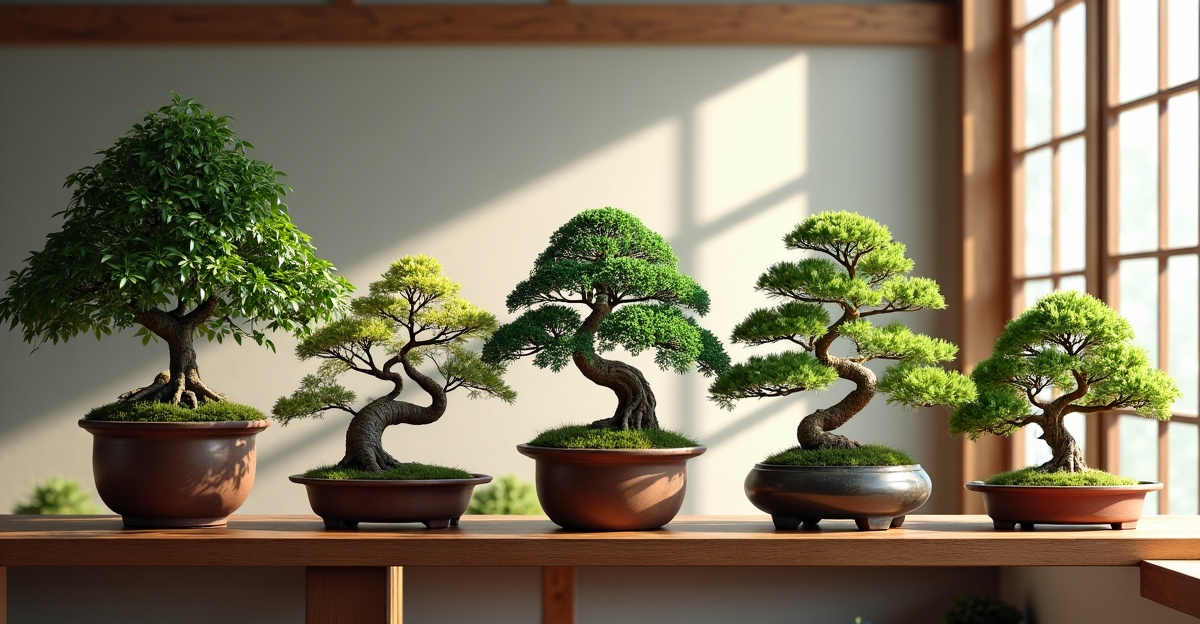
Every spring, my courtyard fills with the quiet ritual of assessment. I walk slowly past the benches — junipers silvered with morning dew, a Chinese elm leafing out in tender green, a flowering azalea so vibrant it seems almost embarrassed by its own beauty. Each tree has a story. Each one was, at some point, someone’s first choice.
If you are searching for the best bonsai trees to add to your collection — or to begin one — you have arrived at the right moment. In this guide, I will share the species that consistently reward their keepers, whether you have a sunny apartment window or a backyard garden to work with.
The best bonsai trees are not the rarest or the most expensive. They are the ones that teach you something, year after year.
Best Bonsai Trees for Beginners (Indoors)
Indoor bonsai thrive in the controlled environment of a home, making them accessible to anyone — even those without outdoor space. These three species consistently earn high marks for their resilience and beauty.
1. Ficus Bonsai (Ficus retusa)
The ficus is the gateway bonsai. It tolerates the imperfect conditions of a home — inconsistent watering, fluctuating humidity, and less-than-ideal light — better than almost any other species. Its glossy, oval leaves and graceful aerial roots give it an ancient, otherworldly appearance even on young trees.
- Light: Bright indirect light; tolerates lower light better than most
- Water: Allow top inch of soil to dry between waterings
- Best for: Apartments, offices, anyone who travels occasionally
2. Fukien Tea Bonsai (Carmona retusa)
A perennial favorite in Asian households for centuries, the Fukien Tea produces small white flowers nearly year-round and develops deeply textured bark even on relatively young specimens. It rewards gentle attention — steady warmth, good humidity, and consistent care — with an elegance that no other indoor species quite matches.
- Light: Bright light; south-facing window or grow light
- Water: Keep consistently moist; mist leaves in dry climates
- Best for: Those who enjoy a tree with presence and character
Shop Fukien Tea Bonsai on Amazon →
3. Chinese Elm Bonsai (Ulmus parvifolia)
If I were to recommend a single species to every beginning bonsai practitioner, it would be the Chinese Elm. Its small, serrated leaves, elegant S-curved trunk, and willingness to forgive occasional neglect make it ideal for learning. It can be kept indoors year-round in warmer climates, or moved outside in summer to invigorate its growth.
- Light: Bright light indoors; full sun outdoors
- Water: Water when top of soil begins to dry; never allow to fully dry out
- Best for: Beginners ready to start learning pruning and styling
Shop Chinese Elm Bonsai on Amazon →
Best Outdoor Bonsai Trees
Outdoor bonsai require seasonal changes to thrive — they need the cold of winter, the heat of summer, and the full spectrum of sunlight that no indoor setting can fully provide. In return, they develop a depth of character that indoor trees rarely achieve.
4. Juniper Bonsai (Juniperus)
The juniper is, for many, the definitive bonsai image — cascading foliage, dramatic deadwood, and the unmistakable blue-green of its dense pads. It is among the most forgiving of outdoor species and responds exceptionally well to wiring and carving. Hardy across most of North America, it thrives in full sun and dislikes being brought inside.
- Light: Full sun outdoors — at least 6 hours daily
- Water: Allow to dry slightly between waterings; never waterlog
- Best for: Anyone with outdoor space and a desire for classic bonsai styling
Shop Juniper Bonsai on Amazon →
5. Japanese Maple Bonsai (Acer palmatum)
Few trees in the bonsai world command the reverence of the Japanese Maple. In spring, its leaves emerge in soft red or green; in autumn, they ignite in shades of orange, crimson, and gold. It is a tree that marks the passage of time with extraordinary beauty. More demanding than the juniper, but deeply rewarding for the patient practitioner.
- Light: Partial shade to full sun; protect from harsh afternoon sun in hot climates
- Water: Keep consistently moist during growing season; reduce in winter
- Best for: Intermediate growers seeking a tree with seasonal drama
Shop Japanese Maple Bonsai on Amazon →
Best Bonsai for Flowering
A flowering bonsai adds a dimension of seasonal beauty that transcends even the finest foliage display. These two species produce blooms of such intensity that they stop visitors mid-step.
6. Azalea Bonsai (Rhododendron)
The Satsuki azalea is the crown jewel of flowering bonsai. Each spring, it covers itself so completely in blossoms — ranging from pure white to vivid magenta — that the foliage nearly disappears. It requires acidic, well-draining soil and benefits from careful post-bloom pruning. But when it flowers, it is without equal.
- Light: Bright indirect light or dappled outdoor sun
- Water: Keep moist; never allow to dry fully; use rainwater if possible
- Best for: Those who want a tree that flowers dramatically
7. Wisteria Bonsai (Wisteria sinensis)
Wisteria in full bloom is one of nature’s most theatrical performances — cascades of violet or white flowers hanging from delicate branches, sweetly scented and utterly breathtaking. As bonsai, this spectacle is rendered in miniature but loses none of its power. It requires careful management of vigorous growth, but the reward each spring justifies every cut.
- Light: Full sun outdoors
- Water: Water freely during growing season; reduce in winter
- Best for: Experienced beginners willing to manage a vigorous grower
Where to Buy Bonsai Trees
Finding a quality bonsai has become considerably easier in recent years. Here are the paths I recommend:
Online (Amazon)
For convenience and variety, Amazon has become a reliable source for starter bonsai and young nursery stock. Look for sellers with consistent reviews and clear photos of the actual trees shipped — not just stock images. A search for bonsai trees on Amazon will surface many options across all price ranges.
Local Bonsai Nurseries
If you have a bonsai specialty nursery in your area, visit it. The trees have been cared for properly, you can inspect root health and structure in person, and the staff can offer guidance specific to your climate. Many cities have bonsai clubs that maintain lists of reputable local sources.
Bonsai Shows and Clubs
Purchasing from a bonsai artist at a show supports the community and often yields a tree with far more character than anything you will find at retail prices. These trees have history, care, and intention behind them.
Conclusion
The best bonsai tree is the one that matches your environment, your patience, and where you are in your practice. A ficus on a sunny windowsill can be as meaningful as a century-old juniper on a carved wooden stand. What matters is the relationship you develop with it over time.
Begin with what resonates. Water with attention. Prune with restraint. And let the tree teach you what it needs.
Whether you start with a Ficus, a Chinese Elm, or a Juniper, you are beginning something that will outlast seasons — and perhaps outlast you.
— Kenji