Best Indoor Bonsai for Low Light Conditions
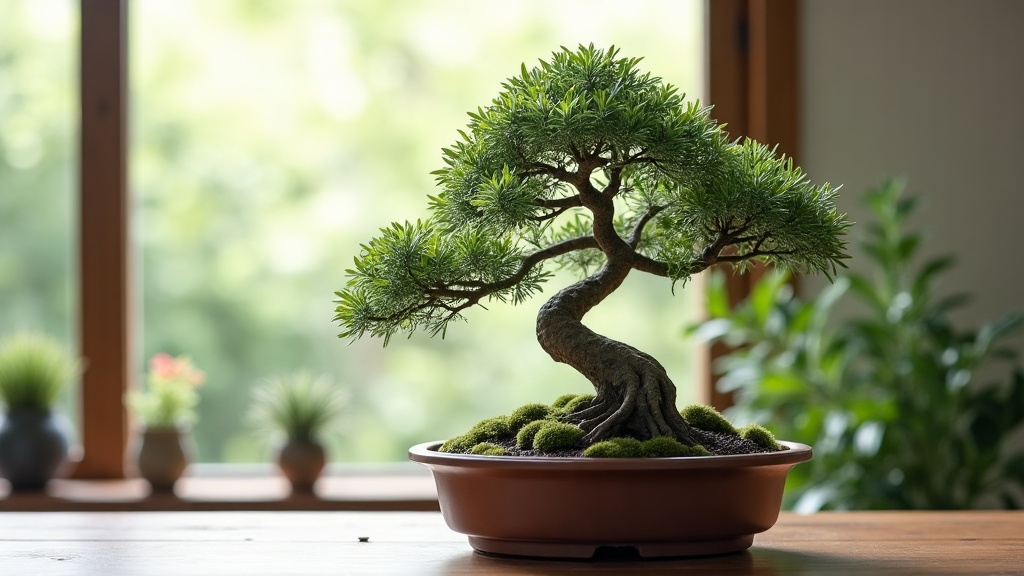
After two decades of working with bonsai in both bright studios and dim apartments, I’ve learned that low light doesn’t mean you must give up on growing trees indoors. Several species adapt remarkably well to the subdued light of north-facing windows or rooms set back from direct sun—if you choose wisely and adjust your care accordingly.
The key is understanding that “low light” in bonsai terms still means consistent indirect light, not a dark corner. Most truly low-light-tolerant bonsai are tropical or subtropical species that evolved beneath forest canopies. They won’t thrive in complete darkness, but they can flourish with 2-4 hours of indirect light or under supplemental grow lights.
What Defines a Low Light Bonsai
Before we discuss specific species, let me clarify what low light means in practice. A low-light location receives:
- Indirect natural light for most of the day—think 5-10 feet from a north-facing window
- Minimal direct sun—perhaps early morning or late afternoon rays, but not midday intensity
- Consistent ambient brightness—not a closet or windowless room without supplemental lighting
In my Osaka training, I learned that indoor bonsai cultivation is always a compromise. We’re asking trees to survive in conditions far from their natural habitat. Low-light species simply handle this compromise more gracefully than others.
Top Indoor Bonsai Species for Low Light
Ficus (Ficus benjamina, Ficus retusa)
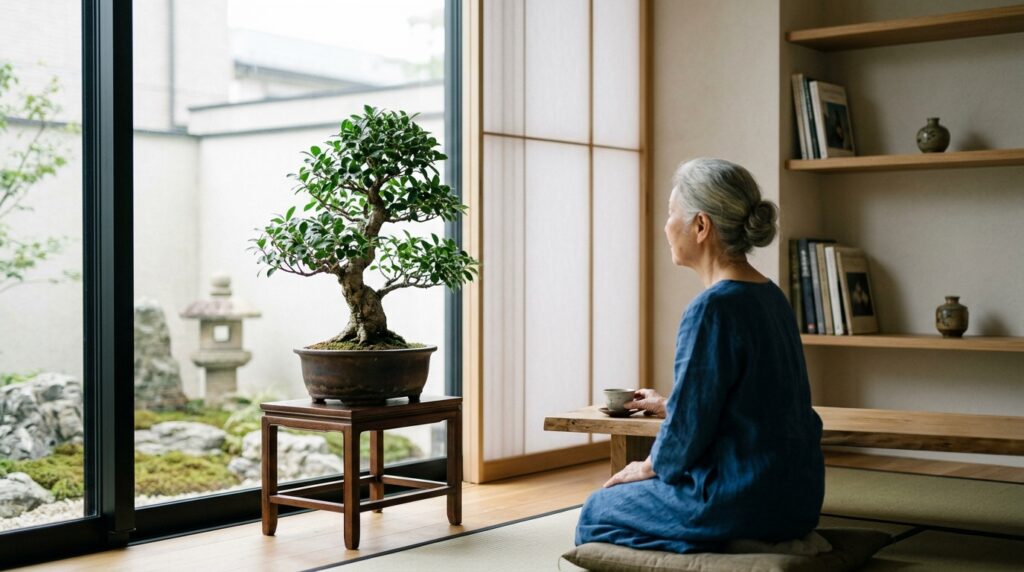
The ficus remains my first recommendation for anyone dealing with limited light. These tropical trees evolved in the understory of Southeast Asian forests, making them naturally tolerant of filtered light. A ficus retusa bonsai placed 6-8 feet from a window will often maintain healthy growth, though you’ll notice slower development compared to specimens in bright light.
The small, waxy leaves of ficus help it conserve energy in dim conditions. In my own collection, I have a ficus that’s thrived for twelve years in a room that receives only morning light through sheer curtains. The growth rate is measured—perhaps 3-4 new leaves per branch each season—but the tree remains healthy and responsive to pruning.
When selecting a ficus for low light, choose varieties with smaller leaves like ginseng ficus or willow leaf. Larger-leafed varieties demand more light to support their foliage mass.
Chinese Elm (Ulmus parvifolia)
Chinese elm occupies an interesting middle ground. While it prefers bright conditions, it tolerates low light better than most deciduous species. A Chinese elm bonsai in subdued light will drop some interior leaves—this is normal adaptation, not decline.
I keep Chinese elm in low light only during winter months when outdoor placement isn’t feasible. The tree enters a semi-dormant state with reduced watering needs. Come spring, I transition it back to brighter conditions for active growth. This seasonal rotation respects the tree’s natural rhythms while accommodating indoor limitations.
Jade Plant (Crassula ovata)
Though not a traditional bonsai species, jade adapts beautifully to bonsai training and excels in low light. As a succulent, it stores energy in thick leaves and trunk, making it remarkably forgiving of inconsistent light. A jade bonsai will grow more slowly in dim conditions, but this actually aids training—the compact growth helps maintain small-scale proportions.
I’ve observed jade bonsai thriving in office environments with only fluorescent overhead lighting. The key is adjusting water accordingly. Less light means slower growth and reduced water consumption. In low light, I water jade only when the soil is completely dry, sometimes just twice monthly in winter.
Schefflera (Schefflera arboricola)
The umbrella tree, or schefflera, tolerates low light conditions that would stress most species. In dim environments, schefflera reduces its leaf size naturally—a fortuitous adaptation for bonsai cultivation. A schefflera bonsai placed in indirect light develops dense foliage with smaller leaves, exactly what we want aesthetically.
The wabi-sabi beauty of schefflera emerges in how it adapts. In bright light, it pushes vigorous growth. In low light, it becomes contemplative, conserving energy, developing character slowly. Both states have their merit.
Fukien Tea (Carmona reticulata)
Fukien tea challenges the assumption that flowering bonsai need intense light. While it blooms more prolifically in brightness, it maintains health and produces occasional flowers even in subdued conditions. A Fukien tea bonsai asks for consistency above all else—stable temperature, consistent moisture, and unchanging light levels, even if those levels are low.
I place fukien tea in low-light situations only for mature trees with established root systems. Young specimens need brighter conditions to develop trunk and branch structure. Once established, they maintain their form admirably in dim rooms.
Comparison of Low Light Bonsai Species
| Species | Light Tolerance | Water Needs | Difficulty | Best Feature |
|---|---|---|---|---|
| Ficus | Excellent | Moderate, consistent | Beginner | Most forgiving, fast healing |
| Chinese Elm | Good (seasonal) | High in growth, low in dormancy | Beginner | Fine ramification, classic look |
| Jade | Very Good | Low, drought-tolerant | Beginner | Extremely low maintenance |
| Schefflera | Excellent | Moderate | Beginner | Natural leaf reduction in low light |
| Fukien Tea | Good (mature trees) | High, consistent | Intermediate | Small leaves, flowers |
Adjusting Care for Low Light Conditions
Watering Discipline
Low light fundamentally changes watering requirements. Trees photosynthesize less, grow more slowly, and consume less water. I’ve seen more low-light bonsai die from overwatering than from insufficient light itself.
In dim conditions, I check soil moisture carefully before each watering. The top inch should be dry. For ficus and schefflera, I sometimes let the soil approach complete dryness before watering thoroughly. This differs markedly from bright-light care, where daily watering may be necessary.
Consider using a moisture meter for bonsai if you’re uncertain. These inexpensive tools provide objective data about when watering is actually needed.
Fertilization Strategy
Reduce fertilizer application in low light—perhaps half the concentration you’d use in bright conditions, applied half as frequently. The tree cannot process nutrients it cannot use, and excess fertilizer accumulates as salts that damage roots.
I fertilize low-light bonsai only during their active growth period, which may be shortened compared to specimens in brightness. A balanced liquid fertilizer diluted to quarter strength works well for maintenance feeding.
Air Circulation Matters
Stagnant air in low-light rooms encourages fungal issues and pest problems. I use a small fan to maintain gentle air movement around indoor bonsai. This isn’t about creating wind stress—just preventing the still, humid conditions where problems develop.
In my Kyoto training, we learned that indoor bonsai are ecosystems unto themselves. Light, water, air, temperature—all elements must balance. When one element (light) is limited, we must carefully adjust others to maintain equilibrium.
Supplemental Lighting Options
If natural light is severely limited, supplemental lighting extends your options considerably. Modern LED grow lights are efficient, generate minimal heat, and provide spectrum-appropriate illumination.
I use full-spectrum LED grow lights positioned 12-18 inches above trees, running 10-12 hours daily. This supplements weak natural light rather than replacing it entirely. The combination of ambient daylight and artificial light creates conditions where even light-demanding species can survive.
For placement, position grow lights above and slightly to the side—mimicking sun angle—rather than directly overhead. This encourages directional growth and prevents the flat, artificial look that purely top-down lighting creates.
Species to Avoid in Low Light
Some popular bonsai simply cannot adapt to dim conditions. Avoid these species unless you can provide bright light:
- Junipers—outdoor species requiring intense direct sun
- Japanese Maple—needs seasonal dormancy and bright light
- Azalea—flowering demands high light levels
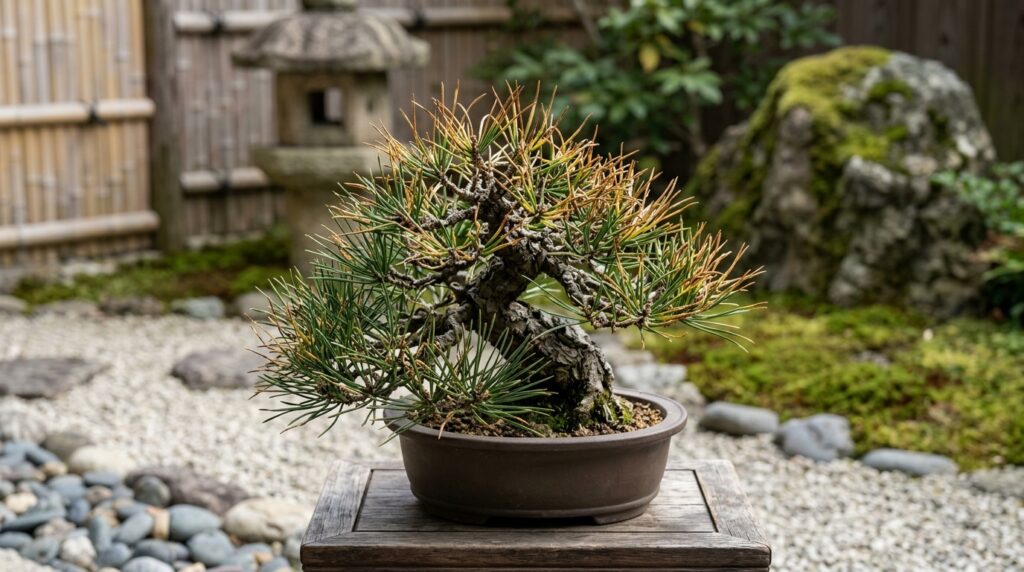
- Pine species—full sun requirements, no exceptions
- Bougainvillea—brilliant color requires brilliant light
I’ve seen beginners struggle with these species in low light, becoming frustrated when inevitable decline occurs. This isn’t failure—it’s a mismatch between plant requirements and available conditions. Better to choose species adapted to your environment than fight nature.
The Wabi-Sabi Beauty of Limited Light
There’s an aesthetic consideration worth mentioning. Bonsai grown in low light develop a particular character—slower growth, denser foliage, more contemplative presence. They don’t display the exuberant vigor of sun-grown specimens, but they possess quiet dignity.
In wabi-sabi philosophy, we find beauty in imperfection and impermanence. A low-light bonsai embodies this principle. It adapts, persists, finds balance in constraint. The tree becomes a meditation on working within limitations rather than against them.
I have a ficus that’s spent fifteen years in subdued north-facing window light. It grows perhaps one-quarter the rate of my outdoor trees. Yet its compact form, dark green leaves, and gnarled trunk express something my vigorous specimens cannot—patience itself made visible.
Frequently Asked Questions
Can bonsai survive in a room with no windows?
Not without artificial lighting. Even the most shade-tolerant species need light for photosynthesis. However, with quality grow lights running 10-14 hours daily, you can successfully maintain bonsai in windowless spaces. I’d recommend starting with ficus or jade if attempting this, as they adapt well to artificial light.
How do I know if my bonsai is getting too little light?
Watch for elongated growth between leaf nodes (etiolation), pale or yellowing leaves, leaf drop, and leggy branches reaching toward light sources. These signs indicate the tree is struggling. If you see them, either move the tree closer to a window, reduce watering and fertilizing, or add supplemental lighting.
Will low light affect flowering and fruiting?
Yes, significantly. Flowering and fruit production are energetically expensive processes that require abundant light. Species like Fukien tea may produce occasional blooms in low light, but you won’t see the profuse flowering that occurs in bright conditions. If flowers are your priority, these species need better lighting.
Can I rotate my bonsai between bright and low light locations?
This stresses most species. Trees adapt their physiology to available light levels—leaf thickness, chlorophyll density, photosynthetic efficiency all adjust. Frequent location changes force repeated adaptation, weakening the tree. Better to choose one appropriate location and maintain consistency. Seasonal moves (bright summer, dimmer winter) are acceptable, but not weekly rotations.
Should I prune low-light bonsai differently?
Yes—prune less aggressively. Each leaf is a solar panel generating energy. In low light, the tree needs most of its foliage to survive. I limit pruning to maintaining shape and removing dead material. Heavy structural pruning should wait until you can provide increased light during the recovery period, or accept very slow regrowth.