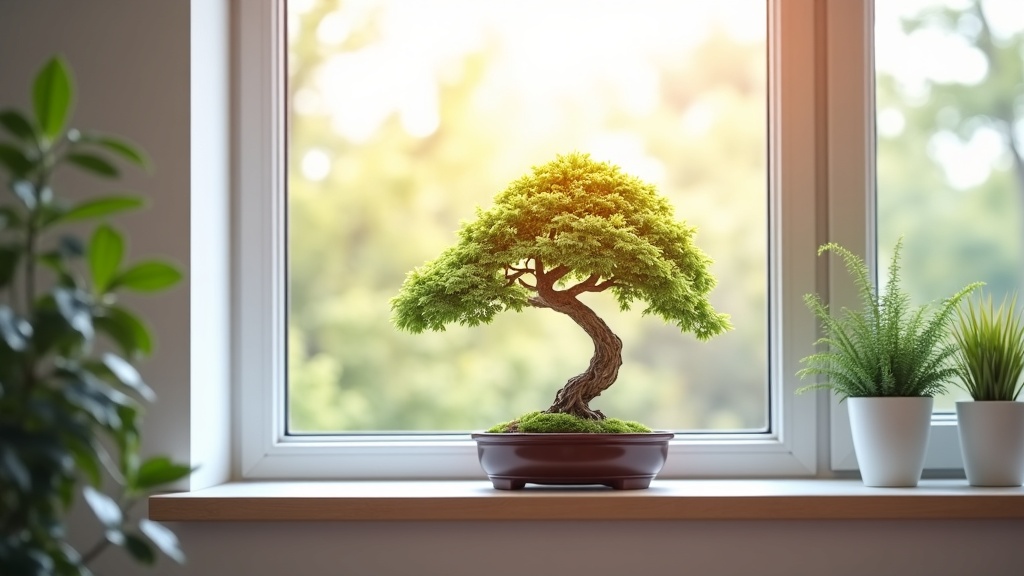
I’ve trained over a hundred apartment dwellers in bonsai care, and the first thing I tell them is this: limited space is not a limitation. In my Osaka studio—barely 35 square meters—I maintained twelve thriving specimens, including a fifty-year-old Acer palmatum that required nothing more than a south-facing windowsill and disciplined attention.
The practice of bonsai adapts naturally to small spaces if you choose appropriate species and understand the relationship between light, air circulation, and human rhythm. Urban growing presents distinct challenges—artificial heating cycles, inconsistent humidity, restricted outdoor access—but these constraints sharpen your awareness rather than diminish your results.
Best Bonsai Species for Indoor Apartment Conditions
Not all trees tolerate indoor life equally. After two decades of practice, I’ve observed that success with apartment bonsai depends less on skill level and more on matching species to your specific light and temperature conditions.
Tropical and Subtropical Species (True Indoor Bonsai)
These trees evolved in stable, warm climates and actually prefer the consistent temperatures inside apartments. They’re your most reliable choice if outdoor access is limited.
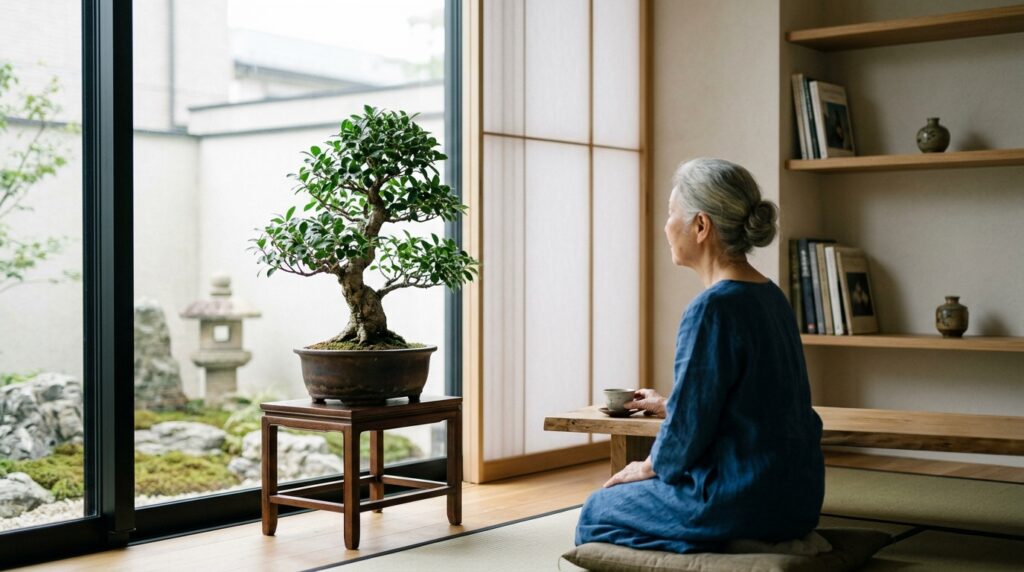
Ficus retusa (Chinese Banyan) — The most forgiving indoor species I know. Tolerates low light better than most references suggest, recovers quickly from pruning errors, and develops attractive aerial roots in humid conditions. I kept one in a bathroom with only north-facing light for three years; it grew slowly but remained healthy.
Schefflera arboricola (Umbrella Tree) — Responds well to aggressive pruning and develops thick trunks relatively quickly. Prefers bright indirect light but survives in dimmer corners. The compound leaves reduce in size with proper care, creating convincing tree proportions even on young specimens.
Carmona retusa (Fukien Tea) — Slightly more demanding but rewards attention with small white flowers year-round. Needs consistent moisture and bright light. I position mine within two feet of a south window and mist the foliage every morning during heating season.
Crassula ovata (Jade) — Not traditional in Japanese practice, but practical for beginners in dry apartments. Stores water in thick leaves, tolerates neglect, and develops character quickly. The succulent nature means you can travel for a week without disaster.
A basic indoor bonsai starter tree from these species typically costs $25–60 and provides years of development potential.
Temperate Species (Require Winter Dormancy)
These trees need a cold period—typically 2–4 months below 45°F (7°C). In apartments, this means balcony access, an unheated stairwell, or creative solutions with mini-fridges. The effort is worthwhile; temperate species offer the most dramatic seasonal interest.
Acer palmatum (Japanese Maple) — My personal favorite despite the complexity. Requires outdoor balcony space or fire escape access. The spring leaf emergence and fall color justify the winter logistics. Even in Tokyo apartments with minimal outdoor space, practitioners find ways to accommodate maples.
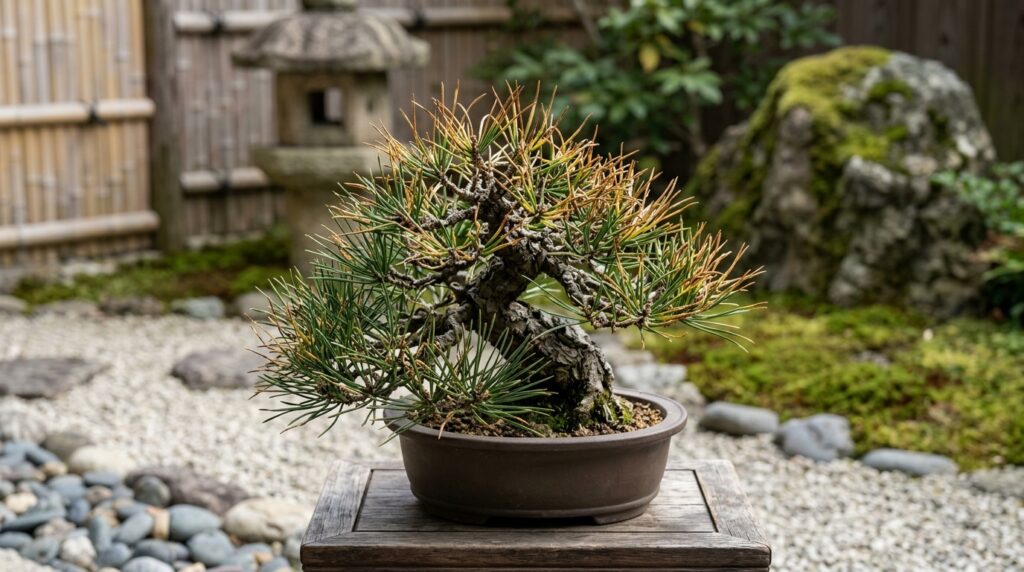
Juniperus chinensis (Chinese Juniper) — Classic material that needs outdoor conditions but tolerates urban air pollution better than most conifers. Can survive on a balcony year-round in most climates. Responds to wiring and holds shapes for decades.
Zelkova serrata (Japanese Elm) — Develops fine ramification quickly, creating convincing broom-style forms within 3–5 years. Less demanding than maples regarding cold hours but still needs genuine winter rest.
Setting Up Your Apartment Bonsai Space
The physical setup matters more than most beginners anticipate. I’ve seen expensive trees decline in apartments with perfect light simply because the grower ignored humidity and air circulation.
Light Requirements and Window Selection
South-facing windows provide maximum light intensity in northern hemisphere locations. I place light-hungry species (maples, junipers, jade) within three feet of south glass. East and west windows work for ficus and schefflera—they receive 4–6 hours of direct sun, which suffices for healthy growth.
North windows present challenges. Only the most shade-tolerant species (ficus, some schefflera cultivars) maintain health in north light, and even then, growth slows dramatically. If north exposure is your only option, supplement with LED grow lights positioned 12–18 inches above the canopy, running 10–14 hours daily.
Sheer curtains diffuse harsh summer sun while maintaining brightness. I use them June through August on south windows to prevent leaf scorch on delicate species like maples.
Humidity Management in Heated Apartments
Central heating drops indoor humidity to 15–25% in winter—far below the 40–60% most trees prefer. The leaves dessicate, buds abort, and fine roots die back.
My standard solution: humidity trays filled with expanded clay aggregate and water. The tree sits on the aggregate, pot above water level. As water evaporates, it creates a localized humid microclimate around the foliage. Refill the tray weekly during heating season.
For serious practitioners with multiple trees, a small cool mist humidifier positioned near your growing area maintains 45–50% humidity within a 6-foot radius. I run mine on a timer—6 AM to 10 AM and 4 PM to 8 PM—to match the trees’ active transpiration periods.
Air Circulation
Stagnant air encourages fungal issues and weakens growth. I use a small oscillating fan on low speed, positioned to create gentle movement in the foliage without directly blasting any single tree. Run it 4–6 hours daily. This also helps strengthen trunks by simulating outdoor wind stress.
Comparison: Space-Efficient Display Methods
| Display Method | Space Required | Trees Supported | Best For |
|---|---|---|---|
| Windowsill | 6–12″ depth | 1–3 small trees | Beginners; minimal commitment; shohin-size specimens |
| Tiered Plant Stand | 2–3 sq ft floor space | 4–8 trees | Near-window placement; varying heights create visual interest |
| Wall-Mounted Shelves | Zero floor space | 3–6 trees | Maximizing vertical space; must be near light source |
| Rolling Cart | 2 sq ft floor space | 2–4 trees | Flexibility to move trees between light sources; balcony access |
| Dedicated Table by Window | 4–6 sq ft floor space | 6–12 trees | Serious practitioners; room for tools and seasonal rotation |
I’ve used all these methods across different living situations. In my first studio, a three-tiered bamboo plant stand positioned beside a south window held eight trees in less than three square feet of floor space. When I moved to a larger apartment with balcony access, I added a slatted wooden bench for temperate species that needed outdoor exposure.
Watering Logistics in Small Spaces
Proper watering is the most critical skill in bonsai, and apartments complicate it. Trees need thorough soaking until water runs from drainage holes—difficult to achieve on a windowsill without damaging floors or furniture.
My method: Every morning, I carry trees to the kitchen sink or bathtub. Water thoroughly with a gentle stream, let them drain for 10–15 minutes, then return them to display positions. This also serves as my daily health check—I inspect foliage, check soil moisture, and spot pest issues early.
A watering can with a fine rose attachment delivers water gently without disturbing soil or exposing roots. Avoid using a strong stream from the tap directly; it erodes surface soil and damages delicate root systems.
For practitioners with many trees or mobility limitations, placing each pot on a deep saucer catches runoff. Pour off excess water 30 minutes after watering to prevent root rot.
Soil and Repotting in Apartment Conditions
Good bonsai soil drains quickly while retaining some moisture—critical in apartments where you can’t water multiple times daily. I use a mix of akadama (fired clay), pumice, and lava rock in roughly 2:1:1 proportions for most species. This blend drains in seconds but holds enough moisture for 24-hour intervals between waterings.
Repotting creates mess. I spread newspaper or a cheap plastic tablecloth in the bathtub or shower, work there, then fold everything up for disposal. The entire process—root pruning, repotting, cleanup—takes 30–45 minutes per tree.
Apartment dwellers should invest in quality pre-mixed bonsai soil rather than storing individual components. A 5-liter bag handles 3–5 repotting sessions for small trees and requires minimal storage space.
Seasonal Considerations for Indoor Trees
Even tropical species that live indoors year-round respond to seasonal light changes. In winter, reduced light intensity slows growth—I adjust watering frequency accordingly, checking soil daily but often watering every 2–3 days rather than daily.
Summer heat through south-facing windows can stress trees. I move the most sensitive species (maples, azaleas) back from the glass during June-August or add sheer curtains to reduce intensity.
Temperate species on balconies need winter protection in harsh climates. I group pots together, surround them with mulch bags for insulation, and check moisture weekly even in freezing weather. Roots in containers freeze faster than ground-planted trees—protection prevents root death.
Common Mistakes Apartment Growers Make
Insufficient light — The most frequent failure. Bonsai marketed as “indoor trees” still need bright conditions. If you’re reading comfortably without artificial light, the spot is probably too dim for optimal growth.
Inconsistent watering — Small pots dry quickly, especially near heat vents or radiators. Missing even one watering cycle can damage fine feeder roots. I set a phone reminder for morning watering until it becomes automatic habit.
Choosing temperate species without outdoor access — Maples and junipers will survive indoors for 6–8 months, appearing healthy while slowly depleting energy reserves. Without proper dormancy, they decline in the second year. Be honest about your space limitations.
Over-fertilizing — Slow indoor growth requires less fertilizer than outdoor culture. I fertilize indoor trees at half the recommended strength, every 3–4 weeks during the growing season only. Excess fertilizer concentrations in small pots cause root burn.
Essential Tools for Apartment Bonsai Practice
You need surprisingly few tools to maintain healthy apartment bonsai. My fundamental kit fits in a single drawer:
- Sharp pruning shears — for trimming shoots and light branch work
- Aluminum wire set (1mm–4mm) — for shaping branches
- Root rake — for repotting
- Bamboo chopstick — for working soil around roots during repotting
- Small brush — for cleaning soil from trunk surface and exposed roots
- Spray bottle — for misting foliage
Advanced techniques require concave cutters and jin pliers, but basic maintenance and development work perfectly fine with these essentials. I practiced with this minimal toolkit for my first five years.
Frequently Asked Questions
Can bonsai survive in apartments with only artificial light?
Yes, but you need proper full-spectrum grow lights positioned correctly. I’ve maintained ficus and jade under LED panels in a basement apartment with no windows. Use lights rated for 6500K color temperature, position them 12–18 inches above foliage, and run them 12–14 hours daily. Growth will be slower than with natural light, but trees remain healthy. Temperate species requiring dormancy won’t thrive under this arrangement—stick with tropical species.
How many bonsai can I realistically keep in a small apartment?
This depends more on your available light than floor space. A single south-facing window can support 6–10 small trees on tiered shelving. I’ve seen studio apartments with 20+ specimens using creative vertical arrangements and supplemental lighting. Start with 2–3 trees, learn their rhythms, then expand gradually. The limitation is usually watering time—once your collection requires more than 15–20 minutes of daily care, you’ve probably hit your sustainable maximum unless bonsai becomes your primary hobby.
Do I need a balcony or outdoor space for bonsai?
Not if you choose tropical species suited for indoor conditions—ficus, schefflera, jade, or fukien tea. These trees evolved in stable warm climates and actually prefer consistent indoor temperatures. However, if you want to work with traditional temperate species like maples, pines, or junipers, you absolutely need outdoor access for winter dormancy. There’s no indoor substitute for genuine cold exposure that triggers proper rest cycles.
What’s the best beginner species for a one-bedroom apartment?
Ficus retusa remains my top recommendation. It tolerates the widest range of indoor conditions, recovers from beginner mistakes, and develops interesting trunk character within 3–5 years. Cost is reasonable—$30–50 for good starter material. Place it near your brightest window, water when the soil surface dries, and fertilize monthly during spring and summer. This species taught me more about bonsai fundamentals than any other.
How do I prevent pests in an indoor bonsai collection?
Indoor trees face spider mites, scale, and occasionally fungus gnats. Prevention beats treatment: maintain good air circulation with a small fan, inspect foliage weekly during your watering routine, and quarantine new acquisitions for 2–3 weeks before placing them near established trees. If you spot pests early, manual removal with cotton swabs dipped in rubbing alcohol handles most infestations. For severe cases, I use neem oil solution, applied in the shower or bathtub to avoid overspray on furniture.