After two decades of working with bonsai, I’ve learned that choosing the right tree is less about finding perfection and more about understanding what fits your skill level, climate, and the time you can offer. Most beginners select trees based on appearance alone, then struggle when the reality of care doesn’t match their expectations.
In this review, I’ll share my honest assessments of common bonsai species and varieties—what makes them worth your attention, what challenges they present, and which ones I return to year after year in my own practice.
What Makes a Bonsai Tree Worth Reviewing
Not every tree deserves your time. In my training in Osaka, my teacher emphasized three criteria: the tree’s responsiveness to technique, its aesthetic potential over seasons, and whether it teaches you something valuable about patience and observation.
A good bonsai candidate should show clear response to pruning and wiring within a growing season. It should offer visual interest beyond just leaves—bark texture, branching patterns, seasonal changes. And it should match your climate without requiring extraordinary measures to keep it alive.
I’ve killed my share of expensive specimens by ignoring these fundamentals. The reviews below reflect what I’ve learned from both success and failure.
Top Bonsai Species: My Direct Experience
Japanese Maple (Acer palmatum)
The Japanese maple remains my most reliable recommendation for intermediate practitioners. The responsiveness to pruning is exceptional—new buds form predictably, branches thicken at a reasonable pace, and the ramification develops beautifully over 3-5 years of consistent work.
Spring color ranges from bright green to deep burgundy depending on cultivar. Fall transformation is remarkable. Winter branch structure reveals your shaping work clearly, which makes this species an excellent teacher.
Challenges include leaf burn in harsh sun and susceptibility to aphids in humid climates. You’ll need partial shade in summer and vigilant pest monitoring. Still, if you can provide these conditions, Japanese maple bonsai trees offer years of satisfying development.
Chinese Elm (Ulmus parvifolia)
This is the tree I suggest when someone asks for a forgiving species. Chinese elm tolerates pruning mistakes, survives occasional watering lapses, and adapts to both indoor and outdoor environments with relative ease.
The small leaves reduce nicely with proper technique. Bark develops attractive mottled patterns within 5-7 years. Branch structure is naturally graceful, requiring less aggressive wiring than many species.
My main reservation is that Chinese elm can feel almost too easy—you don’t develop the same precision that more demanding species require. But for building confidence and learning fundamental techniques, it’s difficult to criticize. Chinese elm bonsai specimens are widely available and reasonably priced.
Juniper (Juniperus species)
Junipers were the first trees I learned to wire in Kyoto. The deadwood techniques they allow—jin and shari—create dramatic aged appearances that other species cannot match. The foliage responds well to pinching, and the natural movement in the trunk often requires minimal intervention.
However, junipers punish indoor placement. I’ve seen countless specimens slowly decline on windowsills, their foliage turning bronze before the owner realizes the damage is irreversible. These are outdoor trees, full stop.
In the right conditions—full sun, excellent drainage, outdoor year-round—junipers are extraordinary. In the wrong conditions, they’re an expensive lesson in plant biology. If you have outdoor space, juniper bonsai trees reward dedicated care with stunning results.
Ficus (Ficus retusa, Ficus benjamina)
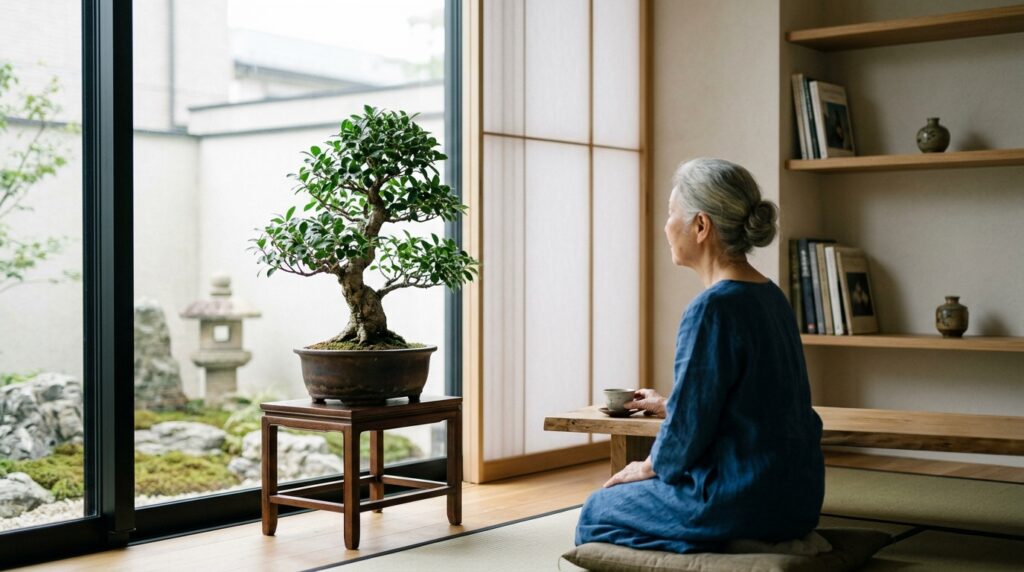
For purely indoor cultivation, ficus varieties offer the most reliable option I’ve found. They tolerate lower light better than most tropicals, respond quickly to pruning, and develop aerial roots that add character over time.
Growth is vigorous—sometimes too vigorous. You’ll be pruning frequently during growing season. The thick leaves don’t reduce as much as I’d prefer, which limits certain styling options. But the trade-off is a tree that actually survives indoors without elaborate grow light setups.
I keep several ficus in my studio for winter work when outdoor trees are dormant. They’re not my favorite aesthetically, but they serve their purpose well. Ficus bonsai trees are practical choices for apartment dwellers.
Comparison of Beginner-Friendly Species
| Species | Difficulty | Indoor/Outdoor | Key Strength | Main Challenge |
|---|---|---|---|---|
| Chinese Elm | Easy | Both | Very forgiving | Can become leggy |
| Ficus | Easy | Indoor | Survives low light | Large leaves |
| Japanese Maple | Moderate | Outdoor | Beautiful seasonal color | Leaf burn susceptibility |
| Juniper | Moderate | Outdoor only | Deadwood techniques | Dies indoors |
| Pine (various) | Advanced | Outdoor | Classic aesthetic | Specific technique required |
Advanced Species Worth Considering
Japanese Black Pine (Pinus thunbergii)
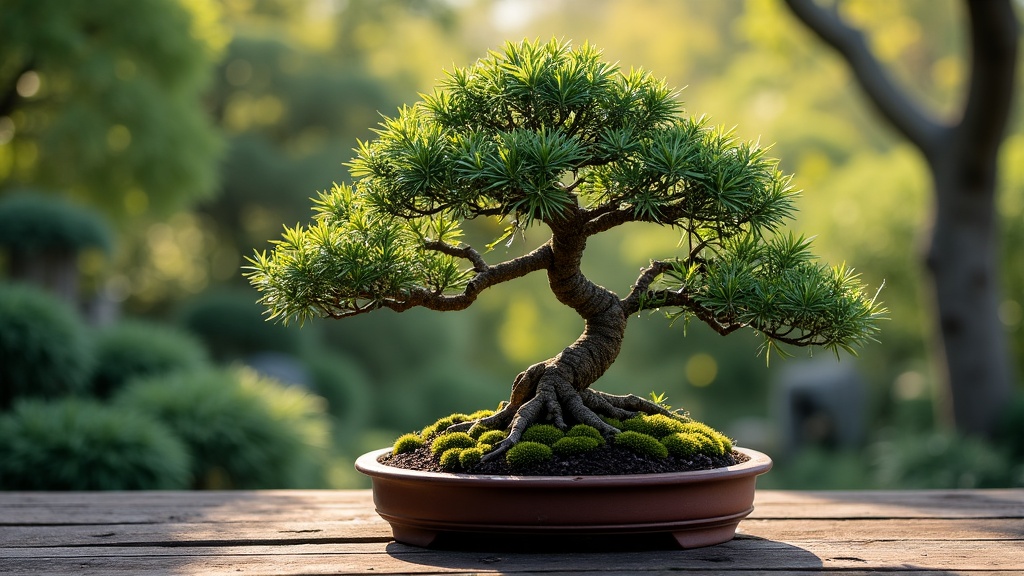
After fifteen years of practice, I finally felt ready to work seriously with pines. The candle-cutting technique, the timing of decandling, the balance between vigor and refinement—these require knowledge that only comes from observation and repetition.
When executed well, pine bonsai embody the aesthetic I was taught to pursue: strength without aggression, age without decay, simplicity that reveals complexity on closer inspection.
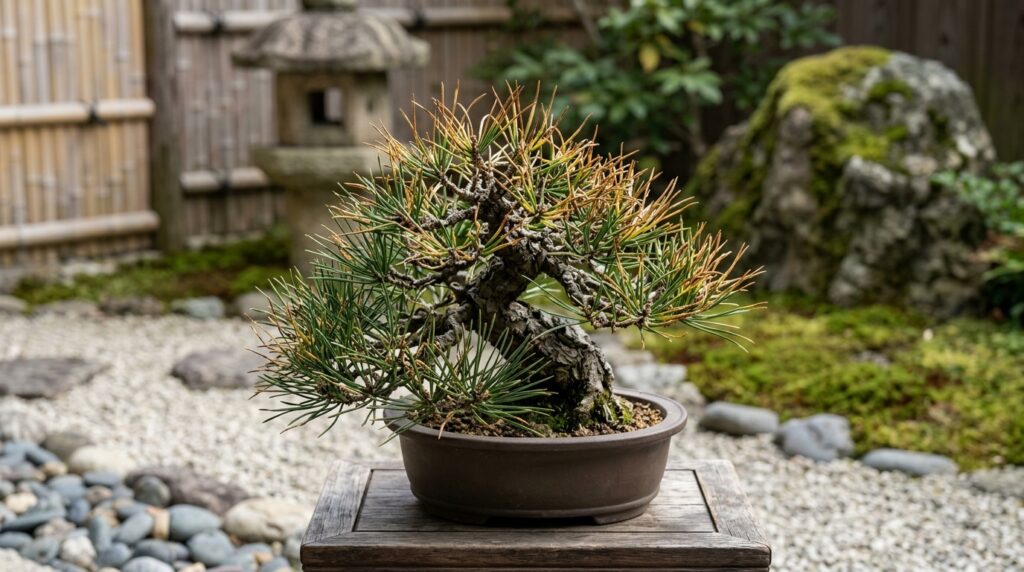
I don’t recommend pines to beginners, not because they’re impossible, but because mistakes take years to correct. A missed pruning window, improper needle plucking, or root work at the wrong time can set back development significantly.
If you’ve worked successfully with deciduous species for several years and want to deepen your practice, Japanese black pine bonsai represents worthy challenge.
Azalea (Rhododendron indicum)
Azalea bonsai bloom with intensity that can feel almost excessive—entire canopies of color that transform the tree completely for several weeks each spring. But this drama comes with specific care requirements.
The soil must remain acidic and consistently moist. The roots are fine and delicate, requiring careful attention during repotting. Post-bloom pruning timing is critical for next year’s flower development.
I appreciate azaleas most when they’re not blooming—the small leaves, tight branching, and gnarled trunks of mature specimens show refined technique. The flowers are a bonus, not the primary achievement.
What to Look for When Purchasing
Most commercial bonsai are sold at a developmental stage I call “promising material”—they have potential but require years of work to realize it. This is fine, expected even, but you should recognize what you’re buying.
Examine the nebari (root spread) carefully. Roots should radiate evenly from the trunk base without major gaps or crossing roots. This foundation is difficult to correct later. A tree with poor nebari but beautiful upper structure is not a good long-term investment.
Check for trunk movement and taper. The trunk should narrow gradually from base to apex, ideally with curves or angles that create visual interest. Straight, uniform trunks lack character and are harder to develop into compelling compositions.
Evaluate the branch structure. Lower branches should be thicker than upper branches. Branch placement should feel intentional, not random. Missing branches in key positions are limitations you’ll work around for years.
For tools and supplies needed for care, quality bonsai tool sets make precise work much easier than improvising with household scissors.
The Role of Pre-Bonsai Material
Some of my most satisfying work has started with pre-bonsai stock—young trees grown specifically for bonsai development but not yet styled. This material costs less than finished bonsai but requires vision to assess its potential.
Pre-bonsai allows you to make fundamental design decisions from the beginning. You choose the front, establish the initial branch structure, and guide the development according to your aesthetic preferences rather than inheriting someone else’s choices.
The trade-off is time. A pre-bonsai specimen may need 5-10 years of development before it resembles the finished bonsai you imagined. This timeline teaches patience in ways that buying finished trees cannot.
I recommend working with both—maintain some developed trees for immediate satisfaction while cultivating pre-bonsai material for long-term practice. Bonsai starter trees offer good entry points for this approach.
Common Mistakes in Tree Selection
The most frequent error I see is choosing trees for their current appearance rather than their care compatibility with the buyer’s actual circumstances. An indoor apartment with limited light cannot support an outdoor species no matter how beautiful it looks in the shop.
Second is underestimating the time commitment. Bonsai are not houseplants that survive on weekly watering. During growing season, many species need daily attention, sometimes twice daily in hot weather. If your schedule doesn’t allow this, choose accordingly or don’t start.
Third is buying too many trees too quickly. Depth of practice with a few trees teaches more than superficial experience with many. I suggest starting with one or two specimens, learning their rhythms thoroughly, then expanding slowly.
Frequently Asked Questions
What is the best bonsai tree for complete beginners?
Chinese elm or ficus, depending on whether you can provide outdoor space. Both tolerate beginner mistakes reasonably well and respond clearly to basic techniques. Avoid pines, azaleas, and other species that require advanced knowledge for basic survival.
How do I know if a bonsai tree is healthy before buying?
Look for firm, well-colored foliage without browning edges or yellowing. Check that the soil is moist but not waterlogged. Examine the trunk and branches for cracks, wounds, or signs of disease. Gently test branch flexibility—they should bend slightly without snapping. Avoid trees with loose root balls or significant root exposure above the soil line.
Are expensive bonsai trees worth the investment?
Price often reflects age and development time rather than inherent superiority. A $500 tree may have 15 years of careful training creating its structure. That said, expensive trees require advanced care—if you cannot maintain them properly, the investment is wasted. Build your skills with affordable material first.
Can I create bonsai from regular nursery trees?
Yes, this is how I source much of my material. Nursery stock offers excellent value if you can envision its potential. Look for trees with good trunk character, interesting root bases, and low branching. You’ll need to dramatically reduce the size through pruning and root work, which takes several years but costs far less than purchasing finished bonsai.
How long does it take for a bonsai tree to look mature?
Starting from quality pre-bonsai material, expect 5-7 years minimum for a convincingly developed tree. Starting from seedlings or cuttings extends this to 10-15 years or more. The timeline depends on species growth rate, your technique, and how frequently you work the tree. Ancient-looking specimens with thick trunks and refined branching often represent decades of cultivation.