
Disclosure: This post contains affiliate links. As an Amazon Associate, I earn from qualifying purchases at no extra cost to you.
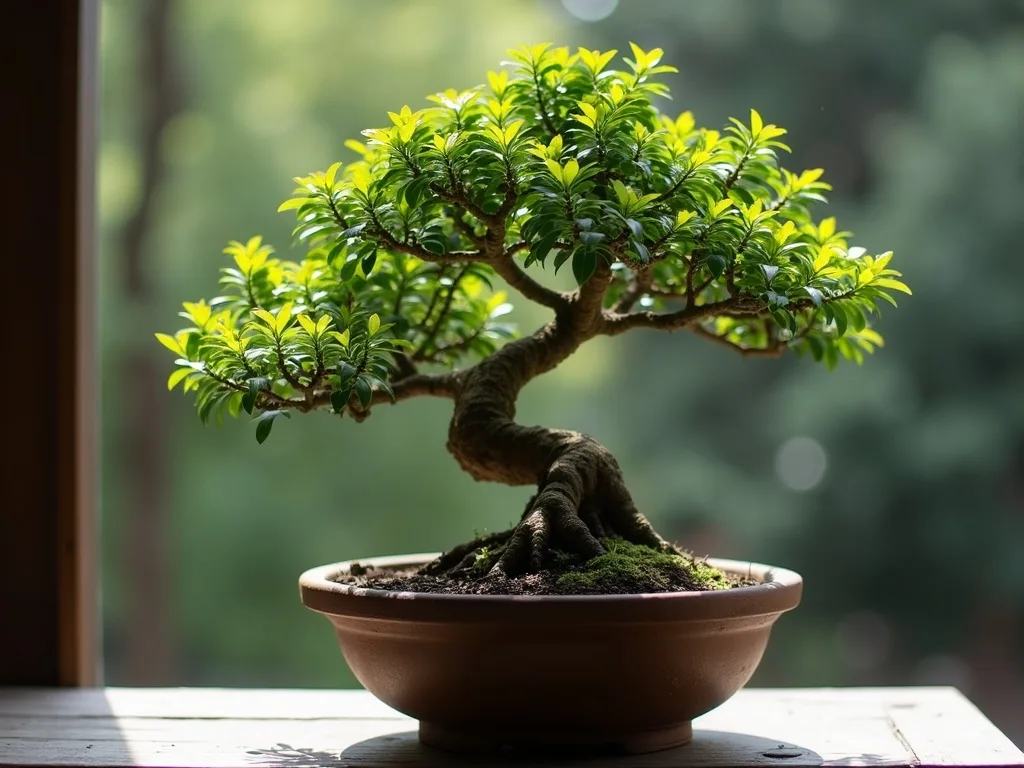
When someone asks me which bonsai they should start with, my answer is always the same: the Ficus. After twenty years of teaching bonsai, I have watched hundreds of beginners find their footing with this remarkable tree. Ficus bonsai care is forgiving by nature — the tree tolerates indoor conditions that would exhaust most species, adapts to imperfect light, and rewards patience with a stunning canopy and, in time, cascading aerial roots that make it look ancient beyond its years. If you want one tree that will grow alongside you as you learn this art, the Ficus is it.
Which Ficus Species Is Right for You?
The name “Ficus” covers a large family, but three species dominate the bonsai world. Understanding which one you have — or which one to seek out — will shape everything about your care approach.
- Ficus retusa / Ficus microcarpa (Ginseng Ficus) — This is the one I recommend to every beginner. Its thick, bulbous roots resemble ginger and give it immediate visual drama even as a young tree. It tolerates lower light than almost any other bonsai species and bounces back quickly from mistakes. When most people picture a “beginner bonsai” at a garden center, this is what they are looking at.
- Ficus benjamina (Weeping Fig) — Graceful, with small oval leaves and a naturally elegant branching structure. Beautiful, but more sensitive to changes in environment. It will punish you with leaf drop if you move it too often. Better suited once you have some confidence.
- Ficus microcarpa (Chinese Banyan) — Often sold under several names, this species is prized for its ability to develop spectacular aerial roots. With the right humidity, the roots will cascade from the branches toward the soil, creating a look that takes decades in nature but can be encouraged much sooner in cultivation.
For most beginners, I recommend starting with a Ginseng Ficus starter tree. The bulbous roots make it visually interesting from day one, and its resilience gives you room to learn.
The #1 Rule: Consistency Above All Else
Before we discuss watering schedules or pruning techniques, I want to give you the single most important lesson in Ficus care: do not move it.
The Ficus is a creature of habit. It memorizes its environment — the angle of the light, the ambient humidity, the temperature of its spot by the window. When you move it across the room, rotate it to a different wall, or bring it outside for a day and back in, the tree experiences genuine stress. The result is almost always the same: a shower of leaves falling to the floor, sometimes hundreds at once.
This is not the tree dying. It is the tree adapting. But every adaptation costs energy, and repeated relocations weaken the tree over time. Choose a spot with good light and leave it there. Visit it. Watch it. Let it settle into your home. Consistency is the highest form of Ficus care.
Light: Bright, Indirect, and Steady
The Ficus will survive in low light — I have seen them endure surprisingly dim apartment corners — but it will not thrive there. For healthy growth and tight, compact ramification, aim for bright indirect light for at least four to six hours per day.
The ideal placement is near an east-facing window where the tree receives gentle morning sun. Morning sun is soft, warm, and less intense than afternoon exposure. A south-facing window works well through a sheer curtain. Avoid placing the tree near air conditioning or heating vents — the dry, blasting air is far more damaging than dim light.
If your home lacks strong natural light, a grow light placed 12–18 inches above the canopy for 12 hours per day is an excellent supplement. Your Ficus will not know the difference.
Watering: Moist, Not Wet
Water your Ficus when the top inch of soil begins to feel dry, but never let the soil dry out completely. The goal is soil that is consistently moist — not soggy, not bone-dry. I think of it like a wrung-out sponge: damp throughout, but not dripping.
In summer, when the tree is actively growing and the air is warmer, you may need to water every two to three days. In winter, growth slows and watering frequency drops — sometimes once a week is enough. Always water thoroughly: pour until water drains freely from the drainage holes, then let excess water drain away completely. Never leave your tree sitting in a pool of water.
If your indoor air is dry — as it often is in winter with central heating — mist the leaves lightly every day or two. This is not a replacement for proper watering, but it helps the foliage breathe and reduces stress from dry air.
Humidity: Give It Tropical Conditions
The Ficus comes from tropical and subtropical environments where humidity rarely drops below 60%. Our heated, air-conditioned homes often hover around 30–40% — stressful for the tree, especially in winter.
There are three simple ways to raise humidity around your bonsai:
- Humidity tray: Place a pebble humidity tray beneath the pot. Fill it with water to just below the surface of the pebbles so the pot never sits in water. As the water evaporates, it creates a microclimate of moisture around the foliage.
- Grouping plants: Place your Ficus near other houseplants. Transpiration from neighboring plants raises local humidity naturally.
- Daily misting: A quick misting of the leaves each morning takes thirty seconds and makes a meaningful difference.
Repotting: Every Two Years in Spring
A Ficus in a small bonsai pot will eventually fill that pot with roots, leaving no room for water or nutrients. When you see roots circling the surface or emerging from drainage holes, it is time to repot.
The best time to repot is early spring, just as the tree shows signs of new growth. Gently remove the tree from its pot, comb out the roots, and prune them back by roughly 30%. Use fresh, fast-draining bonsai soil — a mix of akadama, pumice, and lava rock is ideal. Good drainage is non-negotiable: waterlogged roots will rot quietly and without warning.
I recommend a quality fast-draining bonsai soil mix over regular potting soil. The tree’s roots need oxygen as much as they need water, and heavy soils deprive them of both.
After repotting, water thoroughly and place the tree in a warm, sheltered spot with bright indirect light for two to three weeks while it recovers. Do not fertilize immediately after repotting — wait until you see new growth emerging.
Pruning: Shape Through Patience
Pruning a Ficus is a year-round practice. Throughout the growing season, pinch back new shoots to two or three leaves as they emerge. This gentle, ongoing pinching encourages the tree to branch more finely — a process called ramification — producing the dense, cloud-like canopy that defines a mature bonsai.
Every two to three years, you can cut back more aggressively — removing entire branches to restore the tree’s silhouette or redirect growth. The Ficus heals well and responds vigorously to hard pruning, sending out new shoots from old wood. Always use clean, sharp tools, and seal large cuts with cut paste to prevent infection and encourage healing.
Aerial Roots: Encouraging the Ancient Look
One of the most magical features of the Ficus is its ability to develop aerial roots — thread-like tendrils that emerge from branches and grow downward toward the soil. In tropical conditions, these roots eventually thicken into secondary trunks, giving ancient Ficus trees their cathedral-like appearance.
You can encourage aerial roots by dramatically increasing local humidity. Two methods work well: wrap the lower branches in damp sphagnum moss and keep it moist, or construct a simple humidity tent over the tree using clear plastic wrap and misting inside it daily. Roots will typically begin emerging within a few weeks in these conditions.
Once aerial roots reach the soil and anchor themselves, they will gradually thicken. Do not rush this process. Let the roots find their own path. There is beauty in the patience.
Common Problems and How to Solve Them
Leaf drop: The most common complaint I hear. Almost always caused by relocation, drafts, or sudden temperature change. Move the tree to a stable spot and resist the urge to intervene — new leaves will emerge within a few weeks if the underlying cause is addressed.
Spider mites: Tiny pests that thrive in dry indoor air. You will notice fine webbing on the undersides of leaves and a stippled, yellowing appearance to the foliage. Increase humidity immediately and treat with a neem oil spray or insecticidal soap, coating all leaf surfaces including the undersides.
Scale insects: Brown or gray bumps adhered to stems and branches. Scrape them off with a soft brush and treat with neem oil. Persistent infestations may require a systemic insecticide. Good air circulation and healthy growing conditions are the best long-term prevention.
For a deeper dive into species-specific care, I always recommend the Bonsai Empire Ficus care guide — one of the most thorough resources available online.
Frequently Asked Questions
Why is my Ficus dropping leaves?
Leaf drop is the Ficus communicating stress, most commonly triggered by relocation, cold drafts, sudden temperature changes, or inconsistent watering. Identify and remove the stressor, maintain stable conditions, and be patient. The tree will push new leaves once it settles.
How often should I water my Ficus bonsai?
Water when the top inch of soil begins to feel dry — typically every 2–3 days in summer and once a week in winter. Always water thoroughly until water drains from the bottom, and never let the pot sit in standing water.
Can a Ficus bonsai live indoors year-round?
Yes. Unlike most bonsai species that require a cold dormancy period outdoors, the Ficus is a true indoor tree. It can spend its entire life inside as long as it receives adequate light and humidity. It may go outside in summer if temperatures stay above 55°F (13°C), but it is not required.
How do I get my Ficus to grow aerial roots?
Aerial roots develop in response to high humidity. Wrap branches in damp sphagnum moss or create a humidity tent over the tree using plastic wrap and mist inside daily. Roots typically emerge within a few weeks under these conditions. Once they reach soil, they will thicken over time.
How do I know when to repot my Ficus bonsai?
Signs that repotting is needed include roots circling the soil surface or growing out of drainage holes, water that runs straight through without being absorbed, and slowed growth despite good care. Repot in early spring every one to two years for young trees, every two to three years for mature ones.
About the author: Kenji Nakamura has practiced and taught bonsai for over twenty years, with a particular love for tropical species. His first Ficus — a small Ginseng picked up at a market in Kyoto — is still alive today, its roots wider than his hands. He believes the Ficus teaches beginners the most important lesson in bonsai: that patience, not perfection, is the master’s tool.