Affiliate disclosure: Some links below are affiliate links. If you buy through them, I may earn a small commission at no extra cost to you.
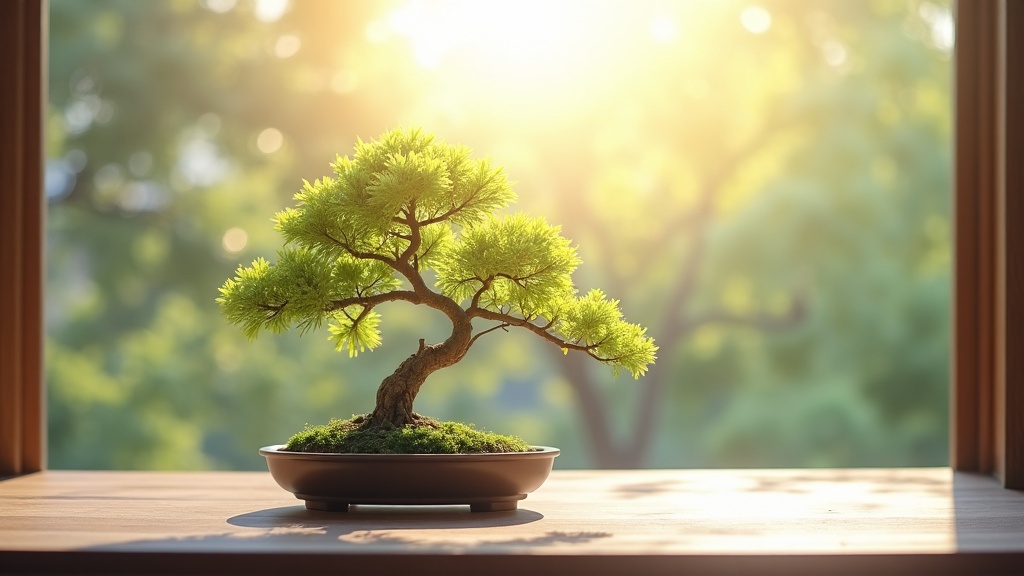
When a bonsai is kept inside, it usually needs the brightest natural light you can give it, ideally several hours of direct sun or a full day of very strong indirect light right at a window. In practice, most indoor bonsai struggle not because the owner forgets to water, but because the tree is living a little too far from the light.
I tell students this early: ?indoor bonsai? does not mean ?low-light bonsai.? It simply means a small group of species can tolerate indoor temperatures better than others. Light is still the governing factor. If you understand that, the rest of your care decisions become much clearer.
The short answer
Most bonsai kept indoors should receive at least 5 to 8 hours of bright light each day. Tropical and subtropical species such as ficus, Chinese elm grown as an indoor specimen, Fukien tea, jade, dwarf schefflera, and brush cherry do best when placed directly in the brightest south-facing or west-facing window available. A little soft morning sun is helpful. Long stretches in dim rooms are not.
If your home does not provide that much light, a grow light is often the more honest solution than simply hoping the tree will ?adjust.? A simple full-spectrum grow light for bonsai can keep an indoor tree compact, healthy, and much easier to water correctly.
Over many years, I have noticed a quiet pattern in weak indoor bonsai: the leaves slowly enlarge, the internodes stretch, and the silhouette loses its dignity long before the tree actually looks sick. By the time a beginner sees yellow leaves, the tree has often been asking for more light for months.
Why indoor bonsai need more light than most people expect
Bonsai are not houseplants in miniature pots. They are trees and shrubs confined to shallow containers, which means their margin for error is smaller. A plant in a deep decorative pot can survive mediocre light for a surprisingly long time because its root environment stays buffered. A bonsai cannot hide its weakness so easily.
Outdoors, even a shaded patio is usually far brighter than the inside of a bright room. Glass reduces light intensity, walls interrupt exposure, and seasonal sun angles change quickly. What feels bright to us may still be modest for a tree.
This matters because light drives nearly everything you want from bonsai: short internodes, smaller leaves, tighter branching, steady root activity, and predictable water use. When light is insufficient, growth becomes coarse and soft. The tree may keep living, but it does not develop well.
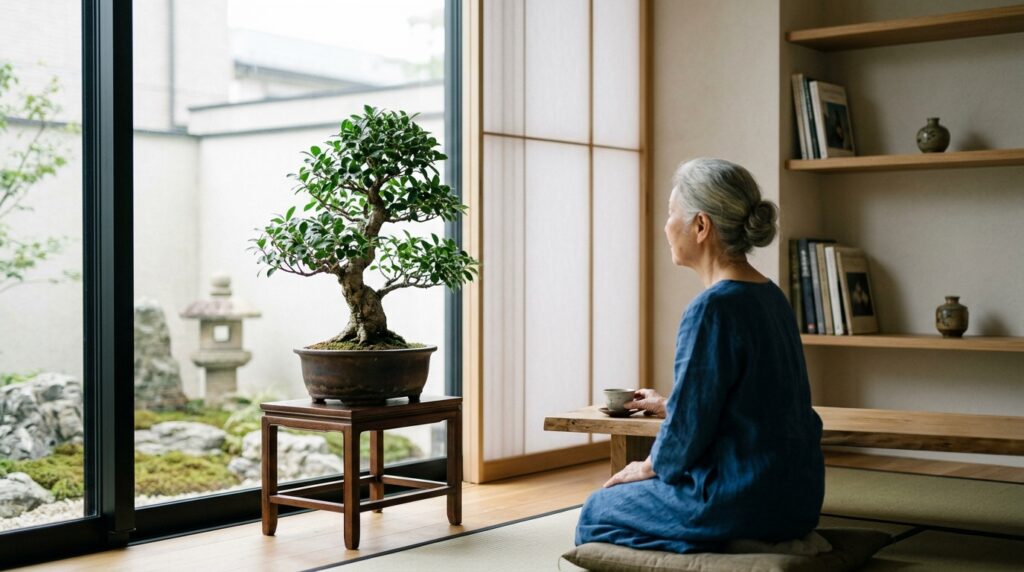
In teaching, I often see people place a bonsai where it ?looks beautiful? in the room rather than where it can actually grow. A tokonoma alcove is lovely for temporary display. It is not where the tree should spend every day. Display and cultivation are different acts, and good bonsai care knows when to separate them.
How window direction changes the answer
The amount of sunlight an indoor bonsai needs cannot be separated from the window it receives. The same ficus may do well in one home and decline in another simply because one sits in a strong south-facing window and the other sits several feet back from a north-facing one.
| Window position | What it usually provides | How suitable it is for indoor bonsai |
|---|---|---|
| South-facing window | Longest, strongest light in most homes | Usually the best choice for ficus, jade, Fukien tea, and other indoor species |
| West-facing window | Strong afternoon light, often warm and bright | Very good for most indoor bonsai if heat is not extreme against the glass |
| East-facing window | Gentle morning sun, softer total intensity | Acceptable for some species, but may need a grow light supplement |
| North-facing window | Bright shade rather than direct sun | Usually too weak as the only light source for long-term bonsai health |
| Two to six feet back from any window | Much dimmer than it appears to human eyes | Rarely enough for bonsai without strong supplemental lighting |
If you want one rule that prevents many problems, use this: keep the bonsai as close to the glass as practical, without pressing foliage against hot or cold panes. A few feet of distance can reduce usable light far more than most beginners assume.
Species matter more than the label ?indoor bonsai?
Not all bonsai respond to indoor light in the same way. Some species can tolerate life indoors for long periods. Others are sold indoors but are really outdoor trees passing through a shop bench.
Species that usually cope best indoors
- Ficus thrives best indoors because it tolerates lower humidity and can recover well if given strong light.
- Dwarf jade wants bright light and can even enjoy several hours of direct sun at the window.
- Dwarf schefflera tolerates indoor conditions better than many species, though growth can become coarse in weak light.
- Fukien tea prefers very bright light and warmth, but can be temperamental if moved often.
- Brush cherry can adapt indoors with strong light and steady watering.
Species often misunderstood indoors
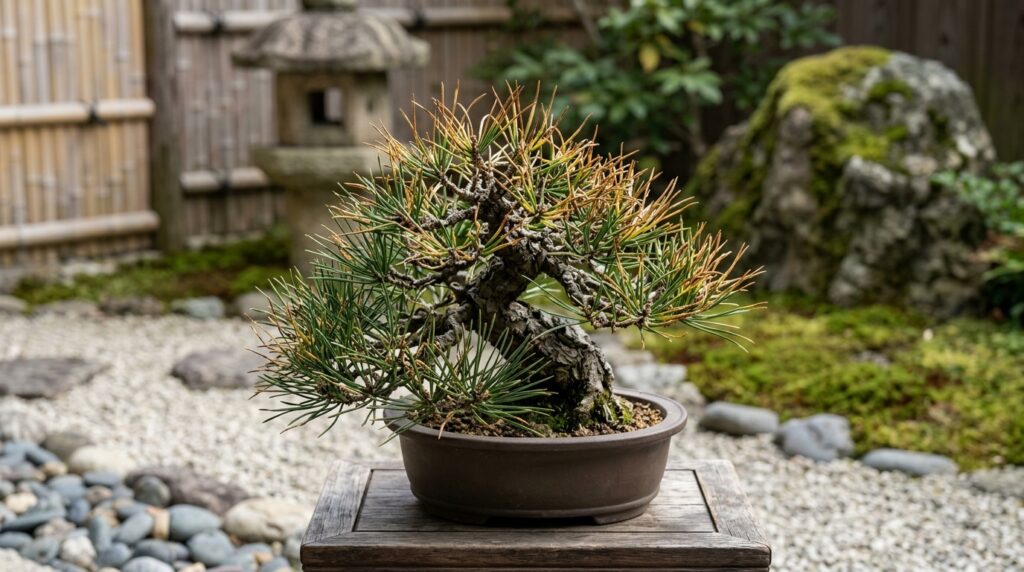
- Juniper is not a true indoor bonsai. It needs outdoor conditions, seasonal change, and far more light than a room can usually provide.
- Pine should be treated as outdoor bonsai, not a windowsill tree.
- Maple may survive indoors briefly, but it does not belong there long term.
- Many Chinese elms are sold as indoor bonsai, but they still perform better with outdoor time or extremely bright conditions.
This is especially relevant for readers asking which indoor bonsai trees grow well in UK homes. In the UK, winter light is often the limiting factor, even in a good window. Ficus is usually the most forgiving choice, followed by jade or schefflera if the room is bright enough. I would be much more cautious with Fukien tea unless the grower can offer reliable warmth and supplementary light.
How to tell if your bonsai is getting enough sunlight indoors
The tree itself gives better evidence than any generic care card. I prefer to judge light by growth quality, not by optimism.
Signs the light is probably sufficient
- New growth is compact rather than stretched.
- Leaf size stays reasonably small for the species.
- The tree drinks water at a steady, predictable pace.
- Color is even and healthy, without long periods of dullness.
- The tree back-buds or branches willingly after pruning, where the species normally should.
Signs the light is too weak
- Long gaps appear between leaves.
- New shoots lean dramatically toward the window.
- Leaf size increases from one flush to the next.
- Older interior growth weakens and drops.
- The soil stays wet for too long because the tree is not actively using water.
One practical tool can help if you are uncertain: a simple light meter for houseplants. I do not think gadgets replace observation, but they can teach beginners an important lesson very quickly: the shelf in the middle of the room is far darker than it looks.
Another quiet clue from experience: a healthy indoor ficus under good light feels resilient when pruned. Under poor light, it often responds hesitantly, as if every cut costs it more energy than it can spare. That difference becomes obvious after you have maintained the same species for a few seasons.
When natural sunlight is enough, and when to add a grow light
If you have a bright south-facing window with several hours of direct sun, natural light may be enough for many indoor bonsai, especially in spring and summer. Even then, placement matters. Set the tree right at the window, rotate it occasionally for balanced growth, and watch how watering changes with the season.
If your brightest window is east-facing, partially shaded, obstructed by nearby buildings, or located in a region with long grey winters, I would strongly consider supplemental lighting. This is not a failure. It is simply matching the environment to the species.
Use a grow light when:
- The tree sits in an east-facing or north-facing window.
- Winter daylight is short and weak where you live.
- You notice stretching, leaf enlargement, or repeated leaf drop.
- You want tighter growth and more reliable maintenance indoors year-round.
Basic grow light setup
- Use a full-spectrum LED grow light positioned close enough to be effective, usually much closer than room lamps.
- Run it for roughly 10 to 14 hours a day, depending on the strength of your natural light.
- Keep the light consistent rather than changing the routine every few days.
- Combine the light with good air circulation and careful watering, not with constantly wet soil.
If you are building a simple indoor setup, a full-spectrum grow light for bonsai and a bonsai humidity tray are two additions that beginners often find genuinely useful. The light matters more than the tray, but together they create a more stable windowsill environment.
How indoor light changes watering, pruning, and styling
Low light does not only slow growth. It changes how you should care for the tree in every other respect.
When a bonsai receives weaker indoor light, it uses water more slowly. Beginners often continue watering on an outdoor schedule, which leaves the soil wet too long. That is one reason indoor root trouble is so common. Water according to the soil and the tree?s pace, not the calendar.
Pruning also needs judgment. In strong light, a healthy ficus can respond well to regular trimming and can maintain a compact outline. In weak light, heavy pruning can set the tree back because it does not have the energy to replace growth cleanly. When the light is modest, I prefer a gentler hand: fewer cuts, more patience, and a focus on restoring vigor before refining shape.
Styling decisions should also respect the environment. If a tree is living indoors, I usually avoid designs that require intense ramification maintenance unless the owner also provides excellent light. A simpler silhouette, allowed to breathe a little, often suits the tree better than a tightly clipped outline that the indoor conditions cannot support honestly.
This is one of the quieter lessons bonsai teaches. A beautiful form is not imposed by will alone. It has to be earned by the strength available to the tree.
The most common indoor sunlight mistakes
- Placing the bonsai in the center of a room. It may look elegant there, but it is almost always too dark for daily life.
- Treating all bonsai as indoor plants. Junipers, pines, and many temperate trees belong outdoors.
- Confusing bright room light with plant light. Human eyes adapt. Trees do not.
- Moving the tree constantly. Rotating occasionally is fine, but repeatedly shifting from shelf to window to table adds stress.
- Ignoring seasonal decline. A placement that works in June may fail in December.
- Overwatering in low light. Reduced light means reduced water use.
In my own practice, I display indoor bonsai away from the window only for short periods when guests are present or when I want to appreciate the tree in a calmer setting. Then it goes back to its growing position. That small discipline prevents many long, slow problems.
A practical placement routine for indoor bonsai
If you are unsure how to set up your tree, start with a simple routine rather than a perfect one.
- Choose the brightest window in the home, usually south-facing or west-facing.
- Place the bonsai as close to the window as possible without foliage touching the glass.
- Observe for two to three weeks: check shoot length, leaf size, and drying speed of the soil.
- Add a grow light if the tree still stretches or if the window is weak in winter.
- Adjust watering to match the new light level rather than following an old habit.
- Reserve decorative display spots for short periods, not permanent placement.
This modest routine is enough for most beginners. You do not need elaborate equipment first. You need an honest reading of the light you have.
FAQ
Can bonsai survive in low light indoors?
Some species may survive for a time, but they rarely develop well in low light. Survival and good bonsai culture are not the same thing. If the room is dim, choose a stronger window or add a grow light.
How many hours of direct sun should an indoor bonsai get?
For many indoor species, 4 to 6 hours of direct sun at a bright window is helpful, with additional bright ambient light through the rest of the day. The exact amount depends on species, window direction, season, and heat against the glass.
Is morning sun or afternoon sun better?
Morning sun is gentler and very useful. Afternoon sun from a west-facing window is stronger and can also be excellent, especially for ficus and jade, provided the foliage is not scorched by excessive heat buildup.
Can I keep a bonsai on a desk away from the window?
Not as its permanent growing position. A desk display can be fine for a short time, but the tree should return to strong light. Long-term desk placement without supplemental lighting usually leads to weak growth.
Which indoor bonsai is best for a UK home?
Ficus is often the safest recommendation because it tolerates indoor warmth and lower winter light better than many alternatives. In brighter UK homes, jade and schefflera can also do well. In darker homes, a grow light makes the choice much less risky.
Indoor bonsai do not ask for endless sunlight, but they do ask for honest placement. Give them the brightest window you have, judge the result by the quality of growth, and add artificial light when the home cannot provide enough. That is usually the difference between a tree that merely lingers and one that settles in with quiet strength.