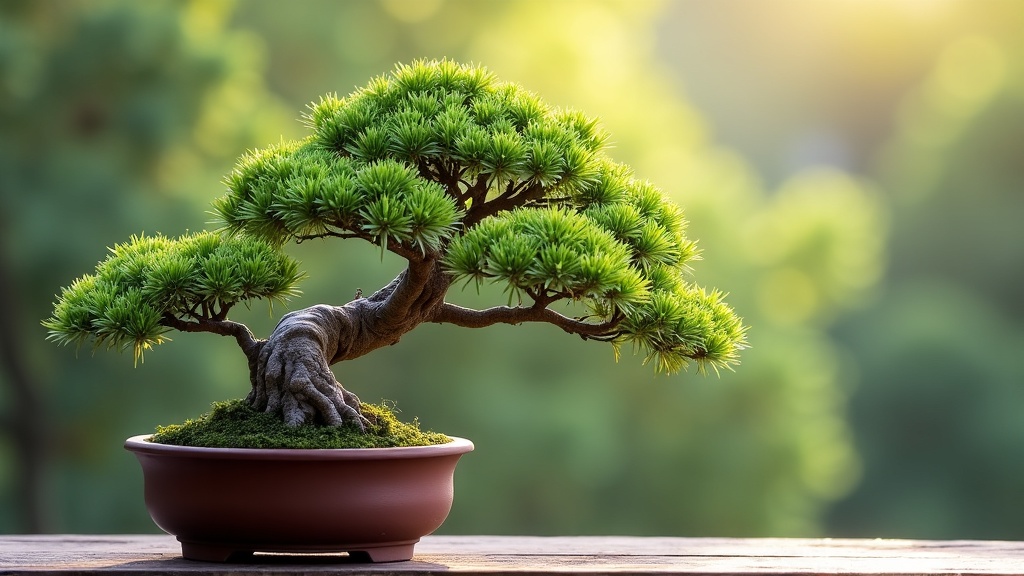
After twenty years of working with bonsai, I’ve learned that caring for these miniature trees is less about following rigid rules and more about understanding what your tree needs in each moment. A healthy bonsai requires attention to five fundamental elements: water, light, soil, pruning, and seasonal awareness — master these, and your tree will reward you with decades of beauty.
The difference between a thriving bonsai and a struggling one often comes down to observation. In my early training in Osaka, my teacher would spend entire afternoons simply watching his trees, noting the angle of light, the moisture in the soil, the vigor of new growth. This patient attention is the foundation of bonsai care.
Understanding Your Bonsai’s Basic Needs
Every bonsai, regardless of species, shares certain fundamental requirements. The tree living in your ceramic pot has the same needs as its full-sized counterpart in nature — it simply receives them in a compressed form.
Water: The Most Critical Element
More bonsai die from improper watering than any other cause. The soil should remain consistently moist but never waterlogged. I check my trees every morning by pressing my finger into the soil surface — if the top half-inch feels dry, it’s time to water.
When you water, do so thoroughly. I use a watering can with a fine nozzle and water until it flows freely from the drainage holes. This ensures the entire root system receives moisture. During summer heat, many trees need watering twice daily; in winter, perhaps every few days. Your observation matters more than any schedule.
Light Requirements by Species
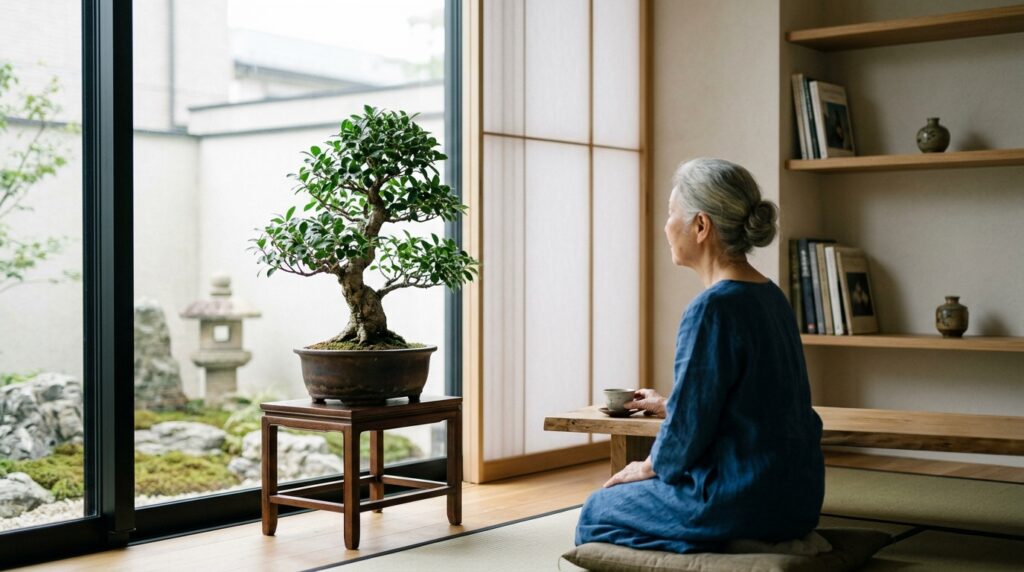
Outdoor bonsai — junipers, pines, maples — need full sun for at least six hours daily. They evolved under open sky and will weaken indoors. Indoor species like ficus or jade require bright, indirect light near a south-facing window.
I rotate my trees weekly to ensure even growth. Without rotation, branches reaching toward light sources will strengthen while shaded areas weaken, destroying the balanced form we cultivate.
Soil Composition and Repotting
Bonsai soil differs completely from garden soil. We need a mixture that drains quickly while retaining adequate moisture — typically a blend of akadama, pumice, and lava rock. This open structure allows oxygen to reach the roots, preventing rot while supporting the vigorous root system confined to a small space.
When to Repot
Young trees need repotting every two years; mature specimens every three to five years. The signal comes when roots circle the pot’s interior or when water drains too slowly. I repot in early spring, just before the growing season begins, when the tree has maximum energy for recovery.
During repotting, I remove roughly one-third of the root mass, trimming the outer roots and bottom. Fresh bonsai soil mix replaces the old, giving the roots room to expand and access to nutrients.
Pruning and Shaping Techniques
Pruning serves two purposes: maintaining the tree’s miniature size and refining its aesthetic form. I distinguish between maintenance pruning — removing unwanted growth — and structural pruning — shaping the tree’s fundamental design.
Maintenance Pruning
Throughout the growing season, pinch back new shoots to maintain shape. For deciduous trees, I trim new growth back to one or two leaves once shoots extend beyond the silhouette. Conifers require pinching new candles (growth tips) by two-thirds when they’re still soft.
Use sharp bonsai pruning shears to make clean cuts. Ragged cuts invite disease and heal slowly.
Structural Pruning and Wiring
Major structural work happens during dormancy for deciduous trees, or year-round for tropical species. I remove crossing branches, downward-growing branches, and any growth that disrupts the tree’s visual balance.
Wiring allows us to position branches. I wrap aluminum bonsai wire at a 45-degree angle along branches, then gently bend them into position. The wire stays for several months while the branch sets, but must be removed before it cuts into the bark — another reason for daily observation.
Seasonal Care Adjustments
Bonsai care changes with the seasons. This natural rhythm, which we call living with the tree’s calendar, reflects the wabi-sabi principle of accepting and celebrating impermanence.
| Season | Watering | Fertilizing | Primary Tasks |
|---|---|---|---|
| Spring | Daily as growth accelerates | Weekly, balanced formula | Repotting, structural pruning, begin fertilizing |
| Summer | 1-2 times daily in heat | Weekly, slightly reduced | Maintenance pruning, wiring, pest monitoring |
| Fall | Decrease gradually | Low-nitrogen formula, stop mid-fall | Prepare for dormancy, final styling |
| Winter | Minimal, every 3-5 days | None for deciduous trees | Protect from severe cold, wire deciduous trees |
Winter Protection
Outdoor bonsai need winter cold for dormancy, but roots in shallow pots can freeze and die. I move my trees to an unheated shed or cold frame where temperatures stay above 25°F (-4°C). They receive protection from harsh winds and temperature extremes while still experiencing seasonal dormancy.
Fertilizing for Healthy Growth
The confined root system of a bonsai quickly depletes nutrients from its small soil volume. I fertilize from spring through early fall using a balanced organic bonsai fertilizer.
Apply fertilizer at half the recommended strength, but twice as often. This provides steady nutrition without the shock of concentrated feeding. I prefer organic fertilizers — they release nutrients slowly and improve soil biology. Pellets placed on the soil surface work well, breaking down gradually with each watering.
Common Problems and Solutions
Yellowing Leaves
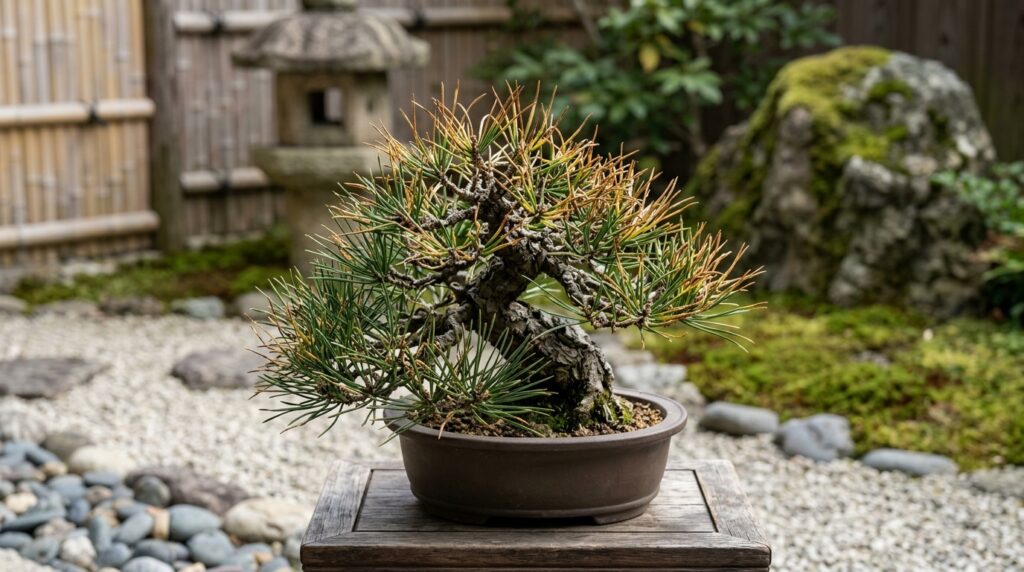
Yellow leaves typically indicate either overwatering or nutrient deficiency. Check soil moisture first — if the soil stays soggy, you’re watering too frequently or drainage is inadequate. If soil moisture seems appropriate, increase fertilization.
Pest Management
Aphids, spider mites, and scale insects occasionally appear. I inspect my trees during morning watering, checking leaf undersides and branch crotches where pests gather. A strong spray of water dislodges many pests; for persistent infestations, neem oil spray works effectively without harsh chemicals.
Leaf Drop
Sudden leaf drop usually signals environmental stress — dramatic changes in light, temperature, or watering patterns. Tropical species like ficus are particularly sensitive. Maintain consistency in care, and the tree typically recovers within weeks.
Tools and Equipment Essentials
Quality tools make bonsai care easier and protect your trees from damage. I recommend starting with these essentials:
- Concave cutters: Create hollow cuts that heal with minimal scarring
- Wire cutters: Remove training wire without damaging branches
- Root rake: Untangle roots during repotting
- Trimming shears: Clean cuts for leaves and small branches
- Watering can with fine rose: Gentle watering that won’t disturb soil
A complete bonsai tool set provides these basics. As your practice develops, you’ll add specialized tools, but these fundamentals will serve you for years.
Developing Your Observation Practice
The most important skill in bonsai care isn’t technique — it’s attention. I spend a few minutes each day simply observing my trees. How does the foliage look? Is growth vigorous or weak? Are branches extending where I want them, or do they need redirecting?
This daily practice reveals problems early, when they’re easily corrected. It also deepens your relationship with the tree. You begin to recognize its individual character, its tendency to push growth in certain directions, its response to seasonal changes. This knowledge, accumulated through patient observation, becomes the foundation of expert care.
Frequently Asked Questions
How often should I water my bonsai?
Check soil moisture daily by feeling the surface. Water thoroughly when the top half-inch feels dry. Frequency varies by species, pot size, season, and climate — observation matters more than following a fixed schedule. Most outdoor bonsai need daily watering in summer, while indoor tropicals may need water every 2-3 days.
Can I keep my bonsai indoors?
Only tropical and subtropical species (ficus, jade, Chinese elm) thrive indoors long-term. Temperate species like juniper, maple, and pine require outdoor conditions with seasonal temperature changes for health. These trees evolved under open sky and will gradually weaken and die if kept inside permanently.
When is the best time to prune my bonsai?
Maintenance pruning happens throughout the growing season to control size and shape. Structural pruning — removing major branches or significantly reshaping the tree — should occur during dormancy for deciduous trees (late winter) or year-round for tropical species. Avoid heavy pruning during times of stress like extreme heat or immediately after repotting.
How do I know when my bonsai needs repotting?
Repot when roots circle the pot’s interior (visible when you lift the tree) or when water drains very slowly, indicating compacted soil. Young trees typically need repotting every 2 years, mature trees every 3-5 years. The best time is early spring, just before buds swell, when the tree has maximum energy for recovery.
What type of soil should I use for bonsai?
Never use regular potting soil or garden soil — these retain too much water and suffocate roots. Use a specialized bonsai soil mix combining akadama (a Japanese clay), pumice, and lava rock. This blend drains quickly while retaining adequate moisture and allows oxygen to reach the roots. Different species may need adjustments to this basic mix, with some preferring more or less drainage.