
Affiliate disclosure: As an Amazon Associate I earn from qualifying purchases.
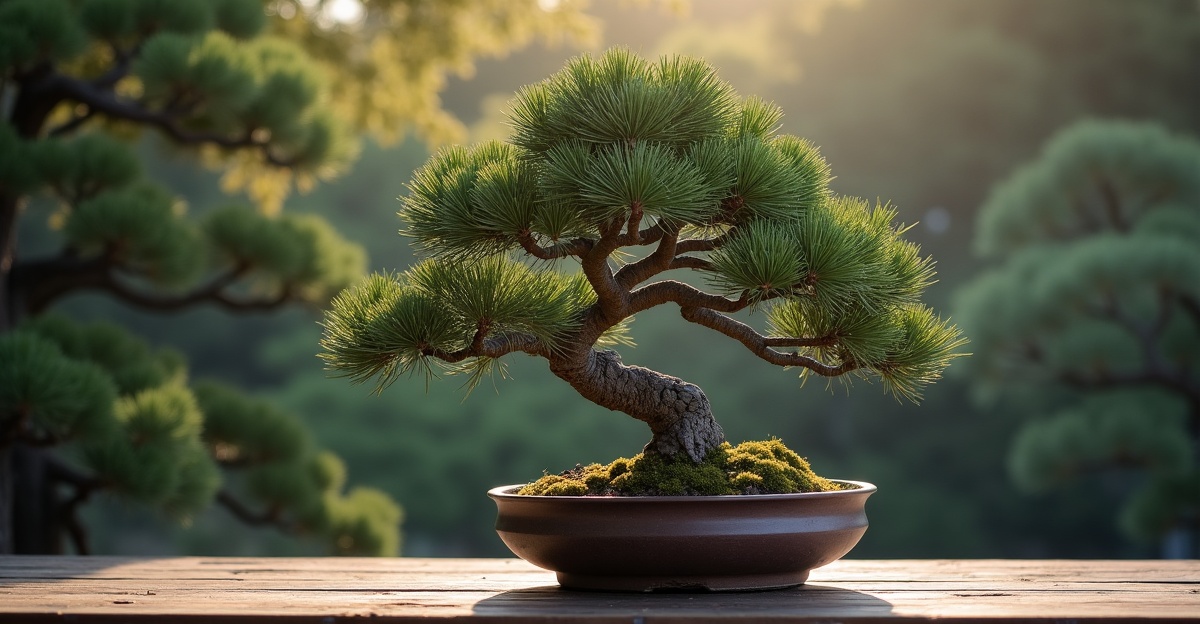
Pine bonsai care demands more patience and more precision than almost any other species. I have been working with Pinus for over fifteen years, and I will tell you honestly: pines are not forgiving trees. Make one wrong cut at the wrong time, and you will spend the next two growing seasons trying to recover. But get the technique right, and a pine bonsai will reward you with extraordinary character — twisted deadwood, compressed foliage pads, and a sense of age that no other species communicates quite as powerfully.
This guide covers everything you need to know about pine bonsai care: species selection, placement, watering, soil, fertilizing, decandling, wiring, and repotting. Whether you are working with a Japanese Black Pine or a White Pine, the fundamentals here will keep your tree healthy and help it develop the refined character pine bonsai are known for.
Understanding Pine Species: Two-Flush vs. One-Flush Pines
The most important thing to understand before you touch a pine bonsai is whether your tree is a two-flush pine or a one-flush pine. This single distinction changes everything about how you prune and develop the tree.
Two-flush pines produce two growth cycles per year — a spring flush and a summer flush. The Japanese Black Pine (Pinus thunbergii) and Japanese Red Pine (Pinus densiflora) fall into this category. Two-flush pines respond to the classic decandling technique, which is covered in detail below. This dual growth cycle gives you much greater control over ramification and needle length, which is why serious bonsai practitioners often prefer these species for high-level development work.
One-flush pines push growth only once per year, in spring. This group includes White Pine (Pinus parviflora), Scots Pine (Pinus sylvestris), Ponderosa Pine (Pinus ponderosa), and Mountain Pine (Pinus mugo). These species are developed through different pruning strategies — selective candle work in spring rather than decandling in summer. One-flush pines are generally more cold-hardy and may suit growers in northern climates better than the Japanese species.
Placement: Pine Bonsai Must Live Outdoors in Full Sun
I get asked regularly whether pine bonsai can live indoors. The answer is no — not even temporarily. Pines are temperate outdoor trees that require full sun, natural temperature cycles, and winter dormancy to survive long-term. Keeping a pine indoors, even near a bright window, will slowly weaken it over months until it declines beyond recovery.
Place your pine bonsai in the sunniest spot you have. Full sun — at least six hours of direct sunlight daily — produces compact, short needles and strong, dense growth. Shade does the opposite: needles elongate, internodes stretch, and the tree loses the compact character that makes pine bonsai so impressive.
In summer, pines can tolerate intense heat as long as the roots do not overheat. If your pot sits on concrete or a dark surface that absorbs heat, raise it on a stand to improve airflow underneath. During winter, most pine species handle freezing temperatures well, but extended periods below -10 degrees C (14 degrees F) may damage roots in a shallow bonsai pot. A cold greenhouse or unheated garage works well for winter protection without interrupting dormancy.
Watering Pine Bonsai: Restrained and Responsive
Pines dislike constantly wet soil. Overwatering is one of the most common causes of pine bonsai failure, and it is especially dangerous because the symptoms — yellowing needles, weak growth — appear slowly and are easy to misread as underwatering.
Water thoroughly when the top centimetre of soil approaches dryness, then allow a brief dry-out before watering again. In summer heat, this might mean watering daily. In cooler spring or autumn weather, every two to three days may be sufficient. In winter dormancy, water sparingly — just enough to keep the roots from completely drying out.
Always water until it drains freely from the drainage holes. This flushes accumulated fertilizer salts and ensures the entire root mass gets moisture. For a deeper look at watering technique across species, see our complete bonsai watering guide.
The Right Soil Mix for Pine Bonsai
Pines demand excellent drainage. A soil that retains too much moisture will suffocate roots and invite fungal problems. A reliable mix is akadama, pumice, and lava rock in roughly equal parts — this drains quickly, provides good aeration, and still retains enough moisture to sustain healthy growth between waterings.
Avoid soil mixes with peat, bark, or other organic matter. These retain too much moisture for pines and break down over time, compacting around the roots. For trees in active development, lean slightly heavier on pumice (around 40 percent) to further improve drainage and root oxygenation.
You can find quality akadama for bonsai on Amazon. Look for hard-fired akadama if possible — it holds its structure longer between repotting cycles. For a full breakdown of soil options, read our bonsai soil mix guide.
Fertilizing Pine Bonsai Through the Seasons
Pines are heavy feeders, and a well-fed pine grows with noticeably better vigor — denser foliage, stronger branching, and greater resilience to pests and disease. Do not be timid with fertilizer.
A seasonal fertilizing schedule for pine bonsai:
- Early spring (before candles extend): High-nitrogen fertilizer to push strong initial growth.
- Late spring through summer: Balanced fertilizer with roughly equal NPK. For two-flush pines being decandled in summer, pause feeding for 2-3 weeks before and after decandling to reduce stress on the tree.
- Autumn: Switch to low-nitrogen, high-phosphorus fertilizer to harden new growth and strengthen roots before winter. This is the most important feeding period — do not skip it.
- Winter: No feeding during dormancy.
Solid organic fertilizers work well for pine — they release slowly and consistently without risk of burning roots. Organic bonsai fertilizer cakes placed on the soil surface are a traditional and effective approach. For more detail, see our bonsai fertilizer guide.
Pruning Pine Bonsai: Decandling and Needle Work
Pruning pine bonsai requires a completely different mindset than pruning deciduous trees. You are not simply removing growth — you are manipulating the tree’s energy distribution to achieve compact foliage, balanced vigor, and refined structure.
Decandling Two-Flush Pines
Decandling is the primary technique for Japanese Black and Red Pines. In early to midsummer — in Japan, late June through July; adjust timing forward in cooler climates — the spring candles are cut back, either completely or to a portion of their length, depending on the vigor of each shoot. This forces the tree to push a second flush of growth with shorter needles and finer ramification.
The key is balancing vigor across the tree. Strong shoots at the apex and on thick branches are cut earlier, resulting in weaker, shorter second-flush growth. Weak shoots lower in the tree or on fine branches are cut later or left alone to build strength. Tracking which branches received which timing — a notebook works well — builds the intuition needed to read a pine’s energy over multiple growing seasons.
Candle Work for One-Flush Pines
One-flush species like White Pine, Scots Pine, and Ponderosa are managed differently. In spring, as the candles extend, selectively reduce or pinch back individual candles before the needles open — removing the most vigorous candles entirely, cutting back moderate ones by half, and leaving weak ones untouched. This evens out the tree’s energy without triggering a second flush.
Needle Thinning
In autumn, thin old needles by hand — remove the previous year’s needles from strong shoots while leaving this year’s growth. This improves light penetration into the interior of the tree, encouraging back-budding and maintaining the health of inner branches. It also gives the foliage a cleaner, more refined appearance going into winter.
For pruning tools and technique, our bonsai pruning guide covers the core principles that apply across species.
Wiring Pine Bonsai: Late Autumn Is the Right Window
The best time to wire pine bonsai is late autumn through early winter, after the growing season has ended and the needles have hardened. At this point branches are more flexible and easier to bend without snapping, and reduced foliage gives clear sight lines to work with.
Copper or aluminum wire both work — copper holds its position better on the stiff, resinous branches of mature pines. Wrap at a 45-degree angle and check for wire bite every 4-6 weeks, especially as spring growth begins. Pine branches thicken quickly, and wire left on too long will cut deeply into the bark, leaving scars that take years to heal.
Remove wire by cutting it in sections rather than unwinding — unwinding risks snapping branches that have set in position. Our bonsai wiring guide has full technique details. Copper bonsai wire in multiple gauges is the right investment for serious pine work.
Repotting Pine Bonsai: Timing, Frequency, and the Mycorrhizal Rule
Pine bonsai are repotted less frequently than many other species — typically every 3-5 years for young trees in development, every 5-10 years for mature specimens. Repot in early spring before the candles begin to extend, when the roots are just starting to become active again.
The most important rule for repotting pines: do not remove more than one-third of the root mass, and leave some of the old soil around the roots when you can. Pine roots host mycorrhizal fungi — a symbiotic relationship that dramatically improves nutrient uptake. Removing all old soil destroys this fungal network and can severely weaken the tree. When you add new soil, mix a small amount of the old soil into the fresh medium to introduce beneficial fungi.
For step-by-step repotting technique, see our bonsai repotting guide. After repotting, keep the tree sheltered from strong wind for several weeks and reduce watering slightly until new growth confirms recovery.
Common Pine Bonsai Pests and Diseases
Pines are generally robust, but a few problems appear regularly in cultivation:
- Pine needle scale: Small white or brown scales on needles and branches. Treat with horticultural oil spray in late winter or early spring before new growth. Repeat every 10-14 days for persistent infestations.
- Spider mites: Most common in hot, dry conditions. Look for fine webbing and yellowing, stippled needles. Increase humidity, spray with insecticidal soap or miticide, and rotate products to prevent resistance.
- Root rot (Phytophthora): Caused by overwatering or poor drainage. Symptoms include sudden browning of needles and soft, dark roots. Prevention through proper soil mix is far more effective than treatment — once rot takes hold in a pine, recovery is very difficult.
- Pine wilt nematode: A serious disease spread by pine sawyer beetles, causing rapid yellowing and death within months. There is no effective cure. Remove and destroy affected trees immediately to prevent spread to others.
- Resin oozing from specific spots: Small amounts of resin are normal on pines. Heavy oozing concentrated in one area may indicate bark beetle activity — examine closely and treat with an appropriate pesticide.
Pine Bonsai Care: Frequently Asked Questions
Can pine bonsai live indoors?
No. Pines are outdoor trees that require full sun, natural airflow, and cold winter dormancy. Keeping a pine indoors will weaken and eventually kill it, regardless of how bright the location seems. Even a very bright south-facing window does not provide sufficient light intensity or the temperature cycling pines need to thrive. They must live outside year-round.
How often should I water my pine bonsai?
Water when the top layer of soil approaches dryness — typically daily in summer heat, every 2-3 days in cooler weather. Always water until it drains from the pot. Never let the soil stay wet continuously, and never let it dry out completely. Adjust frequency based on your specific climate, pot size, and soil mix rather than following a fixed schedule.
What is decandling and why is it done?
Decandling is the removal of spring candles from two-flush pine species like Japanese Black Pine, performed in early summer. Removing the candles forces the tree to produce a second flush of growth — this second flush develops shorter needles and finer branching than the spring flush would have produced on its own. It is the primary technique used to create the compact foliage pads and miniaturized needle length characteristic of high-quality pine bonsai.
When is the best time to wire a pine bonsai?
Late autumn through early winter, after the growing season ends. The branches are more flexible at this time, the foliage has hardened, and you have clear visibility of the tree’s structure without the density of summer needle growth. Check for wire bite regularly as spring growth begins — pine branches thicken fast.
How do I choose between Japanese Black Pine and White Pine for bonsai?
Japanese Black Pine is the more demanding and rewarding choice — it responds to decandling beautifully and can develop into a dramatically powerful tree, but it requires technical skill and sustained attention over many years. White Pine is more forgiving, grows more slowly, and has soft, elegant blue-green needles that suit literati and more delicate styles. If you are new to pine bonsai, White Pine is the better starting point. If you want an intensive development project with greater potential for dramatic aged character, Japanese Black Pine is the long-term goal.
Final Thoughts: Pine Bonsai Rewards the Patient Practitioner
No species has taught me patience the way pines have. The techniques — decandling, needle thinning, precise fertilizing windows — must be executed at the right moment, or the tree will simply work around you and develop on its own terms. That difficulty is part of what makes pine bonsai so absorbing as a long-term practice.
If you are just starting out with pines, choose one species, study it through one full growing season before making significant cuts, and observe carefully. The investment in understanding your specific tree’s rhythms is what separates a pine that survives from one that genuinely thrives. The best pine bonsai you will ever work on is the one you know most deeply.
For other species care guides, our articles on juniper bonsai care and maple bonsai care cover the most popular alternatives to pine in depth.
Last updated: March 2026 — Kenji Nakamura, Wabi Bonsai