
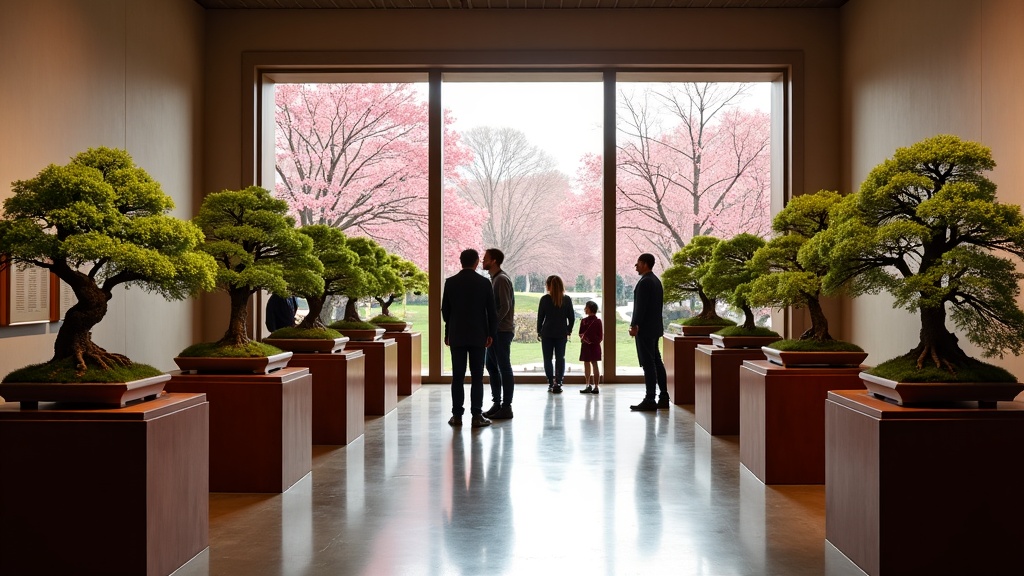
There are events that remind you why you fell in love with bonsai in the first place. For me, the Potomac Bonsai Festival 2026 is one of those gatherings. Returning May 8–10 to the National Bonsai & Penjing Museum at the U.S. National Arboretum in Washington, DC, this year’s festival coincides with World Bonsai Day — a fitting celebration for what has become one of the East Coast’s most respected bonsai events.
Whether you are a seasoned practitioner or someone who has only recently felt the pull of this living art, I want to share everything you need to know to make the most of your visit. After twenty years of attending bonsai events across the country, I can tell you that few match the combination of prestige, education, and sheer beauty you will find at this festival.
Event Details: Dates, Location, and Admission
The Potomac Bonsai Festival 2026 runs from Thursday, May 8 through Saturday, May 10, with Saturday’s programming anchored around World Bonsai Day. The event is hosted at the National Bonsai & Penjing Museum, nestled inside the 446-acre U.S. National Arboretum at 3501 New York Avenue NE, Washington, DC 20002.
One of the most welcoming aspects of this festival is that admission to the Arboretum and the museum is free. The U.S. National Arboretum is open daily from 8:00 AM to 5:00 PM, and on-site parking is also free, though spaces fill quickly on festival days. I strongly recommend arriving by 9:00 AM if you want a comfortable parking spot — or consider taking the Metro to the Stadium-Armory station and using a rideshare for the final stretch.
The festival is organized by the Potomac Bonsai Association (PBA), a nonprofit educational organization with six affiliated clubs spanning the mid-Atlantic region, from the Baltimore Bonsai Club to the Richmond Bonsai Society. Their dedication to this event is evident in every detail.
What to Expect: Demonstrations, Workshops, and Exhibits
The Potomac Bonsai Festival is structured around three pillars: live demonstrations, hands-on workshops, and curated exhibits. Here is what each day typically offers.
Live Demonstrations
Throughout the weekend, accomplished bonsai artists take raw nursery stock or partially developed trees and transform them before your eyes. These demonstrations are where you absorb the most — watching how a master reads a tree’s movement, decides where to make the first cut, and coaxes a design from what others might see as an ordinary shrub. Bring a small notebook and take notes. You will thank yourself later.
Hands-On Workshops
Some workshops allow you to work on a tree under guided instruction and take it home. These sessions tend to fill quickly, so watch the PBA website for registration announcements as the festival approaches. Workshop fees vary but typically cover the cost of the tree and materials. If you plan to attend a workshop, I recommend bringing your own bonsai tool kit — while tools are often provided, there is something grounding about working with instruments that are already familiar in your hands.
The Museum Collection
Do not rush past the museum’s permanent collection. The National Bonsai & Penjing Museum houses one of the finest collections in the Western Hemisphere, spread across three pavilions: Japanese, Chinese, and North American. Some of these trees are centuries old. The Japanese Pavilion includes trees gifted by Japan during the 1976 Bicentennial — specimens that have been in continuous cultivation for over 400 years. Stand quietly in front of them. Let them teach you about patience.
This year’s festival carries additional significance. The National Bonsai Foundation concluded its operations at the end of 2025 after more than four decades of stewardship, with the Friends of the National Arboretum (FONA) stepping in as the primary nonprofit partner. The 2026 festival will be among the first major bonsai events under this new chapter — a moment worth witnessing.
Tips for Getting the Most Out of Your Visit
After attending bonsai festivals for two decades, I have learned that preparation transforms a good visit into an unforgettable one. Here are my practical recommendations.
Arrive early, stay late. The festival grounds are beautiful in morning light, and the crowds thin considerably in the late afternoon. The best photographs — and the most peaceful moments with the trees — come at the edges of the day.
Dress for the weather. May in Washington, DC can be warm and humid. Wear lightweight, breathable clothing and comfortable walking shoes. The Arboretum grounds are expansive, and you will walk more than you expect. A wide-brimmed sun hat and sunscreen are essential. Bring a refillable water bottle — staying hydrated keeps your mind sharp for the demonstrations.
Bring cash. Vendors at bonsai festivals often prefer cash, especially for smaller purchases like accent pots, bonsai wire, kusamono plants, and viewing stones. While many vendors accept cards, having cash ensures you never miss a find.
Talk to people. The bonsai community is remarkably generous. Ask the demonstrators questions. Speak with the vendors about the trees they have brought. Introduce yourself to members of the PBA’s affiliated clubs — the Baltimore Bonsai Club, Brookside Bonsai Society, Kochino Kai, Northern Virginia Bonsai Society, Potomac Viewing Stone Group, and Richmond Bonsai Society all have members attending. Some of my most valuable bonsai knowledge came not from books or videos, but from conversations at events like this one.
Bring a folding chair. Demonstrations can run 60 to 90 minutes, and seating is sometimes limited. A lightweight portable folding chair lets you settle in and absorb the full demonstration without distraction.
Exploring Washington, DC: Beyond the Festival
If you are traveling to the Potomac Bonsai Festival from out of town, I encourage you to make a full trip of it. The U.S. National Arboretum itself deserves several hours of exploration beyond the bonsai museum — the azalea collections are typically in peak bloom in early May, and the Capitol Columns installation is one of Washington’s most quietly stunning landmarks.
The Arboretum is located in northeast DC, about 15 minutes by car from the National Mall. If you are combining your visit with sightseeing, the Smithsonian museums, the Tidal Basin, and Georgetown are all within easy reach. For those flying in, both Ronald Reagan Washington National Airport (DCA) and Dulles International Airport (IAD) serve the area, with DCA being significantly closer to the city center.
For accommodations, I recommend staying somewhere near Union Station or Capitol Hill for convenient access to both the Arboretum and downtown attractions. May is peak tourist season in DC, so book your lodging early.
Why This Festival Matters
In the philosophy of wabi-sabi that guides my practice, we find beauty in impermanence and depth in the passage of time. The Potomac Bonsai Festival embodies this spirit. Each year it is different — new trees, new artists, new conversations. And yet the continuity is what gives it weight. The same museum. The same ancient trees standing in their pavilions. The same quiet reverence that settles over you when you realize you are in the presence of something that has been alive far longer than you have.
The 2026 festival arrives at a meaningful transition point. With the National Bonsai Foundation’s chapter closing and FONA beginning its stewardship, there is a sense that the community is carrying this tradition forward together. That is something worth showing up for.
If you have never attended a bonsai festival, let this be your first. If you are a regular, let this year remind you of what drew you in. I will be there, walking the pavilions, watching the demonstrations, and remembering — as I always do — that bonsai is not something we do alone.
I hope to see you in Washington.
For the latest schedule updates and workshop registration details, visit the Potomac Bonsai Association website.