This article contains affiliate links. If you buy through them, I may earn a small commission at no extra cost to you.
When people ask me, what measures should I take to protect my bonsai during the colder months?, my first answer is simple: protect the roots first, then decide how much cold the species should actually feel. Winter damage in bonsai usually comes less from snow on the branches and more from frozen rootballs, repeated freeze-thaw cycles, cold drying wind, and well-meant shelter that is either too warm or too dark.
A bonsai in a shallow pot is not living under the same conditions as the same species planted in the ground. That is the point many beginners miss. Trees that are perfectly hardy in the garden can still be injured in a bonsai container because the root mass is exposed, the soil volume is small, and moisture swings are faster. Over the years I have seen more bonsai weakened by winter inconsistency than by steady cold.
Start With A Fast Winter Decision
If you want the short answer, separate your trees into three groups before the first real cold arrives: hardy outdoor species, cold-sensitive but dormant species, and tropical or subtropical species. Then match the protection to that group rather than giving every tree the same treatment.
- Hardy outdoor bonsai such as many junipers, pines, larches, elms, and cold-tolerant maples usually need cold dormancy, but they still need their roots protected from deep freezing and drying wind.
- Cold-sensitive deciduous or broadleaf evergreen bonsai may tolerate light frost but should be moved to a sheltered cold space before prolonged hard freezes.
- Tropical and subtropical bonsai such as ficus, schefflera, jade, and many serissa should come indoors or into a heated bright space well before freezing nights.
I learned early in Kyoto that winter protection is not about making everything comfortable. It is about creating the right degree of discomfort. A pine should not be treated like a ficus, and a shohin maple in a tiny pot should not be treated like a mature trident maple in a large training box.
Know What Your Tree Needs In Winter
Hardy species still need winter, but not full exposure
If your bonsai is a temperate species that evolved with winter dormancy, keeping it warm all season can do real harm. The tree expects a rest period. Without that rest, growth becomes weak, internodes lengthen, buds lose quality, and vigor becomes uneven by spring. This is why the question is not just, can bonsai trees stay outside in winter, but which bonsai, where, and under what conditions?
Hardy bonsai can stay outside in winter if the species is appropriate for your climate and the roots are protected from severe cold. A healthy juniper or pine often handles winter well outdoors. A Japanese maple can also remain outside in many regions, but the small rootball is much more vulnerable than the top of the tree. Once the pot freezes solid for long stretches, the margin for error narrows quickly.
Tropical species should not ?test? the cold
Indoor bonsai are different. Ficus, dwarf umbrella tree, jade, Brazilian rain tree, and similar species should not be left outside to ?see how they do? once nights approach freezing. I have watched healthy tropical trees decline from just one poorly timed cold snap. The damage is not always immediate. Leaves may hang on for days, then blacken, drop, and leave the owner thinking the real problem happened later.
Bring these trees in before low temperatures become dangerous, and place them in your brightest available location. If your indoor air is dry, a humidity tray helps only a little, but keeping the tree away from heating vents and cold glass helps much more. A small indoor digital thermometer and hygrometer is useful because most winter mistakes happen when people guess instead of measuring.
Protect The Roots, Not Just The Canopy
The shallow pot is the vulnerable part of the system. In the ground, roots benefit from insulation by surrounding soil. In bonsai, roots sit near the edge of cold air on all sides. That is why root protection matters more than wrapping the branches in most cases.
For hardy bonsai, I usually recommend one of four approaches: heeling pots into mulch, placing trees in an unheated shed or garage, grouping them together in a wind-sheltered corner, or using a cold frame. Which one is best depends on your winter pattern. Steady cold is easier to manage than alternating thaw and deep freeze.
| Winter Setup | Best For | Main Advantage | Main Risk |
|---|---|---|---|
| Mulch bed or heeled-in pots | Hardy outdoor bonsai in cold climates | Good root insulation with natural temperature buffering | Waterlogging if drainage is poor |
| Cold frame | Small to medium collections | Protects from wind and extreme swings | Overheating on sunny winter days if not vented |
| Unheated garage or shed | Dormant trees that need freeze protection | Stable shelter from wind and repeated hard freezes | Neglect due to being out of sight |
| Bright indoor space | Tropical and subtropical bonsai | Keeps frost-sensitive species alive and growing slowly | Low light and dry air |
If you heel pots into mulch, cover the pot sides and root zone rather than burying the trunk. Pine bark, coarse mulch, straw, or similar insulating material works well if it does not stay soggy. A simple layer is often enough. If you need materials, a plant frost blanket can help buffer wind and light frost over a group of trees, but it should not be treated as a substitute for root insulation.
One thing I have noticed after many winters is that small refined trees often need protection earlier than large training stock of the same species. The better the ramification and the smaller the pot, the less forgiving the tree tends to be. Beauty often comes with less thermal mass.
Use Shelter With Restraint
Cold frames are useful when they stay cold
A cold frame is one of the best winter tools for bonsai because it blocks wind and moderates temperature without fully removing dormancy. It is especially useful for deciduous trees in shallow containers and for recently styled or recently repotted material. The important point is that a cold frame should remain cold. If winter sun turns it warm by day and temperatures drop hard at night, you create the same instability you were trying to avoid.
Vent on mild days. Check moisture. Do not let a cold frame become a damp sealed box. In my teaching, I often see people use protection too late and ventilation too late. Both errors come from waiting until the tree looks distressed, but winter work is preventive.
An unheated garage can be better than a warm room
For many dormant species, an unheated garage or shed is far safer than bringing the tree into the house. You are trying to avoid deep root freeze, not wake the tree up in January. A sheltered space that stays roughly cold but mostly above the most dangerous lows can be ideal. The tree does not need bright light while fully dormant, but it does need periodic checks for moisture and mold.
This is a good place for discipline. Trees hidden in winter storage are easy to forget. I suggest a simple weekly inspection routine and a small long-spout watering can nearby so you can water precisely without soaking everything around it.
Adjust Watering For Cold Weather
Winter watering is where many trees are lost. People either water on the summer schedule or stop almost completely. Neither approach is sound. Dormant bonsai use less water, but they still need moisture in the rootball. Wind, sun, and protected storage all change how quickly that happens.
Water according to the soil and the weather, not the calendar. If the top is beginning to dry but the lower rootball remains moist and the tree is dormant, you can wait. If a sheltered tree has become quite dry, water thoroughly during a period when the soil can absorb moisture before freezing again. Morning is usually better than evening in cold conditions because the surface has time to settle before temperatures drop.
I am cautious with heavy winter saturation, especially in organic, water-retentive mixes. Cold and wet together are much harder on roots than cold and slightly on the dry side. This is one reason well-structured bonsai soil matters all year, not just in summer. If your mix stays dense and sour, winter exposes the weakness. For repotting season preparation, many growers find it helpful to source a proper bonsai soil mix or components before spring arrives.
Watch The Real Winter Hazards
Freeze-thaw cycles are often worse than steady cold
In climates with fluctuating winter temperatures, repeated freezing and thawing can lift roots, crack soil structure, and stress fine feeder roots. A tree that stays quietly cold may come through winter better than one that warms up every few days. This is why protection should aim for stability more than warmth.
If your weather swings wildly, avoid placing dormant bonsai against south-facing walls that heat up strongly in afternoon sun. A slightly colder but more stable north or east exposure can be better for many species. That advice sounds minor, but it saves trouble.
Wind can dry a tree even when the soil looks cold
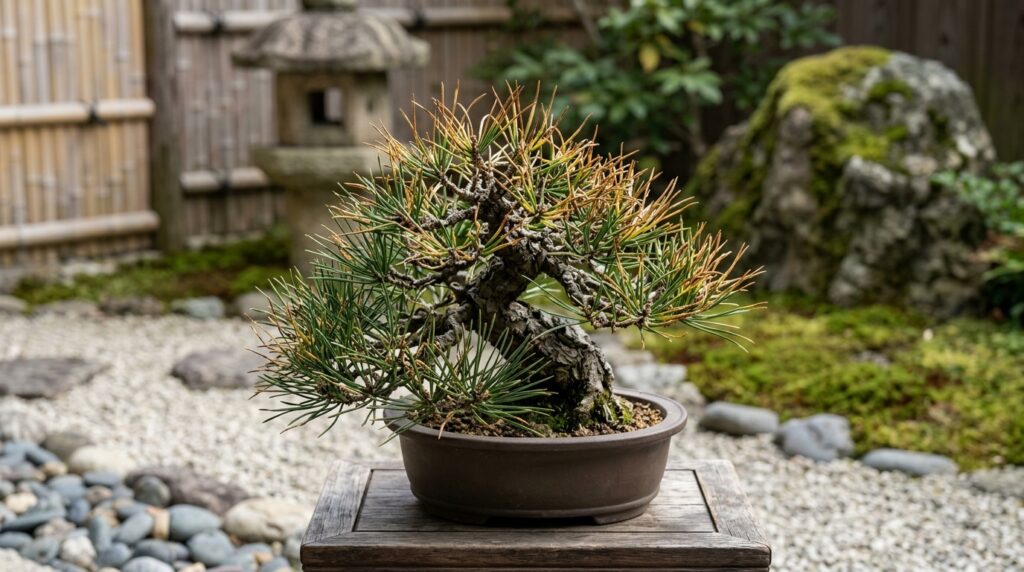
Evergreens continue losing moisture through foliage in winter. Junipers and pines especially can suffer from cold desiccation when roots cannot replace what wind strips away. If the foliage browns from the tips inward by late winter, wind exposure may be part of the cause. Windbreak cloth, grouped placement, or a sheltered corner can make a real difference.
A simple garden jute twine is also useful in winter for lightly securing trees in their pots if strong wind or repeated freezing has loosened them. A tree that rocks in the pot in winter often loses delicate roots just when it can least afford to.
Freshly repotted or weak trees deserve extra caution
A newly repotted tree, a heavily root-pruned tree, or a tree recovering from pests, heat stress, or aggressive styling should not be treated like a fully vigorous specimen. These trees have less reserve and usually benefit from a more conservative winter setup. I often move such trees into the most stable cold shelter I have, even when stronger trees of the same species remain more exposed.
One quiet lesson from long practice is that winter reveals your autumn decisions. Trees fed sensibly, not pushed too late, and allowed to harden off gradually tend to rest with composure. Trees kept soft into late autumn often ask for help all winter.
Species-Based Winter Approach
Deciduous bonsai
Japanese maple, trident maple, elm, hornbeam, beech, and similar deciduous species usually do best with outdoor dormancy plus root protection. After leaf drop, they are far less concerned with light than with temperature stability and moisture balance. Protect fine twigs from harsh drying wind, but focus your effort on the pot and root zone.
Conifers
Junipers, pines, spruce, and larch generally tolerate winter well if healthy, but they still need protection from severe wind exposure and deep root freeze. Do not bring junipers indoors for winter. It almost always weakens them. If the species is hardy for your region, let it stay cold and dormant with the pot insulated.
Broadleaf evergreens
Azalea, olive, boxwood, and similar species vary widely in hardiness. Azalea roots in particular can be sensitive in shallow pots. Boxwood often handles cold better than people expect, but winter burn is still possible in exposed positions. Olive is much less forgiving in real cold. With broadleaf evergreens, local climate and cultivar matter enough that cautious observation is better than bold assumptions.
Tropicals and subtropicals
Ficus and similar indoor bonsai should be moved before frost, kept in strong light, watered carefully, and protected from drafts and heating vents. If winter light is weak in your space, a full-spectrum grow light for indoor plants is often more useful than extra humidity accessories. In winter, light usually limits health before humidity does.
A Simple Winter Checklist
- Identify each bonsai by species and actual cold tolerance, not by guesswork.
- Decide whether it needs outdoor dormancy, cold shelter, or indoor protection before the first severe cold spell.
- Insulate or shelter the pot and root zone, especially for small bonsai in shallow containers.
- Reduce exposure to drying wind and unstable freeze-thaw patterns.
- Water by need, not habit, and never assume dormant means dry is safe.
- Check sheltered trees weekly for moisture, pests, mold, and temperature swings.
- Give weaker, recently repotted, or highly refined trees a more conservative winter position.
If you follow that sequence, you will solve most winter problems before they begin. The best protection is usually not dramatic. It is quiet, consistent, and slightly boring, which is often the mark of good bonsai care.
FAQ
Can bonsai trees stay outside in winter?
Yes, many can, but only if the species is winter-hardy for your climate and the roots are protected. A hardy outdoor bonsai in a shallow pot is still more vulnerable than the same tree planted in the ground.
Should I bring my juniper bonsai indoors for winter?
No. Junipers are outdoor trees and need winter dormancy. Bringing them into a warm house usually weakens them more than the cold would, provided the roots are protected and the species is suitable for your region.
How cold is too cold for bonsai?
There is no single temperature for all bonsai. Species, pot size, health, and winter duration all matter. The roots usually reach their limit before the branches do, which is why root protection matters so much.
Do bonsai need watering in winter?
Yes. Dormant bonsai need less water than in summer, but they should not be allowed to become completely dry. Check the soil regularly and water when needed during suitable conditions.
What is the safest winter protection for a beginner?
For hardy outdoor species, a sheltered outdoor position with the pots heeled into mulch is often the simplest reliable method. For tropical species, move them indoors before freezing weather and place them in the brightest location you have.