If you buy through links in this article, I may earn a small commission at no extra cost to you.
I begin protecting an established juniper bonsai before forecasts fall below about 15°F (-10°C), and sooner when its pot is tiny or the tree is recovering. That is a practical protection threshold, not a temperature at which every juniper suddenly dies: the roots, exposure, and length of the freeze matter as much as the overnight low.
Over twenty years of practice, including training in Osaka and Kyoto, I have learned to look beneath the foliage when winter arrives. A juniper can carry a convincing green canopy while its root environment becomes unsuitable. Good winter care is usually quiet work: moving a pot, checking moisture, and making sure shelter actually moderates the cold.
What temperature is too cold for Juniper bonsai?
For a healthy juniper that has spent autumn outdoors, ordinary frost is generally manageable. Once forecasts approach 15°F (-10°C), an exposed bonsai pot deserves additional protection. This agrees with the practical threshold in Bonsai Empire’s juniper care guide. It does not establish a guaranteed safe minimum for your particular tree.
I use the following bands to decide when to change the setup. They describe forecast air temperatures and assume an established, acclimated tree; they are not laboratory measurements of root survival.
| Forecast temperature | Practical response | What changes the decision |
|---|---|---|
| Above 32°F (0°C) | Keep outdoors with appropriate light, drainage, and normal moisture checks. | Persistent rain and poor drainage may matter more than cold. |
| 32°F to 20°F (0°C to about -7°C) | A healthy, acclimated juniper usually tolerates these frosts. Prepare shelter and protect exposed small pots. | Tiny containers, drying wind, and recent root work justify earlier protection. |
| 20°F to 15°F (about -7°C to -10°C) | Have root insulation and a sheltered position in place; check actual conditions beside the pot. | Several freezing days require more caution than one brief overnight dip. |
| Below 15°F (-10°C) | Use a monitored cold frame or another reliably cold, protected space. | An unheated structure may eventually approach outdoor temperatures during prolonged cold. |
If the forecast is 12°F tonight and your juniper is still on an open bench, move it into prepared cold shelter before evening. Do not wait for visible foliage damage to decide whether protection was necessary.
Why the pot matters more than a landscape hardiness label
A juniper planted in the ground has a large surrounding mass of soil. A bonsai has a small volume of substrate exposed through its surface, sides, and drainage openings. Missouri Botanical Garden’s container-evergreen guidance emphasizes that container roots face colder conditions than roots in the ground. A nursery hardiness rating therefore cannot be treated as the minimum temperature for a shallow bonsai pot.
Identify the juniper before trusting a number
Japanese garden juniper, Juniperus procumbens “Nana”, and Chinese junipers, Juniperus chinensis, including shimpaku selections, are common bonsai subjects. Other collections contain Rocky Mountain, common, or different juniper species. They should not all inherit the cold tolerance of the hardiest member of the genus.
Keep the botanical name and cultivar with your records. Ask the grower how the tree was overwintered, especially when buying late in the year. A tree recently moved from a warm retail display needs a different transition from one that has experienced shortening days and cooling nights outdoors.
Duration and condition change the margin
A brief low followed by a thaw is different from four days when temperatures never rise above freezing. Insulation delays cooling; it does not generate heat. A small pot eventually loses its stored warmth during a sustained cold spell.
I give extra protection to miniature bonsai, recently collected material, trees with disturbed roots, and weak trees. In teaching, I have found that beginners often protect their most expensive tree first. I ask them to assess the smallest root ball and the weakest root system first instead. Price is not a measure of winter resilience.
Choose winter shelter for your actual growing space
The aim is to reduce damaging extremes while preserving winter rest. Bonsai Empire’s overwintering guidance describes cold frames and protection around pots as useful options. The right choice depends on how cold your site becomes and whether you can inspect the trees easily.
In a garden: use the ground and a windbreak
For moderate winters, move the pot from its display bench to a sheltered, well-drained patch of ground. Surround the container with coarse mulch up to its rim, keeping the trunk base and foliage clear. Choose a location away from roof runoff and places where meltwater collects.
This is often enough improvement for a tree that mainly needs protection from exposure, but it is not a promise of survival through severe regional cold. Where deep freezes are routine, make stronger shelter part of the plan before winter. Check mulch periodically for rodent activity.
On a balcony: insulate and measure
A balcony offers little of the thermal buffering available in garden soil. Put the bonsai pot inside a larger, stable container with drainage, and pack insulating material around its sides. Shield it from prevailing wind without sealing the canopy in plastic. Keep the arrangement secure against gusts.
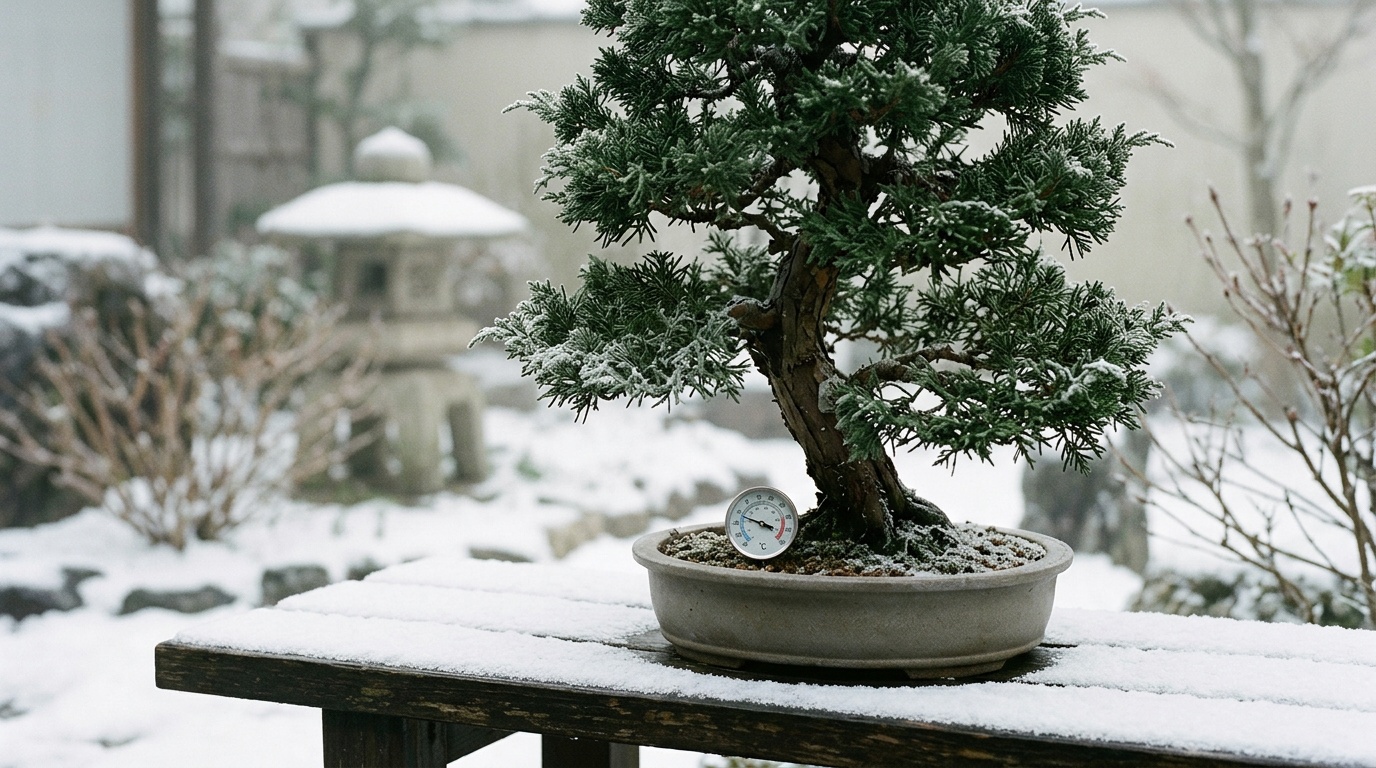
A minimum-maximum thermometer with an outdoor remote sensor is a useful purchase here. Place the sensor near pot level, shaded from direct sun, and check the overnight minimum. This measures the shelter’s air, not the temperature inside the root ball. A soil-rated probe can answer the second question; do not force one into frozen substrate.
In severe cold: use a cold frame or cold outbuilding
A cold frame provides light and shelter, but it needs ventilation when sunshine raises its temperature. An unheated garage can provide temporary refuge during a cold snap if its measured conditions are suitable. For longer storage, I prefer a bright, cold space for an evergreen juniper rather than assuming months of darkness are harmless.
Do not assume that “unheated” means safe. A detached shed may become nearly as cold as outdoors, while an attached garage may stay too warm. If your shelter repeatedly approaches dangerous lows, improve the arrangement or seek overwintering space with a local bonsai grower. Passive insulation alone has limits.
Balance winter light, wind, and watering
Junipers need good light, but strong winter sun is not always helpful when the root ball remains frozen. Sun and wind can draw moisture from evergreen foliage while frozen roots cannot replace it, a mechanism explained by University of Minnesota Extension. During those conditions, reducing exposure matters more than maximizing direct afternoon sun.
For routine overwintering, choose bright shelter with airflow. During prolonged freezing weather, a windbreak and protection from intense afternoon sun can reduce drying. A burlap screen beside the tree is more useful than wrapping the foliage into a tight bundle.
Water according to the substrate, not the calendar
Check your tree regularly, especially under a roof where rain cannot reach it. When the substrate has thawed, assess moisture below the surface. If it is beginning to dry, water thoroughly and let excess water drain. Do not keep adding water to already saturated soil simply because a watering day has arrived.
If the pot is frozen solid, pouring water over it may accomplish little. Reduce drying exposure and reassess when it thaws naturally. Never use hot water to thaw the pot or carry it beside a heater. If prolonged freezing and drying are becoming a problem, move the tree to a cold space where gentle thawing is possible.
One observation I repeat to students is that a sheltered tree can need more deliberate watering than an exposed one: the shelter has also removed its rainfall. Snow on the canopy does not prove the root ball has received water. Check the substrate when conditions allow.
A simple routine before and during a cold spell
I prepare winter quarters while the weather is still comfortable enough to work carefully. Moving a heavy, frozen pot in darkness is an unnecessary complication. My routine is straightforward:
- Review the forecast early. Look at daytime highs, wind, and the number of freezing days, not just the lowest number.
- Check moisture while the soil is unfrozen. Water if needed, allow drainage, and remove any saucer that could hold standing water.
- Move vulnerable trees first. Prioritize tiny pots, recovering trees, and specimens with uncertain growing histories.
- Check shelter readings and ventilation. Record overnight lows and open a cold frame as needed on sunny days.
- Inspect after the weather changes. Look for blocked drainage, displaced insulation, pests, and drying substrate.
I avoid combining winter preparation with major styling. Heavy bends, substantial foliage removal, or unnecessary root disturbance add demands when I want the tree stable. Bonsai4Me’s wiring guidance specifically cautions about cold exposure after wiring damage in severe winter conditions. Never bend frozen branches.
A juniper’s winter silhouette can make an awkward branch seem especially obvious. I note the possible change and leave it for an appropriate working period. Accepting an unfinished outline for a season is sound horticulture as well as good bonsai judgment.
Read winter color carefully and ease into spring
Some junipers develop bronze or purplish winter foliage as part of their seasonal response. Color alone does not prove that the tree froze. Conversely, green foliage immediately after a severe freeze does not prove that the roots escaped injury.
Progressively straw-colored tips, brittle foliage, or a sharply affected windward side deserve closer attention. University of Maryland Extension’s winter-damage guidance notes that symptoms can become visible later, sometimes during spring growth. Review the tree’s exposure and watering history before deciding what happened.
Keep a questionable tree in stable, appropriate conditions. Do not respond with fertilizer, emergency repotting, or repeated pruning simply to feel that something is being done. Photograph affected areas and compare them over time; seek an experienced local assessment if damage progresses.
As spring approaches, ventilate shelter and restore normal outdoor exposure gradually. Be especially careful if warm shelter has encouraged fresh growth before outdoor frost risk has passed. The hardiness of a fully acclimated winter tree is not the hardiness of tender new shoots.
Frequently asked questions
Can juniper bonsai survive freezing temperatures?
Yes. Healthy, acclimated junipers generally tolerate frost. Frozen water in the substrate does not automatically mean dead roots. The important questions are how cold the root ball becomes, how long it stays frozen, and whether the tree loses moisture it cannot replace.
Should I bring my juniper indoors at 32°F?
Usually not if it is healthy and acclimated outdoors. A heated living room is unsuitable winter accommodation. Use cold shelter when protection is needed. The site’s guide to bringing a juniper bonsai inside during winter discusses that distinction further.
What if my juniper has been indoors all autumn?
Do not move it directly from a warm room into a hard freeze. It has missed normal outdoor acclimation. Arrange a bright, cool, frost-protected transition space and ask the nursery or a local bonsai grower for advice suited to your current weather.
Is 10°F too cold for juniper bonsai?
At 10°F (about -12°C), I would protect a juniper bonsai rather than leave its pot exposed. That forecast is below the general 15°F protection threshold. Whether the tree survives depends on its species, condition, acclimation, and actual root-zone temperature; an insulated, monitored setup matters more than reassurance from a single number.