I see this mistake in beginners because bonsai invites action before it teaches patience. Flowering bonsai combine two things that attract new growers: the sculptural look of a miniature tree and the seasonal reward of blooms. The challenge is that some flowering species are far less forgiving than they look. Beginners usually do best with trees that bloom reliably, recover well from small mistakes, and do not demand highly specialized care from day one.
The best beginner-friendly flowering bonsai are azalea, crabapple, Fukien tea, serissa, and bougainvillea. Not every one of these suits every climate, but each can be a strong starter choice when matched to the right growing conditions. If you are choosing your first tree, focus less on the prettiest flower and more on how well the species fits your light, temperature, and watering habits.
What Makes a Flowering Bonsai Good for Beginners?
A beginner-friendly bonsai should be able to tolerate a learning curve. That means it should respond well to pruning, show clear signs when it needs water, and survive occasional minor mistakes. Flowering bonsai also need enough vigor to support both foliage growth and blooming, which is why weak or highly temperamental species are poor first choices.
Good starter species usually have several advantages:
- They are widely available in nurseries and bonsai shops.
- They have well-documented care routines.
- They bloom without requiring advanced techniques.
- They recover reasonably well after pruning or repotting.
- They adapt to container life better than fussy flowering shrubs or trees.
Even so, no flowering bonsai is completely effortless. They still need correct watering, proper soil drainage, and seasonal attention. The goal is not to find a no-maintenance plant, but to choose one that gives you a fair chance to learn.
Azalea Bonsai
Azalea is often the first answer when people ask for a flowering bonsai with visual impact. Satsuki azaleas in particular are famous in bonsai because they produce large, vivid blooms on a tree that can be trained into elegant forms. For a beginner, their biggest advantage is that they are established bonsai subjects with predictable habits and a large body of care knowledge behind them.
Azaleas prefer bright light, regular moisture, and acidic soil. They do best outdoors in most climates, though they need protection from extreme winter conditions depending on your region. Their roots should never dry out completely, but they also should not sit in soggy soil. Once a beginner learns that balance, azaleas can be very rewarding.
The main caution is timing. Heavy pruning at the wrong moment can reduce next season’s flowers, so beginners need to learn to prune soon after blooming rather than randomly throughout the year. Still, for someone willing to follow a simple seasonal routine, azalea is one of the best first flowering bonsai.
Crabapple Bonsai
Crabapple is an excellent choice for growers who want a classic outdoor bonsai with spring flowers and ornamental fruit. It offers multiple seasons of interest: blossoms in spring, green growth through summer, colorful fruit, and a bare branch structure in winter. That makes it especially satisfying for beginners who want to see the tree change through the year.
Crabapples need outdoor conditions and a real winter dormancy period. They like full sun, steady watering, and good air circulation. Compared with more delicate flowering species, they tend to feel more like a small hardy tree than a fragile decorative plant, which many beginners find easier to understand.
The tradeoff is space and climate. Crabapple is not a windowsill bonsai. If you only have indoor growing conditions, it is the wrong pick. But if you have a patio, balcony, or garden space outdoors, crabapple is one of the strongest beginner options for both flowers and long-term bonsai development.
Fukien Tea Bonsai
Fukien tea is popular because it can produce small white flowers several times a year and can be grown indoors in warm, bright conditions. That indoor flexibility makes it attractive to beginners who do not have outdoor space. Its small leaves and naturally fine branching also give it a bonsai-like appearance even when young.
For success, Fukien tea needs bright light, warm temperatures, and consistent watering. It dislikes sudden environmental changes, especially cold drafts or erratic moisture. That means it can be a good beginner tree for someone with a stable indoor setup, but a frustrating one for someone who moves plants around constantly or has low light.
In other words, Fukien tea is beginner-friendly only in the right home. If you have a sunny window and can keep conditions steady, it is a practical flowering bonsai choice. If your indoor environment is dim or dry, it can quickly become difficult.
Serissa Bonsai
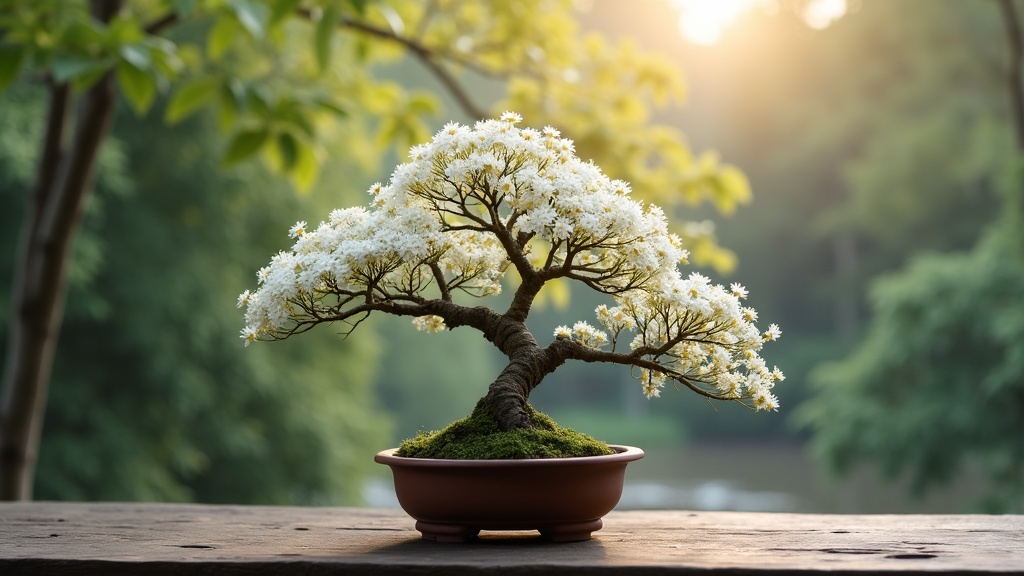
Serissa is often sold as the “tree of a thousand stars” because of its many small white flowers. It has strong ornamental appeal and can bloom generously, which explains why new growers are drawn to it. It also develops fine twigging that looks convincing in miniature.
However, serissa sits near the border between beginner-friendly and temperamental. It can do well for a careful beginner, but it is known for reacting dramatically to environmental shifts. Changes in watering, temperature, or location may trigger leaf drop. That does not always mean the tree is dying, but it can alarm inexperienced owners.
Because of that, serissa is best viewed as a second-tier beginner option. It is suitable if you are attentive and want a flowering bonsai for bright indoor or protected outdoor conditions, but it is less forgiving than azalea or crabapple. Buy it only if you are ready to keep its environment consistent.
Bougainvillea Bonsai
Bougainvillea is a strong beginner candidate in warm climates. Its vivid bracts create the showy effect most people think of as flowers, and it responds well to bonsai training once established. It also tolerates heat and sun better than many other flowering species.
This tree is best for growers in tropical or subtropical areas, or for those who can provide very bright, warm conditions for much of the year. Bougainvillea dislikes frost and can sulk in cool, dim environments. In the right conditions, though, it is vigorous and visually dramatic.
For beginners, the key is understanding that bougainvillea is climate-dependent. It is easy in the right place and difficult in the wrong one. If you live somewhere warm and sunny, it may be one of the easiest flowering bonsai to enjoy.
Which Flowering Bonsai Should Beginners Avoid?
Beginners should be cautious with flowering species that are prized mainly for rarity, exhibition blooms, or highly specific environmental needs. Wisteria, for example, is beautiful but usually not ideal as a first bonsai because flowering can be inconsistent in a container without strong seasonal care. Gardenia can also be difficult because it demands warmth, humidity, acidity, and careful watering all at once.
The problem with difficult species is not that they are impossible. It is that they often force a beginner to solve several problems at the same time. When a new grower is still learning how to water correctly and judge light levels, a demanding tree can turn every mistake into a major setback.
How to Choose the Right Beginner Flowering Bonsai
The best choice depends on where and how you will grow it. Start with these practical questions:
- Do you need an indoor bonsai or can you grow outdoors year-round or seasonally?
- How much direct sunlight can you provide each day?
- Can you check soil moisture regularly?
- Does your area have a cold winter that outdoor species can use for dormancy?
- Do you want flowers once a year, or smaller blooms that may appear more often?
If you have outdoor space and want the easiest long-term path, azalea or crabapple are usually the strongest picks. If you need an indoor tree, Fukien tea is often the most practical starting point as long as light is strong. If you live in a hot climate and want bold color, bougainvillea may suit you best.
Basic Care Tips for Beginner Flowering Bonsai
Most beginner problems come from treating bonsai like house decor rather than living trees. A flowering bonsai needs the right environment first, and styling second. Keep these basics in mind:
- Water based on soil dryness, not on a rigid calendar.
- Use a fast-draining bonsai soil mix appropriate for the species.
- Give enough light to support both growth and flowering.
- Feed during the growing season, but avoid overfertilizing right before or during heavy bloom if the species is sensitive.
- Learn the species-specific pruning window so you do not remove flower buds by accident.
- Repot according to the tree’s growth cycle rather than whenever it looks crowded.
These basic habits matter more than advanced shaping techniques in the first year. A healthy tree will always teach you more than a stressed one.
Final Answer
For most beginners, the best flowering bonsai are azalea and crabapple for outdoor growing, Fukien tea for bright indoor growing, and bougainvillea for warm sunny climates. Serissa can also work, but it is less forgiving. The right beginner tree is the one that matches your conditions, not just the one with the most dramatic blossoms.
If you are buying your first flowering bonsai, choose a healthy, vigorous specimen from a reputable seller and learn that single species well before expanding your collection. That approach usually leads to better blooms, better survival, and a far more enjoyable start in bonsai.
If you are building a basic setup, I would start by comparing bonsai soil mix and akadama bonsai soil before buying more decorative items, because those two choices affect the actual work most.