Disclosure: This article contains affiliate links. As an Amazon Associate, I earn from qualifying purchases at no extra cost to you.
Yes, humidity can affect flowering, but not in the simple way many beginners assume. It rarely causes blooming by itself. What it does is remove stress, help buds develop cleanly, and let flowering species keep enough strength to open and hold their flowers.
In bonsai, that distinction matters. A tree flowers because light, temperature, feeding, pruning timing, and species habit are aligned. Humidity supports that process. When the air is too dry, especially indoors, buds often stall, crisp at the tip, or drop before opening. I have seen this most often with serissa, fukien tea, and small tropical flowering trees kept on bright windowsills above radiators.
Does humidity affect flowering? The short answer
Yes: humidity affects flowering by influencing stress levels, bud retention, and flower quality. No: humidity alone will not make a healthy green tree decide to bloom if the species, season, light, and feeding are wrong.
Think of humidity as a supporting condition, not the trigger. If your bonsai is already capable of flowering, proper humidity helps it follow through. If the tree is not getting enough light, is being pruned at the wrong time, or is too juvenile, extra moisture in the air will not compensate.
After many years teaching indoor growers, I have learned that people often blame fertilizer first. Just as often, the real problem is a dry room, unstable watering, and warm air moving constantly across the canopy. The tree survives, but it does not feel settled enough to bloom well.
Why humidity matters to flowering bonsai
Flowering takes energy. A bonsai must build buds, move water steadily through fine stems, and keep delicate petals from drying too quickly once they open. Dry air increases transpiration. In practical terms, the tree loses moisture faster through its leaves, and the root system has to work harder to keep up.
On a vigorous tropical bonsai in summer, that may be manageable. On a small indoor tree in winter, in a shallow pot, with warm central heating nearby, it becomes a meaningful strain. The tree begins protecting itself. It may slow extension, drop a few buds, reduce flower size, or shorten the bloom period.
Bud formation is not the same as bud opening
This is where many growers get confused. A bonsai can set buds under one set of conditions and then fail to open them well under another. I have seen serissa cover itself with buds in late spring, only to open sparsely after the tree was moved into a drier room. The tree had already committed to blooming, but the finish was poor.
Humidity matters most in the last stages: holding buds, opening flowers evenly, and keeping petals fresh for longer. If you want a flowering bonsai to look refined rather than merely hopeful, this is important.
Which bonsai are most affected?
Not every bonsai responds to humidity in the same way. Indoor tropicals and subtropicals are the main group where this question matters. Temperate outdoor species usually respond more to seasonal cues, full sun, and winter dormancy than to fine adjustments in air moisture.
| Species | How humidity affects flowering | What I usually recommend |
|---|---|---|
| Serissa | Very sensitive to dry indoor air; buds may yellow or drop before opening | Keep humidity moderate and stable, avoid drafts, do not move the tree often |
| Fukien tea | Flowers more reliably when warmth, light, and humidity are all steady | Bright light, 45-60% humidity, careful watering, light feeding through active growth |
| Brush cherry | Dry air can reduce flowering vigor and shorten bloom duration | Use a humidifier in heated rooms and keep the canopy out of hot air flow |
| Jasmine-trained bonsai or mame tropicals | Fine growth dries quickly, so buds and petals are more easily stressed | Stable room conditions matter more than aggressive feeding |
| Bougainvillea | Less dependent on high humidity than many assume; light matters more | Prioritize strong sun and controlled watering, then refine humidity if indoors |
| Azalea satsuki | Humidity helps flower quality, but roots, water quality, and outdoor culture matter more | Grow outdoors properly; do not treat humidity as the primary lever |
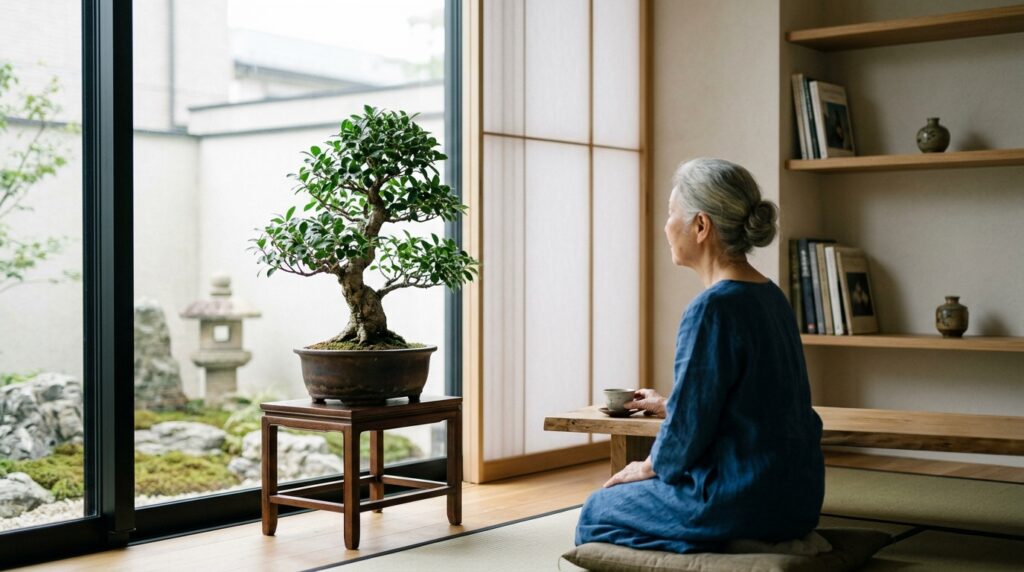
If you are asking from the perspective of which indoor bonsai trees grow well in UK homes, this becomes even more relevant. UK homes often have lower winter light and dry central heating, which is difficult for flowering tropicals. Ficus remains the easiest indoor bonsai there because it tolerates lower humidity better than serissa or fukien tea. If your goal is regular indoor flowering, choose the species with care before you start chasing conditions.
Signs dry air is limiting blooms
Humidity problems do not always announce themselves dramatically. Sometimes the tree simply becomes disappointing. It stays alive, grows leaves, and refuses to perform at the right moment.
- Buds form but dry at the tips before opening.
- Flowers open smaller than expected or fade within a day or two.
- New growth looks healthy enough, but bloom cycles are weak and irregular.
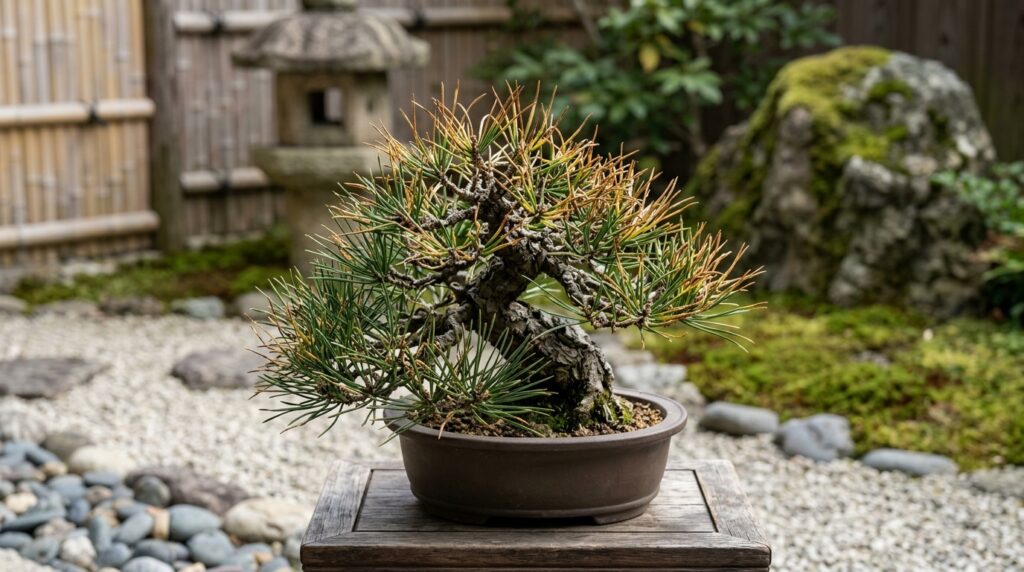
- Leaf edges crisp slightly while the soil seems to dry unusually fast indoors.
- The tree improves noticeably after being moved outdoors for summer.
One quiet pattern I have noticed over the years is that growers often overwater when the real issue is dry air. The leaves look strained, the buds stall, and they respond by keeping the soil wetter. That usually makes the root system less efficient and compounds the problem. Dry air and wet roots are a poor combination for flowering species.
How much humidity is enough?
For most indoor flowering bonsai, I aim for around 45 to 60 percent relative humidity. That is not a magical number, but it is a useful range. Below 35 percent, many tropicals begin to show stress over time. Above 65 percent, the benefit often levels off indoors unless the rest of the environment is strong enough to support active growth.
Do not chase jungle conditions. A tree in a dim room with very high humidity can become soft, weak, and prone to fungal problems. Good bonsai culture is balanced culture. If humidity rises, airflow and light must still be adequate.
A simple digital hygrometer for plant rooms is often more useful than buying another fertilizer first. It tells you whether your room is actually dry, and that stops a lot of guesswork.
The best ways to improve humidity without harming the tree
Not every method is equally useful. Some create a steady improvement. Others mostly make the grower feel attentive.
1. Use a room humidifier when the room is genuinely dry
This is the most effective solution for serious indoor growers. A small room humidifier for plants raises humidity in the entire growing area, not just directly under one pot. If you keep several tropical bonsai together, this is usually the cleanest answer.
I prefer this approach for fukien tea and serissa because it creates stability. Stability is what these trees reward. They do not like being shifted between dry and damp conditions every few days.
2. Use humidity trays for local support, not miracles
A bonsai humidity tray helps, especially on a windowsill, but its effect is local and modest. It is best thought of as support around the tree, not a replacement for proper room conditions. Keep the pot above the waterline on gravel. The roots must never sit in standing water.
For one or two small bonsai, trays are practical. For a dry house in winter, a tray alone is often not enough for reliable flowering.
3. Group compatible tropicals together
Several small trees transpire together and create a gentler microclimate. This is helpful, though again, modest. I use grouping as a refinement, not as the main intervention.
4. Keep the canopy away from radiators, vents, and constant drafts
This matters more than many people think. A room can read acceptable humidity overall, yet the air directly around the tree is being stripped dry by moving heat. More than once, I have improved flowering simply by moving a tree half a meter away from a radiator line.
5. Do not rely on misting as your main strategy
Misting can freshen foliage briefly, but the effect is short-lived. It does not materially change room humidity for long enough to solve persistent flowering problems. Use it as a minor supplement if you enjoy it, not as your central method.
When humidity is not the real problem
It is worth being strict here. If a flowering bonsai is not blooming, the cause may be elsewhere.
- Insufficient light: this is the most common issue indoors. Without strong light, the tree lacks the energy to produce and hold flowers.
- Wrong pruning timing: some species bloom on fresh growth, others on mature tips. Heavy trimming at the wrong moment removes the next flower cycle.
- Excess nitrogen: lush green growth can come at the expense of buds.
- Immaturity: young material often needs time before flowering becomes reliable.
- Temperature mismatch: some species need warm nights; others need a seasonal shift.
One of the more useful lessons from long practice is this: when a tree is healthy but not flowering, look first at light and timing, then at humidity. When a tree is flowering poorly or dropping buds, humidity moves higher on the list.
Indoor bonsai in UK homes: a practical note
Because many readers are trying to choose which indoor bonsai trees grow well in UK homes, I would keep the advice simple. If you want the least resistance, grow ficus. If you specifically want flowers, accept that your margin for error narrows.
Serissa can flower beautifully in a UK home, but only when given very bright light, steady warmth, careful watering, and moderate humidity. Fukien tea is even more particular. It can be rewarding, though I would not call it forgiving. In small flats with dry heating and limited winter sun, the tree may stay alive without ever flowering well.
That is not failure. It is species context. A wise bonsai choice respects the room as much as the tree. I would rather see a healthy ficus with calm structure than a struggling flowering species forever being coaxed toward an image it cannot sustain.
My working rule for flowering bonsai
If the species is tropical, flowers indoors, and lives in a heated room, assume humidity is part of the care plan. Measure it, adjust it if needed, and then evaluate flowering alongside light, feeding, and pruning. If the species is primarily outdoor and seasonal, humidity is usually a secondary detail, not the steering wheel.
The best blooming trees I have maintained indoors were not kept in extreme conditions. They were kept in consistent conditions. That is the deeper lesson. Bonsai respond less to occasional effort than to steady, quiet correctness.
Frequently asked questions
Can low humidity stop a bonsai from flowering completely?
Yes, especially in sensitive indoor species, though it usually works indirectly. The tree becomes stressed, buds abort, and the bloom cycle weakens or fails.
Is high humidity always better for more flowers?
No. Excess humidity in low light can create weak growth and fungal issues. Aim for a moderate, stable range rather than the highest number you can reach.
Do ficus bonsai need higher humidity to flower?
Ficus tolerate normal indoor humidity better than many flowering tropicals, but if you are hoping for fruiting or more vigorous seasonal performance, moderate humidity still helps. Light remains the bigger factor.
Should I mist flowers directly?
Usually no. Delicate blooms can spot or deteriorate faster if kept wet. Improve ambient humidity instead.
Does a humidity tray really make a difference?
Yes, but only modestly. It is helpful for local support and drip control. For persistently dry homes, a room humidifier is more effective.