I see this mistake in beginners because bonsai invites action before it teaches patience. If you keep bonsai long enough, you stop asking for a fixed schedule and start asking better questions. Most bonsai do not want water on calendar days. They want water when the soil has begun to dry a little at the surface but is still slightly damp lower down, which often means once a day in summer, every 2 or 3 days in mild weather, and much less often in winter.
I was taught in Osaka to water the tree in front of you, not the tree you remember from yesterday. That sounds simple, but it is the habit that keeps roots healthy. A small shohin maple in a shallow pot can need water twice in a hot, windy afternoon, while a juniper in a deeper container may still be comfortable the next morning.
The Short Answer
How many times do you need to water a bonsai tree? Usually when the top layer of soil starts to dry, not by a rigid schedule. For many outdoor bonsai in active growth, that means:
- Summer: often 1 time per day, sometimes 2 in heat, wind, or very small pots
- Spring and fall: often every 1 to 3 days
- Winter: sometimes every few days to once a week, depending on species, soil, and climate
Indoor bonsai are different because household air is steadier but often drier. Tropical species such as ficus usually prefer evenly moist soil, though still not constant saturation. If you water a bonsai ?a little every day? without checking the root zone, you are more likely to cause trouble than help it.
Why There Is No One-Size-Fits-All Watering Schedule
The number of times a bonsai needs water changes because the tree and the pot are small, exposed, and responsive. Species matters. Soil matters. Pot depth matters. Weather matters even more than many beginners expect.
One thing I notice when teaching beginners is that they watch the leaves first and the soil second. Leaves often react late. By the time a deciduous tree looks limp, the root ball may already be too dry. By the time foliage turns yellow from chronic overwatering, the damage has been building quietly below the surface for some time.
A bonsai planted in fast-draining aggregate soil dries differently from one in heavy organic mix. A training pot with more soil volume buys you time. A refined display pot gives you less margin for error. This is one reason mature-looking bonsai demand more attentiveness, not less.
What Decides How Often You Need To Water
1. Tree species
Deciduous trees such as Japanese maple or elm usually use a lot of water in leaf. Tropical bonsai such as ficus like steady moisture during warm growth. Many conifers, especially juniper, dislike staying soggy and are safer with a slight dry-down at the surface before the next watering.
2. Pot size and depth
Small shallow pots dry quickly. Deep nursery containers hold moisture longer. If two trees have the same species and soil, the one in the shallower pot nearly always needs more frequent checking.
3. Soil composition
Open bonsai soil with particles such as akadama, pumice, and lava drains well and also tells the truth more clearly. Dense peat-heavy mixes can look damp at the top and still be sour lower down, or look dry at the edges while the center stays wet. Good soil does not eliminate watering skill, but it makes the signals clearer.
If you are still using compacted store-bought soil, a quality bonsai soil mix is one of the few purchases that genuinely changes daily care for the better.
4. Season and weather
Heat, wind, and low humidity can turn a safe morning moisture level into a dry root ball by afternoon. Cloud cover and cool nights slow water use dramatically. Rain helps, but it does not always soak a dense root mass evenly, especially under benches, eaves, or crowded foliage.
5. Root density
A healthy, root-filled bonsai often drinks faster than a recently repotted one. After repotting, the tree may need careful monitoring but not the same volume or frequency it needed before.
A Practical Guide By Season
| Situation | Typical frequency | What to watch |
|---|---|---|
| Hot summer, small pot, active growth | 1 to 2 times daily | Surface dries by midday, pot feels light, foliage loses crispness late in day |
| Mild spring or fall weather | Every 1 to 3 days | Top layer lightens in color, soil just starting to dry at surface |
| Winter dormancy outdoors | Every few days to weekly | Protect from staying waterlogged; check after wind and sunny winter days |
| Indoor tropical bonsai | Often every 2 to 5 days | Dry surface, room heat or AC, smaller pots near bright windows dry faster |
These are starting points, not rules. If you want a habit that works, check at the same times each day during difficult seasons: early morning and late afternoon in summer, morning only in cool weather. That rhythm helps you notice patterns instead of guessing.
How To Tell When Your Bonsai Actually Needs Water
The most reliable method is still simple observation. Touch the soil. Look at its color. Lift the pot. Compare today with yesterday.
- Check the soil surface. If the top layer is beginning to look lighter and drier, inspect further.
- Use a finger or chopstick. Insert it slightly into the soil. If it comes out cool and a little damp, you can usually wait. If it feels barely moist or dry, water thoroughly.
- Lift the pot. With practice, weight becomes one of the best indicators. A watered tree feels grounded; a dry one feels noticeably lighter.
- Notice the weather. Windy, bright days accelerate drying far more than beginners expect.
I still keep a plain long-spout watering can for bonsai beside the benches because fine, even watering is easier with it than with a kitchen cup or a harsh hose stream. A bamboo chopstick also remains one of the best low-tech moisture tools you can use.
How To Water Properly Once The Tree Needs It
When it is time to water, water thoroughly. Do not give a decorative sip.
Use a gentle rose or fine shower and soak the entire soil surface until water runs freely from the drainage holes. Then wait a moment and water again. The second pass helps fully wet dry pockets and ensures the whole root ball is evenly moistened.
This matters because bonsai soil can channel water if it has become very dry. Beginners sometimes pour once, see runoff, and assume the tree is watered. In reality, the water may have moved around the root ball instead of through it.
If a tree has become badly dry, immerse the pot in water up to soil level for a few minutes, then let it drain completely. I use this sparingly, mostly as a recovery measure, not a routine. Frequent soaking can reduce oxygen in the root zone if overused.
How Watering Changes By Bonsai Type
Deciduous bonsai
Maples, elms, hornbeams, and similar trees often want the closest attention during spring leaf-out and summer heat. They use more water as foliage expands, and thin leaf margins can scorch quickly if the root ball dries too far. If you are growing Japanese maple, afternoon shade in harsh climates may reduce both stress and watering extremes.
Conifer bonsai
Junipers and pines should not be treated as desert plants, but they resent staying wet all the time. Let the surface begin to dry, then water deeply. If a juniper is yellowing, overwatering and poor root aeration are often more likely causes than simple thirst.
Tropical indoor bonsai
Ficus, jade, and other indoor species live by a different rhythm because temperatures are steadier. They still need bright light and correct watering, not random drinks on a houseplant schedule. Near a sunny window, a ficus may dry quickly. In a dim room, the same tree may stay wet too long and weaken.
The Most Common Watering Mistakes
Watering on a fixed schedule
If you decide every bonsai gets water every morning, some trees will eventually be overwatered and some will be under-watered. The schedule should tell you when to check, not when to pour.
Watering too lightly
A shallow splash only wets the top layer. Roots deeper in the pot remain dry, and salts are not flushed properly.
Keeping the soil constantly wet
Roots need oxygen as much as they need moisture. A chronically soggy bonsai often becomes weak, yellow, and slow. Beginners sometimes mistake that yellowing for dryness and add even more water.
Ignoring species and stage of development
A fast-growing pre-bonsai in a larger training pot is not watered the same way as a refined shohin in a shallow ceramic container. Treating them identically leads to predictable trouble.
If Leaves Are Yellowing, Is Watering The Problem?
Sometimes, yes, but yellowing leaves do not automatically mean the tree needs more water. In practice, I see three common watering-related causes:
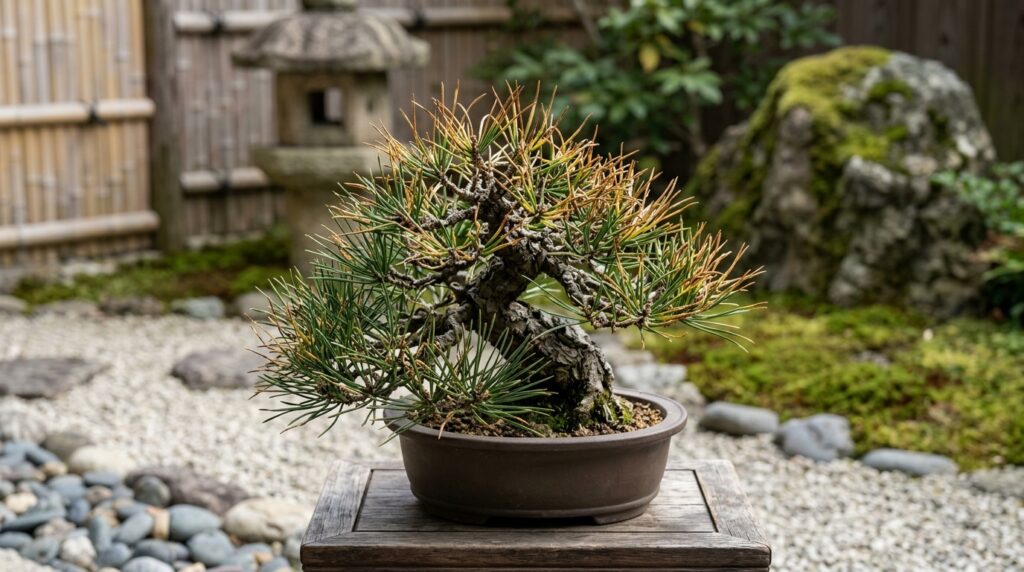
- Chronic overwatering: yellow leaves, weak growth, heavy wet soil, sometimes a stale smell
- Repeated dry-down stress: crisp edges, browning, leaf drop after missed watering
- Poor drainage or compacted soil: symptoms of overwatering even when you are not watering very often
If you are troubleshooting yellow foliage, do not look at color alone. Check the soil texture, drainage speed, and the condition of new growth. A tree in poor soil can behave as if your watering frequency is wrong even when your timing is reasonable.
Useful Tools That Actually Help
I do not believe beginners need a large kit, but a few simple tools make watering more consistent and less rough on the soil surface.
- Fine-rose watering can: gives even coverage without blasting soil away
- Chopstick or soil probe: a simple way to check moisture below the surface
- Well-draining bonsai soil: makes the moisture pattern easier to read
- Humidity tray: useful for cleanliness and local humidity around some indoor setups, though not a substitute for proper watering
For indoor benches or window setups, a bonsai humidity tray can be helpful, but I would rank good light and correct soil far above it. A tray does not fix overwatering.
FAQ
Can I water my bonsai every day?
Only if it actually needs it every day. Many bonsai do in summer. Many do not in cooler weather. Daily checking is good. Daily automatic watering is not always good.
Should I mist my bonsai instead of watering it?
No. Misting does not replace watering the root ball. It may briefly freshen foliage or raise local humidity, but roots still need a deep soak when the soil is ready.
Is morning or evening better for watering?
Morning is best in most cases because it prepares the tree for the day and lets you judge whether a second watering is needed in heat. Evening watering is fine when necessary, especially in summer, as long as the tree is not being kept constantly wet.
How do I know if I am overwatering?
Look for soil that stays wet too long, slow drying, yellowing leaves, weak growth, and a heavy pot day after day. Overwatering is usually about frequency combined with poor drainage, not just the amount of water used in one thorough session.
Do bonsai need more water indoors or outdoors?
Outdoor bonsai often need more frequent watering because they experience sun, wind, and seasonal growth directly. Indoor tropical bonsai may need less frequent watering, but they are easier to overwater because the soil dries more slowly in lower light.
About the Author
Kenji is a bonsai practitioner with 20 years of hands-on experience, shaped by training in Osaka and Kyoto. He teaches quiet, practical bonsai care with an emphasis on observation, restraint, and the small decisions that keep a tree healthy over many seasons.