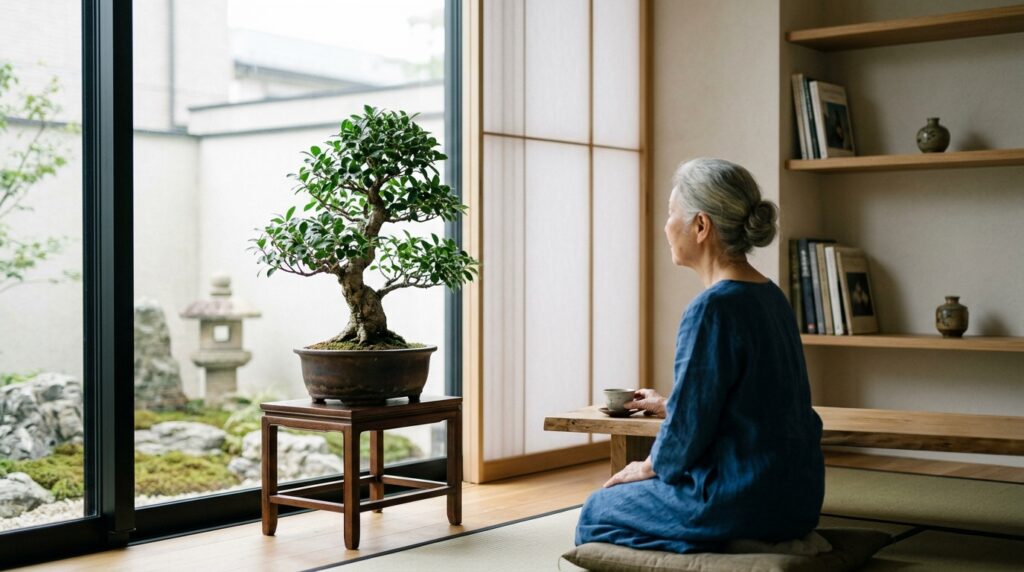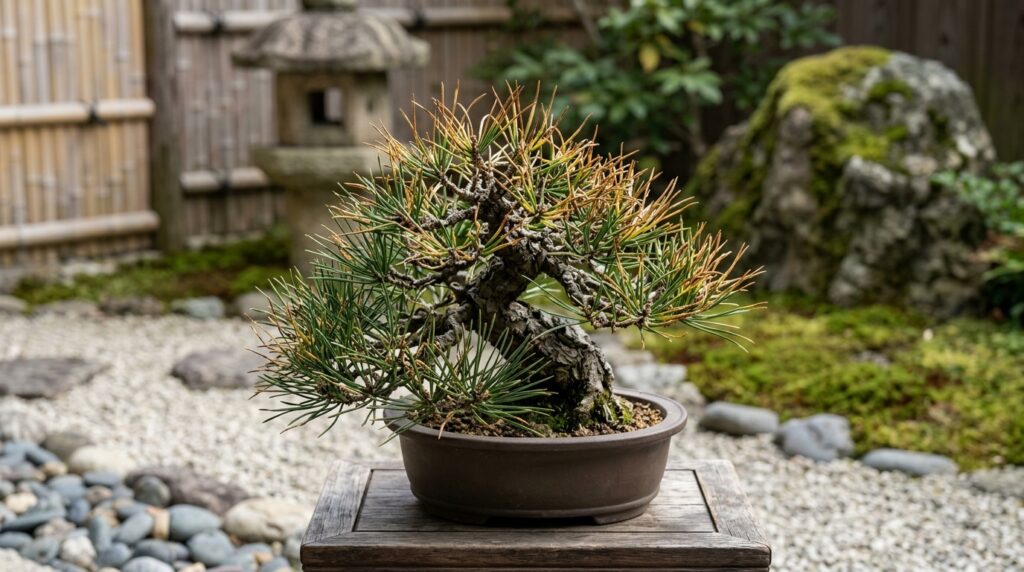
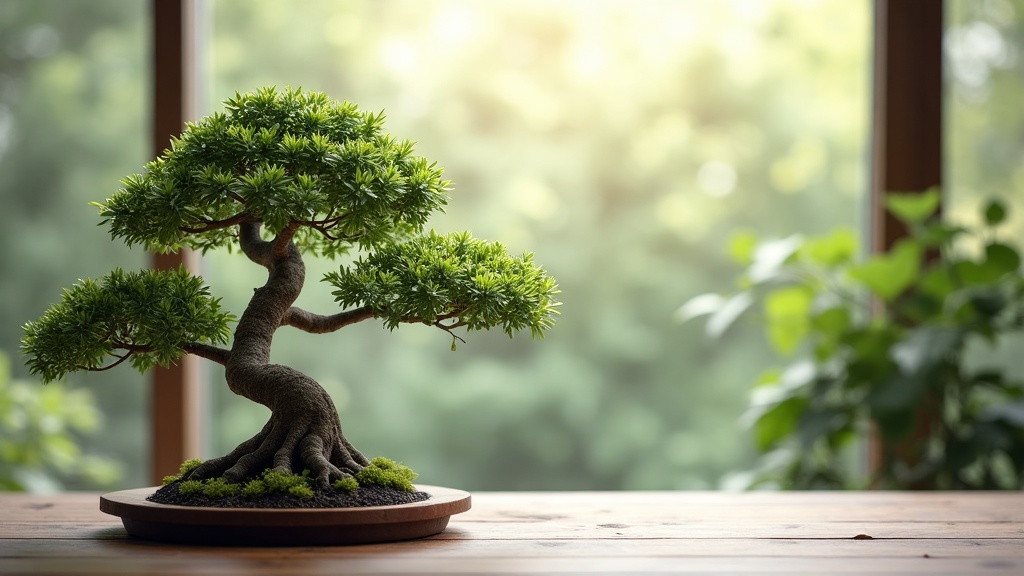
I am often asked, Could you suggest some types of indoor bonsai trees for novices? My short answer is yes: start with species that tolerate ordinary home conditions, recover well from beginner mistakes, and still teach proper bonsai habits. For most people, that means ficus, Chinese elm, dwarf jade, Fukien tea, or Hawaiian umbrella tree.
If I mention tools or supplies below, I may earn a small commission from qualifying purchases at no extra cost to you.
After two decades of practice and teaching, I have learned that beginners usually struggle less with shaping than with matching the tree to the room. A novice can do very well with an “easy” bonsai, but even a beautiful specimen becomes frustrating if it demands more light, humidity, or precision than the home can provide. Indoor bonsai is not really about forcing any tree to live inside. It is about choosing tropical or subtropical species that can adapt to indoor life with dignity.
I also tell students something that sounds simple but matters a great deal: an indoor bonsai should make you want to look at it every day. The best beginner tree is not just forgiving. It is a tree you will notice, rotate, water carefully, and gradually understand.
What makes an indoor bonsai good for a beginner?
Not every bonsai sold as “indoor” is truly beginner-friendly. Some species are marketed well but demand more than the average living room can offer. When I recommend a first indoor bonsai, I look for five traits.
- Tolerance for missed timing. Beginners sometimes water a little early, a little late, or prune a little unevenly. A good first species can absorb that.
- Adaptability to indoor light. No bonsai thrives in a dim corner, but some species handle bright windows much better than others.
- Predictable growth. A novice learns faster from a tree that responds clearly to pruning, pinching, and watering changes.
- Healthy root behavior in pots. Some species settle into bonsai containers more gracefully than others.
- A convincing small-tree character. Even for a beginner, the tree should look believable in miniature, not merely reduced.
In my experience, people often choose their first bonsai with their eyes only. They are drawn to tiny leaves, flowers, or a dramatic trunk. That is understandable. But for the first year, reliability matters more than romance. Once your hands become steadier, your taste can become more selective.
Best indoor bonsai trees for novices
| Species | Why it suits beginners | Main caution | Best placement |
|---|---|---|---|
| Ficus microcarpa | Very forgiving, strong roots, handles indoor air well | Can stretch in weak light | Bright south or east window |
| Chinese elm | Fine branching, classic bonsai look, resilient | Needs better light than many expect | Brightest window, summer outdoors if possible |
| Dwarf jade | Simple watering rhythm, easy propagation, sturdy wood over time | Overwatering is the common mistake | Very bright window with some direct sun |
| Fukien tea | Small leaves, attractive bark, refined silhouette | More sensitive to cold drafts and watering swings | Warm bright window, stable conditions |
| Hawaiian umbrella tree | Adaptable, forgiving, responds well to pruning | Less traditional bark and leaf character | Bright indirect to direct light |
1. Ficus is the safest first choice for most homes
If you want the highest chance of success, I would begin with ficus. Most often this means Ficus microcarpa or a related cultivar sold as ginseng ficus or tiger bark ficus. These trees tolerate indoor air, recover from pruning well, and usually respond kindly if your watering is not yet precise.
Ficus also teaches useful bonsai lessons. It back-buds reliably when healthy, thickens steadily, and shows you clearly when light is insufficient. Leaves become larger and internodes longer in poor light, which is frustrating at first but very educational. A novice can see the relationship between placement and growth without much ambiguity.
One quiet thing I have observed in lessons is that anxious beginners often over-handle delicate trees but become calmer with ficus. The species has enough resilience that people stop hovering and begin observing. That is a healthy change. Bonsai improves when attention becomes steadier and less frantic.
2. Chinese elm offers the most traditional bonsai feeling
Chinese elm is one of the most satisfying species for a beginner who wants a tree that already looks like bonsai in the classical sense. The branching can become elegant, the leaves reduce well, and the silhouette can age beautifully. When cared for properly, it gives you a convincing miniature tree rather than a houseplant in a shallow pot.
I recommend it for novices who have a truly bright window and are willing to rotate the tree regularly. Chinese elm can be kept indoors for extended periods, but it is happier when it receives excellent light and, in many climates, some outdoor time in the warm season. If someone asks me for a tree that can sit in the middle of a room far from a window, I do not recommend elm. That is not a species problem. It is a placement problem.
This connects directly to the common question, Where should I place a bonsai tree in my home? Put it as close as possible to your brightest window, ideally one with several hours of sun. In most homes, that means a south-facing window in the northern hemisphere, then east or west. Avoid placing the tree above a heater, beside an air-conditioning vent, or in a dark hallway where it becomes decoration rather than a living plant.
3. Dwarf jade is excellent if you tend to overwater
Dwarf jade, usually Portulacaria afra, is not a true jade but it is one of the best beginner bonsai plants for learning restraint. It stores water in its leaves and stems, so it does not want constant moisture. For the novice who kills plants by kindness, this can be a very good teacher.
I like dwarf jade because it develops a quiet, age-worn feeling with time. The trunk thickens, the bark texture improves, and the branch pads can become surprisingly refined. It does not have the same immediate classical image as elm, but it can grow into a very persuasive bonsai with patience.
The main risk is soggy soil. If a beginner uses a dense peat-heavy mix and waters on a fixed schedule instead of by observation, root trouble follows. A fast-draining bonsai soil is much more appropriate. If you need one, a practical starting point is an fast-draining bonsai soil mix. Dwarf jade also appreciates stronger light than many first-time owners expect, so give it the brightest sill you have.
4. Fukien tea is beautiful, but only for a careful novice
Fukien tea is often recommended to beginners because it has small glossy leaves, attractive bark, and sometimes tiny white flowers. It can make a charming indoor bonsai, and aesthetically it is easy to understand why people choose it. Still, I place it slightly below ficus and dwarf jade for true beginners.
The reason is stability. Fukien tea dislikes sudden swings in watering, temperature, and placement. It can sulk after being moved, and it may drop leaves if the room is too dry or cold. In a calm, bright, warm home it does well. In a busy house where the tree is shifted often from table to table, it becomes temperamental.
When I see a student succeed with Fukien tea, it is usually because they develop a consistent rhythm early. They check the soil with a finger, water thoroughly when needed, and resist the urge to “improve” conditions every two days. That quiet consistency matters more than any special trick.
5. Hawaiian umbrella tree is underrated for first practice
Hawaiian umbrella tree, Schefflera arboricola, is not always respected by traditionalists, but for the right beginner it can be very useful. It is adaptable, responds to pruning, and tolerates indoor conditions better than many species sold in malls and garden centers. If your goal is to learn basic maintenance, branch selection, and container culture without constant stress, it deserves consideration.
Its limitation is aesthetic. The leaf and bark character are less naturally “ancient tree” than ficus or elm, so the design language is different. I usually recommend it to beginners who want a relaxed, tropical image rather than a strict old-pine silhouette. Bonsai should fit the species honestly. If you try to force every tree into the same visual archetype, disappointment follows.
Which indoor bonsai should you choose for your home?
If you are deciding between these species, choose according to your room and your habits, not only your taste.
- Choose ficus if you want the most forgiving all-round beginner tree.
- Choose Chinese elm if you have very strong light and want the most traditional bonsai appearance.
- Choose dwarf jade if you prefer a succulent-like watering rhythm and a slower, patient style of training.
- Choose Fukien tea if your room is bright and stable and you are naturally attentive to detail.
- Choose Hawaiian umbrella tree if you want something adaptable and low-pressure for early practice.
Over the years, I have noticed that successful beginners are rarely the ones who buy the rarest species. They are usually the ones who place an ordinary tree well and care for it without drama. That is a very bonsai lesson. Good results often come from simple actions repeated carefully.
Where should an indoor bonsai tree sit in the home?
This question matters almost as much as species choice. Indoor bonsai should live where the light is strongest, not where the furniture composition looks nicest. For most homes, the correct place is directly in front of or very near a bright window. A south-facing window is best in many cases. East-facing windows are also excellent for gentler morning sun. West-facing windows can work if summer heat is not too severe.
Avoid these placements:
- Deep inside a room where you can comfortably read without turning on a light
- Next to heating vents, radiators, fireplaces, or air conditioners
- On a windowsill that becomes cold and drafty at night in winter
- In bathrooms unless they are exceptionally bright
If your home is dim, a grow light is often the simplest honest solution. A compact full-spectrum grow light for bonsai can help maintain tighter growth and better health. I do not consider this cheating. It is simply matching the tree to reality. A humidity tray can also be useful for cleanliness and a slight local buffer, though it does not replace proper room humidity. If you need one, look for a bonsai humidity tray sized to the pot.
What basic setup helps a novice succeed?
Indoor bonsai does not require a large tool collection. In fact, too many tools too early can distract from learning the tree. Start with a modest, functional setup.
- A bright window, or a supplemental grow light if your light is weak
- Free-draining soil appropriate to the species
- A watering can with a gentle rose, or a sink sprayer used carefully
- Small pruning scissors, such as bonsai pruning scissors
- Aluminum training wire when the tree is healthy enough for early shaping, such as anodized aluminum bonsai wire
I advise novices to buy better light before buying more tools. Poor light causes far more trouble than modest scissors. Wire is useful, but many first-year improvements come from placement, watering, and selective pruning rather than dramatic bends.
Common beginner mistakes with indoor bonsai
Watering by calendar
The tree does not care what day it is. Check the soil, the pot weight, and the speed of drying. Water when needed, then water thoroughly.
Treating all indoor bonsai the same
Dwarf jade and ficus do not want identical care. One of the first signs of maturity in bonsai practice is adjusting technique to species rather than following a universal routine.
Keeping the tree too far from the window
This is the most common issue I see in homes. People place the bonsai where they enjoy looking at it from across the room. The tree would rather survive near the glass.
Pruning too much, too soon
Many beginner bonsai are sold already styled. Let the tree settle, observe its growth pattern, and then prune with intent. Early patience often prevents months of recovery.
FAQ
Can any bonsai tree live indoors?
No. Many classic bonsai species are temperate trees that need outdoor seasons and winter dormancy. For indoor culture, choose tropical or subtropical species that can adapt to warm year-round conditions.
Is ficus better than juniper for beginners indoors?
Yes. Ficus is far better for indoor beginners. Juniper is an outdoor bonsai and usually declines indoors, even when it looks healthy for a few weeks at first.
How often should I water an indoor bonsai?
There is no fixed schedule that suits every home and every species. Check the soil daily and water thoroughly when the upper layer begins to dry, adjusting for light, pot size, season, and species.
What is the easiest indoor bonsai tree to keep alive?
For most people, ficus is the easiest. It is forgiving, adaptable, and responsive, which makes it both survivable and instructive.