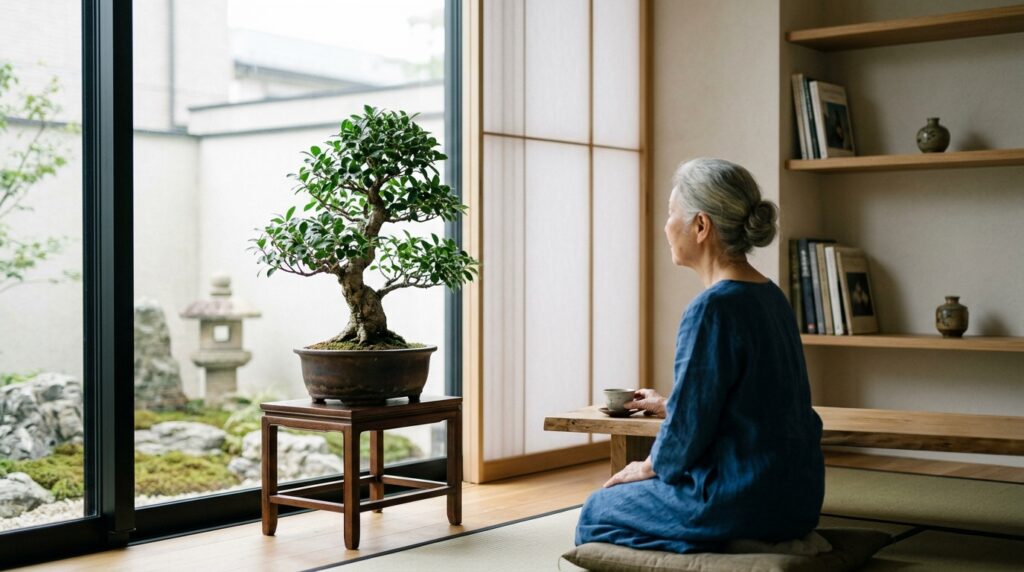
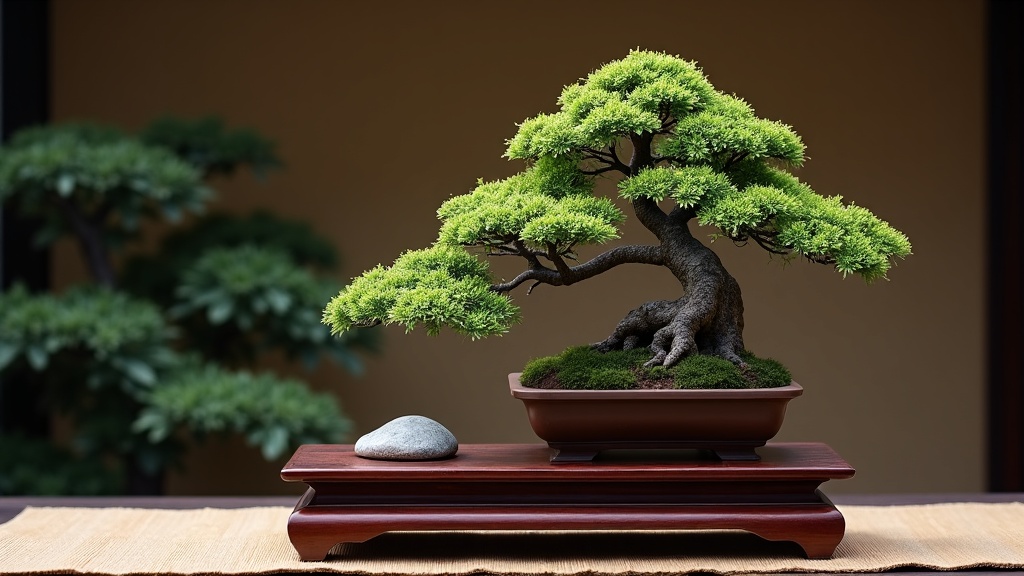
After two decades of working with bonsai, I have learned that the display is as essential as the tree itself. A proper bonsai display stand does not merely elevate your tree—it frames the composition, honors the negative space, and invites contemplation. When paired with suiseki (viewing stones), the arrangement becomes a complete aesthetic experience that embodies wabi-sabi principles.
Understanding the Role of Display Stands in Bonsai Presentation
In traditional Japanese bonsai display, the stand serves multiple purposes. It raises the tree to an appropriate viewing height, creates visual separation from the surroundings, and complements the tree’s character without competing for attention. The stand should disappear into the background while simultaneously completing the composition.
I use wooden stands for most displays because wood harmonizes naturally with living material. The grain, color, and finish should echo the tree’s bark texture or pot glaze. Dark rosewood works beautifully with formal upright pines, while lighter elm suits deciduous species with delicate branching.
Types of Bonsai Display Stands
Different occasions and tree styles require different stand types:
| Stand Type | Best For | Aesthetic Quality |
|---|---|---|
| Flat rectangular table | Formal upright, cascade | Clean, minimal, traditional |
| Root-carved stand | Literati, informal upright | Natural, organic, dynamic |
| Round pedestal | Shohin, accent plants | Elegant, refined, classical |
| Multi-tier stand | Multiple small trees | Display flexibility, spatial harmony |
Selecting the Right Display Stand for Your Tree
The stand must support both the physical weight and visual weight of your composition. For a powerful, thick-trunked pine, I prefer substantial stands with bold lines. Delicate maples demand lighter frames with gentle curves.
Size matters more than most practitioners realize. The stand should typically measure between two-thirds and three-quarters of the tree’s visual width at its widest point. Too large and the tree floats uncomfortably; too small and the composition feels unstable.
One of my reliable choices is the BonsaiOutlet Rosewood Display Table, which offers classic proportions and honest craftsmanship suitable for medium-sized trees. For shohin displays, the Round Elm Pedestal Stand provides the elevation and simplicity that small compositions demand.
Incorporating Suiseki into Your Display
Suiseki—the art of viewing stones—complements bonsai by introducing elemental contrast. Where the tree represents life and growth, the stone embodies permanence and stillness. Together they create balance.
I position suiseki on their own stands, never directly beside the bonsai. The stone should occupy a lower plane, typically on a traditional daiza (stone display base) or simple wooden platform. This height differential establishes hierarchy while maintaining visual connection.
Choosing Stones for Bonsai Display
Effective suiseki suggest landscapes—distant mountains, islands, waterfalls—through shape and surface texture alone. I look for stones with natural weathering, interesting silhouettes, and colors that harmonize with the tree’s seasonal character.
A spring-flowering cherry pairs beautifully with lighter stones suggesting snow-capped peaks. Autumn maples gain depth when displayed alongside darker stones with warm undertones.
Creating Complete Tokonoma-Style Arrangements
The tokonoma alcove in traditional Japanese homes provides the model for formal bonsai display. Even without a dedicated alcove, you can apply these principles to create viewing areas worthy of contemplation.
Position your bonsai slightly off-center on its stand. Place the suiseki on the opposite side, creating asymmetric balance. Add a scroll (kakemono) on the wall behind if space allows, but never let accessories overwhelm the tree.
The Two-Tier Corner Display Stand works exceptionally well for home displays, allowing you to arrange multiple elements without crowding.
Seasonal Adjustments to Display
I rotate my displays seasonally. Spring arrangements emphasize renewal with lighter stands and delicate accent plants. Winter displays feature stark, powerful compositions with darker wood and minimal accessories.
The background matters as well. Neutral walls in cream, grey, or soft brown allow the composition to breathe. Avoid busy patterns or bright colors that compete for attention.
Practical Considerations for Display Stand Selection
Beyond aesthetics, your stands must function reliably. Look for stable construction with solid joinery—no wobbling or flexing under weight. Feet should sit flush on level surfaces to prevent tipping.
Finish quality affects longevity. I prefer natural oil finishes that protect wood while allowing grain to show. Glossy lacquers can look cheap unless executed masterfully. The BambooMN Natural Bamboo Display Platform offers excellent durability with minimal maintenance needs.
Consider storage between exhibitions. Stands should stack or nest efficiently without scratching. I wrap mine in soft cloth and store them in climate-controlled space to prevent warping.
Building Your Display Collection Over Time
You do not need extensive stand collections immediately. Start with two or three versatile pieces in different sizes. A medium rectangular table, a small round pedestal, and one natural root stand cover most display needs.
As your trees develop character, you will recognize which stands truly complement each specimen. I have favorites that I have used for specific trees for over a decade—the pairing becomes inseparable in my mind.
Quality surpasses quantity always. One perfectly proportioned stand in honest material outperforms five mediocre alternatives. Invest in pieces that will serve your trees for years.
Frequently Asked Questions
What height should a bonsai display stand be?
For seated viewing, stands typically range from 6 to 18 inches tall depending on tree size. The tree’s lowest branch should align roughly with the viewer’s eye level when seated. Cascade-style bonsai require taller stands to accommodate the downward-flowing canopy.
Can I make my own bonsai display stands?
Absolutely. Simple stands require only basic woodworking skills. I have crafted many stands from reclaimed wood, driftwood, and salvaged timber. The imperfections often enhance the wabi-sabi aesthetic. Ensure joints are solid and surfaces are properly finished to protect against moisture.
How do I clean and maintain wooden display stands?
Dust regularly with a soft cloth. For deeper cleaning, use barely-damp cloth followed by immediate drying. Reapply natural oil finish annually to prevent drying and cracking. Avoid placing stands in direct sunlight or near heating vents, which accelerate wood degradation.
Should the display stand match the bonsai pot color?
Not necessarily match, but harmonize. Dark stands work well with lighter pots and vice versa, creating visual contrast. Consider the overall composition—sometimes a neutral stand allows an ornate pot to shine, while other times a distinctive stand elevates a simple pot.
Where should I position suiseki relative to the bonsai?
Place the suiseki on the opposite side from the tree’s main visual movement, creating counterbalance. If the tree leans left, position the stone on the right. Maintain clear space between elements—crowding destroys the contemplative quality essential to proper display.