Best Bonsai Trees for Indoors: 10 Species That Actually Thrive
After twenty years of cultivating bonsai, I’ve learned that most “indoor bonsai” lists miss a crucial truth: very few trees naturally thrive in the artificial environment of our homes. The best bonsai trees for indoors are tropical and subtropical species that tolerate low humidity, filtered light, and stable temperatures—conditions most homes provide year-round.
What you’ll find below isn’t speculation or theory. These are the ten species I’ve watched succeed indoors, in apartments from Osaka to Chicago, in the hands of both beginners and advanced practitioners. Each one has proven itself forgiving, adaptable, and genuinely beautiful when given basic care.
Understanding Indoor Bonsai Requirements
Before we examine specific species, let’s establish what “thriving indoors” actually means. A tree that survives isn’t necessarily thriving. The species on this list actively grow, develop ramification, and respond well to training in typical indoor conditions.
Indoor environments present three primary challenges: inconsistent light (usually less than outdoor conditions), low humidity (often 30-40% in heated or air-conditioned spaces), and limited air circulation. The trees that succeed are those evolutionarily adapted to forest understories or tropical climates where these conditions occur naturally.
The 10 Best Indoor Bonsai Species
1. Ficus (Fig Trees)
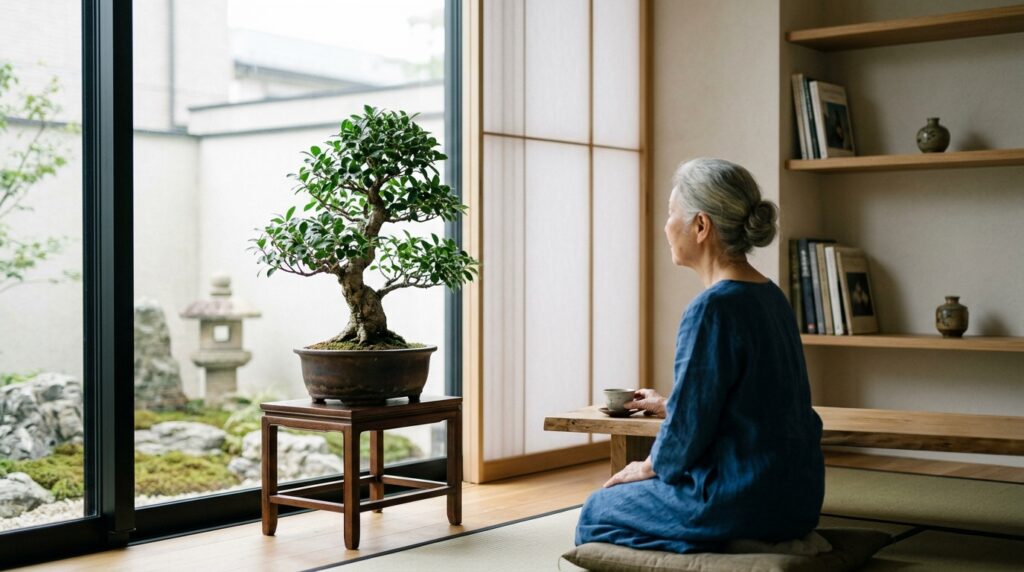
The ficus bonsai remains the most reliable indoor species I’ve encountered. Ficus retusa, F. benjamina, and F. microcarpa all tolerate low light remarkably well and respond vigorously to pruning.
What makes ficus exceptional is their resilience. They develop aerial roots in humid conditions, backbud readily even from old wood, and forgive irregular watering better than almost any other species. I’ve seen ficus recover from complete defoliation and severe root pruning—a resilience that gives beginners crucial room for error.
Care essentials: Bright indirect light, water when the soil surface dries, mist occasionally. Avoid moving them frequently—ficus can drop leaves when repositioned.
2. Chinese Elm (Ulmus parvifolia)
The Chinese elm offers something rare in indoor bonsai: deciduous character with tropical adaptability. While technically semi-deciduous, most Chinese elm kept indoors retain their leaves year-round.
I appreciate their rapid growth and willingness to ramify. The small leaves reduce naturally with proper care, and the bark develops attractive exfoliating patterns as the tree matures. Chinese elm also tolerate aggressive pruning during the growing season, making them ideal for learning styling techniques.
Care essentials: Bright light (near a window), consistent moisture, occasional outdoor time in warm months strengthens growth.
3. Jade Plant (Crassula ovata)
The humble jade plant creates surprisingly sophisticated bonsai. As a succulent, jade thrives in the dry indoor air that challenges most species. Their thick trunks develop character quickly, and the succulent leaves catch light beautifully.
What jade lacks in traditional refinement, it compensates with dependability. I’ve watched jade bonsai survive weeks of neglect and bounce back completely. For someone learning basic bonsai principles without the pressure of keeping a temperamental tree alive, jade provides an ideal foundation.
Care essentials: Bright light (they love direct sun), infrequent watering, well-draining soil. Let the soil dry completely between waterings.
4. Schefflera (Umbrella Tree)
The schefflera bonsai remains underappreciated in Western practice. The compound leaves create an interesting canopy texture, and schefflera develop thick, textured trunks with age.
Schefflera arboricola tolerates low light better than most tropical species. They backbud reliably, even from thick branches, and the growth habit naturally creates movement and interest. I’ve styled schefflera into convincing broom and informal upright forms with minimal effort.
Care essentials: Moderate to bright light, water when topsoil dries, occasional pruning to maintain compact growth.
5. Fukien Tea (Carmona retusa)
The fukien tea requires more attention than other species on this list, but rewards care with delicate white flowers and small, glossy leaves. This species holds special significance in traditional Asian practice.
Fukien tea demands consistency—consistent watering, consistent light, consistent temperature. They dislike sudden changes. But within stable conditions, they thrive indoors, developing fine ramification and blooming periodically throughout the year.
Care essentials: Bright, consistent light, maintain even moisture (never fully dry), warm temperatures (above 60°F), high humidity preferred.
6. Japanese Sweet Plum (Sageretia theezans)
Lesser known but highly capable, the sageretia bonsai develops exfoliating bark that reveals beautiful mottled patterns beneath. The tiny leaves create convincing scale even on young trees.
Sageretia backbud enthusiastically and tolerate hard pruning well. They grow vigorously in warm conditions, which means regular pruning, but also means you can correct mistakes quickly. The species adapts well to indoor conditions if given adequate light.
Care essentials: Bright light, consistent moisture, protect from cold drafts, prune regularly during growing season.
7. Serissa (Snow Rose)
The serissa bonsai produces delicate white or pink flowers against tiny evergreen leaves. Serissa has earned its nickname “tree of a thousand stars” through reliable blooming.
Serissa can be temperamental—it dislikes being moved, changes in watering routine, or temperature fluctuations. However, once established in a good location with consistent care, serissa becomes remarkably stable and blooms prolifically. The fine branching develops naturally without excessive intervention.
Care essentials: Bright indirect light, consistent moisture (sensitive to both overwatering and drying), stable temperatures, avoid moving frequently.
8. Dwarf Jade (Portulacaria afra)
Not a true jade, the dwarf jade offers even smaller leaves and more refined branching than Crassula ovata. The reddish stems contrast beautifully with the small green leaves.
Dwarf jade grows faster than true jade, ramifies naturally, and develops convincing proportions quickly. Like all succulents, it thrives in the dry air of indoor environments. The species tolerates aggressive styling and bounces back from pruning rapidly.
Care essentials: Maximum light (direct sun ideal), infrequent watering, excellent drainage, fertilize during active growth.
9. Hawaiian Umbrella (Schefflera arboricola)
While similar to the standard schefflera, the Hawaiian umbrella tree deserves separate mention for its particularly compact growth habit and smaller leaf size. This variety was specifically developed for bonsai cultivation.
Hawaiian umbrella develops thick, gnarled trunks relatively quickly and the aerial roots (when encouraged) add dramatic character. The species tolerates indoor conditions exceptionally well and backbuds reliably even on interior branches.
Care essentials: Bright to moderate light, regular watering (keep slightly moist), warm temperatures, occasional misting encourages aerial roots.
10. Bamboo Palm (Neanthe bella)
An unconventional choice, the bamboo palm creates forest-style plantings or literati forms that emphasize negative space and vertical line. While not a traditional bonsai subject, palms teach valuable lessons about composition and restraint.
Palms thrive in low-light conditions where other species struggle. They tolerate indoor air well and require minimal intervention once established. The key is selecting small specimens and emphasizing the vertical lines through careful positioning and understory planting.
Care essentials: Low to moderate light, consistent moisture, good drainage, high humidity beneficial but not required.
Indoor Bonsai Species Comparison
| Species | Light Needs | Difficulty | Best Feature |
|---|---|---|---|
| Ficus | Moderate to Bright | Easy | Extreme resilience, aerial roots |
| Chinese Elm | Bright | Easy | Fast growth, fine ramification |
| Jade Plant | Bright to Direct | Very Easy | Drought tolerance, quick trunk development |
| Schefflera | Moderate | Easy | Low light tolerance, reliable backbudding |
| Fukien Tea | Bright | Moderate | Delicate flowers, traditional aesthetic |
| Sageretia | Bright | Moderate | Exfoliating bark, tiny leaves |
| Serissa | Bright Indirect | Moderate | Abundant flowering, fine branching |
| Dwarf Jade | Bright to Direct | Very Easy | Small leaves, rapid growth |
| Hawaiian Umbrella | Moderate to Bright | Easy | Aerial roots, compact growth |
| Bamboo Palm | Low to Moderate | Easy | Extreme low-light tolerance |
Essential Care Principles for Indoor Bonsai
Light Management
Even species that tolerate low light perform better with more. Position your bonsai near south-facing windows (north-facing in the Southern Hemisphere) where possible. East or west windows work well for moderate-light species. If natural light is insufficient, full-spectrum grow lights positioned 12-18 inches above the canopy provide excellent supplementation.
Rotate your tree a quarter-turn weekly to ensure even light exposure. This simple practice prevents lopsided growth and maintains balanced canopy development.
Watering Technique
More indoor bonsai die from overwatering than any other cause. The proper approach: check soil moisture daily by feeling the surface, water thoroughly when the top layer feels dry (but before the soil becomes completely dry), ensure excess water drains completely.
Use a watering can with a fine rose to avoid disturbing the soil surface. Water should emerge from drainage holes—never let a bonsai sit in a water-filled saucer for extended periods.
Humidity Considerations
While the species listed tolerate low humidity, all perform better with elevated moisture levels. Place trees on humidity trays filled with gravel and water (ensuring the pot sits above the waterline), group multiple plants together to create a microclimate, or use a small humidifier during heating season.
Misting provides temporary humidity relief but shouldn’t replace proper watering or humidity management. If you mist, do so in the morning so foliage dries before nightfall.
Soil and Repotting
Indoor bonsai require excellent drainage even more than outdoor specimens, since air circulation and evaporation rates are lower. Use specialized bonsai soil combining akadama, pumice, and lava rock, or create a blend of bark, perlite, and turface.
Repot young trees every 2-3 years, mature specimens every 3-5 years. Spring (as new growth begins) provides the ideal window for most species, though tropical varieties tolerate repotting during any warm period.
Common Mistakes with Indoor Bonsai
Understanding what doesn’t work matters as much as knowing what does. The most frequent errors I observe:
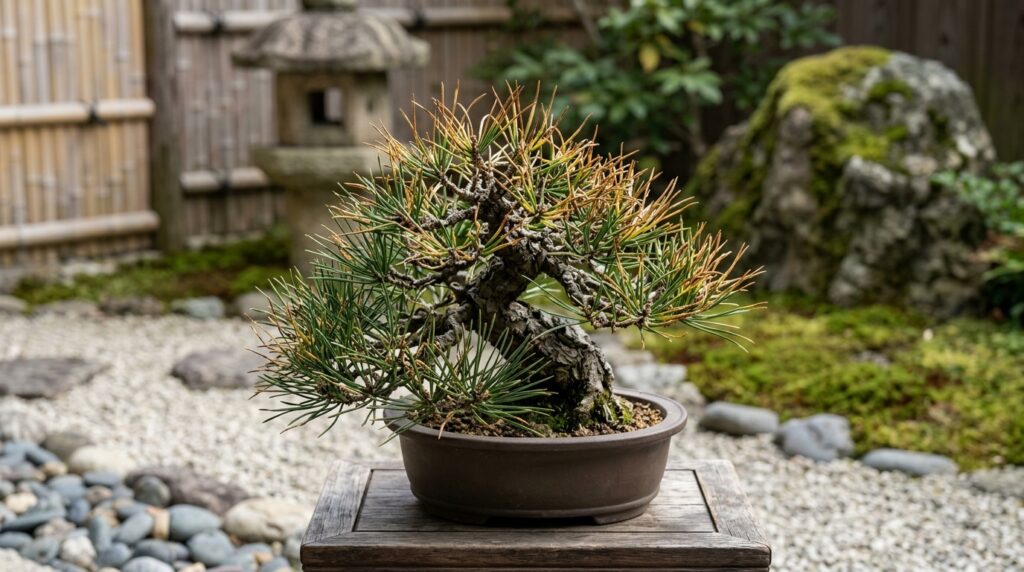
Treating temperate species as indoor trees. Juniper, pine, and maple bonsai require winter dormancy. They survive indoors briefly but decline over months. If you love these species, keep them outdoors and bring them in only for short display periods.
Insufficient light. “Indirect light” doesn’t mean dark corners or rooms without windows. Even low-light species need actual light—the kind you can read by comfortably.
Inconsistent care. Indoor trees tolerate less variation than outdoor specimens. Establish a checking routine (daily is ideal) rather than watering on a fixed schedule.
Overcomplicating early training. New practitioners sometimes over-style young trees. Better to let a healthy tree grow vigorously for a year, building strength, before aggressive styling.
Frequently Asked Questions
Can I keep any bonsai tree indoors permanently?
No. Only tropical and subtropical species tolerate permanent indoor cultivation. Temperate species (juniper, pine, maple, etc.) require outdoor conditions and winter dormancy to survive long-term. The trees listed in this article represent species that genuinely thrive indoors rather than merely surviving temporarily.
How much light does an indoor bonsai actually need?
Most indoor bonsai need at least 4-6 hours of bright, indirect light daily. “Bright” means you can read comfortably without artificial light. South-facing windows (in the Northern Hemisphere) provide ideal conditions. If natural light is limited, full-spectrum grow lights positioned 12-18 inches above the tree for 12-14 hours daily provide excellent supplementation.
Why does my indoor bonsai keep dropping leaves?
Leaf drop typically indicates environmental stress: sudden temperature changes, dramatic light reduction, overwatering or underwatering, or being moved frequently. Ficus especially drop leaves when relocated. If recent changes occurred, maintain stable conditions and the tree usually recovers. If no changes occurred, check watering practices and root health.
Do indoor bonsai need fertilizer?
Yes. Indoor trees grow year-round and gradually deplete soil nutrients. Apply balanced liquid fertilizer at half-strength every 2-3 weeks during active growth (spring through fall), reduce to monthly in winter. Organic fertilizers work well but can attract gnats indoors—mineral-based fertilizers avoid this issue while providing complete nutrition.
What’s the easiest indoor bonsai for complete beginners?
Ficus and jade plant tie for most forgiving. Ficus offers traditional bonsai aesthetics and responds well to training. Jade requires even less attention and tolerates neglect better. Both allow beginners to learn fundamental techniques without the pressure of keeping a finicky tree alive. Chinese elm runs a close third but needs brighter light and more consistent watering.