After twenty years of working with wisteria bonsai, I’ve learned that the difference between a tree that blooms abundantly and one that refuses to flower comes down to three things: precise timing, confident pruning, and patience. The wisteria rewards those who understand its natural rhythm.
Wisteria is one of the most dramatic flowering bonsai you can cultivate, but it demands more attention to timing than almost any other species. In this guide, I’ll share the seasonal care calendar and pruning techniques that have consistently produced cascades of fragrant blooms in my own collection and in the gardens where I trained in Osaka.
Understanding Wisteria’s Growth Pattern
Wisteria is a vigorous climber by nature, and even as a bonsai, this energy doesn’t disappear—it simply needs redirection. The species grows in two distinct phases: a vegetative surge in spring and early summer, followed by flower bud formation in mid to late summer.
The key to successful wisteria bonsai care is working with these phases rather than against them. Many beginners prune too early or too aggressively in spring, removing the exact shoots that would have carried next year’s flowers. Understanding what the tree is doing at each stage of the year eliminates most common frustrations.
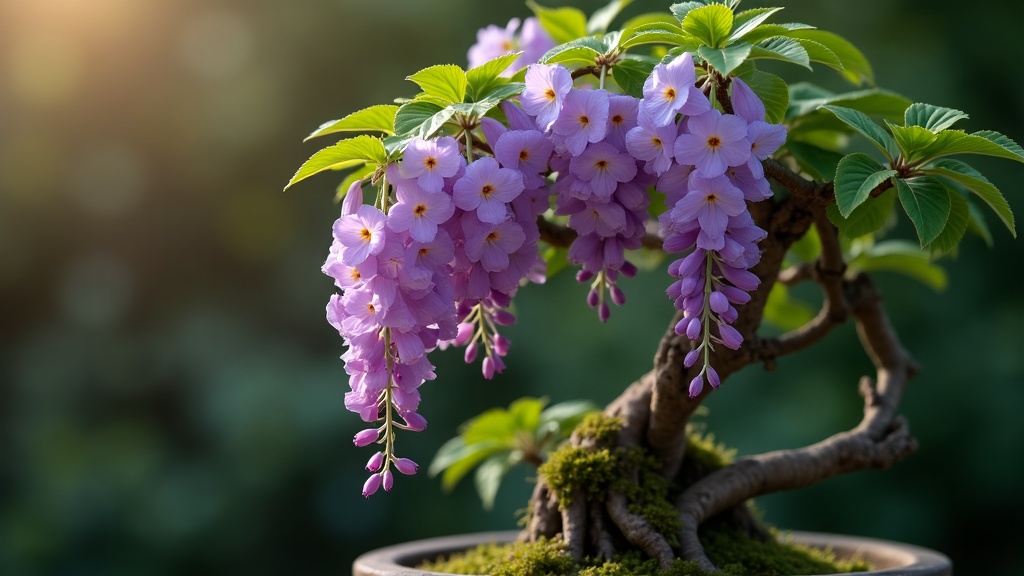
Japanese wisteria (Wisteria floribunda) and Chinese wisteria (Wisteria sinensis) are both suitable for bonsai, though the Japanese variety produces longer, more dramatic flower clusters—sometimes 18 inches or more. Both require identical care.
Seasonal Care Calendar for Wisteria Bonsai
| Season | Primary Tasks | What’s Happening |
|---|---|---|
| Late Winter (Feb-March) |
Structural pruning, repotting (every 2-3 years), root pruning | Dormant period—safe to make major changes |
| Spring (April-May) |
Enjoy flowers, light post-bloom pruning, increase watering | Flowering period, followed by vigorous shoot growth |
| Summer (June-Aug) |
Regular pinching of long shoots, heavy watering, high-potassium fertilizer | Flower buds forming on short spurs—critical period |
| Fall (Sept-Nov) |
Reduce watering gradually, final cleanup pruning, leaf removal if desired | Growth slowing, hardening off for winter |
This calendar assumes a temperate climate similar to USDA zones 5-9, where wisteria naturally thrives. If you’re growing in warmer zones, you may need to provide artificial dormancy through strategic watering and feeding adjustments.
Pruning Techniques for Wisteria Bonsai
Pruning is where most wisteria bonsai either succeed or fail. The species grows with explosive vigor, and without regular intervention, you’ll have a tangled mass of long whips instead of a refined tree with flowering spurs.
Late Winter Structural Pruning
Between February and early March, while the tree is fully dormant, I do the major structural work. This is when I remove any branches that disrupt the overall design, cut back thick growth, and make decisions about the tree’s long-term shape.
Use sharp concave branch cutters for clean wounds that heal flush. At this stage, I’m not worried about flower buds—the focus is purely structural. Heavy cuts made now will heal well during the spring growth surge.
Post-Bloom Pruning (Late Spring)
Immediately after flowering—usually late April or May—I do a light pruning to remove spent flower clusters and any shoots that emerged in awkward positions. This is a gentle cleanup, not a major cutback.
The temptation here is to cut everything back hard because the tree looks leggy. Resist this. Those long shoots are necessary for the tree’s energy production. We’ll deal with them in summer.
Summer Pruning and Pinching (Critical for Flowering)
From June through August, I pinch back new shoots regularly—this is the most important pruning period for flower production. Here’s the exact technique:
- Allow new shoots to extend to 6-8 leaves
- Cut back to 2-3 leaves from the base
- Repeat every 2-3 weeks as new growth appears
- Leave short, stubby spurs—these will carry next year’s flowers
Quality bonsai pruning shears make this repetitive work much easier. The goal is to force the tree to create short flowering spurs rather than long vegetative runners.
Some practitioners in Kyoto pinch even more aggressively, leaving only one or two leaves. I find 2-3 leaves provides better energy balance while still promoting flower bud formation.
Getting Your Wisteria Bonsai to Flower
A wisteria that won’t flower is usually making one of three mistakes: too much nitrogen, insufficient root restriction, or removal of flowering wood.
Root restriction is essential. Wisteria flowers most abundantly when slightly root-bound. This is why we only repot every 2-3 years, and even then, we don’t drastically increase pot size. A slightly stressed root system triggers reproductive behavior—the tree “thinks” it needs to produce seeds.
Fertilizer strategy matters enormously. From spring through early summer, I use balanced fertilizer to support growth. But starting in July, I switch to a high-phosphorus, high-potassium formula—something like 0-10-10 or similar. This shift tells the tree to focus on flower production rather than vegetative growth.
I use bloom booster fertilizer specifically formulated for flowering, applied every two weeks through August. Stop all fertilizer by September.
Age and maturity also play a role. Wisteria grown from seed may take 7-10 years to reach flowering maturity. Grafted specimens or air-layered material from mature plants will flower much sooner—sometimes within 2-3 years. When acquiring wisteria for bonsai, always ask about the plant’s origin.
Watering Requirements
Wisteria is thirsty. During active growth in spring and summer, I water twice daily—once in early morning, once in early evening. The foliage wilts dramatically when dry, which is the tree’s way of telling you it’s suffering.
Use well-draining bonsai soil that allows frequent watering without waterlogging. My standard mix is 50% akadama, 25% pumice, 25% lava rock. This drains quickly but retains enough moisture to support the tree’s high water needs.
In winter, water much less—only when the soil surface begins to dry. The dormant tree requires minimal moisture, and overwatering during dormancy invites root rot.
Wiring and Shaping
Wisteria’s bark is relatively soft and scars easily, so I wire carefully and only when necessary. Late winter, just before spring growth, is the safest time. Use aluminum bonsai wire rather than copper—it’s gentler and easier to remove.
Check wired branches weekly during the growing season. Wisteria thickens rapidly, and wire can bite into the bark within weeks. Remove wire as soon as the branch holds its position.
The traditional form for wisteria bonsai is cascade or semi-cascade, allowing the flower clusters to hang naturally. But informal upright and slanting styles can also be striking. The key is ensuring there’s space below the branches for those long flower racemes to drape without touching the pot or stand.
Common Challenges
No flowers despite healthy growth: Almost always caused by excess nitrogen or pruning at the wrong time. Switch to bloom-formula fertilizer in summer, and ensure you’re preserving those short spurs created by summer pinching.
Weak, pale growth: Usually insufficient fertilizer or poor light. Wisteria needs full sun—at least 6 hours of direct sunlight daily. Weak light produces leggy growth and poor flowering.
Aphid infestations on new growth: Common in spring. I remove them with a strong spray of water or use insecticidal soap if the infestation is severe. Check daily during spring—early intervention prevents major problems.
Leaf scorch or wilting: Insufficient watering. If you’re going to work with wisteria, commit to the watering schedule. There’s no way around it.
Frequently Asked Questions
When is the best time to repot wisteria bonsai?
Late winter, just before spring growth begins—typically February or early March. Look for swelling buds as your signal. Repot every 2-3 years for established trees, annually for young specimens. Root-prune moderately, removing no more than one-third of the root mass, and keep the tree slightly pot-bound to encourage flowering.
Why won’t my wisteria bonsai flower?
The most common reasons are: too much nitrogen fertilizer (switch to high-phosphorus formula in summer), pruning away flowering spurs (preserve the short spurs created by summer pinching), insufficient light (needs full sun), or the tree is too young (seed-grown wisteria may take 7-10 years to mature). Root restriction also triggers flowering—don’t use oversized pots.
How often should I prune wisteria bonsai during summer?
Every 2-3 weeks from June through August. Allow new shoots to extend to 6-8 leaves, then cut back to 2-3 leaves. This repetitive pinching forces the tree to develop short flowering spurs rather than long runners. It’s labor-intensive but absolutely essential for flower production.
Can wisteria bonsai survive winter outdoors?
Yes, wisteria is fully hardy in USDA zones 5-9 and actually requires winter dormancy to flower properly. Protect the pot from hard freezes by burying it in the ground, placing it in a cold frame, or wrapping it with insulation. The tree itself handles cold well—it’s the roots in the shallow bonsai pot that need protection from freeze-thaw cycles.
What’s the difference between Japanese and Chinese wisteria for bonsai?
Japanese wisteria (Wisteria floribunda) produces longer flower clusters—up to 18 inches—and blooms slightly later. Chinese wisteria (Wisteria sinensis) has shorter, more compact flowers that open all at once. Both work beautifully as bonsai and require identical care. Japanese wisteria offers more dramatic floral display, which is why it’s slightly more popular among bonsai practitioners.