Easiest Bonsai Trees for Beginners: 7 Forgiving Species
After two decades of practicing bonsai, I’ve learned that the best teacher is a tree that forgives your mistakes. The easiest bonsai trees for beginners share three qualities: they tolerate irregular watering, they respond well to pruning, and they communicate their needs clearly through their leaves.
I’ve trained beginners in Osaka tea houses and American living rooms, and the pattern is always the same — students who start with forgiving species build confidence, develop observation skills, and stay with the practice. Students who start with temperamental varieties often give up before experiencing the meditative rhythm bonsai offers.
What Makes a Bonsai Tree “Beginner-Friendly”?
In my early training under Master Tanaka in Kyoto, I killed three Japanese maples before understanding a fundamental truth: difficulty isn’t about the species itself, but the match between the tree’s needs and your growing environment.
A beginner-friendly bonsai exhibits these characteristics:
- Resilience to watering inconsistency — recovers from both underwatering and brief overwatering
- Vigorous growth — allows you to practice pruning techniques without fear of killing the tree
- Clear communication — shows visible signs when it needs water, light, or nutrients
- Indoor or outdoor flexibility — adapts to various growing conditions
- Readily available — found at nurseries without specialty ordering
The 7 Most Forgiving Bonsai Species
1. Chinese Elm (Ulmus parvifolia)
The Chinese elm is what I hand every new student. It tolerates low light, irregular watering, and aggressive pruning while continuing to produce new growth. These trees communicate clearly — leaves droop when thirsty, then perk up hours after watering.
Chinese elms develop fine ramification naturally, meaning even a beginner’s first styling attempts will yield a tree with convincing proportions. They’re semi-deciduous, often keeping their leaves indoors through winter, which provides year-round practice opportunities.
Indoor or outdoor: Both
Watering tolerance: High
Growth speed: Fast
Recommended starter tool: bonsai pruning shears
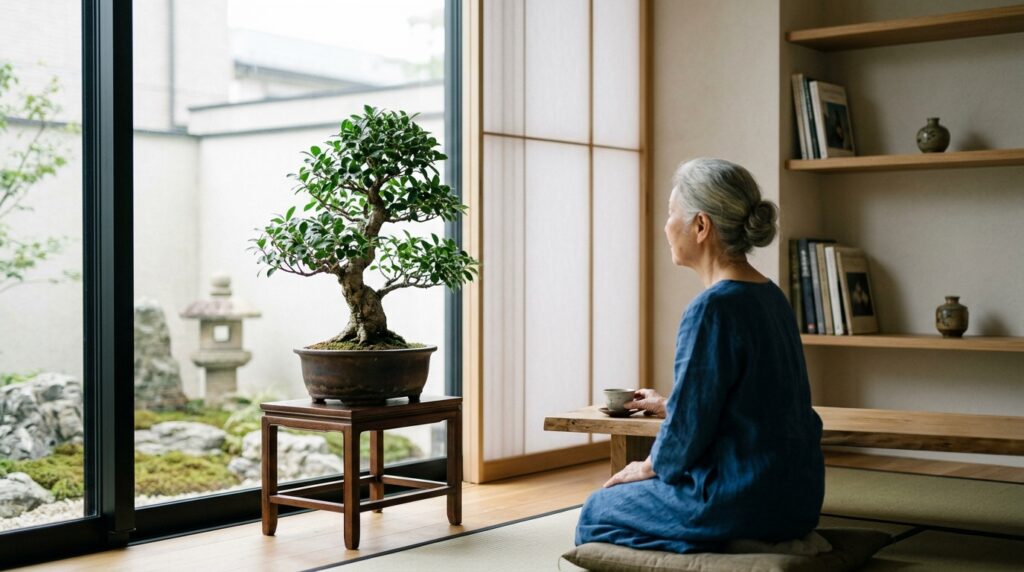
2. Ficus (Ficus retusa or Ficus benjamina)
Ficus species are nearly indestructible. They tolerate low humidity, adapt to indoor lighting, and if you forget to water for a week, they’ll survive. I’ve seen ficus trees recover from complete defoliation due to cold shock — something that would kill most other species.
The thick, woody trunks develop quickly, often within 2-3 years, giving beginners the aesthetic satisfaction of an “aged” tree without the decades-long wait. Ficus also root vigorously, making them excellent candidates for root-over-rock styles.
Indoor or outdoor: Primarily indoor (tropical)
Watering tolerance: Very high
Growth speed: Very fast
Training advantage: Air roots develop easily for dramatic styling
3. Jade Plant (Crassula ovata)
The jade plant isn’t traditional bonsai in the Japanese sense, but it’s an exceptional learning tool. As a succulent, it stores water in its leaves and trunk, making it nearly impossible to kill through underwatering — the most common beginner mistake.
Jade plants demonstrate bonsai principles clearly: prune a branch, and you’ll see exactly where new growth emerges. Their thick trunks and branches look ancient even on young plants, providing immediate aesthetic reward. I recommend jade plants for beginners who travel frequently or have inconsistent schedules.
Indoor or outdoor: Both (protect from frost)
Watering tolerance: Extreme
Growth speed: Moderate
Unique benefit: Thick trunk develops in 3-4 years
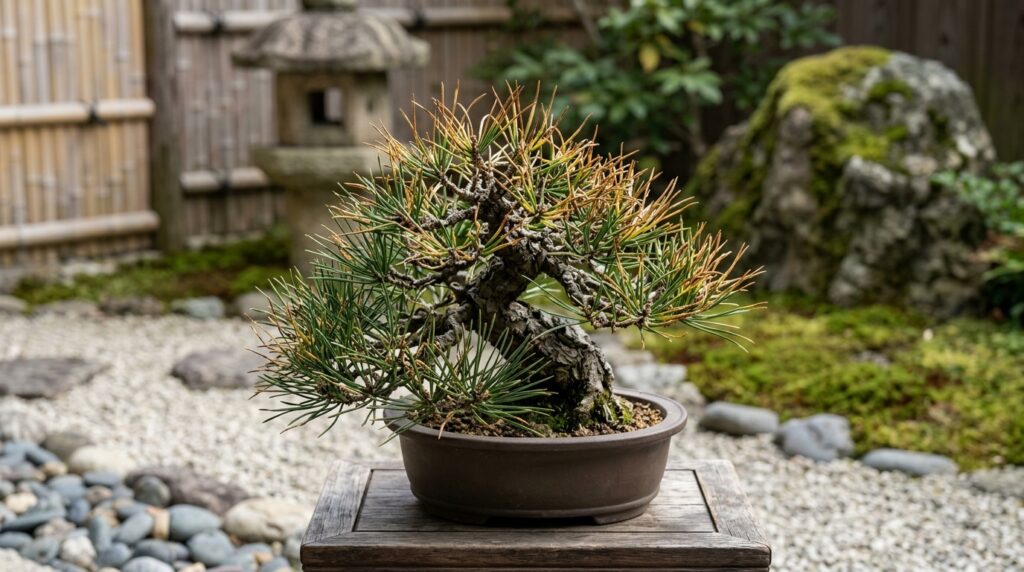
4. Japanese Juniper (Juniperus procumbens)
For students committed to outdoor bonsai, Japanese juniper is the foundation species. It withstands full sun, tolerates both drought and heavy rain once established, and responds beautifully to wiring and shaping.
Junipers grow new branches readily from old wood, which means styling mistakes aren’t permanent — you can reshape the tree over time. The fine, needle-like foliage creates convincing scale even on smaller specimens. However, junipers require outdoor conditions; attempting to grow them indoors leads to slow decline.
Indoor or outdoor: Outdoor only
Watering tolerance: High (once established)
Growth speed: Moderate
Essential supply: bonsai training wire
5. Fukien Tea (Carmona reticulata)
Fukien tea has a reputation for difficulty in some circles, but in my experience, the problem is placement, not the plant. Give it bright light and consistent moisture, and it thrives. The small, glossy leaves naturally suggest age and scale, and it produces tiny white flowers throughout the year.
What makes Fukien tea beginner-friendly is its clear communication: leaves yellow immediately when something is wrong, whether it’s placement, watering, or soil drainage. This teaches beginners to observe daily, developing the attentive practice that serves all future bonsai work.
Indoor or outdoor: Indoor (tropical)
Watering tolerance: Moderate
Growth speed: Moderate to fast
Aesthetic advantage: Year-round white flowers and small natural leaves
6. Portulacaria afra (Dwarf Jade)
Often confused with true jade, Portulacaria afra is actually a distinct species with even greater bonsai potential. The small, round leaves create excellent proportion on small to medium trees, and the plant tolerates aggressive pruning, developing dense branch structure within a single growing season.
Portulacaria stores water like other succulents, making it forgiving of missed waterings. It grows rapidly in warm conditions, allowing beginners to practice pruning techniques frequently. The reddish-brown bark develops naturally, adding visual interest without artificial aging techniques.
Indoor or outdoor: Both (frost-sensitive)
Watering tolerance: High
Growth speed: Fast
Practice advantage: Branches thicken quickly, showing pruning results within months
7. Schefflera arboricola (Umbrella Tree)
Schefflera is widely available at regular nurseries, often sold as houseplants for under $20. This accessibility makes it perfect for beginners who want to practice techniques before investing in more expensive specimens. The compound leaves reduce naturally in bonsai culture, and the tree tolerates low light better than most species.
I use schefflera to teach trunk-chopping techniques — cut the trunk back aggressively, and it sprouts new growth readily, allowing complete redesign. This forgiveness lets beginners experiment with dramatic techniques without risking valuable trees.
Indoor or outdoor: Indoor (tropical)
Watering tolerance: High
Growth speed: Fast
Cost advantage: Often $15-30 at regular nurseries
Comparison: Quick Reference Guide
| Species | Light Needs | Water Tolerance | Indoor/Outdoor | Growth Speed |
|---|---|---|---|---|
| Chinese Elm | Moderate to bright | High | Both | Fast |
| Ficus | Low to bright | Very high | Indoor | Very fast |
| Jade Plant | Bright | Extreme | Both | Moderate |
| Japanese Juniper | Full sun | High | Outdoor only | Moderate |
| Fukien Tea | Bright | Moderate | Indoor | Moderate-fast |
| Portulacaria afra | Bright | High | Both | Fast |
| Schefflera | Low to bright | High | Indoor | Fast |
Essential Supplies for Your First Bonsai
Bonsai marketing creates the illusion that you need dozens of specialized tools. In reality, your first tree needs only four things:
1. Proper soil: Not garden dirt, not houseplant potting mix. Bonsai soil must drain quickly while retaining some moisture. A blend of akadama, pumice, and lava rock works for most beginner species. Premixed bonsai soil removes the guesswork.
2. Sharp pruning shears: Regular scissors crush stems. Bonsai shears make clean cuts that heal quickly. A single pair of 2-inch bonsai scissors will serve you for years.
3. Wire (optional, but useful): Anodized aluminum wire for deciduous trees, annealed copper wire for conifers. Start with 1.5mm and 2.5mm gauges.
4. A proper pot: Not decorative — functional. Bonsai pots have drainage holes and wire-passage holes for securing the tree. Starting with a training pot is perfectly acceptable.
Common Beginner Mistakes (and How to Avoid Them)
Watering on a Schedule Instead of Observation
New students often ask, “How often should I water?” This is the wrong question. The right question is, “What does this tree need today?” Check soil moisture daily by feeling the surface. Water thoroughly when the top half-inch becomes dry. Weather, season, pot size, and growth stage all affect watering needs.
Keeping Indoor Bonsai in Low Light
A south-facing window provides adequate light for most indoor species. Three feet back from a north-facing window is too dark. Insufficient light causes weak, leggy growth that takes years to correct. If you don’t have bright natural light, a simple LED grow light solves the problem.
Styling Too Soon
Let your tree acclimate for 4-6 weeks before any styling work. Observe its growth patterns. Notice where new buds emerge. Watch how it responds to your watering routine. This observation period teaches more than premature wiring and pruning.
Using Regular Potting Soil
Standard potting soil retains too much water in bonsai pots, leading to root rot. Bonsai soil’s coarse, inorganic particles allow roots to breathe while maintaining adequate moisture. This is not optional — it’s the difference between a thriving tree and a dying one.
Where to Get Your First Tree
Local nurseries often stock pre-bonsai material without labeling it as such. Look for Chinese elms, junipers, and schefflera in the houseplant or shrub sections. You’ll pay $15-30 instead of $60-150 for the same plant labeled “bonsai” at a specialty shop.
Online bonsai nurseries provide better selection but higher prices. If you’re uncertain about your commitment level, start with a nursery juniper or home center ficus. If you know you’ll stay with the practice, ordering a quality pre-trained tree from a reputable online source gives you a head start.
Avoid mall kiosks and grocery store “bonsai” in sealed plastic humidity domes. These are typically poor-quality imports with root systems damaged by long transport and improper storage.
Frequently Asked Questions
Can I make a bonsai from a regular tree cutting?
Yes, absolutely. Many of my teaching trees began as cuttings from mature landscape plants. Ficus, jade, and portulacaria root easily from cuttings. Chinese elm and juniper root with slightly more care. This approach costs nothing and teaches patience — you’ll watch the entire development process from stick to styled tree over 3-5 years.
Do bonsai trees need special fertilizer?
Bonsai trees need the same nutrients as full-size trees, just in smaller quantities. I use balanced liquid fertilizer at half the recommended strength during the growing season. Organic options like fish emulsion work well. Expensive “bonsai fertilizer” is often standard fertilizer in smaller packaging at higher prices. A basic balanced liquid fertilizer is sufficient.
How long does it take to grow a bonsai from scratch?
This depends entirely on your definition of “finished.” A believable small bonsai can develop in 3-5 years from cutting or nursery stock. A mature-looking specimen takes 10-15 years. Ancient-appearing trees with massive trunks require 30+ years, or you start with older collected material. Beginners often focus too much on the endpoint. The practice is the point — a 2-year-old tree teaches as much as a 20-year-old tree.
Can I keep any bonsai indoors permanently?
Only tropical and subtropical species survive indoors year-round. Chinese elm, ficus, jade, fukien tea, portulacaria, and schefflera can live entirely indoors if given adequate light. Temperate species like Japanese maple, juniper, and pine require winter dormancy with cold temperatures. Attempting to keep these indoors leads to gradual decline and death within 1-2 years.
What’s the difference between a bonsai and a regular potted plant?
Bonsai is the practice of training a tree to suggest age, proportion, and natural form in miniature. The difference is intention and technique: specialized soil for root health, pruning for ramification and shape, wiring for movement and structure, and pot selection for aesthetic harmony. A jade plant in a houseplant pot is a houseplant. The same jade plant in proper bonsai soil, with styled trunk and branches, in a complementary pot, is bonsai — not because of its inherent nature, but because of the attention you’ve given it.
Starting Your Practice
Choose one tree from this list based on your environment: ficus or schefflera for low light indoors, Chinese elm for bright indoor spaces or sheltered outdoor areas, juniper if you have outdoor space and commitment to outdoor care, jade or portulacaria if you travel frequently.
Obtain proper soil, basic shears, and a pot with drainage. Resist the temptation to immediately wire and style. Spend the first month simply observing: how the tree grows, where buds emerge, how quickly soil dries, how light affects leaf color.
Bonsai reveals itself slowly. The trees in my garden have been teaching me for 20 years, and I learn something new each season. Your first tree isn’t practice for “real” bonsai — it is real bonsai, right now, at whatever stage of development it occupies. The practice begins the moment you decide to observe closely and respond thoughtfully.