As an Amazon Associate I earn from qualifying purchases. If I mention a tool or growing supply below, it is because I believe it is useful, not because every Chinese elm needs more equipment.
Yes, a Chinese Elm bonsai can be kept indoors, but only with conditions that are brighter and more stable than most homes naturally provide. When people ask me this, my real answer is slightly narrower: it can live indoors for a time, and sometimes for years, but it usually grows with better health, tighter structure, and less frustration when it spends most of its life outdoors or at least moves with the seasons.
Chinese elm is one of the few species I will discuss for mixed indoor and outdoor culture because it is tolerant, responsive, and honest about its needs. It does not collapse from one small mistake. That is one reason it is also closely tied to the larger beginner question: are Chinese Elm bonsai suitable for beginners? In my experience, yes. But beginner-friendly does not mean carefree. It means the tree gives you time to learn.
The short answer: indoor is possible, permanent indoor life is often limiting
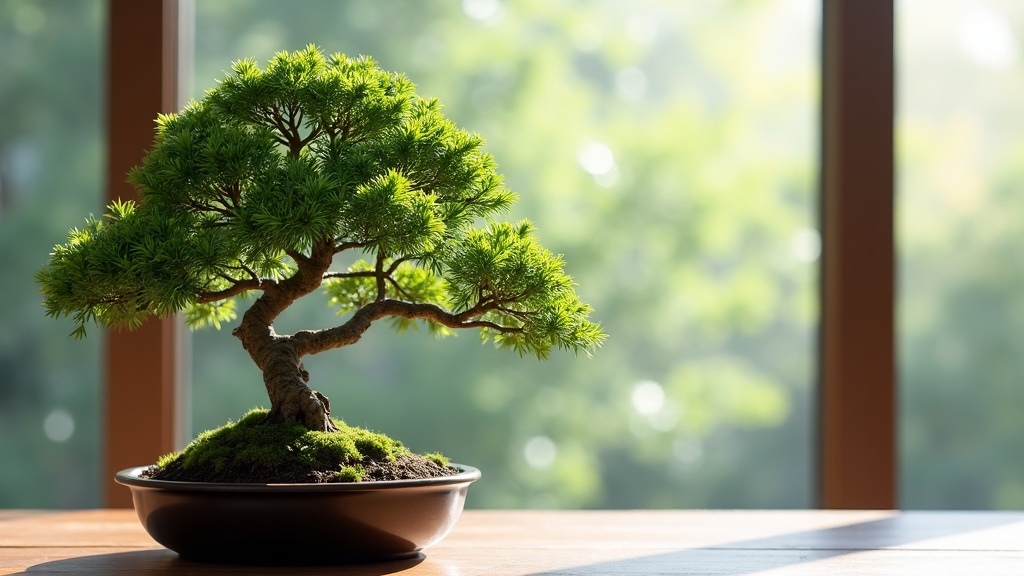
If you keep a Chinese elm indoors, place it in the brightest window you have, ideally with several hours of direct sun or strong supplemental light. Keep it away from heating vents, dry air blasts, and dim corners. Watch watering carefully, because indoor trees dry more slowly in winter and stretch weakly in low light.
What I see most often is not sudden death but slow decline. The internodes lengthen. Leaves become larger than they should be. Fine twigs weaken in the inner canopy. The tree survives, but it loses the crisp, quiet refinement that makes a Chinese elm attractive as bonsai.
In my own practice, Chinese elms kept outdoors through the growing season usually ramify faster, backbud more reliably, and develop bark character with less coaxing. Indoors, they can remain pleasant and healthy enough, but they rarely show the same firmness of growth unless the setup is unusually good.
Why Chinese elm is different from juniper, but not the same as ficus
Many beginners hear that Chinese elm can be grown indoors and assume it behaves like a tropical houseplant. It does not. Chinese elm is a hardy or semi-deciduous temperate species, depending on climate and cultivar. It understands seasons. It responds to day length, heat, and cool rest in a way ficus does not.
This matters because indoor success depends on whether you are trying to merely keep the tree alive or actually develop it as bonsai. A ficus is naturally better adapted to warm indoor life. A juniper is not suitable indoors at all. Chinese elm sits in the middle. That middle position is why it is appealing, and why it confuses people.
One quiet lesson I learned teaching beginners is that Chinese elm forgives indoor culture more readily than many species, but it also reveals the compromises more clearly. On a bright patio, it becomes denser and more self-assured. On a bookshelf across the room from a window, it becomes polite but tired.
Indoor vs outdoor growing for Chinese elm bonsai
| Condition | Indoors | Outdoors |
|---|---|---|
| Light quality | Usually marginal unless placed in a very bright window or under grow lights | Stronger and fuller, which improves twigging and leaf reduction |
| Watering rhythm | Slower drying, easier to overwater in cool months | Faster drying in active season, but growth is more vigorous |
| Winter behavior | May stay semi-active, sometimes confused by warm rooms | More natural seasonal rhythm in suitable climates |
| Pest pressure | Higher risk of spider mites and scale in dry still air | Usually fewer chronic indoor pest issues if airflow is good |
| Refinement potential | Acceptable, but often coarse or leggy without strong light | Better ramification, bark, and overall vigor |
| Best for | Apartment growers with a bright setup and realistic expectations | Anyone who wants the healthiest long-term development |
What an indoor Chinese elm actually needs
1. Light that is stronger than you think
A south-facing window is best in most North American homes. East-facing can work if it is unobstructed and the tree sits very close to the glass. If the tree lives more than a foot or two back from the window, the available light drops sharply. This is where many indoor setups fail.
If your home is dim, a grow light is not indulgence. It is correction. A simple full-spectrum grow light for bonsai can make the difference between mere survival and compact, usable growth. I prefer this over pretending a dark room will somehow become adequate through optimism.
2. Air movement without drafts
Chinese elm appreciates fresh air. Indoors, stagnant conditions encourage pests and weak growth. But do not place it directly in the path of forced heat or air conditioning. I have seen healthy elms decline simply because they spent winter above a radiator or beside a vent, where the soil dried unevenly and the foliage sat in harsh, dry air.
3. Proper soil and drainage
If you intend to grow this species indoors, soil matters even more because evaporation is slower. Dense nursery mud that might be manageable outdoors in summer becomes dangerous in a warm room. Use a coarse bonsai mix that drains quickly. A ready-made bonsai soil mix with akadama, pumice, and lava is a practical starting point if you do not want to blend your own.
4. Careful watering, not frequent watering
Indoor Chinese elms are often killed by kindness. Water when the upper layer of soil begins to dry, then water thoroughly until it runs clear from the drainage holes. Do not follow a calendar. In a cool room in winter, the same tree may need far less water than it does in June.
Students sometimes ask me for a fixed schedule. I do not give one, because the schedule is never the art. Observation is the art. Chinese elm is a good teacher here because it usually shows stress gradually rather than all at once.
5. Pruning with restraint
Because indoor growth can be softer, pruning must be timed to what the tree can actually replace. In strong outdoor growth, Chinese elm responds eagerly to trimming. Indoors, especially in weaker light, aggressive pruning can leave long pauses before useful back budding. I trim indoor elms more conservatively and focus on maintaining shape rather than forcing rapid refinement.
When keeping it indoors makes sense
There are circumstances where I think indoor culture is entirely reasonable. If you live in an apartment, have one bright window, and want a forgiving first deciduous bonsai, Chinese elm is one of the better candidates. If your climate has severe winters and you are managing a small tree with uncertain cold tolerance, a protected indoor period may also be sensible.
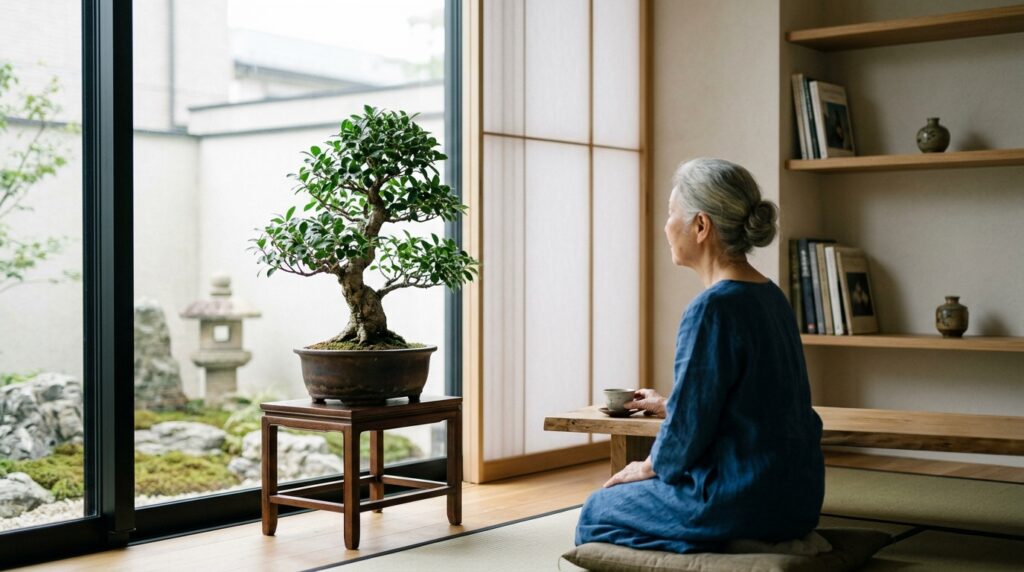
I also understand the emotional side. People want the tree near them. They want to see it while making tea, while reading, while passing through the room in the early morning. There is nothing wrong with that. Bonsai should be seen and lived with. But affection is not the same as horticulture. If the indoor placement is chosen for beauty, you must still solve for light, drainage, and seasonal balance.
One pattern I have noticed over the years is that people succeed indoors when they are deliberate. The failures usually come from casual placement: a decorative stand, a shaded office, a window sill crowded with curtains and glass reflections. Chinese elm tolerates compromise, but not indefinite neglect.
When outdoor growing is the better choice
If your goal is to build a stronger trunk, reduce leaf size, improve ramification, and create finer branch density, outdoor culture is usually better. The tree receives broader-spectrum light, natural temperature variation, wind, rain, and a seasonal rhythm that supports more decisive growth and rest.
Outdoors, Chinese elm also tends to reveal its structure more clearly through the year. In spring, the flush is energetic. In summer, pruning response is easier to judge. In autumn, the slowing of growth tells you something honest about timing. Indoors, the signals are often muted.
I do not mean that every Chinese elm must live outside every day of the year in every climate. Mild regions offer more flexibility than harsh ones. But if you ask me where the species most naturally expresses itself as bonsai, my answer remains outdoors.
How I recommend this species to beginners
Because the parent question here is whether Chinese elm is suitable for beginners, let me be plain: yes, it is one of the best beginner bonsai species, especially for someone who wants to learn pruning, watering judgment, and deciduous branch structure without the punishment of a more demanding tree.
What makes it good for beginners is not that it is cheap or common. It is that the tree responds clearly. You can prune it and see the result. You can make a watering mistake and often recover. You can wire light branches, though Chinese elm often needs less wire than beginners expect because the natural line of the species is already graceful.
If buying your first tree, I would rather see you purchase a healthy young Chinese elm and a few basic supplies than an elaborate kit full of weak extras. A pair of bonsai shears, some anodized aluminum bonsai wire, and a free-draining soil mix are genuinely useful. If your room is dim, add the grow light before buying more decorative pots.
Common indoor problems and what they usually mean
Large leaves and long internodes
This usually means insufficient light or excessive nitrogen relative to available light. Move the tree brighter first. Do not try to solve weak growth with more fertilizer alone.
Leaves yellowing and dropping
This can be seasonal adjustment, but indoors it often points to overwatering, poor drainage, or sudden environmental change. Check the root zone before assuming the problem is lack of water.
Sticky leaves or tiny webs
Think pests. Chinese elm indoors can attract scale and spider mites, especially in dry heated rooms. Isolate the tree, wash the foliage, and improve airflow while you treat the infestation.
Weak inner twigs dying back
This is a classic light problem. The outer growth is taking what little energy is available, and the interior is being abandoned. Stronger light and selective pruning are the remedy.
Frequently asked questions
Can Chinese Elm bonsai stay indoors all year?
It can, but I consider that a compromise rather than an ideal. It needs very bright light, careful watering, and close observation. Many trees do better if they spend at least part of the year outdoors when temperatures allow.
Is Chinese elm better indoors than juniper?
Yes, unquestionably. Chinese elm can adapt to indoor conditions more readily. Juniper should be treated as an outdoor bonsai and will steadily decline indoors.
Are Chinese Elm bonsai suitable for beginners?
Yes. They are forgiving, responsive to pruning, and easier to recover than many species. They are not effortless, but they are among the best teachers for a first bonsai.
Do I need a grow light for an indoor Chinese elm?
If your brightest window gives only modest light, yes, I recommend one. In a truly sunny window, you may manage without it, but most indoor growers underestimate how much light bonsai actually need.
My view after twenty years
When a student asks whether Chinese elm can be kept indoors, I hear a second question beneath it: can I make bonsai work in the life I actually have? Chinese elm is one of the few species for which I can answer yes, provided you accept the tree on its terms rather than your room on yours.
If you can offer strong light, open-draining soil, restrained watering, and some respect for seasonal rhythm, an indoor Chinese elm can be a satisfying companion and a very good first bonsai. If you can also give it time outdoors, even better. The tree will show you the difference.
About Kenji
Bonsai Practitioner & Teacher – 20 Years
Kenji has practiced bonsai for over 20 years, training under master practitioners in Osaka and Kyoto before bringing his craft to the Pacific Northwest. He writes about technique, aesthetics, and patient long-term tree development in a calm, practical voice shaped by the wabi-sabi tradition. Read more about Kenji
A Better Beginner Checklist
- Observe the tree for a full growth cycle before making major styling decisions.
- Learn watering and vigor first, because weak trees do not respond well to ambitious work.
- Change one major variable at a time so you can see how the tree responds.
- Let health, species habits, and season decide the pace instead of your impatience.
This is the quieter discipline most beginners skip, and it is usually what separates living bonsai from overworked projects.