I see this mistake in beginners because bonsai invites action before it teaches patience. Yes, juniper bonsai can survive winter, and in most cases they need to experience a true winter rest period to stay healthy long term. Junipers are outdoor trees, not indoor houseplants. A healthy juniper bonsai is usually more threatened by being kept too warm in winter than by normal seasonal cold.
That said, “winter hardy” does not mean “ignore it completely.” A juniper bonsai lives in a small shallow pot, which exposes its roots to colder temperatures than a tree growing in the ground. The foliage and trunk may tolerate freezing weather well, but the roots need some protection when temperatures drop hard for extended periods.
Why Winter Matters for Juniper Bonsai
Junipers are conifers adapted to outdoor conditions. As autumn temperatures fall and daylight shortens, they slow their growth and enter dormancy. This seasonal pause helps regulate energy use, supports healthy spring growth, and keeps the tree’s natural cycle intact.
When people bring a juniper bonsai indoors for the winter, they often think they are protecting it. In reality, the tree may suffer from warm indoor air, low humidity, and lack of full sun. Even if it stays green for a while, it can weaken steadily because it never gets the cold rest it expects.
How Cold Is Too Cold?
Established juniper species are generally quite cold hardy, but bonsai culture changes the equation because the root ball is small. Light frost and normal freezing temperatures are usually not a problem for a healthy tree that has been acclimating outdoors all season. The main risk appears when the pot freezes solid for long stretches, especially in harsh wind or repeated freeze-thaw cycles.
The exact limit depends on the juniper species, the age and vigor of the tree, the pot size, soil moisture, and your local climate. A mature, vigorous juniper in a protected outdoor space may handle winter well. A recently repotted, newly collected, or weak tree deserves more caution.
Best Winter Care for a Juniper Bonsai
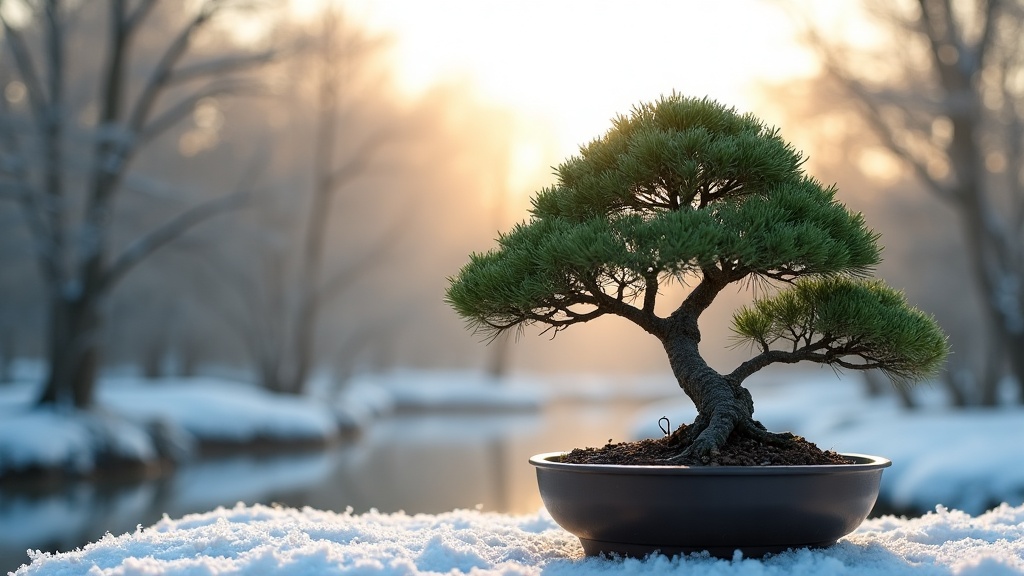
The goal is simple: keep the tree cold enough to remain dormant, but protect the roots from severe exposure. In many climates, the best place is outdoors in a sheltered location such as against a wall, under a bench, in an unheated cold frame, or in a spot protected from strong winter wind.
Many growers also insulate the pot rather than the foliage. You can bury the pot in mulch, bark, or soil, or surround it with leaves or other breathable insulation. This buffers sudden temperature swings and helps prevent root damage.
Watering still matters in winter. A dormant tree uses less water, but the root ball should not be allowed to dry out completely. Check the soil periodically and water when it begins to dry, ideally during a milder part of the day when the soil can absorb moisture. Avoid keeping the soil constantly soggy, since cold wet roots can also create problems.
Should You Bring It Indoors?
In most cases, no. A juniper bonsai should not spend winter in a heated room. If your area gets extremely severe cold, a better solution is an unheated garage, shed, cold frame, or other protected space that stays cold but not dangerously exposed. The tree does not need living-room comfort. It needs dormancy and root protection.
If you must use a garage or similar shelter, do not forget about the tree for months. Check soil moisture regularly, and move it back into brighter outdoor conditions when late winter or early spring weather begins to moderate.
Signs of Winter Stress
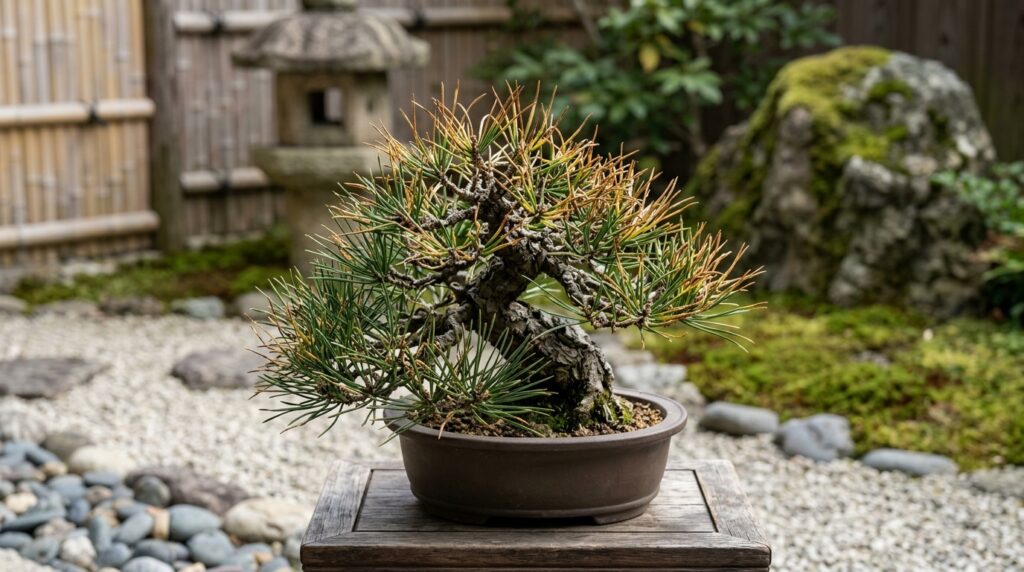
Some bronzing or dulling of foliage color in winter can be normal for junipers. That alone does not mean the tree is dying. Real warning signs include brittle foliage, severe desiccation, branch dieback, blackened roots, or a tree that fails to push healthy growth when spring arrives.
Windburn and dehydration are common winter issues. Even when the soil is cold, sun and wind can pull moisture from the foliage. This is another reason sheltered placement matters as much as temperature.
What to Do in Different Climates
In mild winter climates, a juniper bonsai can often stay outdoors all season with minimal protection. In regions with regular hard freezes, stronger windbreaks and pot insulation become more important. In very cold climates, temporary protection in an unheated structure is often the safest compromise.
The key is to respond to your actual winter pattern, not just the calendar. A tree can handle cold better when it cools down gradually in fall than when it is suddenly exposed after being kept warm too long.
Final Answer
Juniper bonsai can survive winter, and they usually should spend winter in cold outdoor conditions. The important exception is root protection: because bonsai pots are shallow, you need to shield the root zone from extreme, prolonged freezing. Keep the tree dormant, sheltered, and lightly watered, and it will usually come through winter far better than it would indoors.
For beginners who want a simple, sensible setup, I usually think it is enough to compare bonsai tree tools and a pair of bonsai watering can. Those two tools are more relevant to real early practice than buying decorative accessories too soon.
What makes bonsai difficult for beginners is that the tree rarely punishes impatience immediately. A beginner can wire too soon, prune too hard, repot at the wrong moment, and still feel successful for a few weeks. The tree often answers later, with weak growth, poor recovery, or a gradual decline that feels mysterious only because the earlier stress was forgotten.
That is why I teach beginners to treat bonsai less like a series of tasks and more like a conversation with a living thing. Before shaping, ask whether the tree is vigorous enough. Before pruning, ask whether the season supports recovery. Before changing several things at once, ask whether you will still understand the result afterward. Those questions slow you down, but they also keep you from making the kind of mistake that costs a year of progress.
Many bonsai beginners also confuse visible activity with meaningful progress. Wiring, pruning, repotting, and styling feel productive, while observation feels passive. In practice, observation is often the more advanced skill. When you notice how a species extends, where buds appear, how quickly soil dries, and how the tree responds to minor adjustments, your later work becomes much more precise.
I also think beginners benefit from keeping one simple rule: do not ask a weak tree to teach you advanced technique. If a tree is struggling with water balance, poor light, or poor root health, styling it harder rarely improves anything. Restoring strength first is not hesitation. It is sound bonsai practice.
The encouraging part is that this mistake is fixable. Most beginners do too much because they care. Once that energy is redirected into observation, timing, and restraint, progress becomes steadier and the tree begins to look more convincing with less force.
What I Check Before I Panic
When an indoor bonsai starts dropping leaves in winter, I look at light first, then watering rhythm, then sudden temperature swings near windows, vents, or heaters. Most indoor trees are reacting to weak winter conditions or inconsistent care, not inventing a mysterious new problem overnight.
I also want to know whether the species is tropical, subtropical, or a tree that was never going to thrive indoors long term. That distinction matters because some winter leaf loss is stress, while some cases are really a mismatch between the tree and the environment it was asked to tolerate.
What I Protect First in Winter
- The root mass, because roots in shallow bonsai pots are more exposed than roots in the ground.
- Sudden freeze-thaw swings that wake the tree up too early and then hit it again.
- Dry winter wind that can dehydrate foliage even when the tree is dormant.
- Indoor storage choices that stay too warm and quietly weaken the tree.
That is why I do not equate winter survival with simply bringing the tree indoors. Juniper usually needs cold dormancy, but it also needs protection from the worst container-level exposure.
In practice, I would rather give a juniper a cold protected outdoor setup than a warm indoor room that breaks dormancy and drains strength slowly over the season.