I see this mistake in beginners because bonsai invites action before it teaches patience. Yes, you can absolutely over-prune a bonsai tree. Pruning is one of the most important parts of bonsai care, but removing too much growth at the wrong time can weaken the tree, slow recovery, and in severe cases kill it. Bonsai are resilient, yet they still need enough foliage, buds, and stored energy to keep growing after a trim.
The key is to understand that pruning is not just about shape. Every cut affects the tree’s ability to photosynthesize, move water, store energy, and respond to stress. A well-pruned bonsai looks refined while still having the strength to recover. An over-pruned bonsai may look neat for a few days, then begin showing signs of stress such as limp foliage, dieback, stalled growth, or browning branch tips.
What Happens When a Bonsai Is Over-Pruned?
When too much foliage or too many branches are removed at once, the tree loses a large part of its energy-producing system. Leaves and needles are not just decoration; they are the engine that keeps the plant alive. If you strip too much away, the roots still need support, but the canopy can no longer produce enough energy to meet demand.
Over-pruning also forces the bonsai to spend its reserves on survival rather than healthy development. Instead of directing energy toward ramification, trunk thickening, or back budding, the tree shifts into stress response. That can lead to weak shoots, dieback on interior branches, and long recovery periods. Some species bounce back quickly, while others respond poorly and may never regain their former vigor.
Common Signs You Pruned Too Much
One of the clearest signs of over-pruning is a sudden lack of growth during the normal growing season. If your bonsai should be pushing new shoots but remains stagnant for weeks, it may be struggling to recover. Yellowing leaves, crispy edges, premature leaf drop, and shrinking buds are also warning signs.
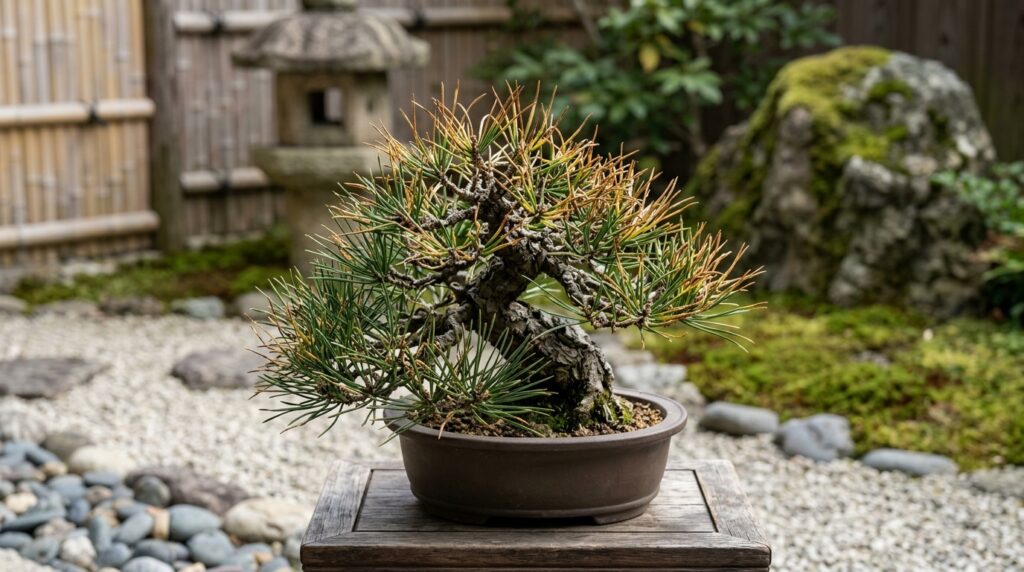
Branch dieback is more serious. If fine twigs start drying from the tips inward after a heavy pruning session, the tree may not have enough energy to keep all tissues alive. In conifers, excessive pruning can be especially risky because old wood may not back bud readily. In deciduous trees, the danger often shows up as weakened shoots and poor leaf size control the following season.
Why Timing Matters So Much
A bonsai can tolerate a moderate pruning when it is healthy and in the right growth stage. The same cuts made during heat stress, winter dormancy transitions, repot recovery, or pest pressure can be far more damaging. Timing matters because the tree’s internal energy cycle changes through the year.
For many deciduous species, structural pruning is safest during dormancy or just before active spring growth, depending on the technique and species. Maintenance pruning is often done during the growing season. Tropical bonsai are usually pruned when actively growing. Conifers often require more species-specific handling, especially when pinching candles or reducing foliage pads. The more you understand the seasonal rhythm of your particular tree, the less likely you are to over-prune it.
Species React Differently
Not all bonsai respond the same way to pruning. Ficus, jade, Chinese elm, and many vigorous tropical or subtropical species can often handle heavier trimming if they are healthy. Junipers, pines, and older conifers usually require more restraint. Cutting back beyond live green growth on some species may leave branches bare permanently.
This is why beginners sometimes get into trouble by applying one pruning rule to every bonsai they own. A fast-growing ficus may recover from a major haircut with little drama, while a juniper treated the same way can decline slowly for months. The right amount of pruning depends on species, age, health, root strength, season, and aftercare.
How Much Is Too Much?
There is no universal percentage that works for every bonsai, but removing a very large share of the green canopy in one sitting is always a risk. If the tree is weak, newly repotted, recently styled, dehydrated, or dealing with pests, even modest pruning may be too much. When several stressors stack up, trees run out of recovery capacity quickly.
A safer approach is to think in phases. Instead of making every cut in one day, spread major design work across multiple sessions or seasons. That gives the bonsai time to replace foliage, rebuild energy, and show you how it responds. Bonsai styling rewards patience more than force.
How to Prune Without Overdoing It
Start with the health of the tree, not the design in your head. If the bonsai has strong color, active growth, and no obvious stress, it is more likely to handle pruning well. If it looks weak, delay major work and focus on watering, light, feeding, and overall recovery.
Make conservative cuts first. Remove dead, damaged, or clearly unwanted growth, then pause and reassess the silhouette. Often the tree needs less removed than you initially thought. It also helps to avoid combining heavy pruning with repotting or aggressive root work in the same window unless the species and timing strongly support it.
Use clean, sharp tools so cuts heal faster and tissue damage stays minimal. After pruning, protect the bonsai from extra stress. Keep watering consistent, avoid sudden environmental changes, and do not rush into more styling because the tree looks temporarily sparse.
Can an Over-Pruned Bonsai Recover?
Often, yes. Recovery depends on how much was removed, the species involved, the season, and the tree’s health beforehand. A vigorous bonsai with strong roots may push new growth after a rest period if it receives proper care. A weak tree or a slow-reacting conifer may decline gradually even if the damage is not obvious right away.
If you think you over-pruned, resist the urge to keep intervening. Do not prune more to “balance” the tree. Do not repot it unless necessary for an urgent problem. Give it stable light, correct watering, protection from extreme heat, and time. Recovery is usually supported by consistency, not more work.
The Bottom Line
You can over-prune a bonsai tree, and the consequences range from temporary stress to permanent damage. Good bonsai pruning is controlled, species-aware, and timed around the tree’s growth cycle. If you are unsure, prune less than you think you need and let the tree tell you when it is ready for more. In bonsai, restraint is often the difference between refinement and setback.
A Better Beginner Checklist
- Observe the tree for a full growth cycle before making major styling decisions.
- Learn watering and vigor first, because weak trees do not respond well to ambitious work.
- Change one major variable at a time so you can see how the tree responds.
- Let health, species habits, and season decide the pace instead of your impatience.
This is the quieter discipline most beginners skip, and it is usually what separates living bonsai from overworked projects.
For beginners who want a simple, sensible setup, I usually think it is enough to compare bonsai training wire and a pair of bonsai pruning shears. Those two tools are more relevant to real early practice than buying decorative accessories too soon.
What makes bonsai difficult for beginners is that the tree rarely punishes impatience immediately. A beginner can wire too soon, prune too hard, repot at the wrong moment, and still feel successful for a few weeks. The tree often answers later, with weak growth, poor recovery, or a gradual decline that feels mysterious only because the earlier stress was forgotten.
That is why I teach beginners to treat bonsai less like a series of tasks and more like a conversation with a living thing. Before shaping, ask whether the tree is vigorous enough. Before pruning, ask whether the season supports recovery. Before changing several things at once, ask whether you will still understand the result afterward. Those questions slow you down, but they also keep you from making the kind of mistake that costs a year of progress.
Many bonsai beginners also confuse visible activity with meaningful progress. Wiring, pruning, repotting, and styling feel productive, while observation feels passive. In practice, observation is often the more advanced skill. When you notice how a species extends, where buds appear, how quickly soil dries, and how the tree responds to minor adjustments, your later work becomes much more precise.
I also think beginners benefit from keeping one simple rule: do not ask a weak tree to teach you advanced technique. If a tree is struggling with water balance, poor light, or poor root health, styling it harder rarely improves anything. Restoring strength first is not hesitation. It is sound bonsai practice.
The encouraging part is that this mistake is fixable. Most beginners do too much because they care. Once that energy is redirected into observation, timing, and restraint, progress becomes steadier and the tree begins to look more convincing with less force.