Disclosure: I may earn a small commission from qualifying purchases made through the product links in this article, at no extra cost to you.
Yes, too much direct sunlight can harm a bonsai tree. I have seen bonsai weaken not because they lacked light, but because the wrong kind of light arrived at the wrong hour, on the wrong species, in the wrong pot.
A bonsai is still a tree, but it lives in a shallow container with limited soil, limited moisture reserve, and roots that heat quickly. That changes how it experiences sun. Good light builds short internodes, strong budding, healthy color, and refined structure. Excessive direct sun can scorch leaves, overheat roots, dry the soil too fast, and push a tree into stress before the owner realizes anything is wrong.
The important question is not simply, ?sun or shade?? It is which bonsai, how much sun, what season, and what happens in that specific pot on that specific bench.
When direct sunlight helps and when it starts to hurt
Most bonsai need strong light to stay compact and healthy. Juniper, pine, many maples, elms, and flowering species generally perform better with meaningful outdoor light than they ever will in a dim room. But ?full sun? on a plant tag is often read too casually. In bonsai practice, full sun at 8:30 in the morning and full sun at 3:30 in late July are not the same experience.
Direct sunlight becomes harmful when the tree cannot balance heat and water loss. Leaves transpire faster, the thin pot heats from all sides, and root tips begin to suffer. At that point, the problem is not light alone. It is the combination of light intensity, air temperature, reflected heat, wind, pot size, soil particle size, and the species? natural tolerance.
One thing I learned early in Kyoto was to watch the bench, not only the weather report. Two benches in the same garden can behave very differently. A white wall behind one bench may reflect heat. Dark tile under another may warm the pot from below. A tree that is stable in one corner can burn in another, even on the same day.
Which bonsai are most at risk from too much direct sun?
Broadly, thin-leaved, tender, recently repotted, recently imported, weak, or indoor-adapted tropical bonsai are more vulnerable than established conifers in active growth. That does not mean conifers are immune. It means they usually tolerate stronger sun when properly acclimated and watered.
Species that usually take stronger direct sun
- Juniper bonsai: Usually happiest outdoors with abundant sun and airflow.
- Pine bonsai: Strong light supports needle density and compact growth.
- Chinese elm outdoors: Often tolerates generous sun when acclimated.
- Bougainvillea and some tropicals: Can enjoy strong light if heat and water are managed well.
Species that often need protection from harsh afternoon sun
- Japanese maple: Fine leaves scorch easily in hot, dry, exposed conditions.
- Fukien tea: Sensitive to abrupt environmental swings and leaf burn.
- Azalea satsuki: Appreciates bright conditions but often benefits from filtered or gentler afternoon light.
- Freshly repotted bonsai of any species: Reduced roots mean reduced margin for heat and dryness.
Beginners often assume the smallest bonsai are the most delicate because they look refined. In practice, very small bonsai are less forgiving, but mainly because the pot and soil volume are so limited. A shohin tree can move from ideal moisture to dangerous dryness in a very short time under direct summer sun.
Signs your bonsai is getting too much direct sunlight
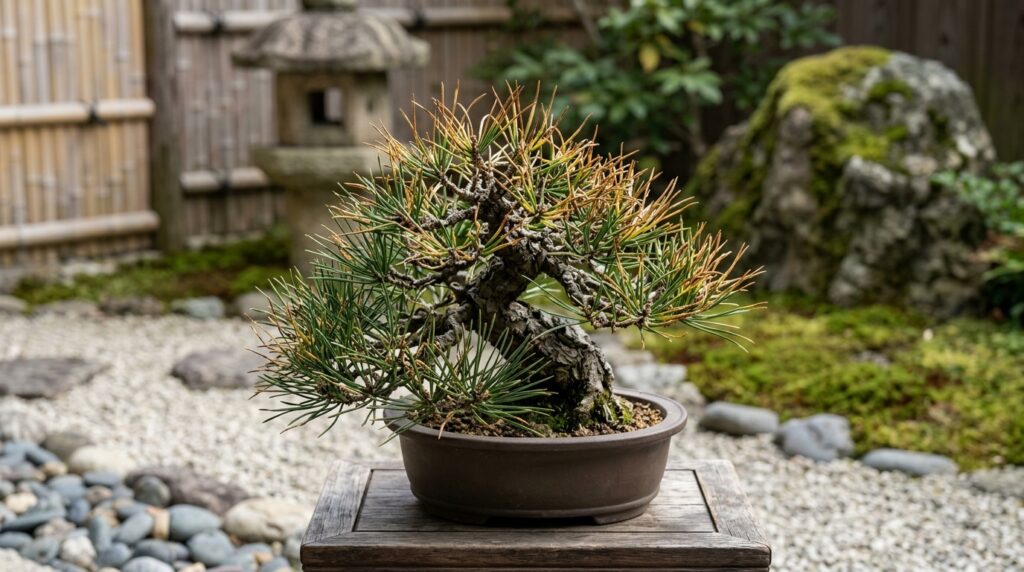
Sun damage rarely appears as a dramatic single event at first. More often, the tree tells you quietly before it declines. These are the symptoms I look for:
- Crisped leaf edges or tips: Common on maples, elms, and many tropicals.
- Bleached or faded leaf color: The green looks washed out rather than rich.
- Leaves curling inward: A defensive response to heat and moisture loss.
- Scorched patches on the sun-facing side only: A strong clue that light intensity is the issue.
- Pot drying out far earlier than usual: Especially if the surface goes from moist to bone dry by midday.
- Wilting despite watering: Roots may be heat-stressed or damaged.
- Weak second flush after a hot spell: The tree has spent energy surviving rather than growing.
I tell students to touch the pot, not just admire the foliage. If the container is becoming uncomfortably hot in direct sun, imagine what the fine roots are experiencing inside. The foliage may recover from mild burn. Damaged roots take longer, and the recovery is often less obvious until weeks later.
Too much sun vs too little sun: the balance that matters
Many bonsai problems come from choosing between two poor extremes. Too little light causes long internodes, larger leaves, weak budding, dull color, and slow drying soil. Too much direct sun causes scorch, dehydration, and heat stress. Good bonsai culture usually sits between those extremes and shifts with the season.
| Condition | Typical Symptoms | Better Approach |
|---|---|---|
| Too little light | Stretching growth, oversized leaves, weak interior buds, slow soil drying | Increase morning sun or overall outdoor brightness gradually |
| Too much direct sun | Leaf scorch, curling, rapid drying, hot pot, stalled growth after heat | Protect from harsh afternoon sun and improve moisture management |
| Balanced exposure | Compact growth, healthy color, predictable watering rhythm, steady vigor | Maintain species-appropriate sun with seasonal adjustment |
If you are unsure, morning sun is usually the safest starting point for many deciduous and tropical bonsai. It gives useful light without the same thermal punishment of late afternoon heat.
How I decide the right amount of sun for a bonsai
I use a simple hierarchy. First, I look at species. Second, I look at current strength. Third, I look at season and climate. Only then do I decide placement.
1. Respect the species first
A juniper is not an indoor ficus, and a Japanese maple is not a black pine. If the species naturally wants strong outdoor light, do not overprotect it into weakness. If it naturally dislikes harsh dry heat, do not force it into an exposed bench all day because ?bonsai need full sun.? That phrase causes many avoidable mistakes.
2. Judge the tree?s condition honestly
A vigorous, well-rooted tree in proper bonsai soil can handle more than a recently purchased mall bonsai in compact organic soil. After repotting, heavy pruning, shipping, or pest treatment, I usually reduce exposure for a period. Recovery and refinement do not happen under the exact same conditions.
3. Adjust by season, not habit
Spring sun often builds strength beautifully. Summer sun, especially in hot inland climates, can become punishing. Autumn may allow more direct exposure again. Winter sun matters differently depending on whether the tree is tropical, subtropical, or temperate. A fixed year-round placement is often less correct than owners hope.
4. Observe your watering rhythm
If one position forces you into emergency watering patterns every hot afternoon, that placement may be too aggressive for that species and pot. Good bonsai care is attentive, but it should not be a race against collapse every day.
One quiet pattern I have noticed over the years is that sun stress often gets blamed on fertilizer, pests, or ?bad luck? first. But when we move the tree half a step into gentler exposure and stabilize watering, the decline often stops. Placement is not glamorous, but it is one of the most powerful corrections you can make.
What to do if your bonsai is already sunburned
If a bonsai shows sun scorch, do not overreact by moving it into a dark interior room. That creates a second stress on top of the first. Instead, correct in measured steps.
- Move it out of harsh afternoon sun. Bright shade or morning sun with afternoon protection is a safer recovery zone for many affected trees.
- Check soil moisture more carefully. Water thoroughly when needed, not on a panic schedule. The goal is even hydration, not constant saturation.
- Protect the root zone from heat. A bench with airflow under the pot is better than hot concrete or stone. A light-colored humidity tray used properly under, not tightly around, the pot can reduce heat reflection in some setups.
- Do not rush to prune damaged leaves away. If parts are still functional, let the tree keep what it can use while it recovers.
- Pause major work. Avoid repotting, heavy pruning, or wiring a stressed tree unless there is a more urgent health reason.
- Reintroduce stronger light gradually. If the species wants high light long term, acclimate over days or weeks rather than one abrupt move.
For growers who need simple shade support, a modest bonsai shade cloth setup can be genuinely useful in summer. If your benches sit on heat-retaining surfaces, a raised bonsai bench or plant stand helps airflow around the pots. And if you are still using dense nursery soil, a proper free-draining bonsai soil mix makes sun management far easier because watering becomes more predictable.
Indoor bonsai and the low-light misunderstanding
This topic connects naturally to another common question: which bonsai tolerates the lowest light levels indoors? The honest answer is that no bonsai truly thrives in low indoor light for long. Some species tolerate it better, but tolerance is not the same as health.
Among common indoor bonsai, Ficus usually handles lower indoor light better than juniper, pine, or Japanese maple. Chinese elm may adapt for periods in bright indoor conditions, but it still prefers more light than many apartments provide. Fukien tea can be kept indoors, yet it often becomes temperamental in weak or inconsistent light.
If someone asks me for the lowest-light indoor option, I usually say: choose ficus, place it in the brightest window you have, rotate it carefully, and treat ?low light tolerant? as a compromise, not a goal. In that sense, the relationship between low light and too much sun is similar. Both are solved by nuance. Indoor bonsai often need more light than people assume, while outdoor bonsai sometimes need less afternoon punishment than people assume.
My practical sunlight guidelines for common bonsai situations
For juniper and pine
Give them abundant outdoor sun, but do not ignore watering and root-zone heat in severe summer conditions. Strong light is usually beneficial. Heat stress is still possible in very shallow pots.
For Japanese maple
Morning sun is excellent. In hot climates, protect from intense afternoon sun, especially during dry winds or heat waves. Leaf beauty is part of the tree?s value, and once the foliage is badly scorched, the season?s refinement is diminished.
For ficus indoors or on a patio
Bright light is important, but sudden movement from a dim room into unfiltered midday sun can burn leaves. Acclimate gradually. Ficus is forgiving, not invincible.
For newly repotted bonsai
Use bright, protected conditions for recovery. Full exposure can wait until the roots and water uptake have stabilized.
For very small shohin bonsai
Be more conservative during heat. Their aesthetics may look composed and still, but their moisture reserve is tiny. These are often the trees that teach discipline about timing and observation.
FAQ
Can bonsai get sunburned through a window?
Yes, some can, especially tropical species moved suddenly into intense south- or west-facing window light. Glass changes the environment, but it does not always make it gentle. Heat buildup near the glass can be significant.
Should I mist a bonsai to prevent sun damage?
Misting is not a real substitute for correct placement and proper watering. It may briefly raise local humidity, but it will not protect overheated roots or compensate for a tree baking in the wrong spot.
Is afternoon sun always bad for bonsai?
No. Many conifers and sun-loving species can do very well with afternoon sun when acclimated and properly watered. The risk rises with tender foliage, high heat, shallow pots, reflected surfaces, and weak root systems.
Will scorched leaves turn green again?
No. Damaged tissue does not repair itself. What you are watching for is healthy new growth and the absence of further damage after you correct the conditions.
How do I know whether the problem is sun or underwatering?
Often it is both. Too much direct sun increases water demand. If the pot also dries too quickly, the symptoms overlap. Look at exposure, pot temperature, drying speed, and whether damage appears mainly on the sun-facing side.
When bonsai keepers ask, ?Can too much direct sunlight harm a bonsai tree?? my answer is simple: yes, and the smaller the pot, the more precise your judgment must become. Light is not the enemy. Poor matching between species, season, and placement is the real problem. When you learn that balance, sunlight stops being something to fear and becomes one of your best tools.