After twenty years of practicing bonsai, I’ve learned that the art begins with understanding a simple truth: bonsai are not houseplants, and they cannot survive indoors year-round. Most beginners fail because they place their first tree on a windowsill and wonder why it dies within months—so let me guide you through what actually works.
This guide distills two decades of training under masters in Osaka and Kyoto into the essential practices you need to keep your first bonsai alive and thriving.
Understanding What Bonsai Actually Need
The word “bonsai” means “tree in a pot,” but that pot changes everything about how you must care for it. In nature, trees have vast root systems that seek water deep underground and anchor against wind. Your bonsai has perhaps two liters of soil—maybe less. Every aspect of care revolves around compensating for this constraint.
I watch beginners make the same mistake repeatedly: they treat bonsai like other potted plants. They don’t. The shallow container, the regular pruning, the artistic wire—all of these create needs that standard houseplant care cannot meet.
Choosing Your First Tree
Start with a tree that forgives mistakes. I recommend juniper bonsai or Chinese elm for true beginners. Junipers tolerate some neglect and adapt well to outdoor conditions. Chinese elms forgive watering mistakes better than most species.
Avoid flowering trees like azaleas or fruiting varieties for your first attempt. They’re beautiful, but they demand precise timing and environmental control that takes years to develop intuition for.
Indoor vs. Outdoor: The Most Important Decision
Here is what most beginners don’t realize: nearly all bonsai must live outdoors. Junipers, pines, maples, and most traditional species require seasonal temperature changes to remain healthy. They need dormancy in winter. Without it, they weaken and die.
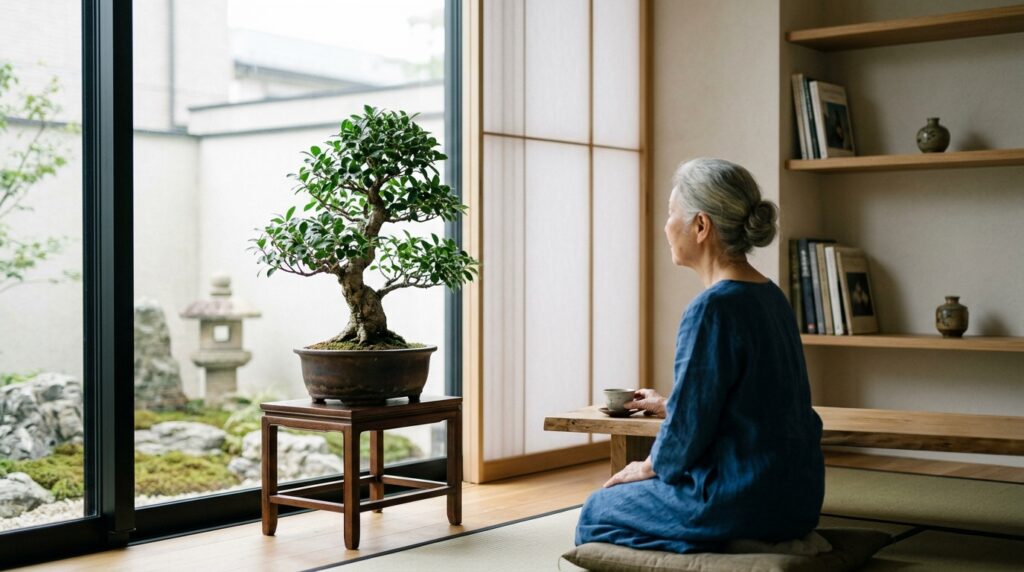
Only tropical and subtropical species—ficus, jade, Hawaiian umbrella—can survive indoors year-round, and even they benefit from outdoor time in warm months.
| Tree Type | Location | Difficulty | Best For |
|---|---|---|---|
| Juniper | Outdoor only | Easy | Cold-climate beginners |
| Chinese Elm | Outdoor preferred, indoor possible | Easy | Most beginners |
| Ficus | Indoor or outdoor (above 50°F) | Moderate | Indoor enthusiasts |
| Japanese Maple | Outdoor only | Moderate-Hard | Experienced growers |
| Pine | Outdoor only | Hard | Advanced practitioners |
The Five Pillars of Bonsai Care
1. Watering: The Skill That Takes Years to Master
I tell my students that watering is both the simplest and most difficult aspect of bonsai. The instruction is straightforward: water thoroughly when the soil surface begins to dry, until water runs freely from the drainage holes. But knowing exactly when that moment arrives—that takes experience.
Check your tree daily. Press your finger into the soil surface. If it feels damp, wait. If it’s dry or barely moist, water. In summer heat, you may water twice daily. In cool spring weather, perhaps every three days. The tree tells you what it needs, but you must pay attention.
I use a watering can with a fine rose nozzle. The gentle spray doesn’t disturb the soil or damage delicate foliage. Water the entire soil surface, not just one spot. Wait thirty seconds, then water again—this ensures complete saturation.
2. Sunlight: Finding the Right Exposure
Most bonsai need direct morning sun and afternoon shade, or full sun with adequate watering. Junipers and pines tolerate—even prefer—full sun. Maples and elms appreciate afternoon protection, especially in hot climates.
Indoor bonsai struggle primarily because of inadequate light. A south-facing window provides the best indoor conditions, but even that rarely matches outdoor brightness. If you must keep your tree indoors, consider a full-spectrum LED grow light positioned 12-18 inches above the canopy.
3. Soil and Repotting
Bonsai soil is not potting mix from the garden center. We use inorganic components—akadama, pumice, lava rock—that drain freely while retaining some moisture. This balance prevents root rot while ensuring the tree never sits in waterlogged soil.
Young trees need repotting every two years, typically in early spring before new growth begins. You’ll know it’s time when roots circle the pot’s bottom or water drains slowly. Use quality bonsai soil or mix your own from equal parts akadama, pumice, and lava rock.
4. Feeding: Gentle and Consistent
That small pot means limited nutrients. I fertilize from early spring through fall with a balanced organic fertilizer—something like 10-10-10 or 6-6-6 NPK ratio. Apply at half the recommended strength every two weeks during the growing season.
Stop fertilizing in late fall. The tree needs to slow down and prepare for dormancy, not push new growth that will be damaged by cold.
5. Pruning and Shaping
Pruning serves two purposes: maintaining the tree’s miniature size and developing its artistic shape. For beginners, focus on maintenance pruning—removing dead branches, cutting back vigorous shoots that disrupt the silhouette.
Use sharp, clean bonsai pruning shears. Make clean cuts close to the trunk or parent branch without leaving stubs. These heal better and look more natural.
Wiring—wrapping branches with aluminum or copper wire to position them—comes later. Master the basics first. There’s no rush. Bonsai teaches patience, and patience creates better trees.
Seasonal Care Adjustments
Spring
This is the season of renewal. Trees wake from dormancy, buds swell, and growth accelerates. Increase watering as temperatures rise. Begin fertilizing. Watch for pests emerging with the warmth. This is also the ideal time for repotting before new growth hardens.
Summer
Heat and sun demand vigilance with watering. Some trees may need water twice daily. Provide afternoon shade if leaves show burning or wilting. Continue regular fertilization. Monitor for spider mites and aphids, which thrive in hot, dry conditions.
Fall
Growth slows. Reduce fertilization frequency and stop entirely by late fall. Begin preparing outdoor trees for winter—this means ensuring they’re properly watered going into dormancy, as winter damage often comes from desiccation, not cold itself.
Winter
Outdoor trees enter dormancy. They still need occasional watering—don’t let the soil completely dry for extended periods. Protect them from harsh winds and extreme temperature swings. I place my trees on the ground against a north-facing wall, where temperature stays more stable than on an exposed bench.
Indoor tropical species continue growing slowly. Reduce watering and don’t fertilize. Watch for pest problems that thrive in the dry indoor air.
Common Beginner Mistakes to Avoid
Over my years teaching, I’ve seen these patterns repeatedly:
- Keeping outdoor species indoors — This kills more beginner trees than any other mistake. Junipers, pines, and maples must live outside.
- Watering on a schedule — The tree’s needs change with weather, season, and growth stage. Water when the tree needs it, not because it’s Tuesday.
- Using regular potting soil — It stays too wet and suffocates roots. Use proper bonsai soil.
- Assuming bonsai are delicate — They’re trees. They tolerate wind, rain, and cold. They just need the right conditions for their species.
- Rushing the styling — Let the tree establish health first. Shape it gradually over seasons and years.
Essential Tools for Getting Started
You don’t need many tools at first. I started with three: pruning shears, a watering can, and a small rake for working soil during repotting. That’s enough to care for your first tree for years.
As your interest grows, add concave cutters for cleaner branch removal, wire cutters, and a root hook. But these come later. Focus on understanding your tree first. The tools serve the knowledge, not the other way around.
Frequently Asked Questions
How often should I water my bonsai?
There is no fixed schedule. Check the soil daily and water when the surface begins to dry. This might be once every three days in cool weather or twice daily in summer heat. The tree and conditions determine frequency, not a calendar.
Can I keep my bonsai indoors?
Only if it’s a tropical or subtropical species like ficus, jade, or Hawaiian umbrella tree. Junipers, pines, maples, and most traditional bonsai species require outdoor conditions year-round. They need seasonal temperature changes and dormancy to survive long-term.
Why are the leaves on my bonsai turning yellow?
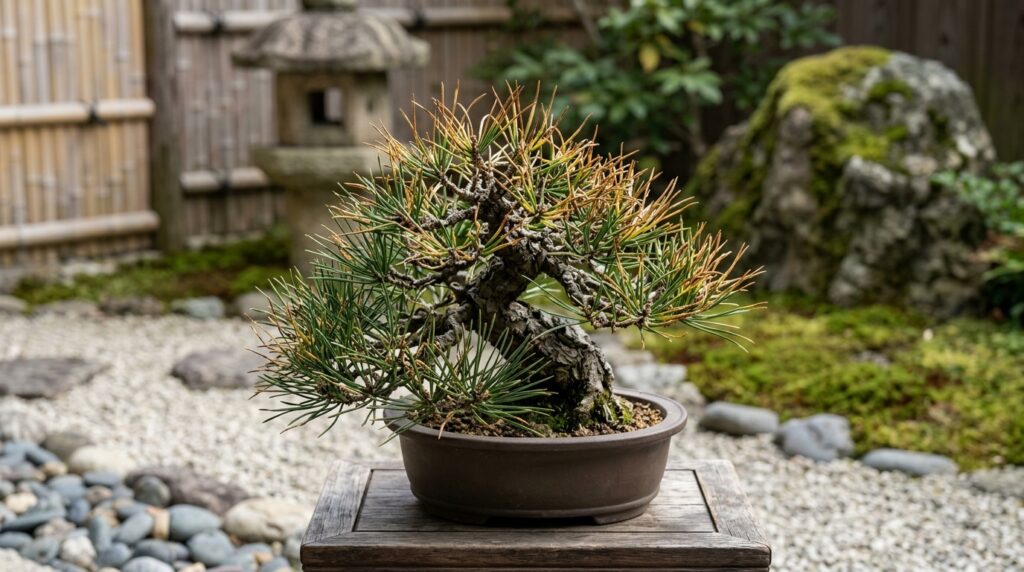
Yellow leaves usually indicate a watering issue—either too much or too little. Check your watering habits and ensure the soil drains well. Yellow leaves can also signal insufficient light or natural fall color change in deciduous species. Consider the season and recent care to diagnose the cause.
When should I repot my bonsai?
Young trees typically need repotting every two years, mature trees every three to five years. The best time is early spring before new growth begins. Signs that repotting is needed include water draining slowly, roots circling the pot’s bottom, or the tree pushing up out of its container.
How do I know if my bonsai is getting enough sunlight?
Healthy growth with normal leaf color and size indicates adequate light. Leggy growth with long spaces between leaves suggests insufficient light. Burnt or scorched leaf edges mean too much direct sun without adequate water. Most species need 5-6 hours of direct sun daily, with some afternoon shade in hot climates.