After twenty years of working with bonsai, I’ve learned that success comes down to understanding five essential conditions: light, water, temperature, soil, and air circulation. Get these right, and your tree will tell you through healthy growth and vibrant foliage.
Most bonsai failures happen not from lack of care, but from misunderstanding what these trees actually need. Today I’ll share the specific conditions that support healthy bonsai growth, drawn from traditional Japanese practice and my own experience with hundreds of trees.
The Five Essential Conditions for Bonsai Health
Bonsai trees need the same fundamental conditions as their full-sized counterparts in nature. The miniaturization doesn’t change their basic requirements—it only intensifies how quickly problems appear when conditions are wrong.
Light: The Most Critical Factor
Light drives photosynthesis, which means it drives everything else. Most bonsai species need 5-6 hours of direct sunlight daily. I place my outdoor trees where they receive morning sun and afternoon shade, which gives them intense light without the harshest heat.
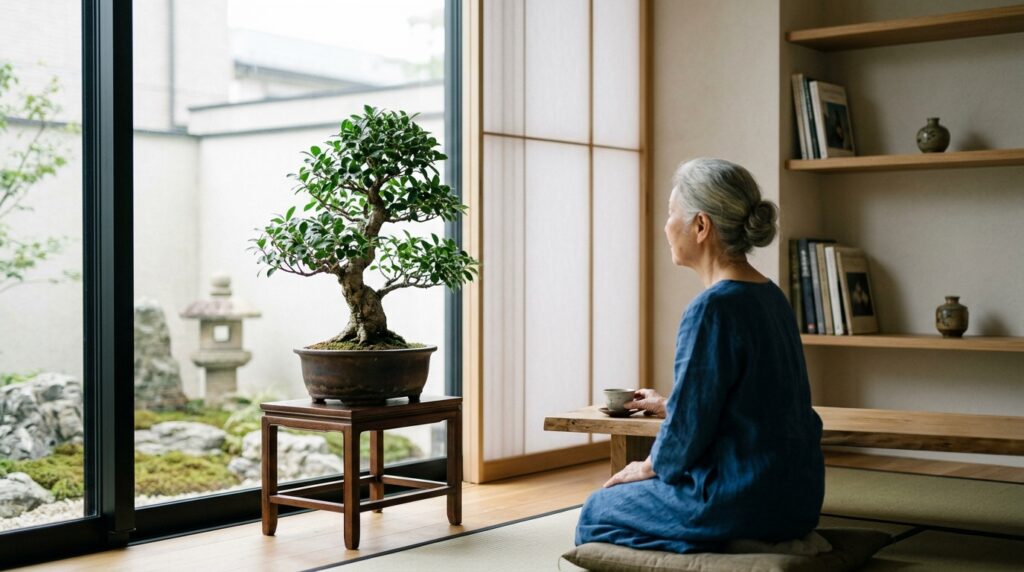
Indoor bonsai face the biggest challenge here. Windows filter out much of the light spectrum plants need. Even a bright room provides only 10-20% of outdoor light intensity. If you’re growing indoors, position your tree within two feet of a south-facing window, or supplement with a full-spectrum grow light.
I’ve seen countless ficus and jade trees languish in offices because the owner assumed “bright indirect light” would suffice. It rarely does. Trees communicate light deficiency through elongated stems, pale leaves, and weak growth. Pay attention to these signals.
Water: Consistency Over Frequency
The bonsai container creates an artificial water environment that requires your active management. In nature, roots extend deep into the earth where moisture remains relatively stable. In a shallow pot, conditions change rapidly.
I check soil moisture daily by pressing my finger half an inch into the soil. Water thoroughly when the surface feels slightly dry—not bone dry, not saturated. The water should flow freely through the drainage holes, which tells you the entire root mass has been moistened.
Water quality matters more than most people realize. Tap water high in chlorine or minerals can build up salt deposits over time. I collect rainwater when possible, or let tap water sit overnight to allow chlorine to dissipate. The right bonsai watering can with a fine rose helps distribute water gently without disturbing the soil.
Temperature and Climate Zones
Bonsai species have evolved for specific climate zones. You cannot force a Japanese maple to thrive in a tropical environment, nor ask a ficus to survive Minnesota winters outdoors. This is non-negotiable biology.
Outdoor temperate species (maple, pine, juniper, elm) require a winter dormancy period. They need 2-3 months of temperatures between 30-45°F. Without this cold rest, the tree exhausts itself and declines. I move these trees to an unheated garage or cold frame when temperatures drop.
Tropical and subtropical species (ficus, jade, schefflera) cannot tolerate frost. They need consistent temperatures above 60°F. These are the species suited for indoor cultivation, though they still benefit from spending summers outside.
| Climate Type | Temperature Range | Common Species | Winter Requirements |
|---|---|---|---|
| Temperate | 30-80°F seasonal | Maple, pine, juniper, elm | Cold dormancy essential |
| Subtropical | 50-85°F year-round | Chinese elm, serissa | Protection from hard frost |
| Tropical | 60-90°F consistent | Ficus, jade, schefflera | Indoor or heated greenhouse |
Soil: The Foundation of Root Health
Bonsai soil must do two seemingly opposite things: retain enough moisture for roots to access between waterings, while draining quickly enough to prevent waterlogging. Standard potting soil fails at this balance.
Traditional Japanese bonsai soil contains three main components: akadama (clay granules), pumice, and lava rock. These create a structure with both water retention and air spaces. The exact mixture varies by species—conifers prefer more drainage, deciduous trees prefer more moisture retention.
I use a 1:1:1 mix of akadama, pumice, and lava rock for most trees. You can find pre-mixed bonsai soil blends that work well if you’re starting out. The key test: water should flow through the pot in seconds, not minutes.
Air Circulation and Humidity
Stagnant air invites fungal problems and weakens trees. Outdoors, natural breezes handle this automatically. Indoors, you need to provide movement—either through gentle fans or by opening windows when weather permits.
Humidity affects how quickly trees lose water through their leaves. Most indoor environments sit at 20-30% humidity, while many bonsai species evolved in 50-70% humidity. The solution isn’t misting the leaves (which can promote fungus)—it’s placing trees on humidity trays filled with gravel and water. As water evaporates, it creates a microclimate around the tree.
Indoor vs Outdoor: Understanding the Difference
The indoor versus outdoor question frustrates many beginners. The simple truth: no tree evolved to live in a house. Some species tolerate indoor conditions better than others, but all bonsai prefer outdoor growing when climate allows.
Indoor challenges include:
- Low light intensity even near windows
- Low humidity from heating and air conditioning
- Inconsistent temperatures near doors and vents
- Limited air circulation
- Lack of seasonal cues for temperate species
If you must grow indoors, choose tropical species like ficus or jade. These have the best chance of adapting to home conditions. Even then, give them summers outside to strengthen.
Outdoor growing provides optimal conditions but requires species selection based on your hardiness zone. A juniper bonsai thrives outdoors in Seattle but struggles in Phoenix. Match the species to your local climate.
Seasonal Adjustments: Following Natural Rhythms
Bonsai care changes with the seasons because the tree’s needs change. This is where beginners often struggle—they water and fertilize on the same schedule year-round, not recognizing the tree’s shifting metabolism.
Spring: Active Growth Phase
Trees wake from dormancy with explosive growth. This is when they need the most water and nutrients. I check soil moisture twice daily in spring because warm temperatures and new leaves increase water consumption dramatically. Begin fertilizing as buds swell.
Summer: Managing Heat Stress
High temperatures increase evaporation from both soil and leaves. Some of my trees need water twice daily in peak summer. Afternoon shade becomes important—the intense 2-5 PM sun can scorch leaves even on sun-loving species. Reduce fertilizer slightly to avoid pushing growth during heat stress.
Autumn: Preparing for Rest
Growth slows as day length decreases. Reduce watering frequency as trees need less. Stop fertilizing 4-6 weeks before your first frost date. This allows the tree to harden off new growth before winter.
Winter: Dormancy Protection
Temperate species enter dormancy but still need protection from extreme conditions. The shallow bonsai pot offers less insulation than ground soil. I move trees into an unheated garage or bury pots in mulch. Water sparingly—only enough to prevent the root ball from completely drying out.
Common Condition Mistakes I See Repeatedly
Most bonsai deaths result from misunderstanding one of these conditions. Here are the patterns I’ve observed:
Overwatering kills more bonsai than underwatering. Well-meaning owners water on a schedule rather than checking soil moisture. Roots sitting in saturated soil suffocate and rot. The tree shows stress, the owner adds more water, the problem accelerates.
Indoor light is never sufficient without supplementation. Windows that seem bright provide a fraction of outdoor light. The tree slowly starves over months. By the time the owner notices sparse foliage and weak stems, the damage is done.
Ignoring species requirements leads to failure. You cannot keep a Japanese maple indoors. You cannot grow a ficus outdoors in Minnesota. These aren’t challenges to overcome with better technique—they’re biological incompatibilities.
Inconsistent conditions create more stress than imperfect consistent conditions. A tree adjusts to stable light, water, and temperature. Constantly moving trees between locations or alternating between bone-dry and saturated soil prevents adaptation.
Setting Up Optimal Growing Conditions
Creating the right environment requires thinking through each condition systematically. Here’s my approach:
First, determine whether you can provide true outdoor growing conditions. If yes, select species suited to your hardiness zone and place them where they receive morning sun and afternoon shade.
If growing indoors, choose tropical species and invest in supplemental lighting. Position a adjustable LED grow light 6-12 inches above the tree, running 12-14 hours daily. Place the tree on a humidity tray near—but not directly against—a window.
Use proper bonsai soil, not potting mix. This single change solves many water-related problems because it makes both overwatering and underwatering much harder to do.
Check soil moisture daily until you understand your tree’s water needs. These vary by species, pot size, season, and location. There’s no universal watering schedule—only responsive daily observation.
Keep a simple journal noting watering frequency, fertilizer applications, and observations about growth patterns. After one full year, you’ll understand your tree’s rhythm and can adjust care accordingly.
Monitoring Your Tree’s Response
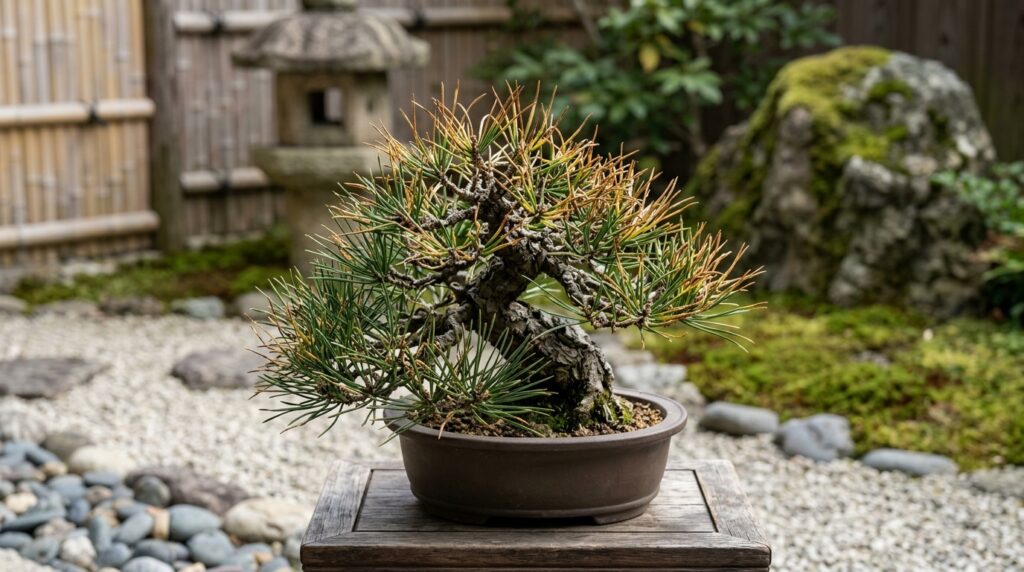
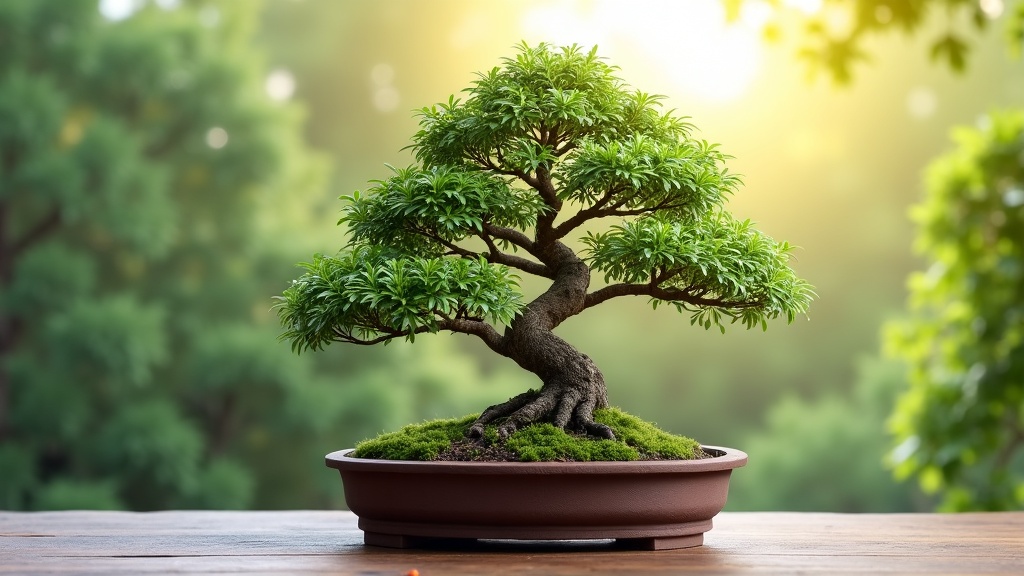
The tree tells you whether conditions are right. Healthy bonsai show strong growth in season, vibrant leaf color, and steady internode development. Problems announce themselves through specific symptoms:
- Yellowing leaves with green veins: iron deficiency from poor soil or overwatering
- Brown, crispy leaf tips: low humidity or underwatering
- Leggy, pale growth: insufficient light
- Leaf drop (on evergreen species): temperature stress or root problems
- Wilting despite wet soil: root rot from poor drainage
Learn to read these signals. A tree showing stress from one condition won’t improve if you only adjust another. If yellow leaves indicate overwatering, adding fertilizer or more light won’t help—you need to address the water issue.
Tools and Equipment for Condition Management
The right tools make condition management simpler and more precise. Essential items include:
- A soil moisture meter for accurate watering decisions
- A watering can with a fine rose for gentle, thorough watering
- Humidity trays or pebble trays for moisture control
- A simple thermometer to track temperature fluctuations
- Grow lights if cultivating indoors
- Quality bonsai soil components for repotting
These aren’t luxuries—they’re tools for creating measurable, consistent conditions. The moisture meter alone prevents most watering problems.
Frequently Asked Questions
Can bonsai trees survive indoors year-round?
Tropical and subtropical species (ficus, jade, schefflera) can survive indoors if given sufficient light through south-facing windows or grow lights, proper humidity via trays, and consistent temperatures above 60°F. Temperate species (maple, pine, juniper) cannot—they require outdoor cold dormancy and will die if kept indoors through winter. Even tropical species perform better with summers spent outdoors.
How do I know if my bonsai is getting enough light?
Healthy growth with normal internode spacing (distance between leaves) indicates adequate light. Insufficient light causes leggy growth with elongated stems, pale or yellowing leaves, and leaves that reach toward the light source. Indoor trees need to be within two feet of a bright window or under grow lights running 12-14 hours daily. If you can’t read comfortably by the light at tree level, it’s not bright enough.
What humidity level do bonsai trees need?
Most bonsai species prefer 50-70% relative humidity, though requirements vary by species. Indoor environments typically provide only 20-30%. While you cannot easily change room humidity, you can create a beneficial microclimate by placing the tree on a humidity tray—a shallow tray filled with gravel and water, with the pot resting on the gravel above water level. Avoid misting leaves, which can promote fungal growth.
Do bonsai trees need special temperature conditions?
Temperature requirements depend on species origin. Temperate species need seasonal variation including 2-3 months of cold dormancy (30-45°F) in winter. Tropical species need consistent warmth above 60°F year-round. Subtropical species tolerate brief temperature drops but not hard freezes. The key is matching species to your ability to provide appropriate temperatures—don’t try forcing a pine to live in tropical conditions or a ficus to survive outdoor winters in cold climates.
How often should I check my bonsai’s conditions?
Check soil moisture daily, especially during active growing season or hot weather. This doesn’t mean watering daily—it means assessing whether water is needed. Observe the tree’s overall health weekly, looking for changes in leaf color, growth patterns, or signs of stress. Monitor light exposure seasonally as sun angles change throughout the year. A daily habit of brief observation prevents most problems before they become serious.