A bonsai tree should cost between $30 and $300 for most practitioners, though truly exceptional specimens can reach into the thousands or tens of thousands. After twenty years working with these trees, I’ve learned that price reflects not just the plant itself, but the years of careful training, the artist’s skill, and the story held within the trunk and branches.
The question of cost troubles many newcomers. They see a small tree in a shallow pot and wonder why it might cost more than a full-sized landscape tree. The answer lies in understanding what you’re actually purchasing—not merely a plant, but time compressed into living form.
What Determines a Bonsai Tree’s Price
Several factors converge to establish a bonsai’s value. During my training in Osaka, my teacher would hold up two seemingly identical junipers and explain how one might be worth ¥5,000 while the other commanded ¥50,000. The difference was rarely obvious to untrained eyes.
Age and Development Time
A tree’s age directly impacts its cost. A three-year-old nursery stock juniper transformed into pre-bonsai material might sell for $40. A fifteen-year-old specimen with established trunk character and refined branching could easily reach $400-800. Century-old masterworks, passed between collectors and sometimes displayed in national exhibitions, can command $10,000 to $100,000 or more.
The critical distinction is not just chronological age, but training time. A collected yamadori (wild-collected tree) might be forty years old but only three years into bonsai training. Its price reflects both the ancient trunk character and the relatively early stage of refinement.
Species and Growing Characteristics
Different species carry different price points. Juniper bonsai trees are widely available and relatively affordable. Japanese maples, with their seasonal color and delicate branching, typically cost more. Rare species like Japanese black pine or certain flowering varieties command premium prices due to slower growth rates and specialized care requirements.
Trunk Character and Movement
The trunk tells the tree’s story. Straight, uniform trunks suggest youth or poor training. Taper, movement, and surface texture (called “bark interest”) indicate age and skilled development. A trunk that moves naturally through space, with proper taper from base to apex, represents years of directional pruning and sometimes guy-wire training. This work is invisible in the final form, yet it determines much of the tree’s value.
Branching Structure and Ramification
Fine branch ramification—the division of branches into increasingly delicate sub-branches—develops slowly. A well-ramified branch pad on a Chinese elm bonsai might represent five to ten years of strategic pruning. The presence of primary, secondary, and tertiary branches in proper proportion significantly increases value.
Pot Quality and Age
The pot is not mere container but partner. Antique Japanese or Chinese pots, particularly those by known artists, can cost as much as the tree itself—sometimes $200-2,000 for a single pot. A tree in a high-quality artisan pot commands a higher price than the same tree in a mass-produced container. In Kyoto, I learned to read pot makers’ stamps and understand glaze traditions that span centuries.
Bonsai Price Ranges: What to Expect
Understanding typical price tiers helps set realistic expectations and identify fair value.
| Price Range | Tree Characteristics | Best For |
|---|---|---|
| $20-$60 | Mass-produced starter trees, 2-4 years old, basic shaping, plastic or low-grade ceramic pot | Complete beginners learning basic care |
| $60-$150 | Pre-bonsai material, 4-8 years old, some trunk character developing, adequate branching, basic training pot | Practitioners ready to develop their own styling skills |
| $150-$500 | Established bonsai, 8-15 years training, clear style direction, good trunk taper, developing ramification, quality pot | Intermediate practitioners, first “serious” tree for a collection |
| $500-$2,000 | Refined bonsai, 15-30 years development, excellent trunk and branch structure, fine ramification, artisan pot, possibly exhibition-quality | Advanced collectors, display trees, investment pieces |
| $2,000+ | Masterwork specimens, 30-100+ years old, museum or exhibition quality, exceptional character, documented provenance, antique pot | Serious collectors, institutions, gallery displays |
What You Should Get at Each Price Point
Knowing what represents fair value at different price levels prevents both overpaying and purchasing false bargains.
Under $100: Learning Trees
At this level, expect basic material. The tree should be healthy with no major defects, suitable for learning fundamental techniques. A ficus bonsai for beginners or young juniper in this range is appropriate. Don’t expect refined branching or significant trunk movement. What you’re buying is potential and practice opportunity.
Red flags at this price: dead branches marketed as “deadwood features,” severe root rot, wire scars cutting deeply into bark, or claims of extreme age that the trunk diameter doesn’t support.
$100-$300: Intermediate Development
Here you should find trees with clear directional training. The trunk should show some taper and movement. Branch placement should follow basic design principles—alternating branches, no bar branches directly opposite each other, balanced visual weight. The nebari (surface root spread) should be developing evenly around the trunk base.
A tree with a 1-2 inch trunk diameter, decent ramification beginning to develop, and placed in an appropriate training pot represents fair value. Species like Japanese maple bonsai or trident maple might reach the upper end of this range.
$300-$1,000: Collection-Grade Trees
At this tier, you’re acquiring a tree that could be displayed at a local club show. Branching should be well-developed with clear primary, secondary, and sometimes tertiary ramification. The trunk line should be interesting—perhaps a gentle curve, or the angular movement of a literati style, or the powerful straightness of a formal upright. The pot should complement the tree appropriately.
Expect to see evidence of years of wiring, strategic pruning, and possibly jin (deadwood) or shari (trunk deadwood) features if appropriate to the species and style. For yamadori conifers or refined Japanese black pine, this price range is common.
Above $1,000: Masterwork Territory
These are trees that embody the intersection of natural beauty and human artistry. Every branch serves a purpose. The negative space between branches is as carefully considered as the branches themselves. The tree might have documented history—previous owners, exhibition records, or connection to known artists.
At this level, you’re not just buying a tree but entering a tradition. I’ve stood before trees in this category that were already mature bonsai when my grandfather was born. The responsibility of stewardship becomes part of the value.
Beyond the Purchase Price
The initial cost is only the beginning. Budget for ongoing care supplies: bonsai wire sets, appropriate bonsai soil components, and quality bonsai pruning tools. A $300 tree might require $50-100 in annual care supplies and a $200-400 repotting with fresh soil every 2-3 years.
Some species, particularly tropical varieties kept indoors, may benefit from supplemental lighting during winter months. Outdoor hardy species need appropriate winter protection depending on your climate zone.
Where to Buy: Price Variations by Source
The same tree can vary in price by 50% or more depending on where you purchase it.
Big-box retailers: Offer the lowest prices ($20-60 typically) but often sell mass-produced “mallsai”—trees with poor training, inappropriate species sold as indoor bonsai, or compromised root systems. Suitable only for absolute beginners willing to accept likely failure as part of learning.
Online marketplaces: Vary wildly in quality. Can find good value but cannot inspect the tree in person before purchase. Shipping stress can damage delicate specimens. Prices range across the entire spectrum.
Local bonsai nurseries: Typically offer fair pricing with the advantage of expert advice and the ability to inspect before purchase. Mid-range prices ($60-500 commonly) with some higher-end material. The relationship you build with a local nursery becomes valuable as your practice develops.
Bonsai artists and specialists: Higher prices reflecting the artist’s skill and reputation, but you’re purchasing refined work and often ongoing guidance. Expect $200-2,000+ for quality specimens.
Auctions and estate sales: Can offer exceptional value if you have the knowledge to assess quality. Also carry risk of overpaying if bidding becomes competitive. Require ability to evaluate tree health and structural soundness independently.
Assessing True Value
After two decades with these trees, I evaluate value through specific observations:
Trunk taper: The trunk should narrow noticeably from base to apex. A trunk that maintains constant diameter suggests minimal training or poor technique.
Nebari quality: Surface roots should radiate evenly from the trunk base, creating stable visual foundation. Avoid trees with roots emerging from only one side or crossing awkwardly over each other.
Branch placement: Branches should alternate around the trunk as you move upward, creating depth. The first branch (often the lowest and thickest) establishes scale for the entire composition.
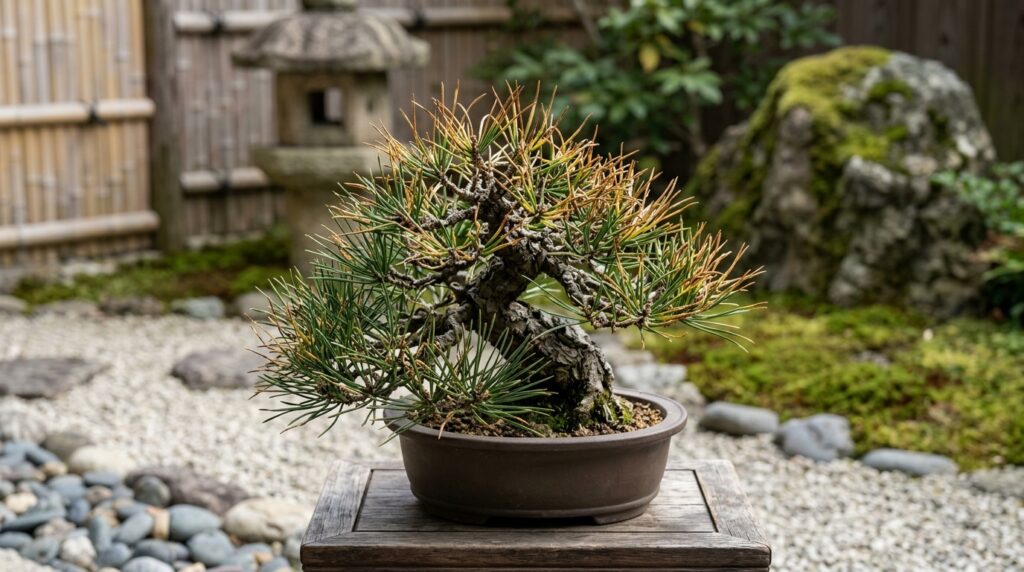
Health indicators: Vibrant foliage color, firm branches, absence of pests or disease. A bargain-priced tree that requires months of recovery care is rarely a bargain.
Pot appropriateness: The pot should complement without overwhelming. As a general principle, pot length should be roughly 2/3 the tree’s height for upright styles, though exceptions exist.
Common Pricing Pitfalls
Certain situations should raise caution. Trees advertised as “100-year-old specimen” at $150 nearly always misrepresent age. Actual century-old bonsai in competent training command significantly higher prices. The claim might refer to the species’ potential lifespan rather than the actual tree’s age.
“Indoor bonsai” sold at mall kiosks for $40-80 often prove disappointing. True bonsai are outdoor trees. While some tropical species like ficus, jade, or schefflera can survive indoors with appropriate care, they won’t develop the character of outdoor hardy species. The price point for indoor-suitable species should reflect their limitations.
Avoid trees with severe wire scarring (wire left on so long it cuts into bark), extensive deadwood on species that don’t naturally carry it well, or unusual trunk wounds poorly explained by the seller.
Making Your First Purchase
For someone approaching bonsai seriously, I recommend beginning with a $60-120 tree rather than the cheapest available option. This provides material with enough potential to develop meaningful skills without requiring the pressure of maintaining an expensive specimen while still learning fundamentals.
Choose hardy species appropriate to your climate. For most of North America, Chinese elm, juniper, or cotoneaster offer forgiving characteristics and reasonable pricing. In warmer zones, ficus provides similar accessibility.
As your skills develop over 2-3 years, consider acquiring one tree in the $200-400 range. This becomes your “serious” tree—the one that pushes your developing abilities and teaches refinement techniques.
Frequently Asked Questions
Why are bonsai trees so expensive compared to regular nursery plants?
The cost reflects years or decades of specialized training, not just the plant itself. A $300 bonsai might represent 10-15 years of weekly attention—pruning, wiring, repotting, and styling decisions. You’re purchasing compressed time and skilled artistry. A comparable landscape tree simply grows, while bonsai requires constant intervention to maintain its miniature proportions and artistic form.
Are expensive bonsai trees harder to care for than cheaper ones?
Not necessarily harder, but the stakes feel higher. A $50 juniper and a $500 juniper require essentially identical care—appropriate watering, seasonal fertilization, sunlight, and winter protection. The difference is the consequence of mistakes. Expensive trees often represent refined work that took years to achieve and cannot be quickly replaced. However, species selection affects difficulty far more than price. A $100 Chinese elm is generally easier to maintain than a $100 Japanese black pine.
Can I find quality bonsai trees under $100?
Yes, particularly if you purchase pre-bonsai material or younger specimens and develop them yourself. Quality in this range means healthy stock with basic good structure—decent nebari, some trunk movement, absence of major defects. The tree won’t be exhibition-ready, but it provides solid foundation for learning. Local bonsai club sales and specialty nurseries offer better value at this price point than retail chains.
Do bonsai trees increase in value over time?
With proper care and continued training, yes. A $200 tree purchased today might be worth $500-800 in ten years if developed skillfully. However, bonsai are not primarily financial investments—they require significant time investment and carry risk of loss through pests, disease, or care mistakes. View appreciation as a pleasant possibility rather than an expectation. Trees by recognized artists or with documented exhibition history tend to hold and increase value most reliably.
What’s the most I should spend on my first bonsai tree?
I suggest $60-150 for a first tree. This provides material with genuine potential while limiting financial risk during the steep learning curve. Many beginners lose their first tree to overwatering, underwatering, or inappropriate winter care. Starting with more affordable material allows learning from inevitable mistakes without prohibitive cost. Once you’ve kept a tree healthy through a full year’s cycle of seasons, you’re ready to consider more expensive specimens.