After twenty years of working with bonsai, I can tell you the best tree for a beginner is not the one that looks most impressive in photos—it’s the one that forgives mistakes while you learn. The Ficus bonsai, Chinese Elm, and Jade plant are the three species I recommend most often for this reason.
In my first year studying in Osaka, I killed seven junipers before my teacher Tanaka-sensei suggested I start with something more forgiving. That ficus taught me more about patience and observation than any amount of reading could have. Let me share what I’ve learned about choosing your first bonsai.
Why Species Selection Matters for New Practitioners
The relationship between a practitioner and their first bonsai shapes everything that follows. A tree that requires precise conditions and immediate responses to stress will frustrate you. A resilient species that tolerates irregular watering, less-than-perfect light, and heavy pruning gives you room to develop your instincts.
In traditional training, we don’t begin with ancient pines. We start with trees that have vigorous growth habits and strong root systems. These characteristics mean the tree can recover from your mistakes—and you will make mistakes. This is part of the practice.
The Best Bonsai Trees for Beginners: At a Glance
| Species | Light Needs | Watering Tolerance | Indoor/Outdoor | Difficulty |
|---|---|---|---|---|
| Ficus | Bright indirect | High (forgives missed waterings) | Indoor | Very Easy |
| Chinese Elm | Full sun to partial shade | Moderate (likes consistent moisture) | Both | Easy |
| Jade (Portulacaria) | Bright light | Very high (succulent, stores water) | Indoor | Very Easy |
| Juniper (Procumbens) | Full sun | Low (needs consistent attention) | Outdoor only | Moderate |
| Schefflera | Bright indirect | High | Indoor | Very Easy |
Detailed Species Recommendations
Ficus: The Most Forgiving Teacher
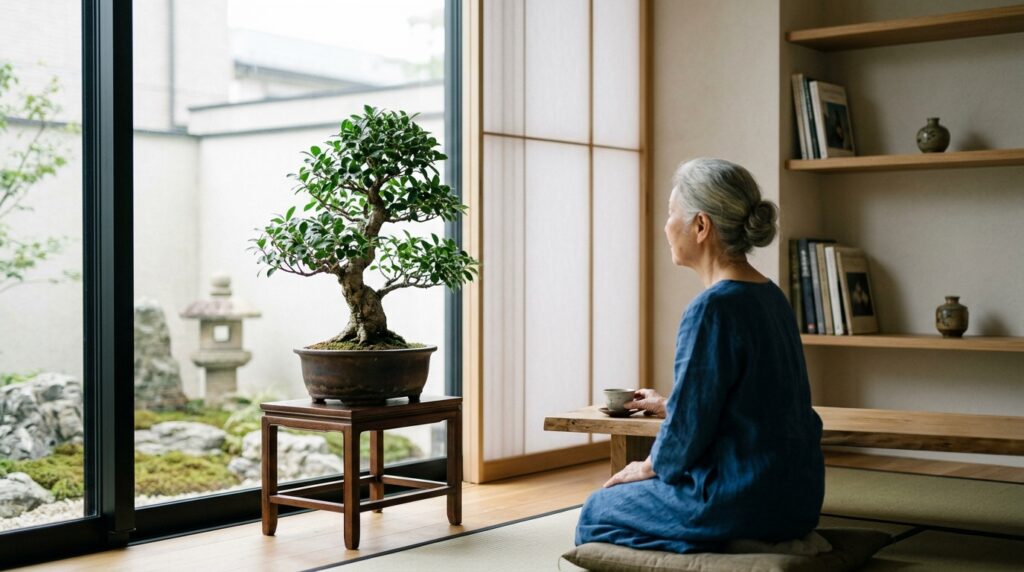
The Ficus retusa and Ficus benjamina are tropical trees that adapt remarkably well to indoor conditions. They tolerate low humidity better than most tropicals, forgive inconsistent watering, and respond vigorously to pruning.
I keep several ficus in my collection specifically for teaching. When students make mistakes—cutting too aggressively, forgetting to water for days, placing the tree in poor light—the ficus usually recovers. This resilience lets you experiment with shaping techniques without the constant fear of killing your tree.
Ficus develop aerial roots in humid conditions, which add dramatic character to the composition. The bark becomes more textured with age, and the leaf size reduces naturally with proper care and defoliation techniques you can learn over time.
Chinese Elm: The Versatile Classic
The Chinese Elm (Ulmus parvifolia) is perhaps the most versatile beginner tree. In temperate climates, it can live outdoors year-round with winter protection. In colder regions, it transitions well to indoor life during harsh months.
What I appreciate about Chinese Elm is its fine branching structure. As you learn to wire and shape, this tree shows you the results clearly. The small leaves create proper scale quickly, and the bark develops attractive exfoliating patterns within just a few years.
Chinese Elm responds well to aggressive pruning and back-budding along old wood. This means you can correct mistakes in branch placement—something much harder with species that only bud at the tips.
Jade and Portulacaria: The Patient Succulent
Many people don’t think of Portulacaria afra (Dwarf Jade) when considering bonsai, but it’s one of the best learning trees. As a succulent, it stores water in its leaves and stems, making it nearly impossible to kill through under-watering—the most common way beginners lose trees.
The thick trunk develops quickly compared to traditional bonsai species. In three to five years, you can have a tree that looks decades old. The small, glossy leaves naturally create good proportions, and the reddish stems add visual interest.
I use jade trees to teach wiring and structural decisions. Since they’re so forgiving, students can focus entirely on aesthetics without worrying about the tree’s survival.
Juniper: Beautiful But Demanding
I include Juniper Procumbens Nana with a caution. This is what many people picture when they think “bonsai”—the classic conifer with aged bark and elegant branching. But junipers killed more of my early trees than any other factor.
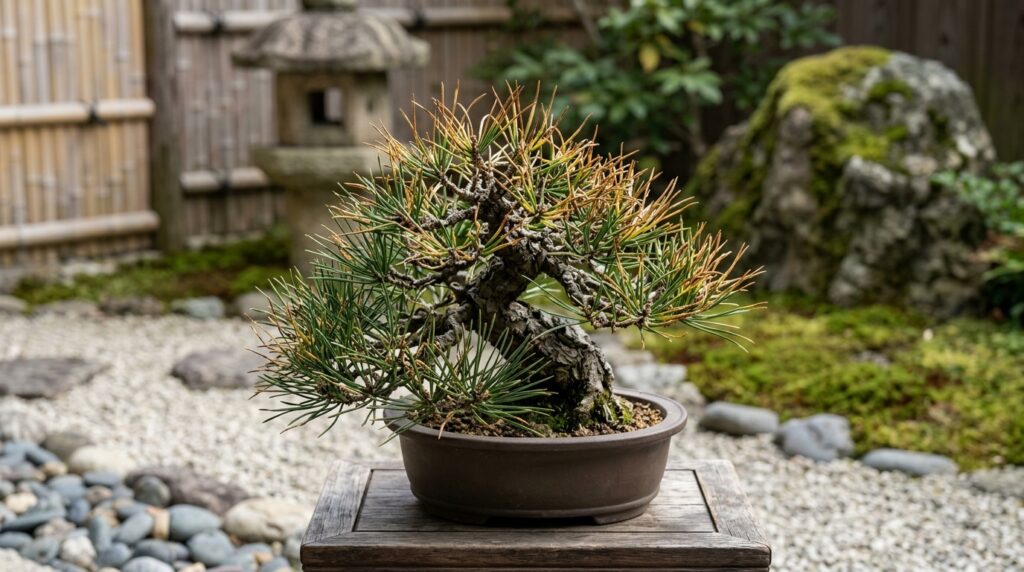
Junipers require outdoor placement, full sun, consistent watering, and winter dormancy. They cannot live indoors despite what some retailers claim. If you have outdoor space and can commit to daily watering in summer, juniper makes a good first conifer. If not, wait until you’ve succeeded with a ficus or elm first.
The reward for this care is a tree that looks ancient relatively quickly. Junipers develop dramatic deadwood features, and their foliage pads take wiring beautifully.
Schefflera: The Underrated Alternative
Schefflera (Umbrella Tree) doesn’t appear in traditional bonsai texts, but it’s remarkably well-suited for beginners. The compound leaves create interesting patterns, the trunk thickens quickly, and the tree tolerates indoor conditions similar to ficus.
I’ve found schefflera particularly useful for learning root-over-rock styles and exposed root compositions. The roots grow vigorously and visible roots develop character within a year or two.
Essential Care Principles for Your First Bonsai
Watering: The Foundation of Practice
More bonsai die from watering issues than all other causes combined. The goal is not to water on a schedule but to water when the soil begins to dry. This requires observation.
I check my trees by touching the soil surface and looking at the color. Dry soil is lighter in color. Most beginners water too little or too much—rarely just right. A proper bonsai watering can with a fine rose helps you water thoroughly without disturbing the soil.
Water until it runs freely from the drainage holes. Wait a few minutes and water again. This ensures the entire root ball is saturated, not just the surface.
Light: Understanding Your Tree’s True Needs
Indoor trees need more light than most beginners provide. A “bright room” to human eyes is often dim for a tree. Place your ficus or jade within a few feet of a south-facing window, or supplement with a grow light.
Outdoor trees need full sun—minimum six hours of direct sunlight daily. Morning sun is gentler, but most species can adapt to full afternoon sun with proper watering.
Soil: Invest in Proper Bonsai Mix
Standard potting soil stays too wet for bonsai containers. Use a well-draining bonsai soil mix with components like akadama, pumice, and lava rock. These materials allow air to reach the roots between waterings.
In Kyoto, we used pure akadama for many species. In drier climates, adding some organic component helps retain moisture. The principle remains: the roots need both water and oxygen.
Basic Tools to Start
You don’t need many tools initially. I recommend:
- Sharp pruning shears for cutting branches and roots
- Aluminum wire in several gauges (1mm, 1.5mm, 2mm, 3mm)
- Root hook or chopstick for working soil
- Training pot slightly larger than your tree’s root ball
Expensive tools don’t make you a better practitioner. Clean, sharp tools that you maintain properly will serve you for decades.
Common Mistakes I See Beginners Make
After years of teaching, certain patterns repeat. Understanding these helps you avoid them:
Keeping outdoor trees indoors. Junipers, pines, and other temperate species need winter dormancy. They will slowly decline indoors no matter how good your care seems.
Styling too aggressively too soon. In traditional training, we spend the first year simply keeping the tree healthy. You’re learning its growth patterns, its responses to your environment, its seasonal rhythms. Major styling comes after you understand the tree.
Repotting at the wrong time. Most species should be repotted in early spring as buds begin to swell. Repotting in fall or during active growth stresses the tree unnecessarily.
Using poor soil out of economy. Quality bonsai soil seems expensive until you lose a tree to root rot from staying in dense potting mix. The proper soil is not an expense—it’s insurance.
Neglecting the learning process. Bonsai practice is not about having a beautiful tree immediately. It’s about the relationship that develops through daily attention. The most important skill is observation.
Frequently Asked Questions
Can I start bonsai with a tree from the nursery?
Yes, and this is often better than buying a pre-styled bonsai. Nursery stock gives you a healthy tree with good roots and lets you make all the styling decisions. Look for plants with interesting trunk movement, low branches, and good nebari (surface root spread). Many of my best trees started as $15 nursery plants.
How long before my bonsai looks “finished”?
In traditional practice, we say a bonsai is never finished—it’s always becoming. A nursery plant can look presentable in 2-3 years with proper training. True maturity takes decades. But this is not a flaw of the art; it’s the art itself. The refinement happens gradually, and you develop alongside the tree.
Should I buy a bonsai starter kit?
Most bonsai starter kits include poor-quality tools and often seeds rather than actual trees. Growing from seed takes 3-5 years before you can begin bonsai training. If a kit includes a live tree, proper tools, and good soil, it can be worthwhile. Read reviews carefully.
Do indoor bonsai really exist?
Yes, but they’re tropical and subtropical species that can tolerate indoor conditions—not traditional temperate trees that are brought inside. Ficus, schefflera, jade, and certain other tropicals genuinely thrive indoors with adequate light. Marketing that claims junipers or pines can live indoors is misleading.
How often should I fertilize my beginner bonsai?
During the growing season (spring through early fall), use a balanced liquid fertilizer at half strength every two weeks. In winter, most trees need little or no fertilizer. Organic options like fish emulsion work well. The goal is steady growth, not forcing rapid development.
Beginning Your Practice
The best bonsai tree for beginners is the one you’ll see every day, the one you’ll learn to observe closely, the one that will teach you patience. For most people, this means a ficus or Chinese elm—both forgiving enough to survive your learning curve while being rewarding enough to maintain your interest.
Start with one tree. Resist the urge to collect many trees quickly. In my first five years, I had no more than three trees at any time. This forced me to pay attention to each one, to notice the subtle changes, to develop real skill rather than spreading my attention thin.
The practice of bonsai is about cultivating awareness as much as cultivating trees. Your first tree is your teacher. Listen to what it tells you.