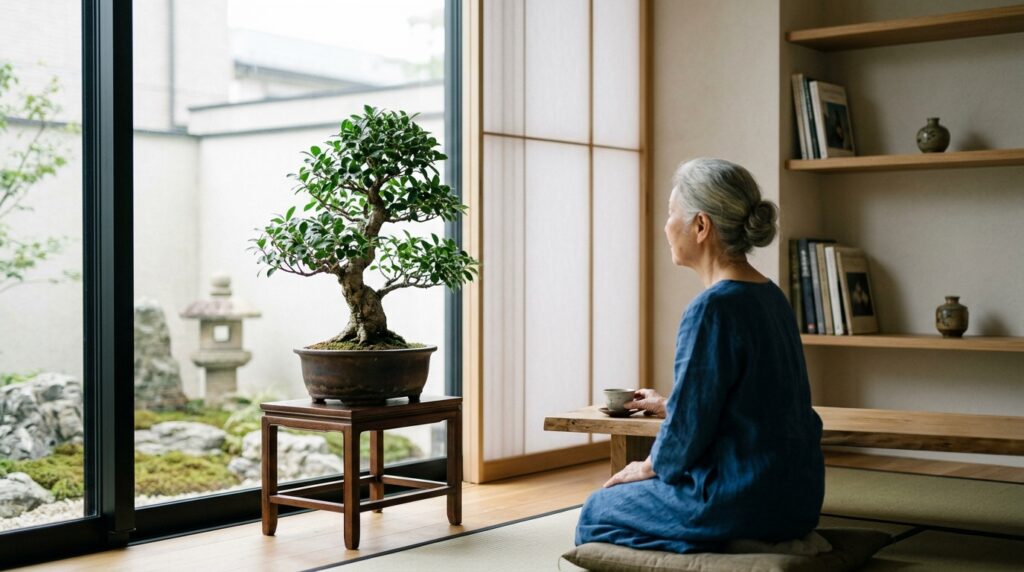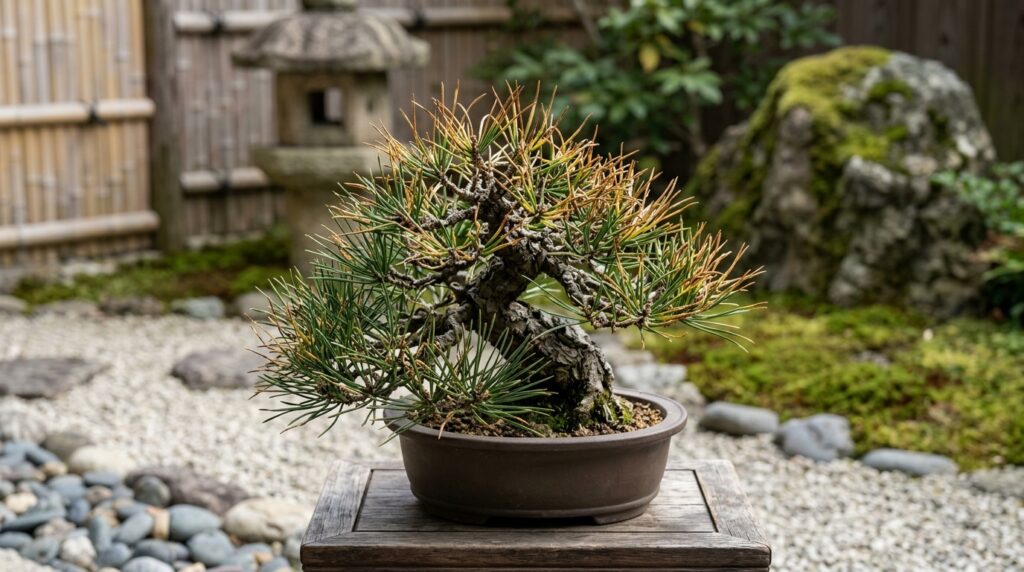
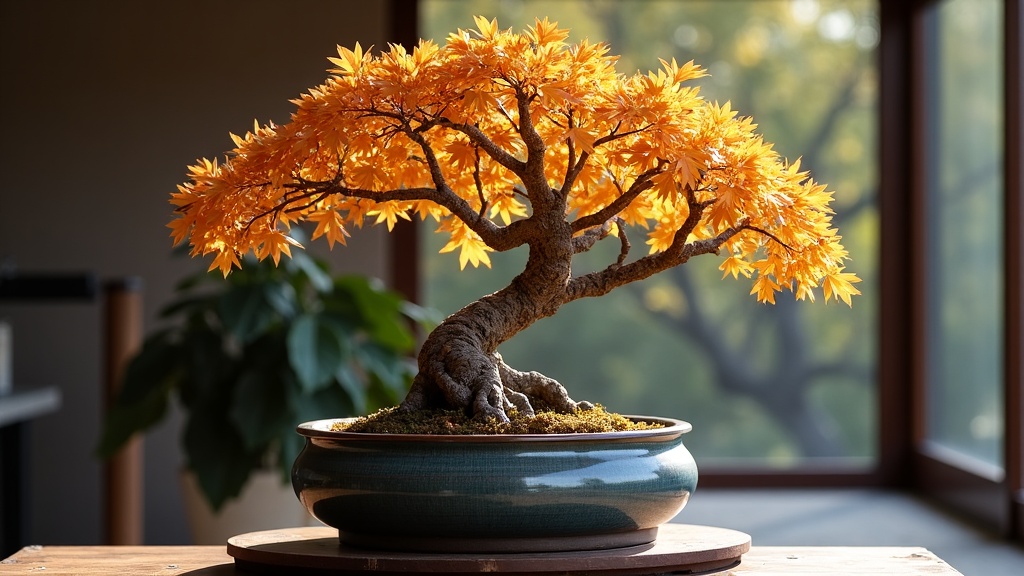
In my years of working with bonsai, I have come to recognize oak as one of the most quietly powerful species. Where pine offers elegance and maple gives us color, oak speaks of strength, patience, and deep time. When you hold an acorn in your palm, you hold the potential of centuries — and when you shape an oak into bonsai, you participate in that same ancient conversation.
Oak bonsai is not for those seeking quick results. This is a tree that asks you to slow down, to work in harmony with its natural vigor, to respect its need for dormancy and its preference for full sun. But for those willing to invest the years, oak rewards with dramatic trunk movement, spectacular deadwood features, and a presence that few other species can match.
This guide will walk you through everything you need to know about oak bonsai care — from species selection to seasonal maintenance, from soil composition to the art of creating jin. Whether you are just beginning your journey with oak or looking to deepen your practice, I hope these words serve you well.
Why Choose Oak for Bonsai?
Oak possesses several qualities that make it exceptional material for bonsai cultivation. The trunk thickens readily, developing the rugged, aged bark that suggests centuries of weathering. The branches grow with natural movement, responding well to directional pruning and wiring. And perhaps most importantly, oak’s hard, dense wood creates stunning deadwood features — the bleached jin and dramatic shari that give your tree the appearance of having survived storms and harsh seasons.
The challenge oak presents is primarily one of patience. This is not a species that tolerates indoor conditions, nor one that forgives poor drainage or excessive pruning. Oak asks you to understand its seasonal rhythms and to work with them rather than against them.
Oak Species for Bonsai: Choosing Your Tree
Several oak species adapt well to bonsai cultivation, each with its own character and requirements.
English Oak (Quercus robur)
This is the classic European oak, most commonly seen in bonsai collections. English oak develops a strong, rugged trunk with deeply fissured bark. The leaves are lobed and relatively small for an oak, reducing naturally as the tree matures. This species is hardy to -20°C and adapts well to container cultivation. For those new to oak bonsai, I recommend starting here.
Japanese Emperor Oak (Quercus dentata)
The Emperor oak carries the largest leaves of any temperate oak — sometimes 30cm across in nature. This makes it challenging for bonsai work, though partial defoliation techniques can help. What Emperor oak offers in exchange is spectacular trunk character and impressive presence. This is advanced material, best attempted after you have experience with more forgiving species.
Cork Oak (Quercus suber)
Prized for its deeply textured, corky bark that develops even on young material, Cork oak brings immediate visual age to your composition. It is less cold-hardy than English oak, requiring protection below -5°C, but adapts well to training. The evergreen foliage remains throughout winter in mild climates.
Holm Oak (Quercus ilex)
Another evergreen species, Holm oak is more forgiving than deciduous oaks in several respects. It tolerates heavier pruning, responds well to regular trimming for ramification, and maintains year-round interest. The leaves are smaller and more refined than Cork oak. This is an excellent choice for Mediterranean climates or for those who prefer working with evergreen material.
The Outdoor Requirement: Why Oak Cannot Live Inside
I must be direct about this: oak is an outdoor tree. It cannot be kept indoors year-round, not even in a bright south-facing window. Oak requires natural temperature fluctuations and a period of cold dormancy to remain healthy. Without winter chill, the tree will decline over several years, losing vigor until it finally fails.
If you do not have outdoor space where you can keep a tree year-round — a balcony, patio, garden, or even a fire escape — oak bonsai is not the right choice for you. This is not a limitation to overcome with grow lights or humidity trays. This is fundamental to the biology of the tree.
Sunlight Requirements
Oak thrives in full sun — at least 6 hours of direct sunlight daily during the growing season. In climates with intense summer heat above 35°C, some afternoon shade prevents leaf scorch, but morning sun is essential.
Position your oak where it receives maximum light during spring and fall. In winter, when the tree is dormant and leafless, light intensity matters less, though protection from harsh freezing winds is important.
Watering: Finding the Balance
Oak presents an interesting challenge with water. The species is naturally drought-tolerant, with deep taproots that seek moisture far underground. But in a bonsai pot, we must provide adequate water while avoiding the soggy conditions that oak absolutely abhors.
The rule I follow: water thoroughly when the soil surface just begins to dry. During hot summer weather, this may mean twice daily. In cool spring or fall conditions, perhaps every other day. Always check soil moisture before watering — never water on a schedule alone.
Signs of Overwatering
- Yellowing leaves, particularly older interior foliage
- Soft, dark spots on leaves
- Musty smell from soil surface
- Premature leaf drop while leaves are still green
- Black or brown root tips when you inspect during repotting
Signs of Underwatering
- Leaves curl and become crispy at edges
- Branch tips die back
- Entire tree suddenly wilts despite soil looking acceptable
- Leaves drop while still attached firmly to stems
Oak forgives occasional underwatering far more readily than chronic overwatering. When in doubt, wait an extra day.
Soil Mix: The Foundation of Healthy Growth
This is where many oak bonsai fail. Standard potting soil, even quality organic bonsai soil, retains too much moisture for oak’s preferences. What we need is a fast-draining, predominantly inorganic mix that allows air to circulate freely through the root zone.
My recommended mix for oak:
- 40% Akadama (Japanese clay granules) — provides structure and moderate water retention
- 30% Pumice — excellent drainage and air porosity
- 30% Lava rock — adds weight for stability, ensures drainage
Sift out particles smaller than 2mm to prevent compaction. For trees in development stages that need heavy watering, increase Akadama to 50% and reduce pumice. For established trees in shallow display pots, increase lava rock to 40% for better stability.
You can purchase quality bonsai soil mix components from Amazon or mix your own from bulk materials.
Repotting: Timing and Technique
Oak repotting should occur in early spring, just as buds begin to swell but before they open. In most temperate climates, this means late February through early April, depending on your local conditions. The key indicator: when you see the tiniest hint of green at bud tips, you are in the window.
Repotting Frequency
- Young trees (under 10 years in training): every 2 years
- Mature trees (over 10 years in training): every 3-4 years
- Very old, refined trees: every 4-5 years or as needed
Root Pruning Caution
Oak tolerates root pruning less enthusiastically than many other species. Never remove more than one-third of the root mass in a single repotting. Work methodically with a root hook to untangle circling roots, but preserve as much fine feeder root as possible.
The thick structural roots you find deep in the pot can be shortened, but do this gradually over several repotting cycles rather than all at once. Each time you repot, remove a bit more, working your way toward a more compact, radial root system.
Fertilizing Schedule
Oak is a vigorous grower that demands substantial nutrition during the growing season. I use a balanced organic fertilizer supplemented with occasional liquid feeding.
Spring (March-May)
Apply balanced NPK (10-10-10 or similar) at full strength every two weeks. This is when oak makes its strongest growth push.
Summer (June-August)
Continue fertilizing but reduce nitrogen slightly to encourage branch maturation rather than excessive leaf growth. A ratio of 5-10-10 works well.
Fall (September-October)
Switch to low-nitrogen, higher potassium formula (3-10-10) to help the tree harden off for winter. Final feeding should occur 4-6 weeks before your first expected frost.
Winter (November-February)
No fertilizer during dormancy. The tree is not actively growing and cannot use nutrients.
Pruning and Styling: Working with Oak’s Nature
Oak bonsai styling requires understanding the tree’s natural growth pattern and working with it rather than forcing an unnatural form. Oak tends toward bold, masculine shapes — think windswept survivors on coastal cliffs, ancient specimens in open parkland.
Branch Selection and Structure
Prune in late winter while the tree is dormant and you can clearly see branch structure. Remove any branches growing straight up or straight down. Eliminate branches that cross the trunk or other branches. Select primary branches that emerge at slightly upward angles and have good taper from thick at the trunk to fine at the tips.
Leave longer sections between branches on oak than you might on maple or elm. Oak needs room to breathe visually.
Leaf Reduction Techniques
For species with large leaves like English oak, partial defoliation in late May can encourage a second flush of smaller leaves. Remove all leaves, leaving the petiole (leaf stem) intact. Cut just above where leaf meets stem. Within 2-3 weeks, new leaves emerge, typically 30-40% smaller.
I do not recommend full defoliation every year. This is stressful for the tree. Use this technique only on vigorous, healthy specimens, and only once every 2-3 years.
Wiring and Shaping
Wire oak branches in late fall or early winter after leaf drop. With leaves out of the way, you can see the branch structure clearly and make better decisions about placement. Oak branches thicken quickly, so check wire every 2-3 weeks during the growing season and remove before it cuts into bark.
Use aluminum wire for easier application and removal. Choose wire thickness approximately 1/3 the diameter of the branch you are wiring. A good bonsai wire set should include multiple gauges for different branch sizes.
Creating Deadwood: Jin and Shari
This is where oak truly excels. The dense, hard wood takes exceptional jin (deadwood branches) and shari (trunk deadwood). Use sharp carving tools to remove bark and cambium, following the natural grain of the wood. Soak carved areas with lime sulfur to bleach and preserve the wood.
Let your deadwood tell a story — imagine lightning strikes, storm damage, snow load breaking a branch. Natural deadwood rarely appears as clean, straight lines. Add texture, depth, and weathering.
Seasonal Care Calendar
| Season | Tasks | Watering | Fertilizing |
|---|---|---|---|
| Spring (Mar-May) |
Repotting (early), bud pinching, training wire removal, pest monitoring | Increase frequency as leaves emerge, daily when temps exceed 20°C | Balanced NPK 10-10-10, every 2 weeks |
| Summer (Jun-Aug) |
Partial defoliation (if needed), trimming new growth, shade from extreme heat | 1-2x daily depending on heat, early morning and late afternoon | Lower nitrogen 5-10-10, every 2 weeks |
| Fall (Sep-Oct) |
Structural pruning, apply training wire, deadwood refinement | Reduce as temperatures drop, check soil before watering | Low nitrogen 3-10-10, stop 4-6 weeks before first frost |
| Winter (Nov-Feb) |
Protect from extreme cold below -10°C, check for ice damage, major structural pruning | Minimal, only when soil is dry and temps above freezing | None |
Pests and Diseases
Oak is relatively resistant to pests when healthy, but several issues can arise:
Oak Leaf Roller Moth
Caterpillars roll themselves inside leaves and feed on the interior. You will see leaves curled and bound with silk webbing. Hand-remove affected leaves or apply Bt (Bacillus thuringiensis) spray, which is organic and safe for beneficial insects.
Powdery Mildew
White, powdery coating on leaf surfaces, especially during humid conditions with poor air circulation. Improve airflow around your tree, avoid overhead watering, and apply neem oil or sulfur-based fungicide if severe.
Root Rot
Usually a result of poor drainage or overwatering. Symptoms include sudden wilting, yellowing leaves despite adequate water, and foul smell from soil. If caught early, emergency repot into fresh, well-draining mix and remove all affected roots. Prevention is far easier than cure — maintain proper soil mix and watering practices.
Scale Insects
Small, brown bumps on branches and leaves that suck sap from the tree. Scrape off manually or spray with horticultural oil in early spring before new growth.
Winter Care and Protection
Oak is hardy, but in containers, roots are more vulnerable to freeze damage than trees in the ground. Protect your oak when temperatures drop below -10°C consistently.
Protection Methods
Cold Frame: Place the pot in a cold frame or unheated greenhouse. This provides protection from wind and extreme cold while still allowing dormancy.
Mulch Protection: In milder climates, bury the pot to the rim in a garden bed and mulch heavily around the trunk base.
Unheated Garage/Shed: For brief extreme cold snaps, move the tree into an unheated garage or shed. Return to outdoor location once temperatures moderate.
Never bring dormant oak into a heated home. This will break dormancy prematurely and confuse the tree’s seasonal cycle.
The Philosophy of Oak: A Note on Patience
I want to be honest about what oak bonsai asks of you. This is not a 2-year project. This is not even a 5-year project. Working with oak is a 10-year commitment minimum — and that is just to develop the basic trunk and primary branch structure.
Oak teaches patience in ways that few other species can. You will prune a branch and wait two years to see how the tree responds. You will wire a section of trunk and wait three years for the movement to set. You will repot the tree and spend an entire season just letting it recover before doing any further work.
This is not a limitation. This is the practice itself. In our hurried modern world, oak bonsai invites you to slow down, to trust in processes that unfold across years rather than weeks. When you work with oak, you participate in deep time. You become part of a continuum that extends centuries into the past and centuries into the future.
The tree in front of you today is not the tree it will become. That future tree exists as potential, waiting for your patient, persistent attention across many seasons. This is wabi-sabi in living form — finding beauty in imperfection, accepting transience, honoring the natural cycle of growth and decay.
Frequently Asked Questions
Can I keep oak bonsai indoors?
No. Oak requires outdoor conditions year-round, including a cold dormancy period in winter. Indoor conditions will slowly kill the tree over several years. If you want an indoor bonsai, consider tropical species like Ficus or Chinese Elm instead.
How long does it take to develop oak bonsai from seed or nursery stock?
From seed, expect 15-20 years minimum to develop a presentable bonsai. From nursery stock with existing trunk thickness, 5-10 years to refine into good bonsai. Oak is a long-term commitment.
Why are my oak leaves turning yellow in summer?
Most commonly, this indicates overwatering or poor drainage. Check your soil mix — it should drain freely within seconds of watering. Reduce watering frequency and ensure the pot has adequate drainage holes. Yellowing can also indicate nitrogen deficiency if you have not fertilized, but this is less common with regular feeding.
When is the best time to collect oak from nature for bonsai?
Early spring, just before bud break, when the tree is still dormant but about to begin active growth. Collect trees with trunk character — older specimens with movement, deadwood, or interesting bark. Never collect from protected lands without permission. Expect 2-3 years of recovery before beginning serious training.
Can I grow oak bonsai from acorns?
Yes, but understand this is the longest possible path. Collect fresh acorns in fall, stratify over winter (keep cold and moist), and plant in spring. Grow in the ground or large container for at least 5-7 years to develop trunk thickness before beginning bonsai training. This is a multigenerational project.
Essential Tools and Materials
To work effectively with oak bonsai, invest in quality tools. Cheap tools frustrate the work and can damage your tree. A comprehensive bonsai tool set should include concave cutters for branch removal, wire cutters, trimming shears, and a root hook.
Affiliate Disclosure
Wabi Bonsai is a participant in the Amazon Services LLC Associates Program, an affiliate advertising program designed to provide a means for sites to earn advertising fees by advertising and linking to Amazon.com. When you purchase through links on this page, I earn a small commission at no additional cost to you. This helps support the ongoing creation of in-depth bonsai care guides. Thank you for your support.
May your oak bonsai bring you many years of patient practice and quiet contemplation.
— Kenji
About Kenji
Bonsai Practitioner & Teacher — 20 Years
Kenji has practiced bonsai for over 20 years, training under master practitioners in Osaka and Kyoto before bringing his craft to Seattle. He approaches bonsai as a meditative discipline rooted in patience, observation, and deep respect for the natural world. Read more about Kenji