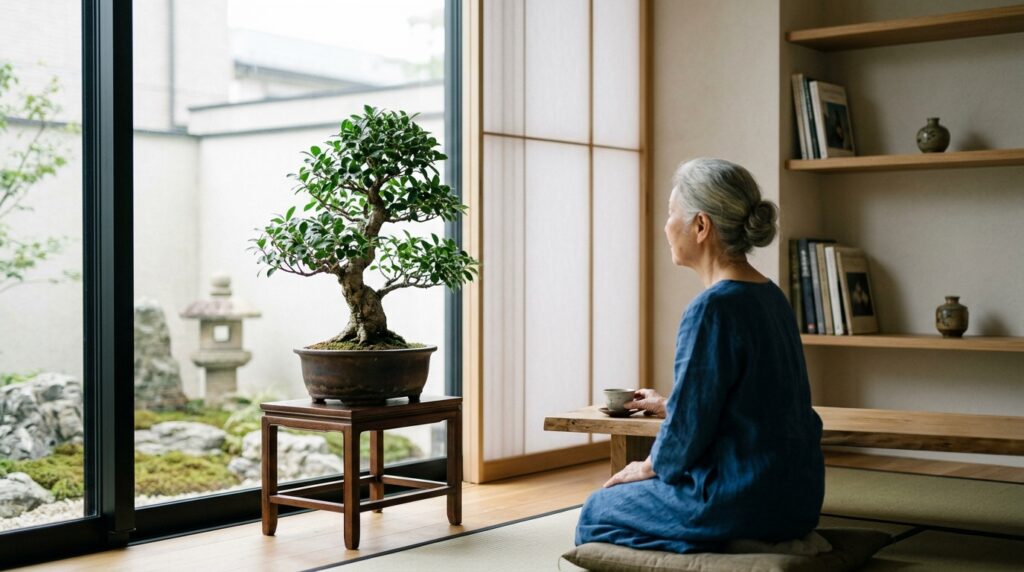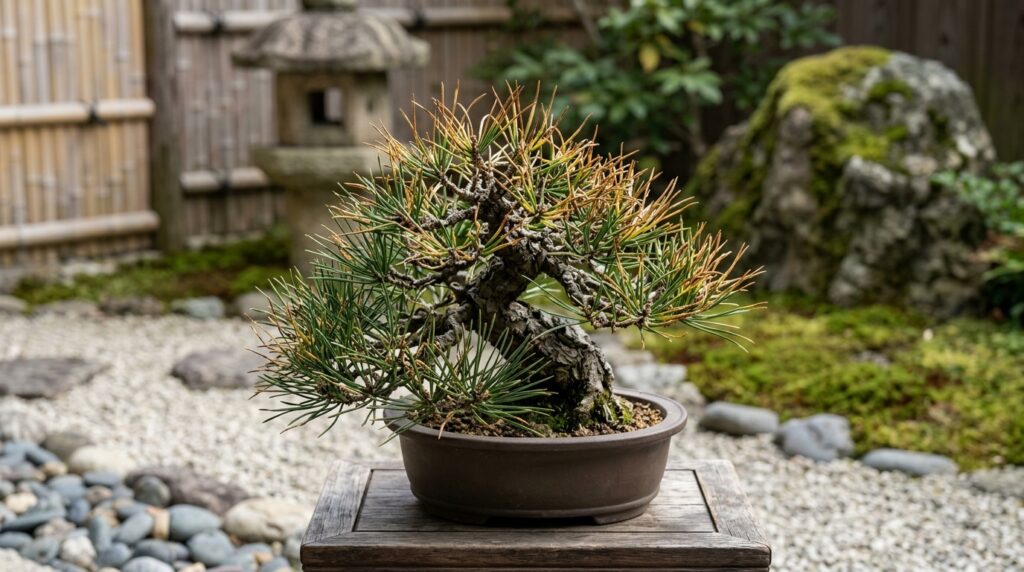
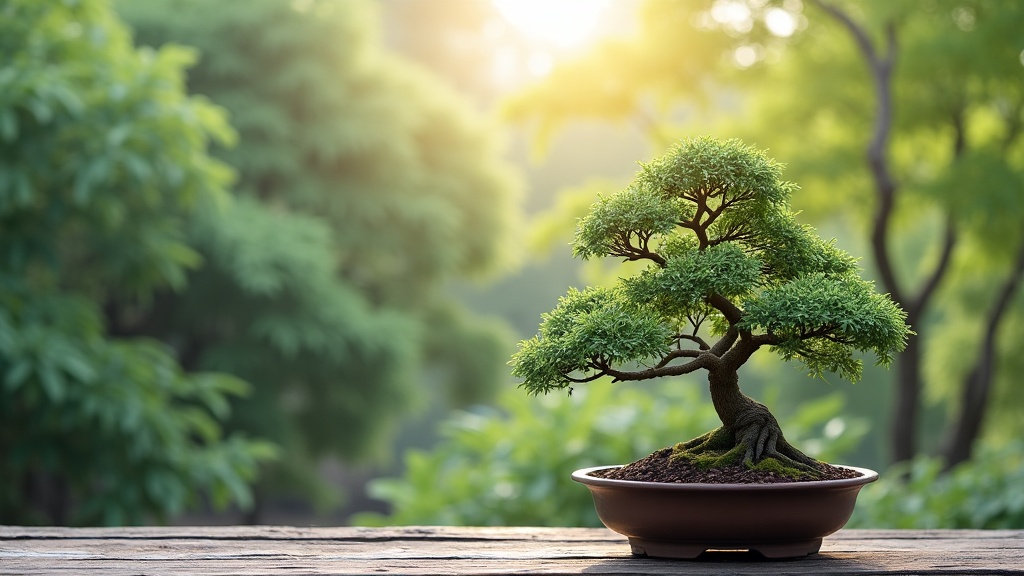
I see this mistake in beginners because bonsai invites action before it teaches patience.
Bonsai has a reputation for being difficult, but not every tree demands constant attention.
If you want the look of a bonsai without turning plant care into a full-time hobby, the best
choice is a species that tolerates inconsistent watering, adapts well to pruning, and grows
reliably in normal home or patio conditions. In general, the least maintenance bonsai trees
are hardy, forgiving species rather than delicate or highly specialized ones.
For most beginners, the easiest low-maintenance bonsai options are jade,
ficus, Chinese elm, and juniper. Each has
a slightly different care profile, so the right choice depends on whether you want an indoor
or outdoor bonsai and how much daily attention you can realistically give it.
What Makes a Bonsai Low Maintenance?
A low-maintenance bonsai is not a tree that can be ignored forever. It is a tree that
forgives small mistakes and does not require highly controlled conditions to survive. The
easiest bonsai species usually share a few traits:
- They tolerate occasional missed watering better than sensitive species.
- They recover well after pruning.
- They adapt to common light and temperature conditions.
- They resist pests and stress better than more delicate varieties.
- They do not require advanced seasonal care right away.
That matters because bonsai difficulty is often less about styling and more about keeping the
tree healthy over time. A hardy species gives you more room to learn.
The Least Maintenance Bonsai Trees
1. Jade Bonsai
Jade is often the easiest bonsai for people who want something simple. Technically a succulent
rather than a traditional woody tree, jade stores water in its leaves and trunk, which makes
it far more forgiving if you forget to water it on schedule.
Jade bonsai does best in bright light and prefers to dry slightly between waterings. It also
grows slowly enough that it does not demand constant pruning. For busy owners or complete
beginners, that makes it one of the lowest-effort choices available.
Best for: Indoor growers, dry homes, and people who tend to overthink plant care.
2. Ficus Bonsai
Ficus is one of the most widely recommended beginner bonsai trees for good reason. It adapts
well to indoor conditions, handles pruning well, and is generally more tolerant of low
humidity than many other tropical species.
Another advantage is resilience. If conditions are not perfect, ficus is more likely to hang
on and recover than a fussier species. It likes warmth, steady light, and regular watering,
but it usually does not punish minor mistakes immediately.
Best for: Beginners who want a classic bonsai look indoors.
3. Chinese Elm Bonsai
Chinese elm is often described as one of the most beginner-friendly true bonsai trees. It has
small leaves, attractive branching, and a strong ability to bounce back after pruning. It can
be grown indoors in bright conditions or outdoors in mild climates, which adds flexibility.
Compared with more demanding varieties, Chinese elm is easier to shape and less likely to
decline from small care mistakes. It still needs regular watering, but its overall balance of
beauty and durability makes it one of the best low-maintenance bonsai choices.
Best for: People who want a traditional bonsai species that is still forgiving.
4. Juniper Bonsai
Juniper is one of the most popular bonsai trees in general, especially for outdoor growing. It
is hardy, visually distinctive, and capable of handling pruning and shaping very well. Once
established in the right environment, it can be relatively easy to maintain.
The main limitation is that juniper is not truly an indoor bonsai. It needs outdoor seasonal
conditions and plenty of sunlight. If you can provide that, it is a strong low-maintenance
option. If you need a tree for a desk or living room, it is not the easiest match.
Best for: Outdoor growers who want a hardy evergreen bonsai.
Indoor vs. Outdoor Maintenance
The easiest bonsai for one person may be difficult for another simply because of placement.
If you want an indoor bonsai, jade and ficus are usually the
least demanding. If you have a balcony, patio, or garden with good light,
juniper and Chinese elm become much more practical.
A common mistake is choosing a bonsai that looks appealing without matching it to the
available environment. A species that fits your space will almost always feel easier to care
for than one that fights your conditions every day.
Tips for Keeping Bonsai Maintenance Low
Even an easy bonsai needs a consistent routine. These habits keep care simple:
- Choose a species suited to your indoor or outdoor space.
- Check soil moisture before watering instead of watering on a rigid calendar.
- Place the tree where it gets the light it actually needs.
- Prune lightly and regularly instead of doing major corrective cuts.
- Watch for pests early so small problems do not become major ones.
- Do not repot more often than necessary.
The goal is not zero maintenance. The goal is predictable maintenance that fits into normal
life.
Which Bonsai Is Best for Absolute Beginners?
If you want the simplest possible starting point, jade is often the easiest overall because it
is so forgiving about watering. If you want a more traditional tree form indoors, ficus is
usually the better pick. For outdoor growers, juniper and Chinese elm are strong beginner
choices, with Chinese elm often edging ahead because it is especially adaptable.
Final Answer
The bonsai trees that require the least maintenance are typically jade, ficus, Chinese elm,
and juniper. Among them, jade is often the easiest for busy beginners, while ficus is the best
low-maintenance indoor bonsai with a more classic tree appearance. The right choice depends on
where you will keep it, but hardy, forgiving species always make bonsai care much easier.
What makes bonsai difficult for beginners is that the tree rarely punishes impatience immediately. A beginner can wire too soon, prune too hard, repot at the wrong moment, and still feel successful for a few weeks. The tree often answers later, with weak growth, poor recovery, or a gradual decline that feels mysterious only because the earlier stress was forgotten.
That is why I teach beginners to treat bonsai less like a series of tasks and more like a conversation with a living thing. Before shaping, ask whether the tree is vigorous enough. Before pruning, ask whether the season supports recovery. Before changing several things at once, ask whether you will still understand the result afterward. Those questions slow you down, but they also keep you from making the kind of mistake that costs a year of progress.
Many bonsai beginners also confuse visible activity with meaningful progress. Wiring, pruning, repotting, and styling feel productive, while observation feels passive. In practice, observation is often the more advanced skill. When you notice how a species extends, where buds appear, how quickly soil dries, and how the tree responds to minor adjustments, your later work becomes much more precise.
I also think beginners benefit from keeping one simple rule: do not ask a weak tree to teach you advanced technique. If a tree is struggling with water balance, poor light, or poor root health, styling it harder rarely improves anything. Restoring strength first is not hesitation. It is sound bonsai practice.
The encouraging part is that this mistake is fixable. Most beginners do too much because they care. Once that energy is redirected into observation, timing, and restraint, progress becomes steadier and the tree begins to look more convincing with less force.
What I Check Before I Panic
When an indoor bonsai starts dropping leaves in winter, I look at light first, then watering rhythm, then sudden temperature swings near windows, vents, or heaters. Most indoor trees are reacting to weak winter conditions or inconsistent care, not inventing a mysterious new problem overnight.
I also want to know whether the species is tropical, subtropical, or a tree that was never going to thrive indoors long term. That distinction matters because some winter leaf loss is stress, while some cases are really a mismatch between the tree and the environment it was asked to tolerate.
How I Judge Whether to Stop
If I start wondering whether one more cut will make the silhouette cleaner, that is usually the moment I slow down and reassess vigor, not the moment I keep cutting. A tree can recover from an imperfect branch more easily than it can recover from repeated unnecessary pruning.
I also look at how much of the work was structural versus cosmetic. Once the important structural cuts are made, the safest move is often to leave the smaller refinements for another session after the tree has had time to answer the first round of work.
That patience is not hesitation. It is one of the habits that keeps bonsai from being pushed past what the tree can comfortably sustain.