I see this mistake in beginners because bonsai invites action before it teaches patience. A bonsai tree might look small enough to live anywhere, but it still has the same basic needs as a full-sized tree. The biggest one is light.
Short answer: most bonsai trees will not survive for long in a room with no windows unless you replace sunlight with strong artificial grow lights. Without enough light, growth weakens, leaves drop, and the tree eventually dies.
Bonsai are not house decorations that happen to be alive. They are real trees and shrubs growing in shallow containers, which means their margin for error is smaller than that of many ordinary houseplants. A dark room can be especially hard on them because reduced light affects photosynthesis, water use, vigor, and resistance to stress all at once.
Why windowless rooms are a problem
Light is fuel for a bonsai. In a room with no windows, there is usually not enough natural light for the tree to produce the energy it needs to stay healthy. Standard indoor lighting may let you see the plant, but that does not mean the plant is getting useful light for sustained growth.
When a bonsai does not receive enough light, the symptoms tend to build gradually. Leaves may turn pale, branches stretch and become leggy, new growth comes in weak, and the soil stays wet longer because the tree is using less water. Over time the roots decline as well, and recovery becomes harder.
Indoor bonsai versus outdoor bonsai
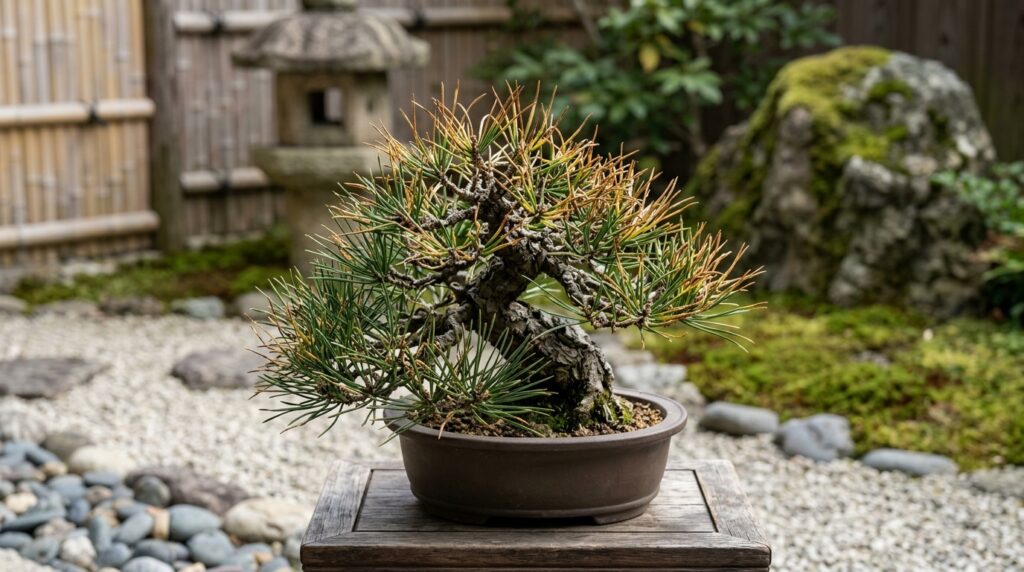
This distinction matters. Many bonsai species are actually outdoor trees, including junipers, pines, maples, and elms. These trees need seasonal changes, fresh air, and much stronger light than a typical room can offer. Putting them in a windowless room is usually a fast path to decline.
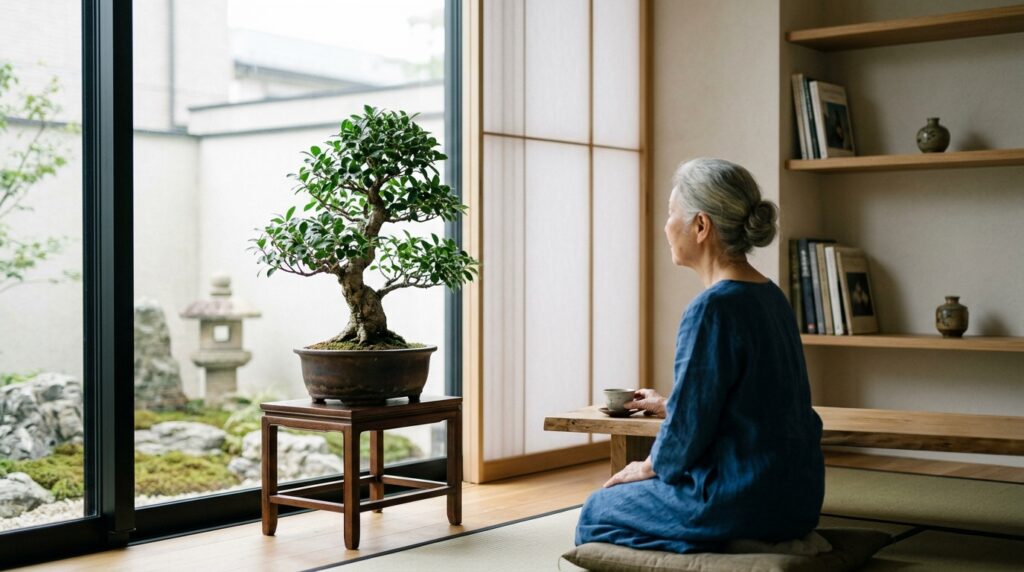
A smaller group of tropical and subtropical species can adapt to indoor life better. Common examples include ficus, jade, Hawaiian umbrella tree, and some brush cherry varieties. Even these more tolerant bonsai still need bright conditions. “Indoor bonsai” does not mean “low-light bonsai.”
Can grow lights make it work?
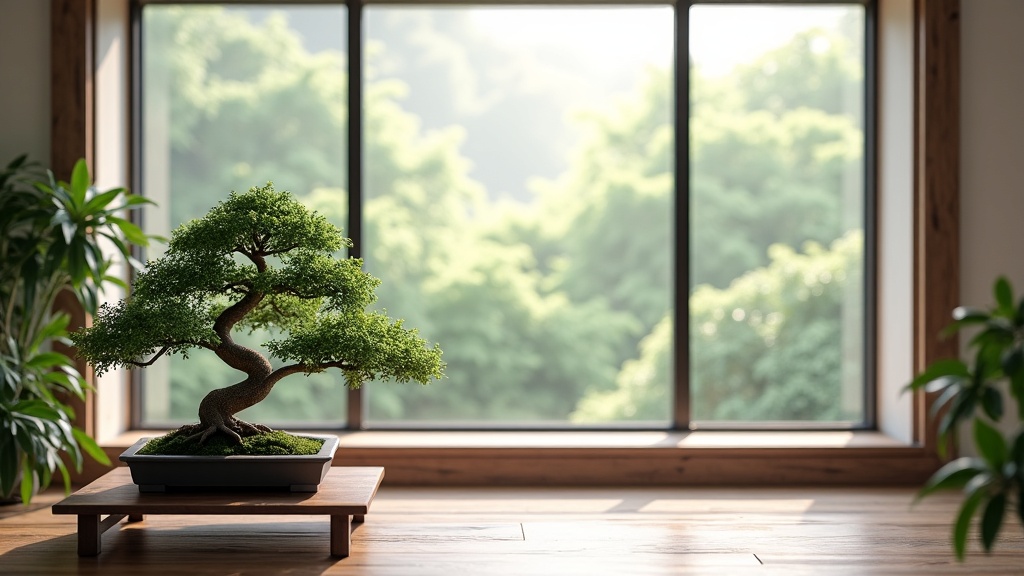
Yes. If the room has no windows, artificial lighting is the only realistic way to keep a bonsai alive there. A weak desk lamp will not be enough, but a proper full-spectrum grow light can substitute for sunlight if it is bright enough and used consistently.
For best results, place the grow light close enough to the tree to deliver meaningful intensity without overheating the foliage. Run it on a timer so the bonsai gets a predictable day length, often around 10 to 14 hours depending on the species and season. Consistency matters as much as brightness.
Which bonsai are most likely to cope indoors?
If you want to keep a bonsai in a room without windows, choose a species known for indoor tolerance and pair it with strong lighting. Better candidates include:
- Ficus: one of the most forgiving indoor bonsai, tolerant of lower humidity and minor care mistakes.
- Dwarf jade: likes bright light and dries between waterings, making it easier for some beginners.
- Schefflera: adaptable indoors and often used where conditions are less than ideal.
- Carmona or Fukien tea: popular indoors, though more demanding about stable care and light.
Even with these species, the phrase “survive” should not be the goal. A healthy bonsai should not merely hang on. It should produce steady growth, hold its leaves well, and respond positively to pruning and shaping.
Signs your bonsai is not getting enough light
- Leaves yellowing or dropping without another obvious cause
- Long, weak shoots reaching toward the light source
- Very slow growth during the active season
- Persistent damp soil and a higher risk of root problems
- Smaller leaves losing color or vigor
If you notice several of these signs in a windowless room, treat the lighting setup as the first thing to fix.
How to improve survival in a room with no windows
If moving the bonsai near a bright window is not an option, give it the strongest support you can:
- Use a real grow light rather than relying on normal room bulbs.
- Choose an indoor-tolerant species instead of an outdoor conifer or deciduous tree.
- Use a timer so the light schedule stays regular every day.
- Watch watering carefully, because low-light plants often need less water than expected.
- Rotate the tree if the light hits from one side to keep growth more even.
- Monitor humidity and air circulation, since stale indoor air can add stress.
The bottom line
Bonsai trees generally cannot live well in a room with no windows if they are left under ordinary indoor lighting. Most will weaken and eventually die, and outdoor species will fail even faster. The exception is a properly managed setup with strong artificial grow lights and an indoor-friendly species such as ficus or jade.
If your goal is a thriving bonsai rather than a struggling one, think less about where it fits in the room and more about whether the room can meet the needs of a real tree. Bonsai stay small by design, but their need for light is not small at all.
What makes bonsai difficult for beginners is that the tree rarely punishes impatience immediately. A beginner can wire too soon, prune too hard, repot at the wrong moment, and still feel successful for a few weeks. The tree often answers later, with weak growth, poor recovery, or a gradual decline that feels mysterious only because the earlier stress was forgotten.
That is why I teach beginners to treat bonsai less like a series of tasks and more like a conversation with a living thing. Before shaping, ask whether the tree is vigorous enough. Before pruning, ask whether the season supports recovery. Before changing several things at once, ask whether you will still understand the result afterward. Those questions slow you down, but they also keep you from making the kind of mistake that costs a year of progress.
Many bonsai beginners also confuse visible activity with meaningful progress. Wiring, pruning, repotting, and styling feel productive, while observation feels passive. In practice, observation is often the more advanced skill. When you notice how a species extends, where buds appear, how quickly soil dries, and how the tree responds to minor adjustments, your later work becomes much more precise.
I also think beginners benefit from keeping one simple rule: do not ask a weak tree to teach you advanced technique. If a tree is struggling with water balance, poor light, or poor root health, styling it harder rarely improves anything. Restoring strength first is not hesitation. It is sound bonsai practice.
The encouraging part is that this mistake is fixable. Most beginners do too much because they care. Once that energy is redirected into observation, timing, and restraint, progress becomes steadier and the tree begins to look more convincing with less force.
What I Check Before I Panic
When an indoor bonsai starts dropping leaves in winter, I look at light first, then watering rhythm, then sudden temperature swings near windows, vents, or heaters. Most indoor trees are reacting to weak winter conditions or inconsistent care, not inventing a mysterious new problem overnight.
I also want to know whether the species is tropical, subtropical, or a tree that was never going to thrive indoors long term. That distinction matters because some winter leaf loss is stress, while some cases are really a mismatch between the tree and the environment it was asked to tolerate.
How I Judge Whether to Stop
If I start wondering whether one more cut will make the silhouette cleaner, that is usually the moment I slow down and reassess vigor, not the moment I keep cutting. A tree can recover from an imperfect branch more easily than it can recover from repeated unnecessary pruning.
I also look at how much of the work was structural versus cosmetic. Once the important structural cuts are made, the safest move is often to leave the smaller refinements for another session after the tree has had time to answer the first round of work.
That patience is not hesitation. It is one of the habits that keeps bonsai from being pushed past what the tree can comfortably sustain.