Yellow leaves on your bonsai are almost always telling you something specific about its care — usually involving water, light, or nutrients. After twenty years of working with bonsai, I’ve learned that yellowing is rarely a death sentence; it’s a signal that asks for your attention and a small adjustment.
The pattern and location of the yellowing matter as much as the color itself. A few older leaves turning yellow at the base of the tree is natural aging. But when new growth yellows, or when entire sections fade at once, your tree is asking for help.
Understanding Why Bonsai Leaves Turn Yellow
Yellowing happens when chlorophyll breaks down faster than the tree can produce it. This breakdown occurs for specific reasons, and identifying the pattern helps you find the cause quickly.
In my workshop in Osaka, my teacher would hold a yellowing branch up to the light and ask: “What is the tree trying to conserve?” That question taught me to see yellowing not as failure, but as the tree’s intelligent response to stress.
Natural vs. Problematic Yellowing
Some yellowing is part of the tree’s life cycle. Deciduous bonsai naturally yellow and drop leaves in autumn. Many evergreens shed their oldest interior needles after two to five years. This is healthy.
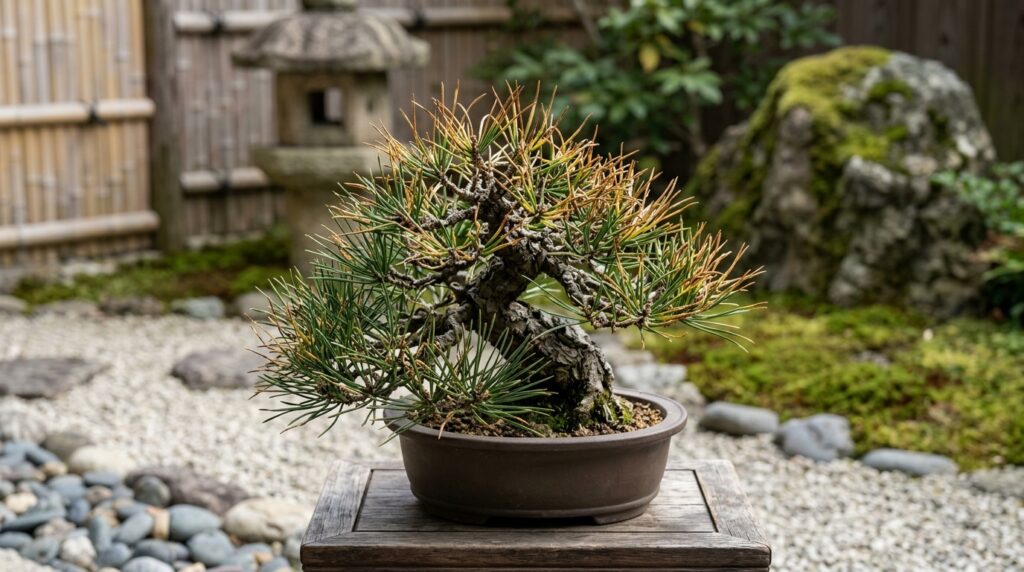
Problematic yellowing shows different patterns: entire branches yellowing at once, new growth emerging yellow, or sudden color loss across the canopy. These patterns indicate environmental stress.
The Six Most Common Causes
1. Watering Problems (Most Common)
Both overwatering and underwatering cause yellowing, but the patterns differ. Overwatering creates pale yellow leaves that feel soft or mushy, often with dark spots. The soil stays wet for days. Root rot may have already begun.
Underwatering produces crispy yellow-brown leaves that curl or feel papery. The soil pulls away from the pot edges. The yellowing usually starts at leaf tips and spreads inward.
I check moisture by pressing my finger an inch into the soil. If it’s saturated and has been for three days, overwatering is likely. If it’s bone dry and the pot feels light, the tree is thirsty.
2. Nutrient Deficiency
Yellow leaves with green veins usually indicate iron chlorosis, common in acid-loving species like azaleas when soil pH rises. Overall pale yellowing, especially in older leaves, suggests nitrogen deficiency — the tree is pulling nitrogen from old growth to feed new shoots.
Bonsai soil drains quickly, which is good for roots but means nutrients wash through fast. I fertilize my deciduous trees weekly during the growing season, conifers every two weeks. Using a balanced bonsai fertilizer prevents most deficiency issues.
3. Light Stress
Insufficient light causes weak, pale yellow growth. The tree stretches toward the light source, producing long internodes and thin leaves. Too much direct sun, especially after moving a tree from shade, can scorch leaves — they turn yellow-white before browning.
Most bonsai need 4-6 hours of direct morning sun. Tropical species like ficus handle lower light but still need bright indirect light most of the day.
4. Temperature Shock
Rapid temperature changes stress bonsai. Bringing a tree indoors from freezing weather without acclimatization, or placing a tropical species near a cold window, causes sudden yellowing.
I keep my tropical bonsai away from heating vents and cold drafts. Temperature should stay relatively stable — sudden 15°F swings trigger stress responses.
5. Root Bound Conditions
When roots completely fill the pot and circle endlessly, they can’t absorb water or nutrients efficiently. The tree shows yellowing despite proper watering. If you see thick roots emerging from drain holes or the soil drains instantly without absorbing water, the tree likely needs repotting.
Most bonsai need repotting every 2-3 years. Fast-growing species like ficus or Chinese elm may need annual repotting when young.
6. Pests and Disease
Spider mites cause stippled yellowing — tiny yellow dots that eventually merge. Turn leaves over and look for fine webbing or tiny moving specks. Scale insects create yellow patches where they feed, usually along veins.
Fungal infections like rust produce yellow spots with orange or brown pustules on leaf undersides. Root rot from overwatering causes sudden widespread yellowing accompanied by a sour smell from the soil.
Diagnostic Process: What to Check First
When I see yellowing, I follow a systematic check:
| Check This | What You’re Looking For | Likely Cause If Found |
|---|---|---|
| Soil moisture | Saturated for 3+ days OR bone dry | Over/underwatering |
| Leaf undersides | Webbing, tiny insects, sticky residue | Pests (mites, scale, aphids) |
| Yellow pattern | Green veins, yellow tissue | Iron deficiency/chlorosis |
| Location on tree | Only oldest interior leaves | Natural shedding or nitrogen deficiency |
| Recent changes | Moved, repotted, or brought indoors in past 2 weeks | Environmental stress/shock |
| Drainage holes | Thick roots emerging, instant water runthrough | Root bound condition |
Solutions Based on Cause
Fixing Overwatering
Stop watering immediately. Let the soil dry until it’s barely moist an inch down — this may take a week. Improve drainage by tilting the pot slightly to help water escape. If the soil stays soggy for more than 10 days, consider emergency repotting into fresh, well-draining bonsai soil mix.
Check roots during repotting. Healthy roots are white or tan and firm. Brown, mushy, or black roots should be pruned back to healthy tissue. Dust cuts with sulfur fungicide powder to prevent further rot.
Going forward, water only when the top inch of soil feels dry. Most bonsai die from overwatering, not drought.
Fixing Underwatering
Water thoroughly until water runs from drain holes. Don’t just sprinkle the surface — the entire root mass needs to rehydrate. Set the pot in a shallow tray of water for 10 minutes to allow soil to absorb from below.
Once rehydrated, establish a consistent watering schedule. I water my outdoor bonsai every morning in summer, every 2-3 days in spring and fall. Indoor trees need checking every 1-2 days.
Using a soil moisture meter helps you learn your tree’s rhythm until you develop a feel for it.
Correcting Nutrient Deficiency
For overall pale yellowing, apply a balanced fertilizer (like 10-10-10 or 20-20-20) at half strength weekly. You should see new growth darken within 2-3 weeks.
For iron chlorosis (green veins, yellow tissue), apply chelated iron supplement or use an acidic fertilizer. Azaleas, gardenias, and other acid-lovers need soil pH between 5.0-6.0. You can also use chelated iron supplements as a foliar spray for quick correction.
Remember that fertilizer can’t fix yellowing that’s already occurred. Those leaves won’t regain color. But new growth will emerge healthy green.
Adjusting Light Conditions
If your tree isn’t getting enough light, move it gradually. Don’t shock a shade-adapted tree with full sun. Increase exposure by one hour daily over two weeks.
For sun-scorched leaves, move the tree to partial shade immediately. Remove severely damaged foliage. The tree will recover, but damaged leaves won’t repair themselves.
Indoors, place trees within 3 feet of a south or west-facing window. Supplementing with a grow light for bonsai helps during winter months.
Addressing Root Bound Trees
Root bound trees need repotting, ideally during the appropriate season for that species. For most deciduous trees, repot in early spring before buds swell. Tropicals can be repotted when temperatures stay above 60°F consistently.
Remove the tree from its pot. Use a root hook to gently tease out circling roots. Prune back 1/4 to 1/3 of the root mass, cutting from the bottom and outer edges. Repot in fresh bonsai soil.
Water thoroughly after repotting and keep the tree in partial shade for 2-3 weeks while new roots establish.
Treating Pests and Disease
For spider mites, spray the entire tree — especially leaf undersides — with neem oil spray. Repeat every 5-7 days for three applications. Misting the tree daily also helps; mites hate humidity.
Scale insects require manual removal. I use a soft toothbrush dipped in diluted dish soap to scrub them off, then rinse thoroughly. Follow with neem oil to kill any I missed.
For fungal infections, remove affected leaves and improve air circulation. Avoid overhead watering, which spreads spores. Apply a copper-based fungicide if the infection is widespread.
Prevention: Building Long-Term Health
Preventing yellowing is simpler than fixing it. I’ve learned this through two decades of both failures and successes.
Use proper bonsai soil — a mix that drains in seconds but retains some moisture. Standard potting soil stays too wet. A good mix combines akadama, pumice, and lava rock, or similar components.
Fertilize regularly during the growing season. Bonsai live in small containers with limited nutrients. What they have washes away with each watering. Consistent feeding prevents deficiencies before they show.
Repot on schedule. Even if the tree looks healthy, roots need periodic maintenance. Circling roots strangle themselves and create problems you won’t see until yellowing starts.
Observe daily. I spend a few minutes each morning simply looking at my trees. You’ll notice subtle changes — a leaf dulling, a branch looking stressed — days before obvious yellowing appears.
When to Remove Yellow Leaves
I remove yellow leaves once they’re more than 50% discolored. They’re no longer photosynthesizing efficiently and the tree will shed them anyway. Removing them early improves appearance and prevents fungal problems on decaying foliage.
Use clean, sharp scissors. Cut at the base of the petiole (leaf stem). Don’t pull or tear, which can damage the branch.
If an entire branch has yellowed and won’t recover, prune it back to healthy wood. This redirects the tree’s energy to vigorous growth rather than maintaining dying tissue.
Species-Specific Considerations
Some species show yellowing more readily than others. Chinese elm and ficus can yellow from minor stress but recover quickly once conditions improve. Junipers rarely yellow unless severely stressed — by the time a juniper yellows, you’re often dealing with a serious problem.
Pine needles naturally yellow and drop after 2-3 years. This interior shedding is normal. But if current-year needles yellow, check for pests or watering issues.
Azaleas and gardenias are dramatic about pH. Even slightly alkaline water will cause iron chlorosis within weeks. If you have hard water, consider using distilled water for sensitive species.
Recovery Timeline
Once you’ve identified and corrected the cause, be patient. The tree won’t respond overnight. Yellow leaves won’t regain color — your goal is healthy new growth.
You should see improvement in 2-4 weeks: new shoots emerging green, growth resuming, the tree looking stronger. Full recovery — filling in where yellow leaves were removed — may take a full growing season.
If you see no improvement after a month, revisit your diagnosis. You may be treating the wrong issue, or there could be multiple problems at once.
Frequently Asked Questions
Can yellow leaves turn green again?
No. Once a leaf has fully yellowed, the chlorophyll is gone and won’t regenerate. Focus on correcting the underlying problem so new growth emerges healthy. Remove severely yellowed leaves to improve the tree’s appearance and redirect its energy.
How often should I fertilize to prevent yellowing?
During the growing season (spring through early fall), fertilize weekly with a balanced fertilizer at half the recommended strength, or every two weeks at full strength. I prefer the weekly approach — it provides consistent nutrition without the risk of burning roots. In winter, most temperate species are dormant and don’t need fertilizer.
Is yellowing always a sign of a problem?
Not always. Deciduous trees naturally yellow in fall before leaf drop. Many evergreens shed older interior needles annually — this yellowing typically starts at the trunk and works outward. A few older leaves yellowing on an otherwise healthy tree is normal. But widespread yellowing, or yellowing of new growth, indicates stress that needs addressing.
My bonsai yellowed after repotting — what went wrong?
Post-repotting yellowing usually means root damage or transplant shock. If you pruned too much root mass, the remaining roots can’t support all the foliage — the tree sheds leaves to balance itself. This is temporary. Keep the soil consistently moist (not soggy), place the tree in partial shade, and avoid fertilizing for 4-6 weeks. The tree should stabilize and push new growth within a month.
Should I use tap water or distilled water for my bonsai?
Most species tolerate tap water fine unless yours is very hard or heavily chlorinated. Acid-loving species like azaleas, camellias, and gardenias do better with distilled or rainwater, especially in areas with alkaline tap water. If your tap water has high mineral content (you see white deposits on pots), consider filtering it or mixing it 50/50 with distilled water for sensitive species.